Sublimation Paper vs Heat Transfer Paper: Which to Use? (November 2026)
Use sublimation paper with sublimation ink for polyester or coated blanks; use heat transfer paper with compatible ink for fabric transfers. The right choice depends on your printer, material and the finish you want.
On this page (8 sections)
- What is the difference between sublimation paper and heat transfer paper?
- Which method gives the print finish you want?
- Which paper should you use on shirts?
- Can sublimation paper heat transfer onto cotton?
- What does heat transfer paper for sublimation mean?
- Which paper should you buy for your setup?
- How do you avoid common transfer mistakes?
- Which should you choose?
Use sublimation paper with sublimation ink for polyester or coated blanks; use heat transfer paper with compatible ink for fabric transfers. In a sublimation paper vs heat transfer paper choice, start with the ink and material, then decide which finished look you want.
The names sound similar, but the papers carry designs through different transfer methods. Sublimation moves dye into a compatible surface, while heat transfer paper places a printed design layer onto fabric.
If you are choosing a sublimation printer machine, check whether it uses sublimation ink before buying paper. A standard inkjet printer and sublimation printer may look alike, but the ink determines which transfer process is possible.
What is the difference between sublimation paper and heat transfer paper?
Sublimation paper carries sublimation ink to a compatible surface; heat transfer paper carries a printed image that bonds as a layer to fabric. The papers aren't interchangeable, even when both are used with a heat press.
Sublimation paper is printed with sublimation ink, then pressed against a light polyester fabric or a polyester-coated blank. Heat activates the dye so it transfers into the material.
Printable heat transfer paper is printed with a supported inkjet printer and applied to fabric using an iron or heat press. The paper's instructions tell you which side to print, whether to mirror the design, and how to place it.
Sublimation paper vs heat transfer paper by ink
Sublimation paper needs sublimation ink. HTVRONT says its sheets work only with sublimation ink and are intended for light polyester fabric and polyester-coated items.
For sheet options, compare sublimation ink transfer sheets.
Heat transfer paper depends on its own printer and ink directions. Avery's paper is for inkjet printers, while TransOurDream describes compatibility with inkjet printers using pigment or dye ink.
Don't choose based on the word "inkjet" alone. A printer with standard ink isn't automatically ready for sublimation, and changing ink can require a printer made for that purpose.
Sublimation heat transfer paper and material compatibility
The target surface is the clearest dividing line. Sublimation works with polyester fabric or a specially coated blank, while the heat transfer papers in this comparison are intended for fabric, including dark cotton.
For polyester content, follow the paper and blank instructions. HTVRONT recommends material with cotton content of 30% or less, and its guidance points to light-colored polyester fabric.
For dark cotton, an iron-on transfer sheet is the better match. For a black-shirt project, see how to sublimate on black shirts and check which transfer method the shirt supports.
Avery is designed for dark cotton and cotton/poly fabrics, and TransOurDream describes use on black and dark fabric with 70% to 100% cotton.
Which method gives the print finish you want?
Choose sublimation for a dye-in finish on a compatible blank; choose heat transfer paper when you need to apply a printed layer to fabric. The material and color affect which result you can get.
A sublimated image becomes part of the suitable surface rather than sitting as a separate film. That can make it a good fit for polyester shirts, mugs and coated craft blanks.
For curved blanks, see how to use sublimation shrink wrap.
Heat transfer paper leaves the design on the fabric surface. It can work on dark cotton where standard sublimation is not the right method, but the transferred area may feel more like an applied layer.
Think about the whole design too. Large solid shapes can cover more fabric with a transfer layer, while a smaller graphic may leave more of the garment's original feel around it.
If your project is a mug, compare sublimation paper for mugs and check that the mug has a sublimation coating. For a tumbler, use a blank and process intended for sublimation, then see our guide to sublimation paper for tumblers.
Which paper should you use on shirts?
Use sublimation paper for light polyester shirts and heat transfer paper for dark cotton shirts. Fabric color and fiber content matter as much as the printer.
A light polyester shirt is a straightforward sublimation target when the paper, ink and press settings match. The image can transfer without adding a separate iron-on sheet.
A dark cotton shirt calls for a compatible heat transfer paper. Avery is designed for dark cotton and cotton/poly, while TransOurDream describes dark fabric use from 70% to 100% cotton.
Before printing, read the paper instructions for mirror settings and print side. Avery's description says its dark transfer paper does not need mirroring, while TransOurDream's steps specify printing, cutting and placing the image face up.
If you plan to cut your design with a Cricut, the guide to using sublimation paper with Cricut explains where the cutting machine fits into the workflow. Cutting ability does not change which ink or material the paper needs.
Can sublimation paper heat transfer onto cotton?
Sublimation paper alone does not make ordinary cotton a suitable sublimation surface. For cotton, use a transfer method designed for that fabric or a specifically compatible system.
The dye in a standard sublimation process bonds best with polyester or a polyester coating. A cotton shirt may not hold the image in the same way, so don't assume a paper marketed for shirts will work on every shirt.
For dark cotton, Avery's sheet is made for dark cotton and cotton/poly fabrics. TransOurDream's dark transfer paper describes use on black and dark fabrics with 70% to 100% cotton.
Some sublimation papers mention cotton, but the fabric guidance can be limited. HTVRONT gives a cotton-content ceiling of 30% or less, so check the fiber blend before pressing.
What does heat transfer paper for sublimation mean?
The phrase usually describes paper used in a heat transfer process, but it doesn't tell you whether the paper is for sublimation or an iron-on print. Look for the named ink type and compatible surface.
Sublimation is a heat transfer method, so people sometimes use overlapping terms such as "sublimation heat transfer paper." The practical question is whether the sheet is made for sublimation ink or for a standard inkjet transfer.
See whether sublimation ink works on paper for more on the ink and transfer surface.
A sheet labeled sublimation paper should specify sublimation ink and suitable blanks. A sheet labeled heat transfer paper should identify fabric colors, printer type and application steps.
When comparing best sublimation paper sheets, check the printer, ink, sheet size and project material together. A paper that fits your printer but not the blank won't solve the mismatch.
Which paper should you buy for your setup?
Match the paper to the ink already in your printer and the material you plan to decorate. That simple check avoids buying a transfer sheet for the wrong process.
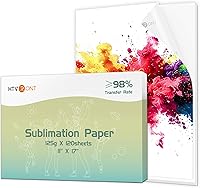
For sublimation projects, HTVRONT's 8.5 x 11 in sheets are 120 gsm and require sublimation ink. The pack is intended for light polyester fabric and polyester-coated items.
For dark fabric with an inkjet printer, Avery's 5-sheet pack is designed for dark cotton and cotton/poly. TransOurDream offers 20 sheets for dark fabric and includes reusable Teflon paper for pressing.
Bryco Goods White Kraft Butcher Paper Roll is a barrier paper option for protecting a work surface during sublimation. It is not the transfer sheet that receives the printed design.
How do you avoid common transfer mistakes?
Confirm ink, material, print side and press directions before starting. A correct paper can still produce a poor result if one of those steps doesn't match.
- Check the ink: sublimation paper needs sublimation ink; heat transfer sheets need the type of ink they support.
- Check the blank: confirm fiber content for fabric or coating for a hard blank.
- Read mirror instructions: some transfer papers need a mirrored image, while others do not.
- Follow the paper's press steps: use its stated temperature, timing and protective sheet guidance.
- Test the design size on screen: make sure text and details remain readable after printing and cutting.
Don't substitute a generic temperature or pressing time for the paper's instructions. Different papers and blanks can need different settings.
Which should you choose?
Pick sublimation paper for sublimation ink, light polyester and coated blanks; pick heat transfer paper for supported inkjet designs on cotton, especially dark fabric. Your printer and project material make the decision.
If you already own a sublimation setup, choose sublimation sheets made for that ink and blank. If your goal is a dark cotton shirt from a standard inkjet printer, choose heat transfer paper that names that fabric type.
For paper that will carry a sublimation design, compare the Epson F170 sublimation printer review if you're considering a dedicated printer. For paper-based craft projects that need a cutting tool, see best laser cutter for paper and best laser engraver for paper crafts.
Choose by the process first, then buy a paper that matches it. That keeps sublimation paper and heat transfer paper in their proper roles.
Frequently asked questions
Can you use heat transfer paper for sublimation?
No. Heat transfer paper and sublimation paper are made for different ink and transfer processes.
Use sublimation paper with sublimation ink, and use heat transfer paper with the printer and ink it supports.
Check the package instructions before printing, since using the wrong combination can waste a sheet or produce a poor transfer.
What is sublimation paper used for?
Sublimation paper temporarily holds sublimation ink so heat can transfer the design onto a suitable polyester fabric or coated blank. It is the carrier sheet, not the final decoration.
The material needs to be compatible with sublimation for the dye to bond as intended.
Can sublimation paper work on cotton?
Standard sublimation transfers are best suited to polyester fabric and polyester-coated items. HTVRONT gives a cotton-content limit of 30% or less for its paper, so check the exact material guidance for your paper and blank.
For dark cotton, printable heat transfer paper is a more fitting option.
Can I use one printer for both papers?
Only if the printer and ink are suitable for each process, and many setups are dedicated to one ink type. Sublimation paper requires sublimation ink, while the heat transfer papers here are for inkjet printers.
Check the printer maker's instructions before changing inks.
Does sublimation paper leave a thick print?
Sublimation dye transfers into compatible material, so it does not leave the same iron-on layer as a typical heat transfer paper design. The finished feel also depends on the blank and transfer settings.
Heat transfer paper leaves a design layer on the fabric, which can feel more noticeable.