Can You Laser Engrave Rust-Oleum Paint?
Sometimes, but only after you identify the exact Rust-Oleum coating and confirm it is safe for your laser. Paint can release hazardous fumes when heated, so don't engrave an unknown coating or rely on a respirator to make an unsafe material safe.
On this page (8 sections)
- Can you laser engrave Rust-Oleum paint safely?
- What should you check before engraving a painted surface?
- What hazards can laser engraving paint create?
- Is ventilation enough for Rust-Oleum paint?
- Can a respirator or safety glasses protect you?
- What is a safer option if the coating is unknown?
- What should you do if the paint smokes or catches fire?
- Should you engrave Rust-Oleum paint?
Sometimes, but only after you identify the exact Rust-Oleum coating and confirm it is safe for your laser. Paint can release hazardous fumes when heated, so don't engrave an unknown coating or rely on a respirator to make an unsafe material safe.
Rust-Oleum is a brand with many paints and coatings, not one fixed formula. The can name alone doesn't tell you whether its coating is suitable for laser engraving.
Can you laser engrave Rust-Oleum paint safely?
You may be able to engrave a specific Rust-Oleum coating, but only when its ingredients and the laser maker's material guidance support that use. A coating that looks dry or ordinary can still produce harmful fumes under a laser.
Start with the exact product name and its safety information. Look for ingredients or warnings that indicate the coating is unsuitable for laser processing, and check the laser maker's approved material guidance.
If the composition is unclear, skip the job. A small test burn still exposes you to the material's fumes and does not prove the process is safe.
For a broader look at coatings, read is painted wood safe to laser engrave. If your project involves cutting through the surface, see can you laser cut painted wood?, since cutting can expose more material to heat than a shallow engraving.
What should you check before engraving a painted surface?
Identify the exact paint, inspect its safety information, and confirm the machine's rules before setting up the job. Don't use color, odor, brand, or a quick test as a substitute for material identification.
Check the paint container and its product documentation for the full name and warnings. Then consult your laser manufacturer's guidance on coatings and materials that must not be processed.
Also consider what's beneath the paint. A painted wood board might contain treated or composite material, so the surface coating is only one part of the decision.
For another material-specific check, see laser engraving extruded polystyrene.
For another material-specific check, see whether the xTool M2 can cut mirrored vinyl.
For wood projects, compare the substrate with 10 safe woods for laser cutting and review whether treated lumber is safe to laser cut. Avoid combining an unknown coating with an unknown base.
What hazards can laser engraving paint create?
Heating paint can produce smoke and fumes, and the hazards depend on the coating's ingredients. For another laser-fume concern, see laser cutting plywood formaldehyde.
Smoke extraction and material checks matter even when the engraved area is small.
A laser heats the surface intensely. That can break down coatings and release airborne contaminants, while residue can collect on the workpiece and inside the machine.
Use the exhaust system and filtration setup specified for your laser and material. Keep the work area clear, stay with the machine, and stop if smoke escapes into the room or the material behaves unexpectedly.
Don't assume that a strong smell tells you whether the fumes are safe. Some harmful contaminants may not have a reliable warning odor.
Is ventilation enough for Rust-Oleum paint?
Ventilation helps control fumes, but it doesn't make an unidentified or prohibited coating safe to engrave. Confirm the material first, then use the extraction method your laser maker calls for.
Direct exhaust outdoors only where permitted and set up safely. A room fan or open window may move fumes around without capturing them at the source.
If your workspace is a garage, review whether it's safe to laser engrave in a garage. Make sure exhaust, airflow, and fire precautions suit the machine and the material.
Can a respirator or safety glasses protect you?
Personal protective equipment is a backup for the hazards it is rated to address, not a replacement for material checks and fume control. Choose each item for the specific hazard and follow its instructions.
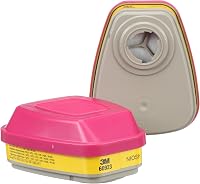
A compatible half-face respirator setup may help with certain airborne contaminants when properly fitted. The 3M P100 Respirator Cartridge/Filter is described for certain organic vapors, acid gases, and particulates, and works with specified 3M facepiece families.
This cartridge is not suitable for every contaminant or every environment. Confirm the coating hazards, respirator compatibility, fit, and workplace requirements before relying on it.
A facepiece also has to fit the wearer and use compatible cartridges. The 3M Rugged Comfort Quick Latch Half Facepiece has a quick latch and an adjustable head harness, but it does not identify paint ingredients or make unsuitable material safe.
Laser eyewear addresses a different risk: exposure to the beam. See diode laser eye protection guidance to match coverage to the laser.
LP-LaserPair LaserPair Laser Safety Glasses 200-534nm are described for specified wavelength ranges, so match eyewear to your laser's wavelength and required protection rating.
Never treat general safety glasses as laser protection. Follow your machine's instructions for eyewear, and don't use goggles unless their wavelength coverage and protection rating match the laser.
What is a safer option if the coating is unknown?
Use an unpainted, identified material that your laser maker permits. Removing paint can create dust or expose the underlying material, so don't sand or strip a coating without checking the product's safety guidance and using suitable controls.
If the paint identity is missing, the can is unreadable, or the documentation doesn't resolve the hazard, set the piece aside. Choose bare wood known to be suitable for your machine, and confirm it isn't treated or otherwise restricted.
For basic material guidance, see can you laser engrave wood. Keep the project within the laser maker's approved materials and operating instructions.
What should you do if the paint smokes or catches fire?
Stop the job if smoke escapes the enclosure, the workpiece flares, or the machine behaves unexpectedly. Follow the laser maker's emergency steps and keep the machine's fire precautions within reach.
Don't leave a running laser unattended. If a fire starts, respond only as your machine's instructions and your training allow, and call emergency services if you can't control it safely.
After a smoke event, let the machine cool and follow its cleaning instructions. Don't resume until you know what material caused the smoke and have corrected the ventilation or material-selection problem.
Should you engrave Rust-Oleum paint?
Engrave only when the exact coating is identified, its safety information supports the process, and your machine's guidance allows it. If any of those checks is uncertain, choose a known, unpainted material instead.
Respirators and laser eyewear can serve specific protective roles, but neither makes an unknown coating safe. For painted wood, use is painted wood safe to laser engrave to check the broader material questions before you proceed.
Frequently asked questions
Can you laser engrave Rust-Oleum paint?
Sometimes, but only if you identify the exact coating and confirm its ingredients are compatible with your laser and ventilation setup. Rust-Oleum products vary, and heating paint can release hazardous fumes.
Check the product safety information and your laser maker's guidance before processing; if either is unclear, don't engrave it.
Does Rust-Oleum paint contain PVC?
Rust-Oleum sells different paints and coatings, so don't assume one formula applies to every can. Check the exact product's safety information for PVC, chlorine-containing materials, and other laser-incompatible ingredients.
If you can't identify the coating or confirm its composition, choose an unpainted material instead.
Can a respirator make laser engraving painted surfaces safe?
No. A respirator does not identify the coating or control fumes at their source, and its cartridges must match the hazards and fit the wearer.
Use effective exhaust and follow the laser maker's safety guidance; don't process paint with unknown ingredients or treat personal protective equipment as a substitute for ventilation.
Are laser safety glasses enough when engraving paint?
No. Laser eyewear protects against specified wavelengths and ratings, while paint-related hazards call for material checks and suitable fume control.
Use the eyewear required by your laser maker and confirm it matches your machine.
Don't look at the beam or assume general safety glasses provide laser protection.