9 Best Laser Engraving Machine for Golf Clubs (November 2026)
The best laser engraving machines for golf clubs include the xTool S1 40W Laser Cutter and Laser for large club-marking projects, the BlazeX M3 10W Laser Engraver Machine for camera-guided setup, and the xTool F2 5W IR & 15W Diode for direct metal marking.
On this page (4 sections)
The best laser engraving machine for golf clubs is the xTool F2, because its 5W IR laser is designed for dark color marking on metal and its 50MP camera helps place small designs accurately.
That combination matters more than headline wattage alone. A name or logo must fit a small usable area on a curved, reflective face, and the camera preview lets you check placement before the laser starts.
The IR laser is the direct match for metal marking in this group. For knife personalization, compare laser engravers for knives under 2,000 dollars.
Choose the xTool S1 for a larger workspace, or the CREALITY FALCON when rotary work is central to your shop.
Golf club heads use different metals and finishes, and one finish may behave differently on another club. Surface preparation and a stable holding method therefore matter as much as the machine.
For other metal and plastic projects, compare laser engravers for plastic and metal. If you are comparing machines for other metal projects, start with our guide to the Best Laser Engraver For Metal.
The Best Metal For Laser Engraving guide can also help you match a test piece to your intended finish. Testing on a similar piece is the safest way to judge contrast and depth before you commit a finished club head.
Also plan for ventilation, eye protection and setup time for each job.
Our picks at a glance
-
1
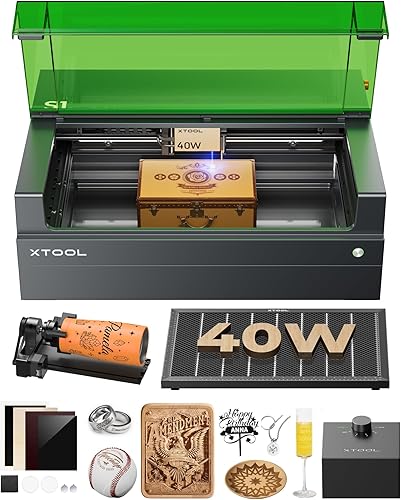 Best for large club-marking projects
xTool S1 40W Laser Cutter and Laser
9.5/10 our score
See it on Amazon -
2

-
3

- 4
 Best for enclosed home craftingCheck it
- 5
 Check it
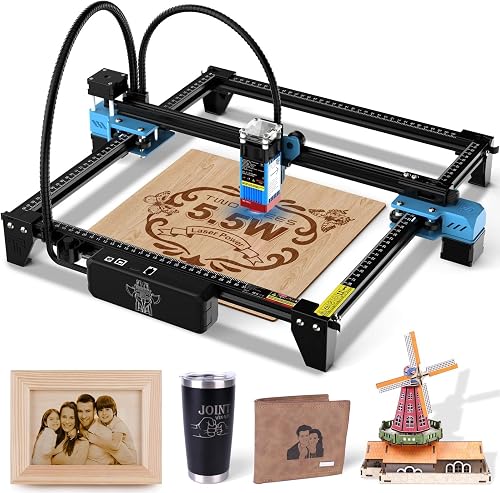
Twotrees TTS-55 Pro Laser Engraver 5500mW Laser
Best for compact maker work - 6
 Check it
LaserPecker LP2 Handheld Laser Engraver
Best for portable personalization - 7
 Check it
ORTUR Laser Master 2 S2 LU2-10A Laser
Best for a wide open work area - 8
 Check it
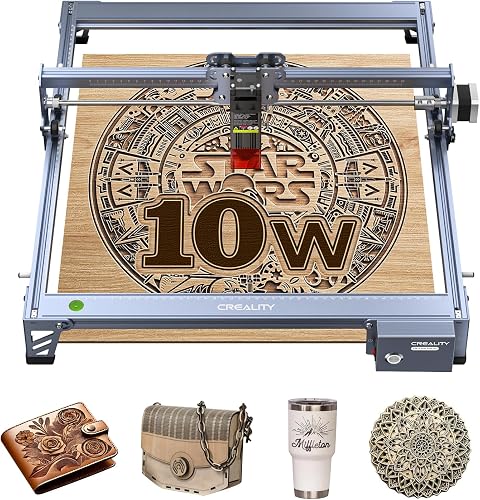
Creality Laser Engraver Machine 10W Output Power
Best for simple desktop cutting and marking - 9
 Check it
CREALITY FALCON 10w Laser Engraver with Air
Best for cylindrical club fixtures
The best laser engraving machines for golf clubs
The best golf club laser engraver depends on whether you need direct metal marking, curved-surface support, a camera, portability or a large work area.
No single machine wins on every one of those points.
We compared the listed power, laser type, alignment tools, rotary options and stated material support against those needs.
That approach keeps the choice tied to your club surface and workflow.
Our score weighs specs, features and buyer feedback against what you're shopping for.
Product details and claims below come from the supplied product information, while general setup advice applies to this type of machine.
Use the score as a starting point, then check the trade-offs for your own work.
A portable pick and an enclosed pick will suit very different spaces.
| Product | Best for | Laser power | Bed size | Speed | Our score |
|---|---|---|---|---|---|
| xTool S1 40W Laser Cutter and Laser | large club-marking projects | 40W | 23.93 x 15.16 in | Up to 600mm/s | 9.5 |
| BlazeX M3 10W Laser Engraver Machine | camera-guided setup | 10W | 9.4 | ||
| xTool F2 5W IR & 15W Diode | direct metal marking | 9.4 | |||
| xTool M2 10W Laser Engraver | enclosed home crafting | 10W | 9.3 | ||
| Twotrees TTS-55 Pro Laser Engraver 5500mW Laser | compact maker work | 5.5W | 9.2 | ||
| LaserPecker LP2 Handheld Laser Engraver | portable personalization | 9.2 | |||
| ORTUR Laser Master 2 S2 LU2-10A Laser | a wide open work area | 10W | 9.1 | ||
| Creality Laser Engraver Machine 10W Output Power | simple desktop cutting and marking | 9.1 | |||
| CREALITY FALCON 10w Laser Engraver with Air | cylindrical club fixtures | 8.8 |
xTool S1 40W Laser Cutter and Laser: Best for large club-marking projects
- 40W laser
- 23.93 x 15.16 in bed
- 600mm/s speed
- Rotary bundle
The xTool S1 combines a 40W laser with a large bed and rotary bundle. It suits makers who want room for larger layouts, batches of small items or curved projects.
Pros
- Large bed
- Rotary bundle
- Class 1 enclosed design
Cons
- 86.8 lb item weight
- Large footprint
The xTool S1 40W Laser Cutter and Laser is the highest-scoring choice for large layouts and repeat work.
Its 40W laser, 23.93 x 15.16 in bed and rotary bundle give you more room than the compact machines in this group. That room helps you arrange more than one small piece at a time or plan a layout around a club head.
The stated speed reaches 600mm/s, and the machine is described for wood, metal and acrylic. Higher speed helps with repeat work, but placement still needs care on curved metal.
Its Pin-point Positioning technology and AutoPassthrough support help when a project needs careful placement or a longer workpiece. For golf clubs, the key benefit is flexibility.
The rotary bundle can help with curved items, while the large bed gives you space for club heads, tags or other pieces. That mix suits a maker who wants to learn one machine and use it widely.
The enclosed Class 1 design filters 99% of laser light, and the machine has flame sensors, an emergency stop button and a lid-open stop feature. Those controls make it easier to plan a home or studio setup.
At 86.8 lb, it needs a permanent work area rather than a casual desktop setup. Give it a stable bench, clear space and a routine for checking the lid and sensors.
BlazeX M3 10W Laser Engraver Machine: Best for camera-guided setup
- 10W laser
- 0.01mm precision
- Smart camera
- Protective enclosure
The BlazeX M3 pairs a 10W laser with a smart camera and enclosure. Its camera-guided placement can help when you need to position a name or logo carefully on a club head.
Pros
- Smart camera
- Class 1 enclosure
- 13 engraving materials included
Cons
- Rotary roller sold as an upgrade
- No bed dimensions stated
The BlazeX M3 10W Laser Engraver Machine is a strong pick when camera placement matters.
Its smart camera previews the design on the material, and the machine states 0.01mm precision.
That preview helps when a club head leaves only a narrow area for a name or logo.
You can check alignment before you start, which reduces wasted effort.
The 10W laser is described for engraving metal and glass, as well as cutting wood and acrylic.
That range makes it useful for a mixed craft shop where golf club personalization is part of a wider product range.
You can switch between personalization and general craft work on one machine.
Still, check the finish on your club head before you plan a metal job.
The bundle includes a protective enclosure, tool kit, 13 engraving materials and a honeycomb laser bed.
The honeycomb bed gives small pieces a flat, supported surface for steady work.
Use the included materials for practice runs before you test a club finish.
Its Class 1 safety design includes a fan, tilt sensors and a lid-open stop.
Those features support a more contained setup than an open frame.
BlazeX supports LightBurn, LaserGRBL and CutLabX across Windows, macOS, iOS and Android.
That choice helps if you already use one of those programs for other projects.
Rotary rollers and risers are available as upgrades, so confirm the attachment plan if curved club heads are your main work.
Ask about diameter range and holding method before you order an upgrade.
xTool F2 5W IR & 15W Diode: Best for direct metal marking
- 5W IR laser
- 15W diode laser
- 50MP camera
- 6000mm/s speed
The xTool F2 is the clearest fit for metal club heads because its 5W IR laser is designed for deep, dark color marking on metal. Its camera supports precise placement on small pieces.
Pros
- IR metal marking
- 50MP camera
- Portable 10 lb design
Cons
- Class 4 laser
- Small-piece focus
The xTool F2 5W IR & 15W Diode is the best direct match for metal golf club heads. For more options focused on metal marking, see laser marking machines.
Its 5W IR laser is designed for deep, dark color marking on metal, while the 15W diode handles other cutting and engraving tasks.
The built-in 50MP camera supports alignment accuracy up to 0.1mm on small pieces. That matters when a club head has limited usable space for a name, date or logo.
The machine reaches a stated speed of up to 6000mm/s and weighs 10 lb. Its enclosed design is intended for workshops, stores, fairs and pop-ups, with a built-in fan and optional purifier.
The F2 is a Class 4 laser, so workspace controls and operating procedures matter. The package includes the machine, base plate and base material kit, while accessories such as the RA3 and Slide Extension expand the workflow.
xTool M2 10W Laser Engraver: Best for enclosed home crafting
- 10W diode laser
- Dual cameras
- Class 1 enclosure
- Base material kit
The xTool M2 gives home crafters a Class 1 enclosed machine with dual cameras. It is a practical choice when golf-club marking is one project among many wood, leather and fabric crafts.
Pros
- Class 1 enclosure
- Dual cameras
- Beginner-friendly software
Cons
- 3W IR laser sold separately
- Rotary sold separately
The xTool M2 10W Laser Engraver fits home crafters who want an enclosed machine for several materials.
It uses a 10W diode laser and built-in dual cameras for real-time workspace previews.
The cameras help you place a design on the material before you engrave.
That is useful for small club markings, but laser type still sets the limits.
The M2 works with wood, leather, felt, fabric and paper, and its wider craft workflow includes cutting and engraving.
That breadth suits a home shop where clubs are only part of the plan.
You can make gifts, decor and paper projects between club jobs.
A separately sold 3W IR laser can add fine engraving on metal and plastic.
That add-on changes the machine from a general craft tool to a more metal-focused option.
Budget for it as a separate purchase if metal work is your main goal.
For golf clubs, that means the standard machine is better suited to general craft work than direct metal marking.
If metal personalization is your main goal, compare it with the xTool F2 before choosing.
The F2 has a 5W IR laser made for color marking on metal.
The M2 is Class 1 and fully enclosed, which suits a home workspace.
You get more containment for noise, smoke and light than with an open frame.
The package includes the M2 machine and base material kit, while the CMYK Inkjet module and RA3 Lite Rotary are separate add-ons.
Plan your rotary and inkjet needs at the start so you are not surprised later.
Twotrees TTS-55 Pro Laser Engraver 5500mW Laser: Best for compact maker work
- 5.5W laser
- 300 x 300mm work area
- Air-assist support
- 30,000mm/min speed
The Twotrees TTS-55 Pro suits makers who want a compact open-frame machine with air-assist support. Its 300 x 300mm work area leaves room for individual club projects and small craft layouts.
Pros
- Compact work area
- Air-assist support
- Wi-Fi control
Cons
- Class II laser
- Open-frame setup
The Twotrees TTS-55 Pro Laser Engraver 5500mW Laser is a compact maker option with a 300 x 300mm work area.
Its 5.5W laser has a stated 0.08 x 0.46mm spot focus and up to 0.1mm engraving accuracy. That focus helps with fine lines and small text on a club surface.
It will not replace a dedicated IR laser for direct metal color marking. It supports engraving and cutting on wood, leather, acrylic, paper and stainless steel.
That list suits maker work where clubs sit beside other craft projects. Test your exact club finish, because stainless steel support does not describe every metal.
The built-in air-assist interface can support cleaner cuts, although you still need to plan a safe workspace for smoke and laser exposure. Air assist helps clear smoke from the cut path when airflow and focus are set for the material.
The machine reaches up to 30,000mm/min and supports online or TF card engraving. Offline work can help when your computer is tied up with design files.
Built-in Wi-Fi allows mobile app or computer web control. That gives you more places to send a job from, but you still need to monitor the work.
This is an open-frame Class II machine, so it needs more careful placement than the enclosed picks. Keep the area clear, use eye protection and control access while it runs.
Choose it for compact maker work where you can create a controlled setup and test the club surface before a final piece. A test piece with a similar finish will save you from a bad final result.
LaserPecker LP2 Handheld Laser Engraver: Best for portable personalization
- 1kg portable design
- 36,000mm/min speed
- 0.05mm precision
- Coated-metal support
The LaserPecker LP2 is the most portable choice here. It works with coated metal and offers multi-angle engraving, making it useful for mobile personalization work when the club surface is suitable.
Pros
- 1kg design
- No assembly
- Safety goggles included
Cons
- Pure or highly reflective metal needs surface treatment
- Basic set
The LaserPecker LP2 Handheld Laser Engraver is the most portable option in this roundup.
Its 1kg design, built-in handle and removable baseplate make it suitable for mobile personalization work.
You can move it between a bench, a table or a market stall with ease.
That portability suits pop-ups where you mark items for customers on site.
It engraves wood, leather and coated metal at speeds up to 36,000mm/min, with 0.05mm precision.
That precision helps with small text and fine detail on a suitable surface.
The machine supports multi-angle engraving, and the removable baseplate helps when the workpiece does not fit a normal flat setup.
A club head rarely sits flat, so that flexibility can help with positioning.
The important limit for golf clubs is surface type.
LaserPecker says pure or highly reflective metals need surface treatment, so identify the club finish before planning a job.
Coated metal is the safer starting point for this machine.
If your clubs are bare or highly reflective, treat that as a warning sign.
The package includes the laser unit, electric stand, conical protective cover, power adapter, safety goggles, 2 Type-C cables and an English manual.
Having goggles and a cover in the box helps you start with basic protection.
Overheat protection and motion sensors add safety controls for portable use.
Still set up in a clear area and keep the machine steady during a job.
Store the cables and cover with the unit so you can pack it quickly.
That habit makes mobile work simpler and safer.
ORTUR Laser Master 2 S2 LU2-10A Laser: Best for a wide open work area
- 10W laser
- 390 x 410mm engraving area
- Air-assist interface
- Class 4 laser
The ORTUR Laser Master 2 offers a wide 390 x 410mm area and a 10W laser module. It is suited to buyers who want open workspace flexibility for club layouts and other larger pieces.
Pros
- Wide engraving area
- Air-assist interface
- LightBurn support
Cons
- Class 4 laser
- Assembly required
The ORTUR Laser Master 2 S2 LU2-10A Laser gives you a wide 390 x 410mm engraving area and a 10W laser module.
It suits buyers who want an open workspace for club layouts and other larger craft materials.
That width gives you room to position a club head and test pieces nearby.
You can also use the space for wood, acrylic and other craft work.
Its compressed laser point is 0.05 x 0.1mm.
That fine point helps with detail, but you still need to secure curved work well.
The machine also has an air-assist interface, which can support cutting work and help manage smoke when the setup is configured correctly.
Air assist is most useful when you are cutting rather than marking.
Set the airflow for the material and keep the exhaust path clear.
ORTUR supports LaserGRBL and LightBurn, along with common formats such as SVG, DXF, JPG, JPEG, PNG, BMP and TIF.
That format range covers most design files you will use for names and logos.
Assembly generally takes about 10 to 15 minutes.
Build it on a flat, stable surface and check that all parts are secure.
This is a Class 4 laser with a protective cover that filters 98% of UV light, plus included protective goggles.
Use the goggles and keep other people out of the direct beam path.
Its open design and 9.03 lb weight make it easier to move than the xTool S1, but less contained for home use.
Ventilation and a clear work zone are essential with this type of setup.
Creality Laser Engraver Machine 10W Output Power: Best for simple desktop cutting and marking
- 10W output power
- 0.06 x 0.06mm spot
- 17 x 16 in stated size
- Wi-Fi, USB and SD transfer
The Creality 10W machine combines a fine spot focus with several file-transfer options. It fits buyers who want a general laser for metal marking, wood work and other craft materials.
Pros
- Fine spot focus
- Multiple transfer methods
- 1-year warranty
Cons
- Rotary support is not stated
- Open setup
The Creality Laser Engraver Machine 10W Output Power combines a 10W output laser with a 0.06 x 0.06mm spot focus.
Its stated size is 17 x 16 in, giving it a useful desktop footprint for general engraving work.
That footprint fits a bench where you also do layout and finishing work.
The fine spot helps with small text and detailed marks on suitable surfaces.
The machine supports marking metal and glass, as well as work on wood, paper, acrylic and leather.
That range suits a general craft shop where club marking is one job among many.
Check your club finish first, since support varies by material and coating.
It can transfer files by Wi-Fi, USB cable or SD card, which gives you several ways to move designs into the machine.
That choice helps if your design computer stays in another room.
Creality supports LightBurn and LaserGRBL.
LightBurn suits experienced users, while LaserGRBL is often a simpler start for new users.
The focusing plate is designed for quick adjustment without tools, and assembly usually takes 10 to 20 minutes.
A tool-free focus step makes test runs faster between changes.
Build the frame square and keep the belts and rails clean for steady motion.
Rotary support is not stated in the supplied product information.
If your club heads need a dedicated turning fixture, compare this option with the xTool S1 or CREALITY FALCON before choosing.
A stable fixture matters more than speed when the face is curved.
Plan your holding method before you buy, not after the machine arrives.
CREALITY FALCON 10w Laser Engraver with Air: Best for cylindrical club fixtures
- 10W output power
- Air assist
- Rotary roller
- 1–110mm outside clamping
The CREALITY FALCON includes air assist and a rotary kit with adjustable jaws. It is a strong choice when your golf-club workflow also includes cylindrical objects, tumblers or other round work.
Pros
- Rotary kit included
- Adjustable air assist
- LightBurn support
Cons
- Class 4 laser
- 20.1 lb item weight
The CREALITY FALCON 10w Laser Engraver with Air Assist is the best fit when cylindrical work is part of the plan.
Its rotary kit includes adjustable jaws for outside clamping from 1 to 110mm, inside support from 25 to 75mm, sphere support from 10 to 130mm and ring-shaped items from 15 to 100mm.
That range covers many round objects beyond golf clubs.
It helps when you also engrave tumblers or other cylindrical items.
The 10,000mW output and 0.06mm spot are suited to general engraving and cutting.
The fine spot helps with detail, while the output supports a wider material range.
Air assist helps remove smoke and dust, reduce excess burning and keep cuts cleaner.
Cleaner cuts matter when you work on wood or acrylic between club jobs.
For golf clubs, measure the part you plan to hold before using the rotary kit.
A club head may need a custom holding method even when its shape seems close to a supported range.
Do not force a fit that lets the piece shift under the laser.
The machine is Class 4 and includes an anti-UV filter acrylic module, emergency stop button and active stop function.
Those controls support a safer setup, but they do not replace good supervision.
It weighs 20.1 lb and supports LightBurn, LaserGRBL and TF-card offline work.
Offline work helps when you want to run a job without a live computer link.
Keep the rotary connection cable handy and check the kit manual before fitting round work.
What makes a golf club laser engraving machine a good choice?
A good golf club laser engraver has the right laser type for the club surface, a stable way to hold curved work and enough alignment control for small designs. Those three points should guide your choice more than raw power.
Direct metal marking is the key distinction between these machines. A diode laser and an IR laser behave differently on metal, and that difference shows in color, contrast and depth on a club head.
The xTool F2 is the clearest choice when metal color marking is the main task because it has a 5W IR laser. That makes it the most focused pick for direct metal work.
The LaserPecker LP2 can work with coated metal, but highly reflective or pure metal may need surface treatment. Check the coating on your clubs before you plan a job with it.
A camera helps you place a design before starting. The xTool F2 has a 50MP camera, the BlazeX M3 has a smart camera and the xTool M2 has dual cameras.
A preview reduces the risk of a name landing off center. It also helps you use the flat area on a curved face more fully.
A rotary system can help with curved work, but round does not always mean it will fit a standard rotary kit. The xTool S1 and CREALITY FALCON include rotary-related equipment, while the BlazeX M3 supports rotary upgrades.
Measure your club head and check the stated range before you decide. Work area also matters when you want to test pieces beside the club.
A larger bed gives you room to arrange a layout and compare settings. A compact machine suits a smaller bench but leaves less room to experiment.
Safety class and enclosure shape your workspace as well. Class 1 enclosed models are easier to place in a home shop, while open-frame Class 4 models need stricter controls.
For blanks and practice pieces, see our guide to the Best Blank Plates for Laser Engraving. If you need more options for testing metal settings, compare the Best Metal Blanks for Laser Engraving.
Use those blanks to learn how your chosen laser handles a finish. That practice saves finished clubs from unwanted marks.
How should you prepare a golf club for laser engraving?
Start by cleaning the surface, measuring the usable area and making a small test design on a similar finish.
Cleaning removes oils and dust that can change how the laser marks the surface.
Measuring keeps your name or logo inside the flat area that will take the mark well.
The correct settings depend on the metal, coating, curvature and laser type.
A setting that suits one club may fail on another finish.
That is why a test piece with a similar surface is so useful.
Hold the club head so it cannot shift during the job.
A small alignment error can move a name or logo out of position, especially on a curved face.
Use a fixture, support or rotary setup that keeps the face steady.
Check the hold from the side and from above before you start.
Use the machine's camera or positioning tools when available.
Preview the design, check its size against the club head and confirm that the rotary attachment or fixture will not obstruct the laser path.
A preview also shows if the design crosses an edge or a change in finish.
Adjust the design on screen before you make a permanent mark.
Ventilation and eye protection still matter.
Enclosed Class 1 models reduce exposure concerns, while open-frame and Class 4 machines require a more controlled workspace and careful operating procedure.
Keep the exhaust path clear and do not leave the machine unattended.
Wear the eye protection supplied or required for your setup.
After the job, inspect the mark under good light.
That check helps you learn what to change for the next club.
Which machine should you choose?
Choose the xTool F2 if direct metal marking and small, accurate placement are your priorities.
Its 5W IR laser and 50MP camera make it the most focused pick for metal club heads. That pairing suits a buyer who wants color marking on metal first.
Choose the xTool S1 if you need a larger bed, a 40W laser and a rotary bundle for bigger or repeated projects. Its size helps with layouts, batches and longer workpieces.
Choose the CREALITY FALCON if adjustable rotary jaws and air assist are central to your work. That kit suits round items and general cutting between club jobs.
For a home craft room, the xTool M2 offers Class 1 enclosure and dual cameras, but its standard 10W diode laser is less directly matched to metal than the F2's IR laser. It suits wood, leather, felt, fabric and paper craft work.
For mobile work, the LaserPecker LP2 is the easiest to carry, provided the club finish is suitable. Its coated-metal support and 1kg design suit pop-ups and small spaces.
If your clubs have a reflective or pure metal finish, look at another pick. For a wider open work area, the ORTUR option gives you more room to arrange pieces.
For camera-guided placement on a mixed craft bench, the BlazeX M3 is worth a look. For compact open-frame maker work, the Twotrees model suits a controlled setup.
If you plan to turn golf club personalization into a broader service, compare our guide to the Best Laser Engraving Machine For Small Business.
Measure the club, confirm the surface type and test your design before engraving a finished item. That order of steps protects your work and your budget.
Our top 3 picks at a glance
-
1
Best for large club-marking projects
xTool S1 40W Laser Cutter and Laser
9.5/10 our score
See it on Amazon -
2
-
3
Frequently asked questions
What is the best laser engraving machine for golf clubs?
The xTool F2 is the best laser engraving machine for golf clubs when direct metal marking is the main job. Its 5W IR laser is designed for dark color marking on metal, and its built-in 50MP camera supports alignment on small pieces.
Choose the xTool S1 if you need a larger bed and rotary bundle.
Can a laser engraving machine mark a golf club head?
Yes, but the result depends on the club head's surface and the laser type. The xTool F2 has a 5W IR laser for metal color marking, while the LaserPecker LP2 supports coated metal and says pure or highly reflective metal needs surface treatment.
Test settings on a similar spare surface first.
Do you need a rotary attachment for golf club engraving?
A rotary attachment can help hold and turn curved work, but it is not the only way to position a golf club head. The xTool S1 comes as a rotary bundle, and the CREALITY FALCON includes a rotary kit with adjustable jaws.
Check the attachment range and the shape of your club head before choosing.
What should you check before buying a golf club laser engraver?
Check the laser type, metal compatibility, work area, camera alignment and rotary support. An IR laser is the clearest match for direct metal color marking, while a camera can help place small names or logos.
Also plan for ventilation, eye protection and a stable way to hold the club.
Is laser engraving worth it for golf clubs?
Laser engraving can be worthwhile when you need repeatable names, logos or small-batch personalization. The value depends on how often you engrave, how much setup your chosen machine needs and whether your club surfaces work with the laser.
Our guide to Is Laser Engraving Worth It? covers the broader business decision.


