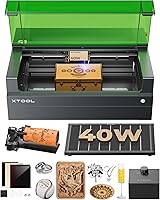
xTool D1 Pro vs D1 Pro 2.0: What Changed? (November 2026)
Choose the D1 Pro 2.0 only when its documented revision changes match your workflow. The xTool D1 Pro vs D1 Pro 2.0 decision depends on the exact machine version, included equipment and support for your planned materials.
On this page (9 sections)
- xTool D1 Pro vs D1 Pro 2.0: what changed?
- Does the D1 Pro 2.0 change daily laser work?
- Which machine suits flat engraving?
- Does the D1 Pro 2.0 work with rotary projects?
- Which safety differences should you check?
- What software and setup issues matter?
- Should you upgrade from the D1 Pro?
- What should you buy for a new setup?
- xTool D1 Pro vs D1 Pro 2.0: final choice
Choose the D1 Pro 2.0 only when its documented revision changes match your workflow. The xTool D1 Pro vs D1 Pro 2.0 decision is less about the name and more about the exact machine package, laser configuration, setup process and accessories you need.
Both names describe xTool diode laser machines in the same product family. This comparison focuses on how to evaluate the revision, what changes can affect daily work and when the original D1 Pro may still make sense.
If you are comparing xTool machines more broadly, our guide to the best laser cutter xTool options puts the D1 family beside other machines in the brand's range. You can also compare xTool vs Glowforge.

xTool D1 Pro vs D1 Pro 2.0: what changed?
The important changes are the ones that affect setup, control, safety and project capacity. A model revision can change hardware, software support, included parts or the way you prepare a job, so compare those areas directly.
Start with the exact product names and package contents. Sellers may use similar names for different laser powers, work-area packages or bundles, and those differences can matter more than the “2.0” label.
Next, compare the machine's operating details. Check the laser power, working area, frame design, focus method, safety equipment, control connection and supported software for both versions.
Do not assume that every D1 Pro 2.0 package contains the same accessories as an older D1 Pro package. A machine can keep a familiar family name while the bundle changes.
Which xTool D1 revision should you compare?
Compare the exact versions sold in the packages you are considering, not just the family names. Record the model name, laser power, work area and included parts in a simple table before you choose.
A useful comparison sheet should include:
- Laser power and module type
- Maximum working area
- Focus and material-clearance method
- Frame and enclosure options
- Air-assist or rotary support
- Software and connection methods
- Emergency-stop or cover-safety features
- Included cables, tools and setup parts
- Replacement parts and current support
If one detail is missing, treat it as a question to verify. Do not fill the gap with an assumption based on the word “Pro” or “2.0.”
Does the D1 Pro 2.0 change daily laser work?
The newer machine is worthwhile when it removes a real step from your routine or supports a project the older machine cannot handle as well. For simple flat engraving, a small revision may not change your results enough to justify replacing a working D1 Pro.
Think about your current workflow from file preparation to finished part. The important questions are how quickly you can set focus, how easily you can position material, how often you need to adjust the machine and how much cleanup follows each job.
A revision may matter if it changes the way you align stock, manage clearance or connect the machine. It may matter less if you already have a repeatable process and mostly engrave the same flat materials.
Use a small test plan when comparing specifications. Choose one engraving, one cut and one material combination that represents your normal work, then compare setup steps and repeatability using the exact machine instructions.
The How to Use an xTool Laser Engraver guide can help you organize the general workflow before you compare a specific D1 Pro revision.
Which machine suits flat engraving?
Either machine can be considered for flat work only after you confirm the exact laser configuration and working area. Your choice should match the size and thickness of the materials you plan to process.
For small signs, labels and simple craft blanks, the central question is whether the work area fits your largest regular project. For the S1's dimensions, see the xTool S1 cutting area guide.
A larger frame does not help if your material preparation, ventilation or workspace cannot support it.
For repeated production, look at setup consistency. A machine that is easy to square, focus and position can save more time than a small difference in headline specifications.
Keep a material log for your own settings. Record the material, thickness, power, speed, passes and finish so you can compare future jobs without guessing.
Do not copy settings from one machine revision to another. Even when the frame looks similar, the correct settings depend on the exact laser module, material and desired finish.
How should you compare cutting performance?
Compare the published power and working limits, then confirm with small test pieces before committing useful material. One pass on one material does not prove that a machine will cut every similar-looking sheet.
Material names can hide major differences. Wood species, glue content, coatings and surface color all affect engraving and cutting behavior.
Start with a small grid of controlled tests. Change one setting at a time, label every square and keep the results with the material name and machine version.
The goal is a repeatable range, not the fastest possible setting. A slower job with a clean edge may be more useful than a fast job that needs extra sanding or produces inconsistent detail.
Does the D1 Pro 2.0 work with rotary projects?
Rotary work depends on clearance, software setup and a compatible attachment, not only on the laser machine name. Confirm the exact rotary support and riser requirement before planning mugs, bottles, rings or other curved objects.
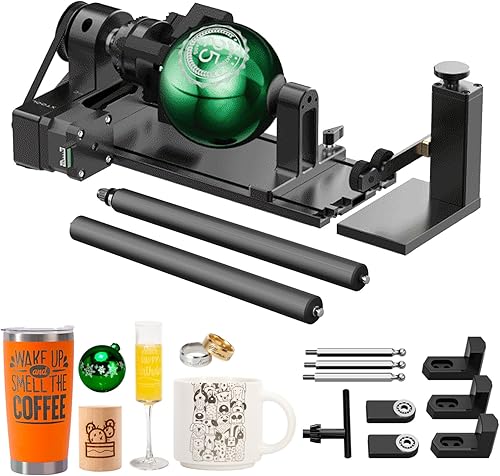
The xTool RA2 Pro is compatible with the xTool D1 Pro. It is a 4-in-1 rotary attachment with roller rotary, chuck rotary, sphere-engraving and ring-engraving modules.
The RA2 Pro is designed for cylindrical objects such as wine glasses, tumblers, mugs with handles, bottles, balls and rings. Its chuck jaws can hold objects between 0 mm and 100 mm in diameter, while other project shapes use the matching rotary module.
Its listed maximum rotational speed is 360 degrees per second, with a minimum speed of 36 degrees per second. The rotary module uses a precision stepper motor with a minimum angle of 0.45 degrees.
Those figures describe the attachment's motion. They do not tell you the best setting for every object, coating or engraving design.
The attachment has an adjustable z-axis and chuck diameter. It is made from anodized aluminum alloy and uses a modular, pre-assembled design.
Before using any rotary accessory, measure the object, check the available height and confirm that the machine can hold the attachment safely. A long cylinder or irregular object may need additional support during setup.
Which safety differences should you check?
Choose the safer setup by checking the machine's enclosure, wavelength, ventilation and operating instructions together. Eye protection can add a layer of protection, but it does not replace correct machine use.
The D1 Pro and D1 Pro 2.0 should be evaluated for their exact safety design. Check whether the package is open-frame or enclosed, what protective parts are included and what the manual requires during operation.
Avoid watching an active laser process directly. Keep children, pets and untrained users away from the working area, and follow the machine's instructions for ventilation and material selection.
The xTool Laser Safety Glasses are compatible with the D1 Pro and D1. They are also compatible with listed xTool F2, F1, F1 Ultra, M1, M1 Ultra and S1 machines.
These glasses weigh 50g. Confirm your machine's wavelength before use, and follow the machine manual for enclosure and operating requirements.
Do not engrave unknown plastics or coated materials until you know what fumes and residue they may produce. A clean-looking result does not prove that a material is suitable for indoor laser work.
What software and setup issues matter?
The best revision is the one that fits your existing software and setup habits with the fewest surprises. Check the supported control software, file workflow, connection method and calibration steps before choosing between machines.
Your normal process may include design software, file export, machine connection, focus adjustment, framing and job start. Any change in one of these steps can affect the time required for a small batch.
Use the same test file on both machines when a direct comparison is possible. Include a square, a fine line, small text and a simple cut outline so you can check alignment and detail.
Keep the file names and settings clear. Save a version for each machine rather than overwriting one profile with another.
Software compatibility can also affect rotary work. The RA2 Pro supports Laserbox Basic, LaserGRBL and LightBurn, but your exact machine setup still needs to be configured correctly.
The What is Kerf? A Simple Guide for Laser Cutting Pros guide explains why the beam's cut width matters when you design parts that must fit together.
Should you upgrade from the D1 Pro?
Upgrade when the D1 Pro 2.0 solves a problem you face often enough to justify changing machines. Keep the original D1 Pro when it already handles your materials, project size and software workflow.
An upgrade may make sense if you need a different working area, a changed safety setup, easier alignment or a feature that your present machine does not support. Write down the problem first, then match it to a documented difference.
An upgrade may not make sense when the only reason is a newer product name. If your current D1 Pro produces the work you need and your accessories remain compatible, the cost and setup time may outweigh a modest revision.
Check your existing accessories before switching. Rotary attachments, risers, air-assist parts and machine profiles may not transfer in the same way across packages.
If your main goal is higher output, compare the full workflow rather than one specification. Material handling, ventilation, file preparation, focus, cleanup and repeat jobs all affect the time per finished piece.
What should you buy for a new setup?
Choose the machine package that matches your first 3 project types and leaves room for safe, repeatable setup. Start with flat work unless you already know that cylinders or unusual shapes are central to your plan.
For a general starter comparison, list the materials, largest project size, expected weekly use, available ventilation and future accessory needs. Then compare both D1 versions against that list.
If your work will focus on cylindrical pieces, plan the rotary setup at the same time as the laser machine. The RA2 Pro supports multiple rotary forms, but it must be used with a riser and needs suitable clearance.
If your work includes glass bottles, review the How to Laser Engrave Glass Bottles: Pro Settings guide before choosing a rotary workflow. Glass preparation and alignment can affect the result as much as the machine revision.
For higher-power xTool options, compare the Best xTool 20W Laser Engravers guide with your material and cut requirements. A different machine class may be a better fit than changing from one D1 revision to another.
xTool D1 Pro vs D1 Pro 2.0: final choice
Pick the D1 Pro 2.0 if its documented hardware, safety or workflow changes solve a specific problem. Pick the original D1 Pro if it already fits your work and the newer package does not add a feature you will use.
Compare exact laser power, working area, safety design, software support, included accessories and upgrade path before ordering. For curved projects, confirm rotary clearance and riser requirements, then choose the machine that supports your normal materials with the fewest setup changes.
The xTool D1 Pro vs D1 Pro 2.0 choice is practical, not automatic. Match the revision to your projects, workspace and operating habits.
Frequently asked questions
What is the difference between the xTool D1 Pro and D1 Pro 2.0?
The exact difference depends on the revision details for the machines you are comparing. Check the laser power, work area, safety design, included accessories, software support and replacement-part availability for each exact package before deciding.
A newer name alone does not tell you which changes matter to your workflow.
Is the xTool D1 Pro 2.0 better than the D1 Pro?
The D1 Pro 2.0 is the better choice when its revision adds a feature you need or makes setup easier for your projects. The original D1 Pro may still fit if your materials, software and accessories already match it.
Compare the exact package contents and machine details before treating the newer version as an automatic upgrade.
Can the xTool RA2 Pro work with the D1 Pro?
The xTool RA2 Pro is compatible with the xTool D1 Pro and supports roller, chuck, sphere and ring engraving. It must be used with a riser.
Check the machine setup and clearance before planning a cylindrical project, especially for longer or irregular objects.
Do xTool Laser Safety Glasses work with the D1 Pro?
The xTool Laser Safety Glasses are compatible with the xTool D1 Pro and D1. They cover the listed 316nm–450nm and 900nm–1080nm ranges and weigh 50g.
Confirm that your machine's laser wavelength is within the stated range before relying on any eyewear.