Rotary Tools: The Complete Buying Guide
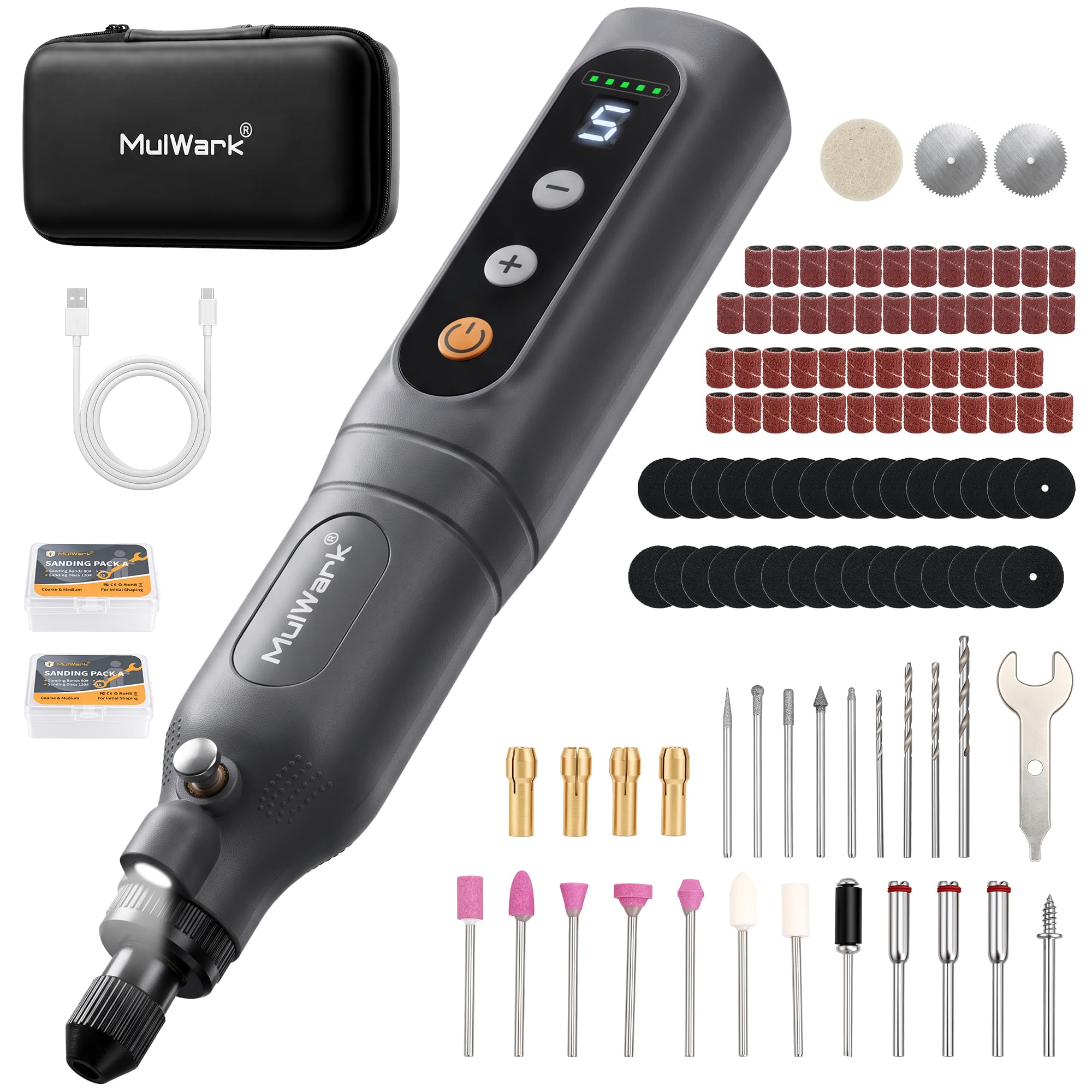
A rotary tool is a compact, high-speed tool for engraving, carving, sanding, grinding, cutting and polishing. The right rotary tool guide choice depends on your material, accessory needs, control preferences and whether you need corded power, cordless freedom or a flex shaft.
On this page (12 sections)
- What is a rotary tool kit used for?
- What is a rotary tool set?
- Which types of rotary tools should you consider?
- Which rotary tool accessories do you need first?
- How do rotary tool speeds affect the job?
- Which rotary tool suits your project?
- Rotary tool vs drill: which should you choose?
- Can a rotary tool handle wood carving and engraving?
- Can a rotary tool cut, grind and polish metal?
- How should you set up and use a rotary tool safely?
- How do you maintain a rotary tool and its accessories?
- How do you choose the right rotary tool guide option?
A rotary tool is a compact, high-speed tool for engraving, carving, sanding, grinding, cutting and polishing. This rotary tool guide explains the main types, what the accessories do, how to choose a kit and which product formats suit different projects.
The tool itself is only half the decision. The collet size, accessory range, speed control, grip, power source and attachment support affect how useful it will be after the first project.
Rotary tools fit detail work better than large power tools. They can remove small amounts of material, clean tight areas and shape edges where a drill, sander or grinder would feel too large.
What is a rotary tool kit used for?
A rotary tool kit is used for small, detailed jobs that need a spinning accessory, including engraving, carving, sanding, grinding, cutting and polishing. The motor spins a bit, wheel, brush or polishing accessory while you guide the tool across the work.
Engraving accessories can mark wood, plastic, glass or metal when the accessory is suitable for that surface. For a dedicated heat-based wood-marking tool, see wood burning kits.
For glass projects, compare the best glass engraving tools. Carving bits remove small amounts of wood, while sanding drums smooth edges and shape curves.
Grinding stones can remove rough spots or sharpen some edges. Cutting wheels can separate thin material, but they need careful handling because they are fragile compared with larger saw blades.
Polishing accessories are useful for cleaning up a surface or bringing out a shine when paired with the right compound and material. Wire brushes can remove surface residue, but they can also mark soft materials.
A rotary tool is not a replacement for every larger tool. It is slower for long cuts, less suitable for heavy stock removal and usually less comfortable for large surfaces.
The most useful kit is the one that matches your work. If you plan to engrave, prioritize control and engraving accessories.
For metal plate work, compare handheld engraving machines for metal plates.
If you need to cut, look for suitable wheels and a grip that lets you keep the tool steady.
What is a rotary tool set?
A rotary tool set combines the motor tool with accessories or attachments for several jobs. Some sets focus on a basic group of sanding and grinding pieces, while others add cutting, polishing, engraving or specialty attachments.
The number of accessories does not tell you how useful the set will be. A smaller set with the right accessory can be a better choice than a larger set filled with pieces you will not use.
Check the product name and contents before choosing. A kit with a flex shaft supports a different working style from a basic handheld tool.
A kit with attachments can cover more tasks, but each attachment adds another setup decision.
Rotary tool sets also vary in how clearly they support a beginner. A simple set may be easier to organize, while a broader set can help you try several crafts without buying accessories one at a time.
Think about your first 3 projects. Write down the material, task and accessory needed for each one.
Then compare that list with the set's named accessories.
For a short list of kits organized around common projects, see our guide to the best rotary tool kit. If speed control is central to your work, compare the best variable speed rotary tool kit options.
Which types of rotary tools should you consider?
The main rotary tool types are corded handheld tools, cordless tools, pen-style engraving tools, flex-shaft tools and drill-press-style workstation setups. Each type changes how you hold the tool and where it works best.
Corded handheld rotary tools
A corded tool provides continuous power while you work near an outlet. It can suit longer projects, workshop use and jobs where you do not want to stop for charging.
The Dremel 4300 rotary tool review examines one corded option.
The trade-off is the cord. It can catch on the work, limit movement and make it harder to work outside a bench area.
Our guide to the best corded rotary tool options can help if constant power matters more than portability.
Cordless rotary tools
A cordless tool gives you more freedom around the workpiece. It can be useful for quick repairs, outdoor projects and areas where an outlet is inconvenient.
Battery runtime, charging and tool weight become part of the decision. A cordless format may also be less convenient for long jobs if you need to stop and recharge.
See the best cordless rotary tool options when access and movement are your main concerns.
Pen-style engraving tools
A pen-style tool is shaped around detail work. The narrow grip can help when you need to guide a small mark, line or pattern.
This format may suit lettering, small signs and decorative work. It is less natural for jobs that require broad sanding or extended grinding.
For more focused engraving ideas, compare the best pen engraving tool choices.
Flex-shaft rotary tools
A flex shaft transfers rotation from the motor to a lighter handpiece. This can make detailed work easier because you hold the smaller handpiece instead of the motor body.
The shaft needs a stable setup and enough room to bend without sharp kinks. It can be especially useful for carving, engraving and work that requires careful hand movement.
See the best rotary tool with flex shaft guide for this format.
Which rotary tool accessories do you need first?
Start with accessories that match your first material and task, rather than trying to collect every bit. Sanding, cutting, grinding, polishing and engraving accessories each remove or shape material in different ways.
A sanding drum is useful for smoothing edges and shaping some wood surfaces. Sanding bands wear down and need replacement, so keep the grit and size organized.
A grinding stone can remove small rough areas and may suit detail cleanup. Use light pressure because forcing the tool can overload the accessory or create unnecessary heat.
A cutting wheel is designed for separation work. Keep the material secured, guide the wheel steadily and replace damaged wheels before use.
Our guide to best rotary tool cutting wheels explains what to compare.
Polishing wheels and brushes are suited to surface finishing. A polishing kit may include different shapes or compounds, so check which material each piece is intended to handle.
See the best rotary tool polishing kit guide for finishing work.
For grinding and sharpening tasks, compare the best rotary tool grinding bits options. For a broad accessory collection, see the best rotary tool accessory kit guide.
Use one accessory at a time and return it to a labeled container after the job. Organization matters because a worn sanding band and a fresh cutting wheel should not be treated as interchangeable.
How do rotary tool speeds affect the job?
Rotary tool speed affects control, heat, material removal and surface finish. A variable-speed tool gives you more room to adjust, but the correct setting still depends on the accessory and material.
Start at a lower speed when you are learning a new accessory. This gives you time to see how the bit contacts the surface and whether it is removing material evenly.
A higher speed may suit some cutting, grinding or shaping tasks, but more speed can also create more heat. Heat-sensitive materials can soften, discolor or deform if the accessory stays in one place.
Polishing can require a controlled speed so the wheel does not overheat the surface. Engraving benefits from a setting that lets you maintain a steady line without the tool jumping.
Do not press harder to make the tool work faster. Let the accessory cut, sand or grind while you guide it.
Excess pressure can wear the accessory and reduce control.
If a task produces dust or debris, pause to clear the work area. A clean surface makes it easier to see your line and judge whether the accessory is behaving as expected.
Which rotary tool suits your project?
The best choice depends on the workpiece, the detail level and the way you want to hold the tool. These 4 products cover a workstation stand, flex-shaft work, a broad attachment and accessory package, and pen-style engraving.
Drill Press Rotary Tool Workstation Stand, 220-01
The Drill Press Rotary Tool Workstation Stand, 220-01 suits someone who wants to change how a rotary tool is supported during a project. A stand can be useful when a task benefits from a more fixed position instead of a fully handheld approach.
{{product B00068P48O}} The listing describes a rotary tool workstation stand for projects where a supported setup is more useful than holding the motor by hand.
This is a stand rather than a complete rotary tool kit. Treat it as a setup component and confirm that your existing tool and planned work are suitable before ordering.
A supported arrangement can help with repeatable positioning, but it also reduces the freedom of a handheld tool. It may fit a workshop better than a mobile repair kit.
Choose it when your main need is a workstation format. Pick a handheld kit instead if you need to move around a large or irregular workpiece.
2305 Rotary Tool Kit with Flex Shaft
The 2305 Rotary Tool Kit with Flex Shaft suits detailed work where a lighter handpiece could be easier to guide than the motor body.
{{product B003BYRFH8}} The listing describes a rotary tool kit with a flex shaft for engraving, carving and other detail work that benefits from a smaller handpiece.
A flex shaft changes the balance of the job. You still need to place the motor securely and keep the shaft routed in a gentle curve.
This format can suit decorative work, small carved areas and projects where precision matters more than broad material removal. It may be less convenient when you want the simplest possible setup.
Choose this kit if the flex shaft is central to your work. If you prefer an integrated handheld tool, compare a standard kit instead.
For brand-specific alternatives, see the best WEN rotary tool kit guide.
4300-5/40 Rotary Tool Kit w/LED Light, 5 Attachments, 40 Accessories
The 4300-5/40 Rotary Tool Kit w/LED Light, 5 Attachments, 40 Accessories suits a buyer who wants a named set of attachments and a broad group of accessories in one kit.
{{product B01M1SJNVU}} The listing describes a rotary tool kit with an LED light, 5 attachments and 40 accessories for buyers planning several types of detail work.
The 5 attachments can change how the tool approaches a task, while the 40 accessories give you more pieces to sort by use. A larger set is most useful when your projects cover more than one category.
The LED light may help you see a small work area, but it does not replace good room lighting. Keep the workpiece secure and use eye protection when cutting, grinding or brushing.
Choose this kit when variety is more important than the smallest setup. If you already know that you mainly want carving, compare the best rotary tool for wood carving options.
Stylo+ Rotary Tool Kit with 15 Accessories, Engraving Pen (2050-15)
The Stylo+ Rotary Tool Kit with 15 Accessories, Engraving Pen (2050-15) suits buyers who want an engraving-pen format and a named group of 15 accessories.
{{product B077Y86FKJ}} The listing describes an engraving-pen rotary tool kit with 15 accessories for controlled decorative work and small marking projects.
The pen shape points toward detail work rather than large-area sanding or heavy stock removal. It can fit lettering, small patterns and careful surface marks.
The accessory count gives you more than the pen alone, but it is still important to match each piece to the material and task. Practice on a scrap piece before marking a finished project.
Choose this kit when engraving control is your first priority. For broader tool formats, compare guides to best rotary tools like Dremel and best heavy duty rotary tool.
Rotary tool vs drill: which should you choose?
Choose a rotary tool for small detail work, and choose a drill for making holes, driving fasteners and handling larger drill bits. The tools can overlap, but their shapes and accessory systems support different jobs.
A drill is usually the better fit when you need to bore a clean hole through wood, metal or another material. Its chuck and motor are designed around drilling and fastening.
A rotary tool is better suited to engraving, carving, sanding, grinding, polishing and small cuts. Its smaller accessories let you reach narrow areas and control detail.
A rotary tool can make small holes with the right accessory, but it is not the natural choice for repeated large holes. A drill can sand or polish with an attachment, but its larger body may feel awkward on fine work.
The choice also depends on how much material you need to remove. Use a larger tool when the job is large enough to justify it.
Use a rotary tool when the project rewards control and access.
Read our full rotary tool vs drill comparison before buying one tool to cover both categories.
Can a rotary tool handle wood carving and engraving?
A rotary tool can handle small wood-carving and engraving projects when you use a suitable bit, secure the wood and guide the tool slowly. The tool is best for detail, texture, lettering and small shape changes.
Start with a pencil outline and remove only a little material at a time. A shallow first pass gives you more control than trying to reach the final depth immediately.
Use a carving bit suited to the shape you need. Rounded bits can help with hollows, while narrower shapes can support lines and small details.
The exact accessory should match the wood and the cut.
Keep both hands positioned so you can steady the tool without blocking the work. If the bit catches, stop and reassess the direction instead of pushing through.
A flex shaft can make a detailed carving session easier because the handpiece is lighter to guide. A pen-shaped tool can also suit lettering and decorative marks.
For larger or deeper work, a rotary tool may take more time than a dedicated carving tool. Compare the best rotary tool for wood carving guide and choose based on the scale of your project.
Can a rotary tool cut, grind and polish metal?
A rotary tool can cut, grind and polish metal with the correct accessory and controlled technique. Secure the metal, wear eye protection and avoid forcing the tool through the material.
Cutting wheels can separate thin metal pieces, but the wheel must be held steady. Keep your hands clear of the cutting path and inspect the wheel before starting.
Grinding accessories can smooth a sharp edge or remove a small rough spot. They are not a substitute for a larger grinder when the job involves heavy removal across a broad surface.
Polishing wheels can improve the appearance of a prepared metal surface. Clean the surface first and use a compatible polishing accessory rather than treating every wheel as suitable for every metal.
Heat is a key concern. Pause when the material or accessory becomes hot, especially during long contact.
A slower, controlled pass is often easier to manage than pressing harder.
For metal work, choose the accessory before choosing the kit. A broad accessory set may be useful, but only if it includes the type of wheel or bit your project needs.
When a project involves tumblers, the rotary tool question changes because the tool may not be the correct way to rotate the item. Read Do You Need a Rotary for Tumblers? before planning that setup.
How should you set up and use a rotary tool safely?
Set up a rotary tool by securing the workpiece, installing the correct accessory, choosing a low starting speed and protecting your eyes. Safety begins before the motor starts.
Read the tool and accessory instructions before use. Confirm that the accessory fits the collet and is not cracked, bent or visibly worn.
Clamp or otherwise secure the workpiece so it cannot spin or shift. Hold the tool with a controlled grip and keep the accessory moving when the material requires it.
Wear eye protection whenever the tool can create chips, dust or broken accessory pieces. Use suitable hearing or breathing protection when the work creates persistent noise or airborne dust.
Keep loose clothing, hair and cords away from the spinning accessory. Disconnect the tool before changing accessories or adjusting the setup.
Use ventilation and dust control appropriate to the material. Painted, treated or unknown materials may require extra caution, so identify the material before cutting or sanding.
If you are learning a new tool, make the first pass on scrap material. This lets you check the speed, direction, grip and accessory before you touch the finished piece.
For basic operating steps with a specific model, see how to use a WEN rotary tool and how to use a HARDELL rotary tool.
How do you maintain a rotary tool and its accessories?
Maintain a rotary tool by cleaning dust from the tool, checking accessories and storing each piece where you can identify it. Good care helps you notice problems before the next project.
Unplug or remove the battery before cleaning. Brush dust away from vents and the accessory area without pushing debris deeper into the tool.
Inspect sanding bands, cutting wheels, grinding stones and polishing pieces after use. Replace an accessory when it is worn, cracked or no longer holds its intended shape.
Keep accessories dry and separated by type. Cutting wheels should not be loose in a box where they can strike other hard pieces.
Check the collet and accessory fit before every job. A piece that does not seat correctly can wobble and reduce control.
For a flex shaft, avoid sharp bends and store it without crushing the shaft. A clean, gently routed shaft is easier to use than one pulled around a tight corner.
If a kit includes attachments, keep the attachment instructions with the tool. A simple label system can prevent you from choosing the wrong accessory for a material.
Replacement parts may matter more for a tool you use often. Compare the best WEN rotary tool replacement parts guide if you need to plan ongoing maintenance.
How do you choose the right rotary tool guide option?
Choose the right rotary tool by matching the project scale, accessory type, working position and power format. Start with the task you will do most often, then check whether the tool supports the next 2 or 3 tasks you expect.
Choose a workstation stand when a fixed setup matters more than handheld movement. Choose a flex-shaft kit when a smaller handpiece could improve control.
Choose a kit with several attachments and accessories when you have varied projects and want one organized starting point. Choose an engraving pen when lettering and small decorative marks are the main goal.
Corded tools suit long sessions near an outlet. Cordless tools suit movement and quick jobs.
A variable-speed tool gives you more control across materials, but it still requires the correct accessory and technique.
Do not choose by accessory count alone. Confirm that the named accessories match your materials, and consider how you will store and identify them.
If you are comparing brands or formats, explore best VEVOR rotary tool, best Dremel rotary tool kit and best rotary tools like Dremel.
A rotary tool guide decision becomes simpler when you name the first job. Pick the 220-01 workstation stand for a supported setup, the 2305 kit for flex-shaft detail work, the 4300-5/40 kit for broad accessory coverage, or the Stylo+ for pen-style engraving.
Then choose the accessory, speed range and safety setup that fit that work.
Frequently asked questions
What is a rotary tool kit used for?
A rotary tool kit is used for small cutting, sanding, grinding, polishing, engraving and carving jobs. The tool holds different accessories in a collet, so one kit can handle several materials and tasks.
Choose accessories made for your material, use the correct speed and wear eye protection.
What is a rotary tool set?
A rotary tool set combines the motor tool with accessories or attachments for several jobs. The exact contents vary, so check whether a set includes cutting, sanding, grinding, polishing or engraving pieces.
A larger accessory count is useful only when those pieces match the work you plan to do.
Is a rotary tool the same as a drill?
A rotary tool and a drill are different tools. A drill is built mainly for making holes and driving fasteners, while a rotary tool uses smaller accessories at high speed for detail work such as engraving, sanding, grinding and cutting.
A rotary tool usually offers more control for small surfaces.
Can a rotary tool cut wood and metal?
A rotary tool can cut wood and metal when paired with a suitable cutting accessory and used at a speed appropriate for the material. Let the accessory do the work, keep the tool moving and avoid forcing the cut.
Secure the material before cutting.
Do rotary tools need different speeds?
Variable speed is useful because different accessories and materials work better at different speeds. Lower speeds can help with heat-sensitive work and controlled polishing, while higher speeds may suit some cutting or grinding tasks.
Start low, then increase speed only when the accessory and material allow it.