Rotary Tool vs Drill: Which Should You Choose? (November 2026)
Choose a rotary tool for detail work and accessory-driven tasks, or choose a drill for making holes and handling heavier materials. The rotary tool vs drill decision depends on the job, bit size, control and power you need.
On this page (11 sections)
- Rotary tool vs drill: what is the quick answer?
- How are rotary tools and drills different?
- Which tool is better for drilling holes?
- Which tool is better for sanding and shaping?
- Which tool handles masonry better?
- Which tool is easier for small craft projects?
- Does a drill replace a rotary tool?
- Which product fits each type of buyer?
- What should you check before choosing?
- How should you use and care for either tool?
- Rotary tool vs drill: which should you choose?
Choose a rotary tool for detail work and accessory-driven tasks, or choose a drill for making holes and handling heavier materials. In this rotary tool vs drill comparison, the right choice depends on the material, the size of the task and the accessory you need.
A rotary tool is small and versatile. It can suit sanding, grinding, polishing and other fine work when you need a narrow tool and controlled movement.
If continuous plug-in power matters, compare the best corded rotary tools.
A drill is built around making holes and driving fasteners. Rotary hammer drills add a more specialized option for masonry work, where impact action matters as much as rotation.
The names can cause confusion because both tools spin an accessory. Their size, power, chuck or attachment system and intended work are different.
This comparison covers the 2 tool groups side by side, then matches each one to common jobs. For broader buying advice, use this rotary tool guide before choosing a kit.
Rotary tool vs drill: what is the quick answer?
Buy a rotary tool for precision work, small surfaces and many accessory-driven tasks. Buy a drill for drilling holes, driving fasteners and working through tougher materials.
A rotary tool usually gives you a smaller body and a narrower working area. That makes it easier to guide around edges, small parts and detailed shapes.
A drill gives you a larger bit range and a better fit for holes that need more size or depth. A rotary hammer drill is a different level of tool for masonry and heavy drilling.
The choice is not always either-or. A workshop that handles furniture repairs, wall mounting and craft projects may have a place for both.
The most useful first question is simple: Are you removing or shaping material, or are you making a hole? Choose the tool that matches that motion before comparing brand names or accessory counts.
How are rotary tools and drills different?
Rotary tools focus on small, controlled accessory work, while drills focus on holes, fasteners and higher-load drilling. Their overlapping rotation does not make them interchangeable.
A rotary tool accepts small accessories for tasks such as sanding, grinding and polishing. Its compact format can help when the work area is tight or the material needs careful shaping.
A standard drill is better suited to a bit that enters wood, plastic or other work materials to create a hole. It can also drive screws when paired with the right bit and setting.
The products in this comparison show the range clearly. The 4300-5/40 Rotary Tool Kit w/LED Light, 5 Attachments, 40 Accessories is centered on attachments and accessories, while the DEWALT 20V MAX SDS Rotary Hammer Drill, Cordless, 3 Application Modes, Bare Tool Only (DCH273B) is centered on drilling applications.
For comparable options, see rotary tools like Dremel.
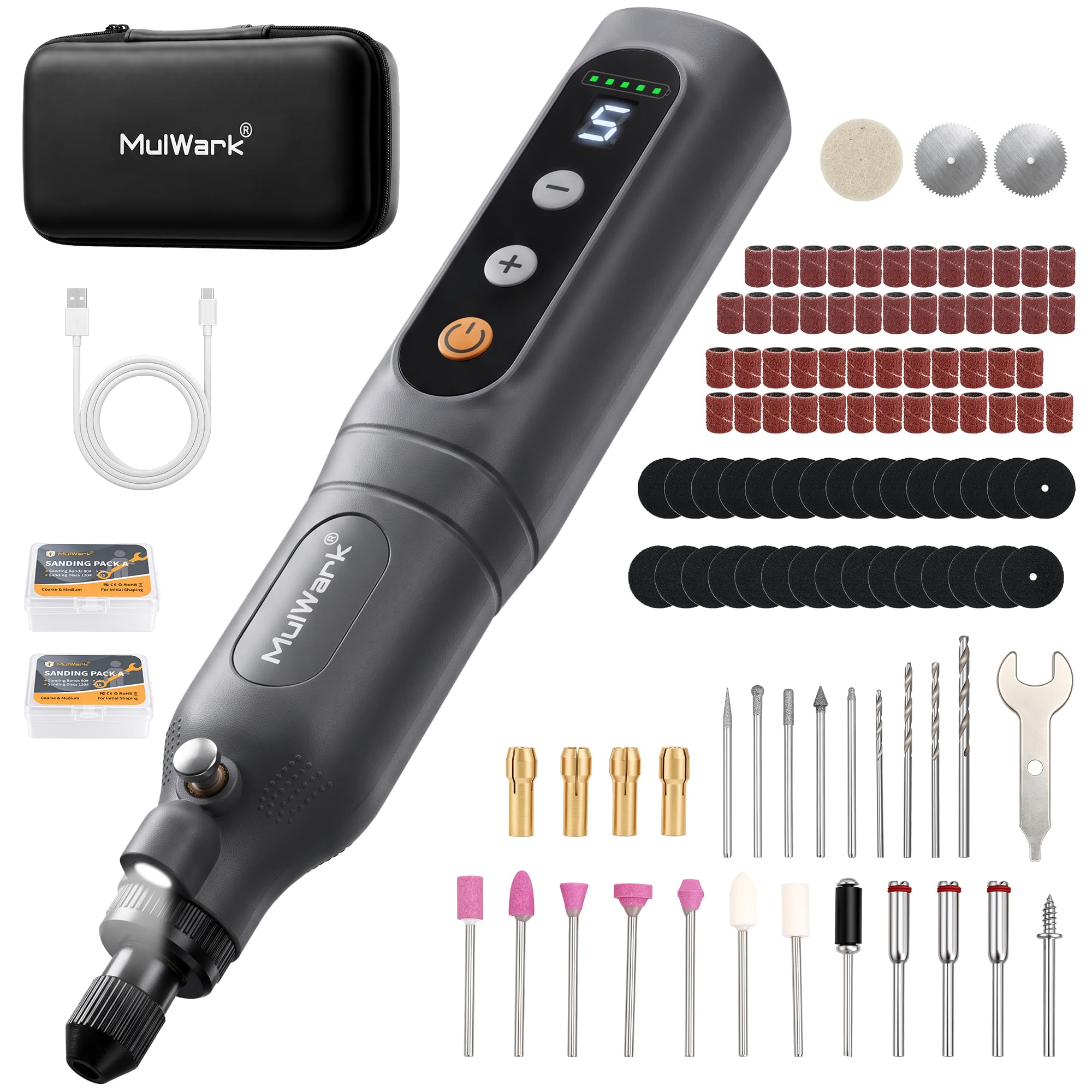
The Mini Cordless Rotary Tool, 5-Speed 69pcs Kit for 3D Printer Sanding targets compact sanding work. The ENEACRO 1-1/4 Inch SDS-Plus 13 Amp Heavy Duty Rotary Hammer Drill targets heavy drilling.
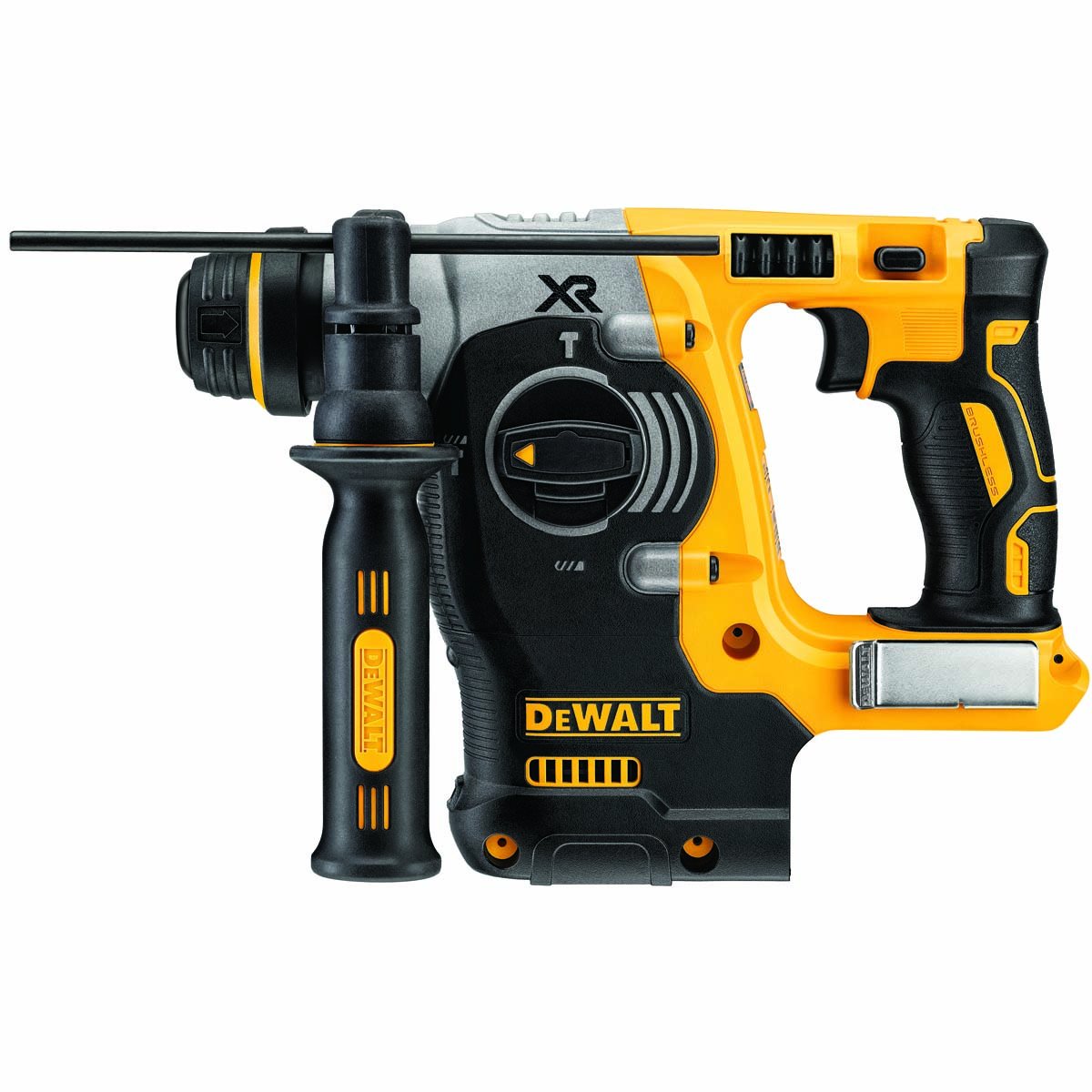 Best for cordless masonry drilling
DEWALT 20V MAX SDS Rotary Hammer Drill
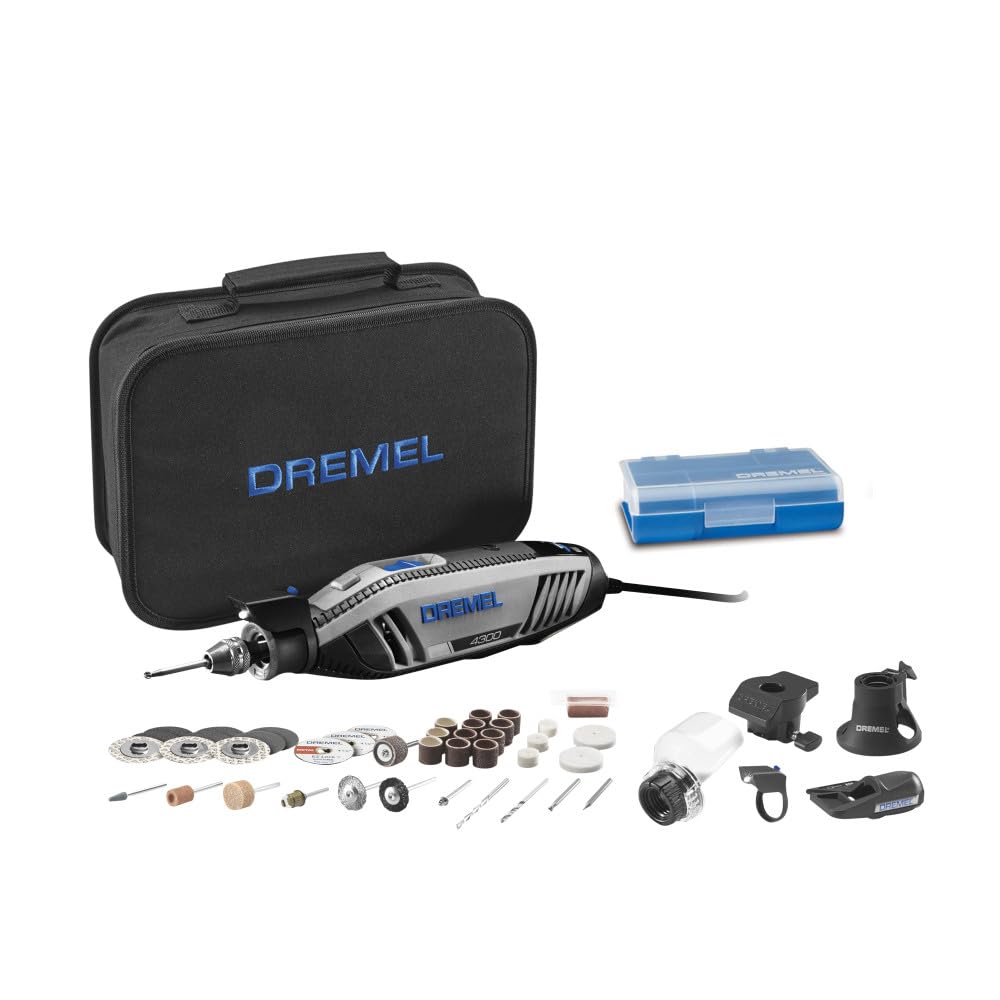 Best for detailed accessory work
4300-5/40 Rotary Tool Kit w/LED Light
Which tool is better for drilling holes?
A drill is better for making holes, especially when the hole is larger, deeper or in a harder material. A rotary tool can handle some small drilling tasks, but it is not the first choice for general drilling.
Hole size affects control, speed and the accessory you need. A drill gives you a more natural platform for holding a drill bit against the work surface and keeping the hole aligned.
A rotary tool drill press stand can help steady a rotary tool for small vertical holes.
For masonry, a rotary hammer drill is the stronger match in this group. The DEWALT has 3 application modes, while the ENEACRO has a 1-1/4 inch SDS-Plus format and 13 amp power.
Those details point to a heavier drilling role than the 2 rotary tools. They do not mean either hammer drill is the right choice for delicate craft work.
Before drilling, mark the center of the hole and secure the work. Use eye protection, keep the bit aligned, and follow the tool manual for the material and accessory.
For a small pilot hole in a light project, the rotary tool may be convenient. For repeated holes, fasteners or masonry, choose the drill category.
Which tool is better for sanding and shaping?
A rotary tool is better for sanding, shaping and detail removal because its accessories are designed for small controlled contact. It suits work where a large drill body or broad abrasive would be difficult to guide.
The 4300-5/40 kit includes 5 attachments and 40 accessories, so it is aimed at users who want several ways to approach detail work. The LED light may also help illuminate a small working area, although it does not replace safe task lighting.
The Mini Cordless Rotary Tool includes 5 speeds and 69 pieces and is described for 3D printer sanding. That makes it a natural fit for small parts and finishing tasks where a compact tool matters.
Use light pressure and let the accessory do the work. Pressing hard can slow the tool, wear the accessory faster or mark the material.
Match the accessory to the job, then practice on a scrap piece if the surface matters. A rotary tool can remove material quickly on a small edge, so short passes are easier to control than one long pass.
If you need help choosing attachments, compare these options with a best rotary tool kit guide.
Which tool handles masonry better?
A rotary hammer drill is the better choice for masonry drilling because it is designed around heavy drilling applications. A small rotary tool is not a substitute for a tool built for that load.
The DEWALT model is a 20V MAX cordless SDS rotary hammer drill with 3 application modes. Its cordless format may suit work where a power cord would restrict movement, while the bare-tool-only format means you should account for what you already have before ordering.
The ENEACRO model is a 1-1/4 inch SDS-Plus 13 amp heavy-duty rotary hammer drill. Its title points to a larger, corded heavy-duty tool intended for demanding drilling tasks.
These 2 drills are not direct replacements for a compact rotary tool. Their size and application focus make more sense when drilling performance matters more than fine control.
Secure the material and clear the area before drilling. Masonry dust can spread quickly, so protect your eyes and use the safety steps required by the tool manual.
Do not choose by the word “rotary” alone. In a rotary hammer drill, “rotary” describes the drilling action within a much heavier tool class.
Which tool is easier for small craft projects?
A compact rotary tool is easier for small craft projects because it takes up less space around the work and supports fine accessory use. The best match depends on whether you need many attachments or a small cordless body.
The 4300-5/40 kit may suit a craft user who wants a wider set of included options. Its 5 attachments and 40 accessories give you a starting point for different detail tasks.
The Mini Cordless Rotary Tool may suit someone working on small parts or 3D printer pieces. Its 5-speed design and 69-piece kit put emphasis on control choices and accessory variety.
Keep the workpiece steady and make sure loose clothing, hair and cords stay away from the spinning accessory. Use the lowest useful speed when you are learning how a new accessory behaves.
A rotary tool is still not a guarantee of a clean finish. Material, accessory shape, speed and pressure all affect the result.
For brand-specific operating ideas, read how to use a WEN rotary tool or how to use a HARDELL rotary tool. These guides can help you understand the basic handling pattern before you begin.
Does a drill replace a rotary tool?
A drill can replace a rotary tool for some simple holes, but it cannot fully replace the rotary tool's small accessory work. The tools overlap in rotation, not in every practical task.
A drill is the better option when your project centers on holes, screws or larger bits. It is also the more suitable category when the material and workload call for a rotary hammer drill.
A rotary tool is the better option when the project centers on edges, small surfaces, sanding, grinding or polishing. Its accessory-focused design gives you more ways to work on a small area.
Trying to use the wrong tool can make a simple task harder. A large hammer drill may be excessive for a delicate edge, while a small rotary tool may be slow or unsuitable for a structural hole.
Think about your next 3 jobs rather than an imagined future project list. If 2 of those jobs involve holes, start with a drill.
If 2 involve shaping or finishing, start with a rotary tool.
You can also compare rotary tools with other equipment through Do You Need a Rotary for Tumblers? and Can You Laser Engrave without a Rotary?.
Which product fits each type of buyer?
Choose the DEWALT or ENEACRO for drilling, and choose the 4300-5/40 or Mini Cordless Rotary Tool for detail work. The better product is the one whose format matches your main task.
{{product B00YDZI9BA}} Choose this DEWALT for cordless SDS rotary hammer drilling, 3 application modes and a bare-tool format.
The DEWALT suits a buyer who needs a 20V MAX cordless SDS rotary hammer drill and wants 3 application modes. It is a focused drilling choice, not a craft accessory kit.
{{product B01M1SJNVU}} Choose this 4300-5/40 kit for 5 attachments and 40 accessories in a detail-focused rotary tool setup.
The 4300-5/40 suits a user who wants an attachment-driven rotary tool kit. Its accessory count makes it more relevant to varied small jobs than to heavy masonry drilling.
{{product B08VHYX96W}} Choose this Mini Cordless Rotary Tool for 5-speed control, a compact format and 69 pieces for 3D printer sanding.
The Mini Cordless Rotary Tool suits small sanding projects and users who want a cordless rotary tool with several speed choices. Its title specifically connects it with 3D printer sanding.
{{product B07QW55TPV}} Choose this ENEACRO for a 1-1/4 inch SDS-Plus, 13 amp heavy-duty rotary hammer drill.
The ENEACRO suits a buyer who needs a heavy-duty rotary hammer drill with a 1-1/4 inch SDS-Plus format and 13 amp power. It belongs in the drilling group, not the fine-detail group.
What should you check before choosing?
Check the job, accessory, power format and handling space before choosing between a rotary tool and a drill. A short checklist can prevent a tool mismatch.
First, name the main action: drilling, driving, sanding, grinding, polishing or shaping. If drilling appears most often, look at drills.
If accessory work appears most often, look at rotary tools.
Next, check the material. Masonry pushes the decision toward a rotary hammer drill, while small craft parts and finishing work point toward a rotary tool.
Then check the tool format. A cordless model can suit work where movement matters, while a corded heavy-duty model may suit a fixed work area and demanding drilling.
Finally, check what is included. The DEWALT is bare tool only, while the 4300-5/40 and Mini Cordless Rotary Tool titles include attachments or accessory counts.
If you want a cordless rotary tool comparison, see best cordless rotary tools. For a broader accessory check, see best rotary tool accessory kits.
How should you use and care for either tool?
Use the correct accessory, secure the work and follow the manual's safety instructions for the material. Good setup matters more than choosing a tool by appearance.
Before starting, inspect the accessory and make sure it is properly fitted. Remove power or follow the manufacturer's safe changing procedure before swapping an attachment or bit.
Keep both hands positioned as the manual directs. Hold small work securely, and do not rely on your hand to stabilize a piece close to a spinning accessory.
Start slowly when the material or accessory is unfamiliar. Increase speed only when the tool remains controlled and the surface responds as expected.
Keep vents and moving areas clear of dust. Store accessories together so worn or damaged pieces are easier to identify before the next job.
For a rotary tool, avoid turning every project into a high-pressure task. For a drill, avoid forcing the bit when alignment or material resistance changes.
Rotary tool vs drill: which should you choose?
Pick a rotary tool if you need controlled sanding, grinding, polishing, shaping or other small accessory work. Pick a drill if you need holes, fasteners or heavier drilling, especially in masonry.
Choose the 4300-5/40 Rotary Tool Kit w/LED Light, 5 Attachments, 40 Accessories when a broad accessory setup matters. Choose the Mini Cordless Rotary Tool, 5-Speed 69pcs Kit for 3D Printer Sanding when compact cordless sanding and 5-speed control fit your work.
Choose the DEWALT 20V MAX SDS Rotary Hammer Drill, Cordless, 3 Application Modes, Bare Tool Only (DCH273B) for cordless SDS drilling with 3 application modes. Choose the ENEACRO 1-1/4 Inch SDS-Plus 13 Amp Heavy Duty Rotary Hammer Drill for a heavier 13 amp SDS-Plus drilling role.
The rotary tool vs drill decision becomes simple when you match the tool to the motion. Shape and finish with a rotary tool, or make holes and handle heavier drilling with a drill.