Does Laser Cutting Plywood Release Formaldehyde?
Yes, laser cutting plywood can release formaldehyde and other irritating fumes, especially when heat reaches the glue between veneer layers. Use plywood made for laser work, strong exhaust, and suitable respiratory and eye protection.
On this page (10 sections)
- Why can laser cutting plywood release formaldehyde?
- Is laser-cutting plywood more risky than cutting solid wood?
- Which plywood should you avoid cutting?
- How should you ventilate a laser cutter for plywood?
- What settings reduce smoke when cutting plywood?
- Can a respirator help with plywood fumes?
- Do you need laser safety glasses while cutting plywood?
- How do you choose safer plywood for a laser?
- What is the safest workflow for cutting plywood?
- So, does laser cutting plywood release formaldehyde?
Yes, laser cutting plywood can release formaldehyde, along with smoke and other fumes from the wood and adhesive between its veneer layers. The risk increases with unknown glue, weak exhaust, or excessive heat.
Plywood is not one uniform material. Its face veneers may look clean while the inner adhesive creates additional emissions when heated.
Why can laser cutting plywood release formaldehyde?
Plywood can release formaldehyde when heat breaks down or volatilizes adhesive in its bonded layers. The amount depends on the glue, board construction, laser settings, cut length, and exhaust.
Wood itself produces smoke and fine particles when burned. Plywood adds resin or adhesive, so a clean-looking sheet can still create irritating gases and residue.
Laser-grade plywood, cabinet plywood, craft plywood, and construction plywood may use different adhesives and surface treatments. Formaldehyde is not the only concern because smoke can contain a mixture of gases and particles.
For another material-specific safety question, see laser engraving extruded polystyrene.
The EPA's formaldehyde information explains why composite wood products need attention. For laser work, identify the sheet before cutting it and control fumes at the source.
Is laser-cutting plywood more risky than cutting solid wood?
Plywood can be harder to assess than clean, untreated solid wood because it includes adhesive layers. Solid wood still creates smoke and particles, but its composition is often easier to identify.
A plywood sheet may contain several veneers, glue lines, a face finish, and a backing layer. Each part can react differently to heat.
Construction plywood deserves extra caution because it is made for building use rather than laser cutting. Warping, voids, glue variation, and surface treatments can affect the cut.
For a lower-risk starting point, choose a sheet sold for laser cutting and keep its material information. 10 Safe Woods for Laser Cutting: Essential Guide covers wood choices that are easier to evaluate.
Do not assume a familiar wood species makes the whole sheet safe. The species describes the veneer, not necessarily the adhesive or coating.
Which plywood should you avoid cutting?
Avoid plywood with unknown adhesive, paint, stain, laminate, preservative treatment, or a strong chemical odor. If you cannot confirm what the panel contains, do not put it under a laser until the supplier gives clear guidance.
Treated wood contains chemicals intended for outdoor durability, not controlled thermal cutting. Painted or coated plywood adds another unknown layer that can create smoke and residue.
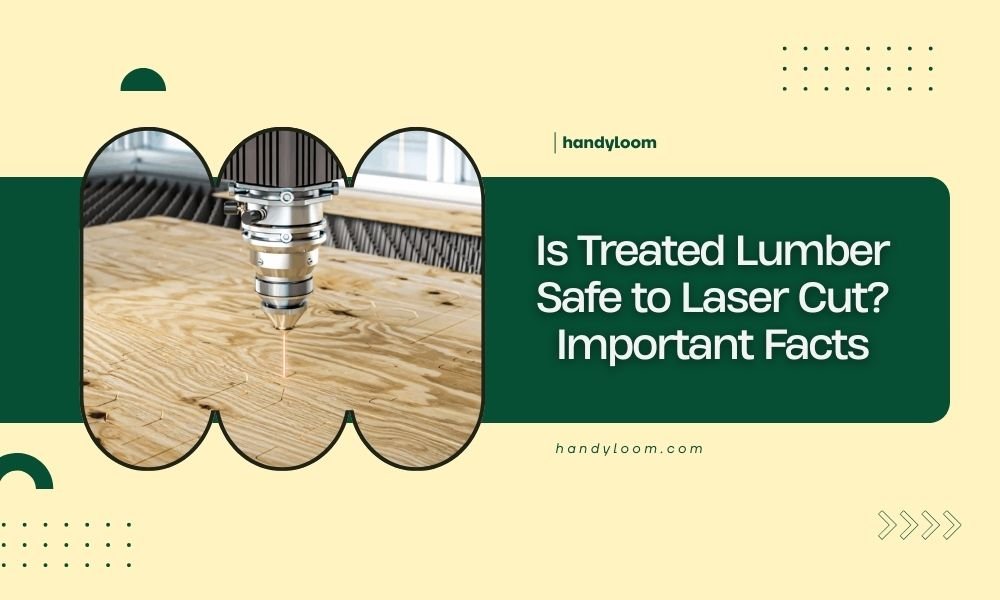
Read our guide on Is Treated Lumber Safe to Laser Cut? Important Facts before using any board sold for outdoor construction.
The same caution applies to treated plywood. This guide on can you laser cut treated plywood safely explains why a familiar sheet can still be unsuitable.
A small test cut is not proof that an unknown board is safe. It shows whether the machine can cut it, but cannot identify every gas or confirm that the exhaust controls exposure.
How should you ventilate a laser cutter for plywood?
Use an enclosed machine with active exhaust that carries fumes away from your breathing zone. Exhaust should move outdoors or through filtration designed for the pollutants your machine creates.
Keep the exhaust path short and direct. Check hoses, seals, fans, and filters for blockages because a working laser does not prove that airflow is adequate.
Do not cut plywood in a closed room with only a window, desk fan, or ceiling fan. Those may move fumes around without removing them.
Keep the machine lid closed during cutting. Let the exhaust clear the enclosure before opening it, following the machine maker's instructions.
A carbon monoxide alarm is not a formaldehyde monitor, and no smell does not prove the air is clear. Strong odors, eye irritation, coughing, or throat discomfort are reasons to stop and improve the controls.
What settings reduce smoke when cutting plywood?
Use the lowest power and slowest cutting combination that produces a complete cut without repeated passes. Excess heat can increase charring, smoke, and adhesive breakdown.
For a one-sided pattern, see why plywood burns on one side.
Start with the material maker's recommended settings for thickness and laser power. Make small adjustments instead of immediately increasing power.
Air assist can help manage the cut and reduce flare-ups when supported by the machine. Keep the nozzle, bed, and exhaust path clean so residue does not become a fire risk.
Stop if the board flames, smolders, or produces unusual fumes. A dark edge shows heat damage or charring, but it does not identify the complete mix of emissions.
Can a respirator help with plywood fumes?
A respirator can be an extra control, but it does not replace enclosure exhaust, material selection, or safe work practices. The cartridge and facepiece must match the hazard, fit the wearer, and be used under an appropriate respiratory protection program.
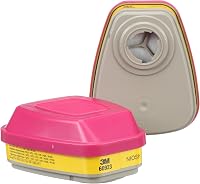
The 3M P100 Respirator Cartridge/Filter 60923 is a 1-pair, NIOSH-approved cartridge/filter combination for certain organic vapors, acid gases, and non-oil and oil particulates. It works with 3M Half and Full Face Pieces 6000, 7000, and FF-400 Series with a bayonet connection, plus specified 3M Scott facepieces with the listed adapter.
{{product B00AEFCKKY}} The listing describes a 1-pair 60923 cartridge/filter for compatible 3M facepieces when your respiratory protection plan calls for protection against certain organic vapors and particulates.
Its swept-back design can preserve the field of view, and the bayonet connection twists on and off. It is not for immediately dangerous environments, and a cartridge alone cannot make uncontrolled laser fumes safe.
When does a reusable facepiece make sense?
A reusable half facepiece suits someone who already has compatible 3M cartridges or filters and knows how to select, fit, and maintain respiratory protection. It covers the nose and mouth, so it does not protect the eyes.
The 3M Rugged Comfort Quick Latch Half Facepiece Reusable Respirator has a one-hand drop-down latch, adjustable head harness, polyester/spandex straps, a Cool Flow Valve, and a silicone face seal.
{{product B00IF7RCU6}} The listing describes a reusable 3M half facepiece with a quick latch and silicone seal for users who need a compatible respirator base for selected cartridges, filters, or supplied air systems.
Its low-profile design leaves a wider field of view and can work with welding and grinding shields. The facepiece does not determine which cartridge is correct, so choose the filter through your safety plan.
Do you need laser safety glasses while cutting plywood?
Yes, use eye protection matched to the laser wavelength and machine setup. Respiratory protection does not shield your eyes from direct or reflected laser energy.
The LP-LaserPair LaserPair Laser Safety Glasses 200-534nm and 740-1095nm Laser Goggles cover 180-534nm at OD 7+, 740-900nm at OD 5+, and 900-1095nm at OD 7+. The stated range includes 355nm, 405nm, 532nm, 740nm, 808nm, 980nm, and 1064nm.
{{product B00UJBGUMM}} The listing describes wrap-around orange goggles with the stated wavelength ranges, adjustable fit, polycarbonate lenses, scratch-resistant coating, and 23% visible light transmission.
The goggles have a TR90 frame, full-rim construction, flank ventilation, and a rectangular shape. They are CE certified by DIN CERTCO and meet EN207 and A1EN207 certifications according to the product information.
Check your laser's wavelength and required optical density before choosing eyewear. Do not wipe the frame with alcohol or an alcohol-containing disinfectant.
For coated boards, read can you laser cut painted wood? before treating paint as harmless.
How do you choose safer plywood for a laser?
Choose plywood made specifically for laser cutting, with clear material information and no unknown coating. Confirm the thickness, adhesive guidance, and recommended settings before starting a large project.
Look for flat sheets with consistent layers and a clean surface. Keep the packaging or material record so you know what was cut if the board creates unusual smoke or residue.
Construction plywood may be easier to find, but that does not make it a good laser material. Adhesive variation and surface treatments can change cut quality and fumes.
Our guide to Best Plywood For Laser Cutting can help compare material types and buying factors. Also review Best Laser Engraver For Cutting Plywood for machine-related considerations.
When the material maker cannot identify the adhesive or coating, choose a known laser-cutting grade instead.
What is the safest workflow for cutting plywood?
Identify the plywood, set up exhaust, close the enclosure, and monitor the first cut. Stop if the material flames, smolders, creates unusual fumes, or overwhelms the exhaust.
Use this order:
- Confirm that the plywood is suitable for laser cutting.
- Reject painted, treated, laminated, or unknown coated sheets.
- Inspect the machine, bed, air assist, fan, hose, and filter.
- Set the exhaust before starting the laser.
- Keep the lid closed and stay nearby.
- Let fumes clear before opening the enclosure.
- Check the finished piece for odor, soot, or hot spots.
Do not cut while asleep or leave the machine unattended. Keep combustible scraps away from the work area and follow the laser manufacturer's fire and maintenance instructions.
If the material repeatedly causes irritation, replace it with known laser-cutting grade plywood rather than using stronger settings.
So, does laser cutting plywood release formaldehyde?
Yes, laser cutting plywood can release formaldehyde because adhesive layers may break down under heat. The safer choice is identified laser-grade plywood, effective exhaust, a closed enclosure, and PPE selected for the machine and exposure plan.
Choose the 3M P100 cartridge/filter only when its protection fits your respiratory program and compatible facepiece. Choose the 3M half facepiece when you need that reusable base, and choose the LaserPair goggles after confirming that their wavelength and optical density ranges match your laser.
The key decision is to start with known plywood rather than treated, painted, laminated, or unidentified sheets. Source control begins before the first cut.
Frequently asked questions
Does all plywood release formaldehyde when laser cut?
No. The amount depends on the adhesive, veneer, board construction, heat, and ventilation.
Plywood made for laser cutting may be a better choice than construction plywood, but you still need an enclosure or exhaust system and should follow the material maker's safety guidance.
Is laser-cut plywood safe indoors?
It can be safe only with suitable controls, including effective exhaust to the outdoors or an approved filtration system, a clean work area, and material that is suitable for laser cutting. Never rely on room ventilation alone if fumes can collect around the machine.
Can a respirator remove formaldehyde from laser-cutting fumes?
A respirator may reduce exposure only when the cartridge, facepiece, fit, and workplace conditions are appropriate. Respirators do not replace source control, and the 3M P100 cartridge/filter described here is not for immediately dangerous environments.
What plywood should you avoid laser cutting?
Avoid treated, painted, stained, laminated, unknown, or construction plywood unless the material maker confirms that it is suitable for your laser. Unknown glue and surface coatings can add fumes, residue, or fire risk that you cannot judge from the wood grain alone.