Why Did Cutting PVC Cause My Laser to Rust?
Cutting PVC can cause laser rust because its fumes and residue may contain corrosive compounds that attack exposed metal. Stop cutting, disconnect power, inspect the machine, and clean or replace affected parts before using it again.
On this page (10 sections)
- Why did cutting PVC cause my laser to rust?
- What should you do immediately after PVC exposure?
- Can rust on a laser machine damage its operation?
- How can you inspect and clean PVC residue safely?
- Which protective equipment helps during cleanup?
- Do laser safety glasses protect against PVC fumes?
- Should you remove rust or replace the laser part?
- How can you prevent rust after future laser cutting?
- What if the laser rusted after only one PVC cut?
- What is the safest next step after PVC caused laser rust?
Cutting PVC can cause laser rust because PVC fumes and residue can corrode exposed metal parts, especially when smoke settles inside the enclosure, air path, rails, exhaust system, or nearby tools. Stop using the laser until you identify affected parts, remove residue safely, and confirm that no electrical or optical components were damaged.
Rust after PVC exposure is more than cosmetic. Corrosion can affect motion, fasteners, fans, wiring contacts, and surfaces around the laser head.
PVC also creates a serious fume hazard, so prevent the exposure from happening again. A separate risk check is available for polystyrene laser cutting settings.
For a different plastic, see polyurethane laser cutting hazards.
Why did cutting PVC cause my laser to rust?
PVC can release corrosive chlorine-containing fumes when heated by a laser. Those fumes may combine with moisture and settle on metal, creating residue that starts corrosion.
The damage depends on the PVC formulation, enclosure, airflow, exhaust route, humidity, and runtime. Rust may appear first on steel screws, brackets, rails, hinges, bed parts, fan housings, or exhaust hardware.
A thin residue may remain when the surface looks clean, allowing damage to continue after the machine is switched off.
This is why the answer to Can You Laser Cut PVC? is not based only on whether the material cuts cleanly. A clean edge does not prove that the fumes are safe for the machine, operator, or exhaust system.
For a separate edge-quality example, see reducing burrs in polypropylene laser cuts.
What should you do immediately after PVC exposure?
Stop the laser, disconnect power, ventilate the room, and keep people away from the fumes. Do not restart the machine to test it, and avoid the exhaust path until the air clears.
Do not use compressed air inside the machine because it can spread residue into bearings, electronics, optics, and enclosed areas. Photograph the rust first, note its location, and record any changes in the exhaust fan or air assist.
Avoid touching residue with bare hands. Follow the manual for removable covers and approved cleaning methods.
If corrosion reaches wiring, power components, control boards, or the laser source, leave the machine disconnected and contact a qualified service technician.
The Is it Safe to Laser Cut PVC? (Warning: Read Before Cutting) guide explains why avoiding PVC is safer than relying on better ventilation.
Can rust on a laser machine damage its operation?
Yes, rust can interfere with movement, airflow, electrical contact, and alignment. Even a small corroded area deserves attention near a rail, screw, fan, mirror mount, bed, or cable connection.
Rust on a moving rail can create rough travel or increase friction. Corrosion near a fan can reduce airflow or add particles to the exhaust stream.
A corroded surface near optics is especially concerning. Smoke residue and rust particles can settle on lenses or mirrors, while aggressive cleaning can scratch coatings or move contamination deeper into the optical path.
Inspect the machine with power disconnected. Look for pitting, flaking, white or green deposits, darkened contacts, stiff motion, damaged seals, and residue inside the exhaust route.
If the laser makes a new grinding sound, loses cutting consistency, shows an error, or moves unevenly, don't keep testing it. Those signs call for service before operation.
How can you inspect and clean PVC residue safely?
Start with a dry visual inspection, then use only cleaning methods approved for your machine. Never scrape aggressively or apply an unknown solvent to rails, belts, plastics, painted panels, optics, or electrical parts.
Check the exposed areas first
Inspect the cutting bed, rails, screws, air-assist nozzle, fan area, exhaust duct, enclosure seams, and removable trays. Separate removable metal parts from electrical and optical components so they can be inspected without spreading residue.
For light surface rust on an uncoated, non-optical metal part, follow the manufacturer's maintenance guidance. If the surface is pitted, flaking, or difficult to reach, replacement may be safer.
Treat optics and electronics differently
Don't use abrasive pads on lenses, mirrors, rails, or coated surfaces. Don't spray cleaner inside the machine or wet connectors, motors, control boards, or cable ends.
If smoke residue appears on an optical component, use the cleaning process specified for that laser system. A damaged coating or contaminated lens can change beam behavior and create another safety problem.
OSHA's hazard communication guidance explains why chemical exposure information and protective measures matter when dealing with hazardous fumes and residues.
Which protective equipment helps during cleanup?
Respiratory and eye protection should match the hazard, but protective equipment does not make PVC cutting safe. Use ventilation, isolation, and the machine manufacturer's safety instructions first.
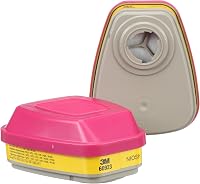
The 3M P100 Respirator Cartridge/Filter is a 1-pair set with a bayonet-style connection for compatible 3M half and full facepieces. Its stated protection includes certain organic vapors, acid gases, and non-oil and oil particulates, but it is not for immediately dangerous to life or health environments.
This cartridge works with 3M Half and Full Facepieces 6000, 7000, and FF-400 Series with the matching connection. It also works with specified 3M Scott facepieces when used with the 3M Scott AV-632 Bayonet Adapter.
A respirator must be properly fitted and used under an appropriate respiratory protection program. It cannot replace stopping PVC cutting or fixing a contaminated room.
The 3M Rugged Comfort Quick Latch Half Facepiece Reusable Respirator has a quick latch, adjustable head harness, polyester/spandex straps, silicone faceseal, and Cool Flow Valve.
Its low-profile design provides a wide field of view and compatibility with welding and grinding shields. It must be paired with suitable 3M cartridges, filters, or supplied air systems, and the seal depends on correct fit.
Do laser safety glasses protect against PVC fumes?
No. Laser glasses protect the eyes from specified laser wavelengths, not from corrosive fumes.
You still need suitable ventilation and respiratory protection for approved cleanup work.
The LP-LaserPair LaserPair Laser Safety Glasses 200-534nm has orange polycarbonate lenses, a wrap-around design, adjustable fit, TR90 frame material, and 23% visible light transmission. Its stated protection ranges include 180-534nm, 740-900nm, and 900-1095nm with different optical density ratings.
The glasses are intended for wavelength-matched laser protection, including systems using 355nm, 405nm, 532nm, 740nm, 808nm, 980nm, and 1064nm light. Confirm that the eyewear matches your exact laser.
The frame includes flank ventilation and all-around splash protection. LP-LaserPair says not to use alcohol or alcohol-containing disinfectant on the frame.
These goggles do not replace the machine enclosure, interlocks, exhaust, or face protection needed for cleanup. For more context, read Is Laser Engraving Toxic?.
Should you remove rust or replace the laser part?
Replace a part when corrosion causes pitting, looseness, rough movement, damaged threads, weakened metal, or contamination that cannot be removed safely. Clean it only if the part remains structurally sound and the machine manual allows that method.
Light discoloration on a removable bracket may be less serious than rust on a rail, fastener, grounding point, fan housing, or optical mount. Do not sand rails or optical mounts without confirming their finish and alignment requirements, since abrasives can remove coatings, change clearances, or spread particles.
Inspect belts, bearings, screws, rails, exhaust fittings, fan blades, cable connectors, and the air-assist path. If anything binds, flakes, or shows electrical discoloration, keep the machine disconnected.
Have a technician assess corrosion near the power supply, control board, laser tube, diode module, wiring, or grounding path. Moisture or solvent in these areas can cause later faults.
How can you prevent rust after future laser cutting?
The most reliable prevention is to keep PVC out of the laser and use materials approved by the manufacturer. For another material-specific fume check, see polyester foam laser safety.
Better exhaust may reduce exposure, but it cannot make an unsuitable material safe.
Store PVC away from the workspace, label material bins, and check unfamiliar plastics before cutting because similar-looking sheets can create different hazards. Review the material safety information first.
The laser cutting foamboard risk guide explains why material choice affects fumes and residue.
Keep the enclosure, exhaust duct, fan, bed, and nearby metal surfaces clean and dry. Inspect them regularly, especially after materials that produce heavy smoke or sticky residue.
A strong fan does not solve every problem. Airflow can carry corrosive fumes through the machine and deposit them along the exhaust route, so the system must suit the material and the room must have enough replacement air.
What if the laser rusted after only one PVC cut?
One cut can be enough to start corrosion if fumes reached warm, damp, or uncoated metal. A single exposure does not prove that every part is ruined, but it justifies a complete inspection before reuse.
Check whether the rust is new, whether it wipes away or has pitted the surface, and whether it appears along the airflow path. Compare it with clean metal elsewhere in the machine.
If the laser still powers on, don't treat that as proof of safety. A machine can operate while corrosion develops near movement parts, electronics, fans, or optics.
Have the manufacturer or a qualified technician assess hidden or electrical corrosion. Keep photos and notes from the exposure so the inspection has a clear starting point.
For other plastics, review Is Laser Cutting Polycarbonate Safe? What You Need to Know before choosing a substitute material.
What is the safest next step after PVC caused laser rust?
If cutting PVC caused laser to rust, stop using the machine, ventilate the area, document the damage, and inspect the full fume path before cleaning or replacing parts. Do not cut another sheet to see whether the problem has gone away.
Choose the 3M P100 Respirator Cartridge/Filter only with a compatible 3M facepiece and suitable respiratory protection plan. Choose the 3M Rugged Comfort Quick Latch Half Facepiece when its fit and cartridge system match the task.
Choose the LP-LaserPair goggles for wavelength-matched laser eye protection, not fume control.
The decision rule is simple: avoid PVC, replace corroded parts that affect movement or electrical safety, and get professional help when rust reaches hidden components or optics. If your machine also struggles with ordinary materials, Why Is My Laser Not Cutting Through Wood? can help separate a material problem from a machine fault.