Heat Press Machines: The Complete Buying Guide
A good heat press machine is the right type and size for your projects, not the largest or cheapest option. Start with clamshell or swing away for full garments, auto release if you sell in batches, and a mini press for small details. Match platen size, temperature range and pressure to the transfers you plan to make.
On this page (12 sections)
- What types of heat press machine are there?
- How big should a heat press machine be?
- What temperature, time and pressure do you need?
- Which heat press machine suits each kind of project?
- How much should you spend on a heat press machine?
- What controls and safety features matter most?
- How do you use a heat press machine step by step?
- Which of these heat press machines should you pick?
- How do VEVOR and HTVRONT presses compare for buyers?
- What accessories and care keep a heat press working well?
- Explore heat presses by topic
- Final rule for picking a heat press machine
A good heat press machine is the type and size that fits your blanks, workspace and work pace. Start with a full size press for shirts and bags, add a mini press for sleeves and small details, and consider auto release only when batch work is part of your plan.
Heat, pressure and time do the work together. Heat softens the adhesive or ink layer, pressure brings it into contact with the blank, and time lets the bond set.
We compared the presses in this guide by platen size, temperature range, pressure control, opening style and project fit. The points below explain those choices so you can match a machine to a real project instead of buying on size alone.
What types of heat press machine are there?
There are four main types to compare: clamshell, swing away, auto release and mini. Each changes how you load a blank, close the platen and use space.
A clamshell opens upward like a hinged lid. You load the lower platen, close and lock the top.
It is compact for home studios and suits flat garments that fit fully on the platen.
A swing away press moves the top platen to the side. That opening makes it easier to slide in a shirt or bag and check placement.
If you plan a swing away heat press 16x24 for large garments, check clearance behind and beside it, not only its footprint.
An auto release press opens itself when the timer ends. That helps with several items in a row, since it will not keep cooking a transfer while you load the next blank.
A best automatic heat press can suit sellers.
A mini press is a small hand unit for sleeves, collars, hats, bags and small details. For a compact model walkthrough, see Cricut EasyPress Mini instructions.
It cannot replace a full size press for a whole shirt front, but it can reach places a large platen cannot.
Combo machines add mug, plate or cap attachments to one base, but only choose one if you will use those attachments often.
How to tell which press type fits your work
List your three most common projects first, then pick the type that loads those blanks with the least fuss. A shirt maker needs a flat platen a garment can slide over.
A hat maker needs a curved or narrow heating area, not just a small flat plate.
Think about how you will work while the press is closed. If you need to cut the next transfer during pressing, auto release has clear value.
If you prefer to control every step, manual opening keeps the process simple.
Check the open position, not only the closed size. A clamshell needs headroom above the base.
A swing away model needs clear space to the side. A slide out drawer needs room to pull the tray toward you.
Storage matters as much as table size. Measure the machine with the platen open and with the drawer or swing arm moved.
Then measure the shelf or cart where you will keep it between jobs.
How big should a heat press machine be?
Buy the platen size that fits your largest regular blank without folding it. For adult shirts, a 15x15 inch platen is a common starting size.
Larger platens reduce repositioning, while smaller platens are easier to store.
A 15x15 inch press can handle a full front design on many adult shirts, bags and mouse pads. Check the blank, because a wide design or large tote may extend past the heated area.
The best 15x15 heat press guide compares models in this size band.
A 16x20 inch press gives more room for two column designs and large tote bags. That extra area can speed up batch work.
It also makes the machine heavier and harder to store, so measure the open footprint. Our best 16x20 heat press picks focus on that larger area.
A best large heat press suits sellers who press wide garments or multiple items in one cycle. Large does not mean better for every craft room.
A large platen can be awkward for a hat or sleeve detail, where a mini press works more directly.
Mini presses have a heated area only a few inches wide. That size suits collars, cuffs, hats, socks and small bags, but not designs spanning a shirt front.
Measure your blanks first and add a small margin so you can center the design without the edge falling off the platen.
What temperature, time and pressure do you need?
Set temperature, time and pressure from the transfer maker instructions, then adjust for your blank. A press that reaches the right range and holds it steady matters more than a very high maximum.
Check the range in Fahrenheit and Celsius if you buy transfers from more than one maker. Small presses in this guide use low, medium and high settings near 284, 320 and 356 degrees F, while full size presses can cover wider ranges for vinyl and sublimation.
Time control should be easy to read and reset for each job. A digital timer helps you repeat the same cycle across a batch, and a simple timer can work if it counts down clearly and signals the end.
Pressure should adjust to the thickness of the blank. Light cotton, fleece, canvas bags and layered vinyl do not need the same force.
On a mini press, pressure comes from your hand, so keep strokes even and overlap each pass by a small amount.
Even heat across the platen helps a design bond in one pass. A cool edge can leave a pale or lifting spot, while a hot spot can scorch light fabric.
A steady readout and a test press on scrap are useful before a paid order. Use heat press materials that match your settings, and read the transfer pack and the blank care label before the platen heats up.
Which heat press machine suits each kind of project?
Match the press to the blank you press most often. Shirts need a flat full size platen, hats need a narrow or curved area, mugs need a wrap attachment, and small details need a mini press.
For T-shirts, choose a platen that fits the design with room to center it. The best heat press for t shirts guide focuses on flat garment work, even heat and enough pressure for layered designs, and a 15x15 inch press is a practical starting point.
For hats and caps, a flat platen can press a front panel, but curved seams and foam fronts need careful placement. A mini press can handle small letters and logos, and the best hat heat press guide covers presses built for that shape.
For mugs and tumblers, a flat platen alone will not wrap heat around a cylinder. You need a mug or tumbler attachment matched to the blank diameter, so see the best heat press for mugs and tumblers guide before you buy a flat press for drinkware.
For bags, check thickness and seams. Canvas totes often need more pressure than a light shirt, and a platen that fits the bag flat, with seams outside the design area, gives a cleaner result.
For pillows and pads, a mini press or small flat area can reach corners and edges. heat press pillows and pads help you match the press to soft blanks that shift under pressure, and for combo work a best the best combo heat press machine may suit a studio making shirts, mugs and caps in one week.
How to choose for sublimation, vinyl and rhinestones
Sublimation transfers need even heat and firm contact so ink transfers fully. For the difference between the methods, see heat press vs sublimation.
Vinyl needs the temperature and peel time on the pack, because some vinyl peels hot and some peels cool.
Rhinestones need enough pressure and time to set adhesive without melting the backing.
Do not use one setting for every transfer type. Make a small test on the same blank, then note the temperature, time and pressure that worked.
That note saves time on the next batch and protects blanks.
How much should you spend on a heat press machine?
Spend for the size and controls you will use each week, not for features you may never use. A smaller press can cost less and take less space, while a larger auto press can pay off through faster batch work.
Budget presses often cover core needs: a flat platen, temperature and time control, and adjustable pressure. They suit a first press for shirts and bags, so check maximum temperature, platen size and warranty terms before you choose a low cost model.
Mid range presses add clearer digital controls, better heat spread and a more stable frame. Those points matter when you press daily or sell finished items, and a firm frame helps the platen close squarely, which keeps pressure even.
Premium and auto presses add auto release, preset modes and slide out drawers. Those features can save time in a busy studio, but they add weight and complexity, so they suit sellers more than a first time buyer.
If your budget is tight, compare the best budget heat press and best mid range heat press guides by platen size and controls. Spend first on the right size and a readable display, and a mini press can be a low cost way to test heat transfer crafts before you add a full size press.
What controls and safety features matter most?
Look for clear temperature and time controls, adjustable pressure and a safe place to rest the hot platen. Those features affect every press you make.
A digital display should show current temperature, not only the setting you chose. That helps you see when the platen has reached the target and whether it holds that level.
A timer that counts down and signals the end helps you avoid over pressing.
Adjustable pressure should be easy to change between blanks. A knob you can set for a light shirt, then raise for a canvas tote, saves time and protects thin fabric.
On hand held mini presses, a comfortable grip and insulated base reduce burn risk.
Safety starts with placement. Put the press on a heat resistant surface with space around it for the blank and your hands.
Keep the cord away from the heating area. Never leave a hot press unattended, even if it has auto shutoff.
Several mini presses switch off after idle time. That feature is a backup, not a substitute for turning the press off when you step away.
Let the platen cool fully before you store it, and keep it out of reach of children and pets.
A slide out drawer keeps hands away from the top platen while you load a blank. Compare the best 15x15 heat press with slide out drawer guide if hand clearance is a concern.
How to set up a press for safe daily use
Place the press on a stable, heat resistant surface at a height where you can see the platen without leaning over it. Plug it into a suitable outlet, keep the cord clear and set a timer nearby for the first test presses.
Keep a Teflon sheet, a clean pressing cloth and a heat resistant mat close by. Those items protect the platen, help you move a hot transfer and give you a safe place to rest a mini press.
Read the manual for your model before first use. It will state voltage, approved surface, cool down steps and storage limits.
Follow those instructions for your exact machine.
How do you use a heat press machine step by step?
Follow the transfer pack steps in order: set the blank, set the press, press, then peel or cool as directed. The same order works for vinyl, sublimation and rhinestones, with small changes for each type.
First, pre press the blank for a few seconds to remove moisture and smooth wrinkles. That helps the transfer bond evenly, especially on cotton and canvas, so lift the blank and check it lies flat with no folds under the design.
Second, set temperature, time and pressure for the transfer you are using. Place the design as the pack directs and center it with platen guides or heat safe tape.
Third, close the press and start the timer, keeping hands clear while it is closed. When the timer ends, open the press and follow the peel instruction, since some transfers peel hot, some peel cool and some need a short cool down.
Fourth, press again if the pack directs a second press. Let the finished blank cool flat before you fold, stack or wear it.
For a mini press, work in small overlapping passes and keep the insulated base nearby between passes. If you are new to a specific brand, the how to use vevor heat press guide walks through that family, for HTVRONT units see how to use htvront heat press, and for Fancierstudio models see how to use a fancierstudio heat press.
How do you fix common heat press problems?
A design that lifts at the edge often needs more time, more pressure or slightly higher temperature within the maker range. A design that looks scorched may have had too much heat or too long a press.
Change one setting at a time and test on scrap.
Wrinkles under the design can cause blank spots. Pre press the blank, smooth it flat and keep seams outside the heated area.
For a thick tote, place the platen so a thick seam does not raise one side.
If the press does not close evenly, check that it sits level and the lower platen is clean. A warped table or folded blank can tilt the press and change pressure.
Level the surface before you adjust settings.
Care for the platen with a clean sheet and soft cloth. Do not use sharp tools on a coated platen.
Replace worn sheets before they crease or pick up residue.
Which of these heat press machines should you pick?
Pick the press that matches your main blank, your batch size and your storage space. The four picks below cover a full size manual press, two mini presses and an auto release press.
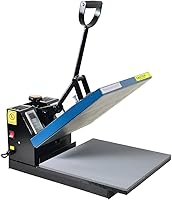
Fancierstudio Digital Heat Press 15 x: full size manual press for shirts and bags
The Fancierstudio Digital Heat Press 15 x suits a first full size press for shirts, bags and mouse pads. It has a 15 by 15 inch platen, a 110 volt and 1800 watt setup, electronic time and heat control and adjustable pressure.
The temperature range runs from 0 to 699 degrees F and the time range runs from 0 to 999 seconds. That covers settings most vinyl and sublimation transfers need.
A silicon gel base board and Teflon coating on the platen help the blank release and keep the platen easier to clean.
The upward opening design saves space compared with a press that swings wide. That helps in a small room, though you still need headroom above the base.
The included 15 by 15 inch sheet gives a starting layer for pressing.
Choose this press for regular shirt and bag work where you load each item by hand. Skip it if you need auto release for long batches or a mini press for hats and sleeves.
Calogy Mini Heat Press: small hand press for details and travel
The Calogy Mini Heat Press suits sleeves, hats, collars, socks, pillows and small details. It measures 4.5 x 2.9 x 5.1 inches, with a heat plate of 2.87 x 4.43 inches, and weighs 0.65 kg.
It has three temperature levels: 284 degrees F for low, 320 degrees F for medium and 356 degrees F for high. A single button changes temperature, switches between Celsius and Fahrenheit and turns the unit on or off.
An LED display shows real time temperature.
Calogy says it heats to 284 degrees F in about 3 minutes, then moves from 284 to 320 degrees F in about 40 seconds and from 320 to 356 degrees F in about 50 seconds. It switches off after 15 minutes of inactivity, and the insulated safety base gives a place to rest the hot unit.
Choose this mini press for small projects and travel crafting. It does not press a full shirt front in one pass.
Plan overlapping passes for any design wider than the heat plate.
HTVRONT Auto Heat Press Machine for T: auto release press for batch work
The HTVRONT Auto Heat Press Machine for T suits sellers who press shirts, totes and apparel in batches. It has a 15x15 inch press area, auto release and a drawer slide design that keeps hands away from the hot plate.
HTVRONT says the press reaches 320 degrees F in 4 minutes and uses NTC thermistor technology with a dual tube heating engine for even heat. The press auto adjusts to project thickness up to 1 inch and auto releases when the timer ends.
It has 4 fast modes, 2 custom modes and an auto mode.
The slide out design lets you load the blank on a drawer, then send it under the platen. The unit shuts off if you do not use it after 15 minutes.
HTVRONT says it works with t-shirts, totes, apparel, wood signs and ceramic coasters up to 1 inch thick.
Choose this press for repeat work where auto release saves time. Skip it if you want the simplest manual press or have very limited space for a slide out drawer.
HTVRONT Heat Press Mini Heat Press Machine: mint mini press for small HTV work
The HTVRONT Heat Press Mini Heat Press Machine suits small HTV and sublimation projects. It has a compact mint body, a lightweight build and three heat settings.
The three settings are 284 degrees F for low, 320 degrees F for medium and 356 degrees F for high. You slide a knob to switch modes.
The unit comes with an insulated base and a user manual, and HTVRONT describes it as easy to carry for craft days.
The soleplate is aluminum alloy, and the handle is made to hold while you press. HTVRONT says it heats up quickly and saves 20 seconds compared with other brands.
It suits t-shirts, hats and small unique projects where a large platen would be hard to place.
Choose this mini press for small details, travel and craft fairs. It is a companion to a full size press, not a replacement for wide shirt designs.
If you need a digital temperature display, the Calogy model shows real time temperature on screen.
How do VEVOR and HTVRONT presses compare for buyers?
Compare VEVOR and HTVRONT by size, opening style and controls, not by brand name alone. Both brands appear in several size bands, so the right pick depends on the blank you press most often.
For VEVOR, start with the best vevor heat press guide for the full range. If you want a larger work area from that brand, the best vevor 16x20 heat press guide narrows the choice.
The best vevor 15x15 heat press guide covers the most common shirt size.
For HTVRONT, the best htvront heat press guide covers the brand range, including mini and auto models. A best clamshell heat press suits buyers who want a compact hinged lid.
A best swing away heat press suits buyers who want open space to load a garment.
Brand choice matters less than spec match. Check platen size, temperature range, pressure adjustment, opening style and the space the machine needs when open.
Those points decide whether a press fits your blanks and your room.
What accessories and care keep a heat press working well?
Buy the accessories that protect the platen and help you load blanks cleanly. A press works best with a clean sheet, a heat resistant surface and a safe place to rest a hot transfer.
A Teflon sheet or pressing pillow helps you move a blank, protect the platen and press seams without marks. best heat press pillows and pads help you choose a pad for curved or soft blanks. best heat press accessories covers sheets, mats and tools you will use on most jobs.
Keep the platen clean with a soft cloth and check the sheet for creases before each press. A creased sheet can leave marks.
Replace a sheet when it picks up residue or loses its smooth surface.
If a part wears out, match the replacement to the model. heat press replacement parts help you check part number, size and voltage before you order. A wrong part can damage the press or change pressure.
Store the press cool and dry with the platen clean. Let it cool fully before you cover it or move it to a shelf.
Check the cord for damage and keep the press out of reach of children.
Explore heat presses by topic
Final rule for picking a heat press machine
Pick a full size press for shirts and bags, a mini press for small details, and auto release for batches. That rule keeps you from buying a large machine for hat work or a mini machine for full shirt fronts.
Start with your largest regular blank and measure it. Choose the smallest platen that fits that blank with a margin to center the design.
Then check temperature range, pressure control and the open footprint against your room.
Our score weighs specs, features and buyer feedback against what you are shopping for. Use the four picks above as shortlisted examples, then use the linked guides to compare more models in the size and type you need.
For a next step, read the guide for your exact size or type, check the transfer pack settings for your material, and measure the space where the press will open and store. That order leads to a press that fits your work from the first press onward.
Frequently asked questions
What is a heat press machine used for?
A heat press machine applies heat and pressure to bond vinyl, sublimation transfers, rhinestones and other designs to fabric and blanks. You load the design, close the platen, set time and temperature, then press for the time the transfer maker specifies.
It suits shirts, bags, hats and small craft blanks.
What size heat press machine should a beginner buy?
Most beginners start with a 15x15 inch press because it fits adult shirts, tote bags and mouse pads without needing repositioning. A smaller mini press suits hats, sleeves and small custom details.
Choose the largest size you can store and lift safely, then check that it fits your most common blank.
Is an automatic heat press better than a manual one?
An automatic or auto release press helps if you make many items in a row because it opens or lifts when the timer ends. A manual clamshell gives you more control over pressure and timing and often costs less.
Pick auto for batch work and manual for learning, testing and varied materials.
How hot does a heat press machine need to get?
Check the transfer instructions first, because vinyl and sublimation transfers have different temperature and time ranges. The four presses in this guide cover low settings near 284 degrees F for small detail work and higher settings for full garment transfers.
Always set the press to the maker range for your material, not the maximum the machine can reach.