Heat Press vs Sublimation: What Is the Difference? (November 2026)
A heat press is the machine, and sublimation is one printing method you can use with it. In heat press vs sublimation, you need a heat press to press a sublimation transfer, but sublimation also needs a printer, ink, paper and polyester or coated blanks.
On this page (13 sections)
- Heat press vs sublimation: the quick verdict
- Sublimation printing vs pressing equipment
- Heat press vs sublimation press: what the names mean
- Platen size and shirt coverage
- Temperature range and control
- Pressure and even contact
- Power, heat-up time and workspace
- Who should buy the Fancierstudio 15-by-15-inch press?
- Who should buy the Calogy Mini Heat Press?
- Heat press vs sublimation for other transfer types
- Cost of the full sublimation setup
- Care, safety and storage
- Which setup should you choose?
A heat press is the machine, and sublimation is a printing method that uses that machine. The heat press vs sublimation choice is not either or.
You plan the two parts together when you build a crafting setup.
Sublimation starts with a printed transfer. Special ink on special paper carries dye that turns to gas under heat and bonds with polyester.
The heat press then supplies time, temperature and pressure to complete that transfer.
This guide compares a full-size heat press machine with a mini press. It also explains where sublimation printing fits, so you do not buy press equipment and expect it to print by itself.


Heat press vs sublimation: the quick verdict
Buy the press for equipment, and plan the printer and blanks for sublimation. A heat press can apply many transfer types, while sublimation covers only jobs that use sublimation ink, paper and compatible blanks.
For several blank shapes, compare combo heat press machines.
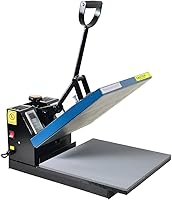
The Fancierstudio press gives you a 15-by-15-inch platen, 1800 watts and a wide temperature range. That size suits full shirt fronts and steady repeat work.
The Calogy mini press gives you a 2.87-by-4.43-inch plate, 300 watts and three preset levels up to 356 degrees F. That size suits small logos, sleeves, hats and detail placement.
Our score weighs specs, features and buyer feedback against what you are shopping for. Higher scores here reflect wider use, stronger controls and a better fit for common shirt work.
Sublimation printing vs pressing equipment
Sublimation printing creates the design, and pressing equipment applies it. A printer lays ink on paper, and a heat press moves the dye from that paper into the blank.
You need a sublimation printer, sublimation ink, sublimation paper and blanks made for the process. Polyester blanks and polymer-coated blanks accept the dye.
For cylindrical drinkware, compare tumbler heat presses for sublimation before choosing a press.
Cotton alone does not give the same result.
The press does not print the design. It holds the printed transfer against the blank with even heat and pressure, so the dye can transfer in a controlled time.
How heat press vs sublimation work together
A typical sublimation job moves through four steps. For a garment-specific walkthrough, see how to heat press a T-shirt.
You print the design in reverse, place it on the blank, close the press for the set time and temperature, then peel or lift the transfer as directed.
Time and pressure matter as much as heat. Too little pressure can leave pale areas, and too much time can shift colors or ghost the image.
Repeatable settings help you match the first good result.
A heat press also handles heat transfer vinyl, rhinestones and other transfers. That wider use makes it a general tool, while sublimation remains one method among several.
Heat press vs sublimation press: what the names mean
A sublimation press is a heat press chosen for sublimation work. The term describes the job, not a separate class of machine with a different heating system.
Sellers often use "sublimation press" for a press with a large platen, digital controls and adjustable pressure. Those traits help with full garments and repeat blanks.
The Fancierstudio model fits that use with electronic time and heat control, a 0-699 degrees F range and a 0-999 second timer. Those controls let you set a consistent cycle for sublimation transfers.
Our guide to the best heat press for sublimation helps you match platen size, pressure and controls to the blanks you plan to press.
Platen size and shirt coverage
Choose platen size by the largest design you will press in one pass. A 15-by-15-inch plate can cover most full shirt fronts, while a mini plate needs several placements for the same design.
The Fancierstudio press measures 33 x 23 x 20 inches as a full unit. That footprint suits a craft table or bench where the press can stay in place.
The Calogy mini press measures 3.39 x 5.98 x 6.02 inches as a unit in the data. Its heat plate covers only 2.87 x 4.43 inches, so repositioning is part of normal use.
Heat press vs sublimation on a full shirt front
A large design needs one even press to keep color and placement consistent. A mini press can still complete the job, but each move adds time and a chance of a visible seam.
For a small-press walkthrough, see Cricut EasyPress Mini instructions.
For full fronts, the best heat press for t shirts guide helps you compare platen size with shirt panels and design width. Check the design size first, then check the press.
Temperature range and control
Pick a press whose range covers your transfer type with room to adjust. Sublimation often needs a set temperature and time, and digital controls make repeat cycles easier.
The Fancierstudio press lists a temperature range of 0-699 degrees F and an upper temperature rating of 500 degrees F in the specifications. Its electronic controls give precise time setup for repeat work.
The Calogy mini press offers three levels: 284 degrees F, 320 degrees F and 356 degrees F. That preset approach suits small crafts where you want a simple choice instead of a full dial range.
Temperature control for sublimation transfers
Sublimation paper and blank makers set the time and temperature for each product. Your press needs to hold that setting across the platen, not only at the center.
A digital display helps you confirm the set point before you close the press. The Calogy model shows real time temperature on an LED display, while the Fancierstudio model uses electronic heat and time control.
Learn the full sequence in our guide on how to heat press sublimation, including placement, pressing and safe removal.
Pressure and even contact
Pressure decides how well ink or vinyl meets the blank surface. Heat alone does not complete a transfer, and light pressure can leave weak spots.
For help supporting uneven areas, compare heat press pillows and pads.
The Fancierstudio press has adjustable pressure and a silicon-gel base board. That base helps the platen meet the blank evenly across a 15-by-15-inch area.
The Calogy mini press uses hand pressure through its handle. That design works for small items, and it also means pressure depends on your hand and arm during each press.
Pressure for seams, sleeves and thick blanks
Seams, collars and zippers change the surface under a design. A large press can bridge a seam with its base, while a mini press can work around small raised areas.
For athletic fabrics and structured panels, our guide on how to heat press on a jersey covers placement and pressure choices. Those habits also help with sleeves and chest logos.
Power, heat-up time and workspace
Check power and space before you place an order. A large press draws more power and keeps a fixed spot, while a mini press stores in a small drawer or shelf.
The Fancierstudio press uses 110 volts at 1800 watts. That draw suits a dedicated circuit check and a stable work surface.
Its upward-opening design saves space when the press is open.
The Calogy mini press uses 300 watts. It heats to 284 degrees F in about 3 minutes from an initial temperature of 84 degrees F, according to Calogy.
It then reaches 320 degrees F in about 40 seconds and 356 degrees F in about 50 seconds.
Safe setup for a press in a craft room
Place the press on a heat-resistant surface with clear space around the platen. Keep cords away from the heat area and keep children and pets out of reach.
The Calogy model has an insulated safety base and auto power off after 15 minutes of inactivity. The Fancierstudio model has a Teflon coating on the heat platen, which helps release material and makes cleaning easier.
Who should buy the Fancierstudio 15-by-15-inch press?
Choose the Fancierstudio press for full shirts, repeat orders and mixed transfer types. Its 15-by-15-inch platen, adjustable pressure and wide controls suit a main craft station.
This press fits sellers who press t-shirts, bags and mouse pads. The data lists those uses, along with transfers, letters, numbers and images on garments and other flat items.
The included 15-by-15-inch heat press sheet helps protect the platen during use. The silicon rubber base is glued down, and the model opens upward to save space.
Fancierstudio backs this model with a 3 month warranty. Check the exact terms on the product page before you order, since warranty terms can change.
Who should buy the Calogy Mini Heat Press?
Choose the Calogy mini press for small designs, sleeves, hats and detail work. Its small plate reaches places that a full-size press cannot cover well.
This mini press fits crafters who add names, small logos and patches to t-shirts, clothing, hats, bags, socks and pillows. Calogy lists those small and unique heat transfer projects as its focus.
The one-button design changes temperature, switches between degrees Celsius and Fahrenheit, and turns the unit on or off. An LED display shows the temperature in real time.
Calogy lists the unit weight at 0.65 kg. That light weight makes storage and travel easier, and the safety base helps protect hands during placement.
Heat press vs sublimation for other transfer types
A heat press handles more than sublimation, and that range changes its value. Heat transfer vinyl, rhinestones and printed transfers all need heat and pressure, but each type sets its own time and temperature.
The Fancierstudio press lists sublimation and rhinestone work in its title. Its wide range and adjustable pressure give you room to switch between those transfer types.
The Calogy mini press suits small vinyl letters and patches. Its top level of 356 degrees F may limit some higher-temperature jobs, so check each material before you commit to a design.
How to choose between vinyl, sublimation and rhinestones
Vinyl sits on the surface and needs clean edges and firm pressure. Sublimation dye bonds into polyester and gives a smooth feel.
Rhinestones need adhesive that activates under heat.
Your blank choice follows the transfer type. Sublimation needs polyester or coated blanks, vinyl needs a compatible fabric surface, and rhinestones need a surface that holds the adhesive.
A heat press machine buying guide can help you plan controls, platen size and pressure for the mix you will actually press.
Cost of the full sublimation setup
Budget for the printer and blanks, not only the press. Sublimation needs a printer, ink, paper, cleanup supplies and blanks, and those items add to the press cost.
Heat transfer vinyl needs vinyl sheets, a cutter and weeding tools. Rhinestones need stones, adhesive and placement tools.
Each method adds its own supplies.
A combo setup can cost less over time if you use one press for several methods. The press stays the same, and you change supplies by project.
Where a mini press can save money
A mini press costs less to store and power, and it uses less space. It can handle small sublimation logos and vinyl details without a full workstation.
A full-size press earns its space when you press large fronts each week. It reduces repositioning and keeps repeat orders faster and more consistent.
The best HTVRONT heat press guide gives another view of full-size options if you want to compare brands before you choose.
Care, safety and storage
Clean the platen, check the base and store the press with the heat area clear. Good care keeps transfers clean and helps the press last longer.
Wipe the Teflon-coated platen on the Fancierstudio model with a suitable cloth when it cools. Check the silicon-gel base for damage and keep the pressure knob clean and easy to turn.
Keep the Calogy safety base in place during use. Its auto power off helps when you step away, and its insulated base reduces burn risk during placement.
Safe habits for every press session
Let the press cool before you clean it or move it. Unplug the unit before you wipe the platen or adjust parts near the heat area.
Use a Teflon sheet or protective sheet when the transfer type calls for one. That barrier helps prevent ink or adhesive from reaching the platen.
If you work with laser-cut blanks or engraved items, our guide on What Is the Difference Between Engraving and Cutting? helps you separate those processes from heat pressing.
Which setup should you choose?
Choose the Fancierstudio press for a main workstation, and the Calogy mini press for detail work. That split matches platen size to the designs you press most often.
Pick the Fancierstudio model if you press full shirt fronts, repeat sublimation orders and mixed transfers. Its 15-by-15-inch platen, adjustable pressure and wide time and temperature ranges support that volume.
Pick the Calogy model if you press sleeves, hats, small logos and pillow details. Its compact plate, preset levels and safety base suit small projects and limited space.
For sublimation, plan the printer, ink, paper and blanks at the same time as the press. In heat press vs sublimation planning, the press is only one part of a complete setup, and the right pairing gives you repeatable results.
Frequently asked questions
Can I do sublimation without a heat press?
You need even heat and firm pressure for sublimation, and a heat press gives both. A household iron can work for tiny tests, but it gives uneven heat and light pressure.
For repeatable results on shirts and blanks, a dedicated press is the safer choice.
Is sublimation a type of heat press?
No, sublimation is a printing method and a heat press is equipment. Sublimation uses special ink and paper to transfer dye into polyester.
The heat press supplies the heat and pressure that move that dye into the blank during the press cycle.
Can a heat press do more than sublimation?
Yes, a heat press can apply heat transfer vinyl, rhinestones, transfers, letters and numbers. The Fancierstudio model lists t-shirts, bags and mouse pads among its recommended uses.
A mini press suits small items such as hats, sleeves and pillow details.
Which press suits a first sublimation setup?
Pick by blank size and production volume. A 15-by-15-inch press suits full shirt fronts and repeat orders.
A mini press suits small designs, sleeves and repair work.
You will still need a sublimation printer, ink, paper and compatible blanks for true sublimation.