CNC Lathe vs CNC Mill: Which Do You Need? (November 2026)
Choose a CNC lathe for round parts and a CNC mill for fixed workpieces with holes, pockets or flat faces. The right choice depends on how the material moves, which cuts you need and how often you change setups.
On this page (11 sections)
- CNC lathe vs CNC mill: what is the basic difference?
- Which machine fits the shape of your workpiece?
- What operations does a CNC lathe handle best?
- What operations does a CNC mill handle best?
- How does tooling change the choice?
- Do you need coolant or chip control?
- Which machine is easier for a first project?
- Who should buy a CNC lathe?
- Who should buy a CNC mill?
- Can one machine replace the other?
- Final CNC lathe vs CNC mill decision
Choose a CNC lathe for round stock and a CNC mill for workpieces that need holes, pockets, slots or flat surfaces. In this CNC lathe vs CNC mill comparison, the cutting motion matters more than the machine name.
For a related choice, see CNC milling machine vs router.
A lathe spins the workpiece while a tool removes material from the outside or inside. A mill holds the workpiece still while a rotating cutter moves through it.
That difference affects the parts you can make, the tools you need and the way you plan each setup. A shop that makes shafts may need a lathe, while one that cuts plates or brackets may get more use from a mill.
If you are still comparing machine families, start with what is a CNC router machine and then match the machine to your material and operations.
 Best for cutting coolant
Mist Coolant Lubrication Spray System for Metal

CNC lathe vs CNC mill: what is the basic difference?
A CNC lathe rotates the workpiece around its axis, while a CNC mill rotates the cutting tool. Each machine is strongest when the part shape matches its cutting motion.
On a lathe, the stock is held in a chuck or another workholding system and spins as the tool travels along or across it. This makes turning, facing, threading and boring natural operations.
On a mill, the stock is clamped to a table or fixture. A spindle turns an end mill, drill or other cutter, and the machine moves the tool or table along several axes.
| Question | CNC lathe | CNC mill |
|---|---|---|
| What rotates? | The workpiece | The cutting tool |
| Best starting shape | Round bar or tube | Plate, block or fixed stock |
| Common operations | Turning, facing, threading and boring | Pocketing, drilling, slotting and contouring |
| Main strength | Cylindrical parts | Flat, angular and complex surfaces |
| Typical tooling focus | Turning tools and boring tools | End mills, drills and specialty cutters |
A lathe can perform some work that looks like milling with extra equipment, and a mill can sometimes handle round stock with the right setup. Those exceptions do not change the main buying rule.
Which machine fits the shape of your workpiece?
Buy a CNC lathe when most parts begin as round stock, and buy a CNC mill when most parts begin as plates, blocks or irregular shapes. Starting shape is often the fastest way to narrow the choice.
Round bar, tube and cylindrical blanks suit a lathe because the workpiece already has the axis needed for turning. The tool can reduce the outside diameter, cut shoulders or open an internal bore in a controlled path.
A mill is more flexible for rectangular stock. It can cut a pocket into a plate, drill a pattern of holes, open a slot or trace an outside profile while the part stays clamped.
Think about the finished part, not only the raw material. A square block that needs a round outer profile may suit a lathe after suitable preparation, but a plate with several faces and holes is usually a better milling job.
Our CNC router vs CNC lathe comparison covers the related choice between router-style cutting and lathe work.
What operations does a CNC lathe handle best?
A CNC lathe is the better fit for turning, facing, boring and threading on cylindrical parts. It removes material efficiently when the design is built around a central axis.
Turning reduces the outside diameter along the length of the stock. Facing cuts across the end to create a flat surface, while boring enlarges or finishes an internal hole.
Threading also suits the lathe because the tool follows the rotation of the workpiece. This coordinated movement creates a repeatable thread when the machine, workholding and tooling are set correctly.
A lathe can make stepped shafts, bushings, pins, spacers and other rotational parts. It may also suit tapered surfaces when the machine has the needed axis control and the program defines the taper.
Tool choice still matters. A square cutting tool is useful for basic external cuts, but the correct orientation, height and clearance depend on the machine and the operation.
{{product B07H3K7WYQ}} These CNC Lathe HSS Square Cutting Tool Bits suit a basic lathe-tooling comparison because the 2-piece set uses 1/2 x 1/2 x 4 in bars for square cutting work.
What operations does a CNC mill handle best?
A CNC mill is the better fit for pockets, slots, drilled patterns, contours and multiple flat faces. It keeps the workpiece fixed while the cutting tool approaches from controlled directions.
Milling is useful when a part needs a pocket inside a face or a slot that does not run through the entire material. It also handles hole patterns and outside contours that would be awkward to create by turning.
The spindle tool can move across the surface, then step down to remove material in layers. That approach gives the programmer more control over depth, edge shape and the order of operations.
Router-style mills are especially common for wood, plywood, laminate and similar sheet or board work. For plastics, compare the material needs with a best CNC router for plastics guide before choosing tooling or feed settings.
A downcut spiral bit can press chips toward the work surface and leave a clean top edge. It still needs suitable speeds, depth of cut, workholding and chip removal for the material.
How does tooling change the choice?
Choose the machine whose common tools match the cuts you expect to make most often. Tooling can expand either machine's range, but extra tools do not remove the basic difference between turning and milling.
Lathe tooling is arranged around the stationary cutting edge meeting a rotating workpiece. The tool's shape and position affect shoulders, faces, grooves, bores and threads.
Mill tooling rotates in the spindle. End mills remove material from the side, bottom or both, depending on their geometry and the programmed path.
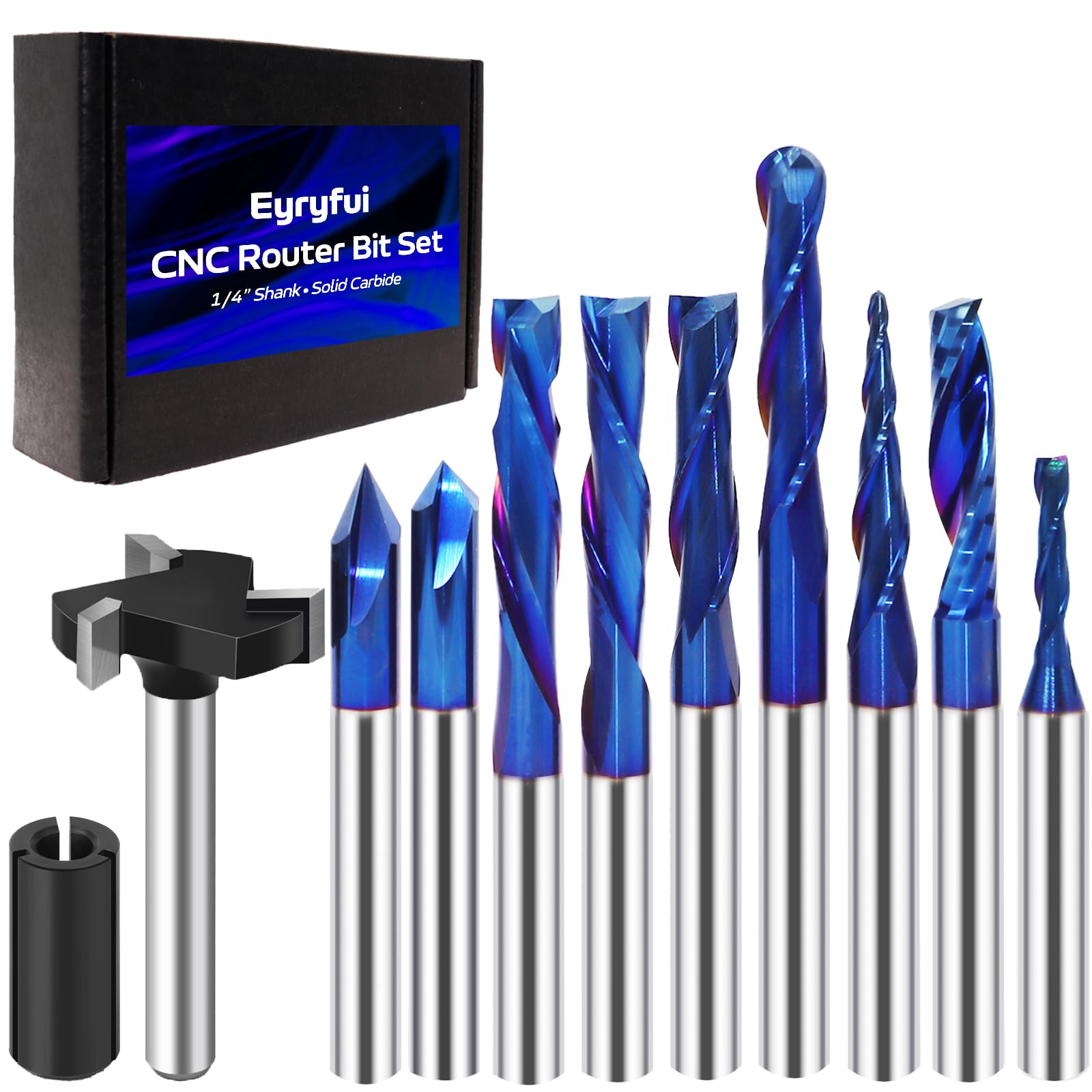
The SpeTool downcut bit has a 1/4 in shank, 1/4 in cutting diameter and 1 in cutting length. Its 2-1/2 in overall length and 2 flutes describe a compact cutting tool for compatible router setups.
Its downcut direction helps leave a clean top edge on grooves, slots, mortises, cycles and dados. The bottom edge may need a different strategy, since downcut and upcut tools move chips in different directions.
Do you need coolant or chip control?
Metal cutting often benefits from a planned coolant and chip-control approach, while wood routing needs safe dust and chip removal. The machine type does not decide this by itself.
A lathe cutting metal may produce heat at the tool and workpiece. A mist system can help direct a cooling spray toward the cutting area, but setup must follow the machine, fluid and safety requirements.
The Mist Coolant Lubrication Spray System is described for metal cutting, engraving, cooling and use with air pipe CNC lathe, milling and drill equipment. That makes it relevant to either machine when the cutting process calls for a mist-style cooling setup.
Do not assume coolant solves every cutting problem. Tool geometry, feed, speed, depth, workholding and material still affect surface finish and tool life.
Wood and board routing create a different housekeeping problem. Dust collection, a clear cutting area and suitable eye and breathing protection are part of the setup.
A best 65mm CNC dust shoe comparison can help when a router spindle and dust shoe use that diameter.
{{product B071DXGGP4}} This Mist Coolant Lubrication Spray System for Metal is suited to metal cutting, engraving, cooling and compatible CNC lathe, milling or drill setups.
Which machine is easier for a first project?
A CNC mill is often easier to understand when your first project is a flat plate, sign, pocket or hole pattern. A CNC lathe can be straightforward too, but rotating stock adds workholding and turning-specific decisions.
With a mill, you can draw the top view of a plate, set a work coordinate and plan the toolpath around the visible surface. A simple pocket or outline gives a clear connection between the design and the cut.
Lathe programming is direct when the part is rotational. The challenge is that the stock, chuck, tool position and spindle direction all affect how a turning tool meets the material.
Start with a part that matches the machine instead of forcing a complicated shape. A small round spacer is a sensible lathe-style project, while a flat panel with a slot is a sensible mill-style project.
In both cases, secure the stock before cutting. Check tool clearance, confirm the work zero and use a conservative first pass until the setup behaves as expected.
Who should buy a CNC lathe?
Buy a CNC lathe if your repeat work includes shafts, bushings, pins, spacers, threaded parts or other rotational shapes. It is the more natural choice when diameter and length define the part.
A lathe can reduce a round blank through several diameters without moving the workpiece between many faces. That can simplify a batch of similar cylindrical parts.
It also gives you a clear workflow for facing an end, turning an outside diameter and boring an inside diameter. The process becomes more specialized when you need flats, cross-holes or complex non-round features.
Choose a lathe only after checking the work envelope, spindle opening, chuck arrangement and tool clearance for your stock. Those machine details decide whether your usual material can be held safely.
The HSS square cutting tool set is a simple example of the kind of tooling a lathe user may consider for square cutting operations. Its 2-piece, 1/2 x 1/2 x 4 in format also means you should check holder dimensions before ordering.
Who should buy a CNC mill?
Buy a CNC mill if your work includes plates, blocks, pockets, slots, drilled patterns or parts with several flat faces. The mill gives the cutter access to surfaces that do not revolve around one axis.
A mill is also the better starting point for many signs, brackets, panels and fixtures. Router-style tooling can suit wood and similar materials when the spindle and collet match the bit.
Those details help with tool selection, but they do not replace checking the machine's collet, speed range and cutting depth. A bit can have the right diameter and still be wrong for the available clearance or material.
For knife and router workflows, see how CNC knife and router cutting works before treating a router as a substitute for every mill task.
Can one machine replace the other?
Neither machine is a full replacement for the other. A mill can work on round stock with suitable fixtures, and a lathe can handle some extra features with added tooling, but the main workflow remains different.
A lathe is efficient when the part is rotational because the spindle provides the turning motion directly. Holding that same part on a mill may require a vise, collet block, rotary setup or several repositioning steps.
A mill is flexible on flat and angular parts because its table and spindle can reach different faces. Trying to reproduce those features on a lathe may require unusual workholding or a second operation.
If your jobs split evenly, write down the 10 parts you make most often. Count how many are mainly cylindrical and how many need pockets, slots, hole patterns or broad flat faces.
Also consider the next operation after the first cut. A part that starts on a lathe may still need milling for a flat or cross-hole, while a milled block may need turning for a precise round section.
Final CNC lathe vs CNC mill decision
Pick the CNC lathe for round parts and turning operations; pick the CNC mill for fixed stock with pockets, holes, slots and flat faces. That rule will usually lead you to the machine that needs fewer workarounds.
Choose the lathe when diameter, length, bore and thread are the main design features. Choose the mill when the part is built around faces, edges, cavities or patterns.
Tooling should support that decision. The HSS square bits fit a basic lathe-tooling discussion, while the SpeTool downcut bits fit compatible 1/4 in collet router work.
The mist coolant system belongs with metal-cutting setups that need directed cooling.
If your first projects are wood panels or routed plastics, begin with the mill side of the comparison and check the material-specific tooling. If they are shafts and bushings, begin with the lathe side and plan your workholding before buying accessories.