9 Best Desktop CO2 Laser Engravers (November 2026)
The best desktop CO2 laser engravers include the Creality Falcon A1C 10W AI Laser Engraver for guided desktop engraving, the xTool F2 5W IR & 15W Diode for portable mixed-material work, and the xTool SafetyPro AP2 Smoke Purifier for Laser for compact fume control.
On this page (5 sections)
The best desktop CO2 laser engraver for serious cutting is the OMTech K40+ 45W, while the WECREAT Vision Pro gives you a larger bed and included rotary attachment. If you are also considering a Glowforge, read what a Glowforge laser cutter is.
That fits if cutting is your main job. The K40+ uses a true CO2 tube for regular cutting of wood, acrylic and leather rather than occasional marking of small items.
For a marking-focused setup, compare CO2 galvo laser engravers.
For many home and studio users, a diode machine is the more practical first choice. Diode models here are lighter, easier to move and often include camera alignment, auto focus or portable enclosures.
The Falcon A1C suits guided setup with its AI camera, auto focus and Class 1 enclosed design. The xTool F2 suits portable dual-laser work because its infrared module marks metal while its diode module handles other materials.
The ACMER S1 suits a small bench where storage matters more than cutting power. It is the lightest machine here, with a small work area for tags, ornaments and other small pieces.
For another CO2 lineup, compare xTool CO2 laser engravers. The K40+ is the only true CO2 laser in this group, while the others use diode or infrared modules.
That difference affects cutting use, machine size and workspace planning. A CO2 tube brings a larger cabinet, more weight and a fixed bench place, while a diode machine is often easier to store or carry to a market.
For a wider comparison, read our guide to the Best CO2 Laser Engraver. If bench space is your main limit, our Best Desktop Laser Engraver guide covers smaller setups.
Before you choose, list the materials you will use most often and measure the space you can give the machine.
Our picks at a glance
-
1
 Best for guided desktop engraving
Creality Falcon A1C 10W AI Laser Engraver
9.7/10 our score
See it on Amazon -
2

-
3
 Best for compact fume control
xTool SafetyPro AP2 Smoke Purifier for Laser
9.3/10 our score
See it on Amazon
- 4
 Check it
WECREAT Vision Pro 45W Laser Engraver
Best for larger desktop batches - 5
 Check it
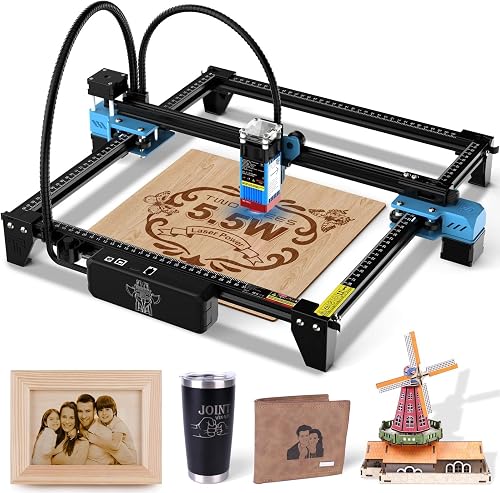
Twotrees TTS-55 Pro Laser Engraver 5500mW Laser
Best for fast open-frame projects - 6
 Check it
OMTech K40+ 45W Desktop CO2 Laser Engraver
Best for desktop CO2 cutting - 7
 Check it
LONGER Ray5 Laser Engraver and Cutter Machine
Best for large diode work areas - 8
 Check it
Creality Falcon A1 10W Laser Engraver
Best for enclosed everyday projects - 9
 Check it
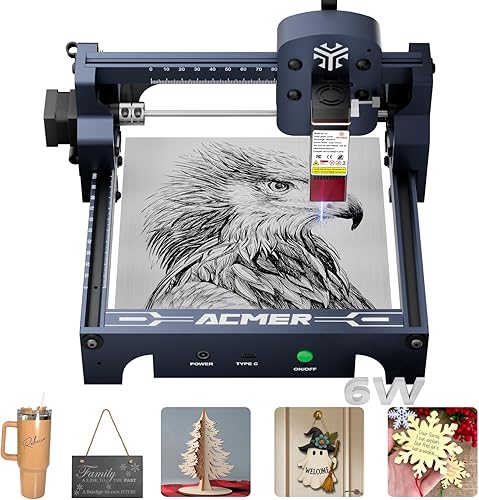
ACMER S1 6W Laser Engraver Machine
Best for small beginner projects
The best desktop CO2 laser engravers for different workspaces
The best choice depends on whether you need CO2 cutting, a large bed, guided alignment, portability or a small footprint. We compared laser type, stated work area, enclosure, control features and the practical space each model needs.
Our score weighs specs, features and buyer feedback against what you're shopping for. A high score means the machine fits the desktop laser use described here, not that it is the right choice for every workspace.
| Product | Best for | Laser | Work area | Size | Our score |
|---|---|---|---|---|---|
| Creality Falcon A1C 10W AI Laser Engraver | guided desktop engraving | 10W diode | 150 x 150 x 148 mm | 18.5 x 16.54 x 15.75 in | 9.7 |
| xTool F2 5W IR & 15W Diode | portable mixed-material work | 9.4 | |||
| xTool SafetyPro AP2 Smoke Purifier for Laser | compact fume control | 11.42 x 19.33 x 21.34 in | 9.3 | ||
| WECREAT Vision Pro 45W Laser Engraver | larger desktop batches | 31.5 x 25.6 x 16.14 in | 9.3 | ||
| Twotrees TTS-55 Pro Laser Engraver 5500mW Laser | fast open-frame projects | 5500mW | 300 x 300 mm | 9.2 | |
| OMTech K40+ 45W Desktop CO2 Laser Engraver | desktop CO2 cutting | 45W CO2 | 12 x 8 in | 31.9 x 19.7 x 9.8 in | 9.1 |
| LONGER Ray5 Laser Engraver and Cutter Machine | large diode work areas | 20W diode | 400 x 365 mm | 24.5 x 14 x 5 in | 8.9 |
| Creality Falcon A1 10W Laser Engraver | enclosed everyday projects | 10W diode | 30 x 25 x 15 in | 8.8 | |
| ACMER S1 6W Laser Engraver Machine | small beginner projects | 6W diode | 130 x 130 mm | 9.84 x 9.84 x 6.38 in | 8.4 |
Creality Falcon A1C 10W AI Laser Engraver: Best for guided desktop engraving
- AI camera
- Auto focus
- 150 x 150 x 148 mm work area
- 15,000 mm/min speed
- Class 1 enclosed design
The Falcon A1C combines an AI camera, auto focus and an interchangeable laser platform in a compact enclosed body. It suits beginners and creators who want guided setup for wood, leather and acrylic projects.
Pros
- AI-assisted layout tools
- Auto focus
- Class 1 enclosed design
Cons
- Smaller work area than several open-frame picks
- Only the selected laser module is included
The Creality Falcon A1C is the strongest all-around pick for creators who want guided operation in a compact enclosed machine. Its AI camera can preview the material, while auto focus and up to 0.1 mm positioning accuracy reduce manual setup work.
The 10W diode module works with wood, leather and acrylic, and the interchangeable platform supports 5W, 10W and 1.2W Falcon modules. Only the selected laser module comes with the package, so plan separately if you want the 1.2W infrared option.
Its 150 x 150 x 148 mm work area suits signs, coasters, wallets, ornaments and personalized gifts. A speed of up to 15,000 mm/min helps with repeated small projects, while the Class 1 enclosure is a useful fit for homes, classrooms and studios.
Choose the A1C if you value camera placement and guided design tools more than a large cutting bed. It is a better compact desktop choice than the larger open-frame machines when enclosure and simple setup are priorities.
xTool F2 5W IR & 15W Diode: Best for portable mixed-material work
- 5W IR and 15W diode lasers
- 50MP camera
- 6000 mm/s speed
- 300+ material support
- 4.6 kg weight
The xTool F2 pairs infrared and diode lasers for metal marking, 3D embossing and other material work. Its compact 10 lb body and built-in camera fit on-site customization and small-batch jobs.
Pros
- Dual-laser setup
- 50MP camera
- Fully enclosed design
Cons
- Class 4 laser
- Slide Extension and other accessories are separate
The xTool F2 is the best fit for portable customization because it combines a 5W infrared laser with a 15W diode laser. The infrared module handles color marking on metal, while the diode supports 3D embossing and thicker-material work.
A built-in 50MP camera provides up to 0.1 mm alignment accuracy on small pieces. The machine is fully enclosed, weighs 10 lb, and is described for on-site and small-batch use, which suits fairs, pop-ups and store counters.
Its stated speed reaches 6000 mm/s, and the Slide Extension can support longer batch layouts when added. The machine includes the base plate and base material kit, but the Class 4 laser classification means you still need to follow the safety instructions closely.
Choose the F2 for mixed materials and portability. Pick the Falcon A1C instead if AI-assisted layout, auto focus and Class 1 enclosure are more important than infrared marking.
xTool SafetyPro AP2 Smoke Purifier for Laser: Best for compact fume control
- 6-layer filtration
- 36-cyclone dust capture
- 55 dB noise level
- 150 m³/h or less extraction support
- 20.9 kg weight
The AP2 adds smoke and odor control to a desktop laser setup. Its six-layer filtration and 36 cyclones suit diode, fiber and CO2 machines whose fume extraction is 150 m³/h or less.
Pros
- Six-layer filtration
- Magnetic filter door
- Manual compatibility with xTool lasers
Cons
- Large and heavy for a desktop accessory
- Not compatible with xTool P3
The xTool SafetyPro AP2 is the best accessory for a desktop laser setup that needs dedicated smoke and odor control. It uses six-layer filtration and 36 cyclones that capture large particles before they reach the filters.
The AP2 supports diode, fiber and CO2 machines with fume extraction of 150 m³/h or less. Its filter system includes cyclone and activated carbon stages, and the magnetic door makes filter access easier.
At 11.42 x 19.33 x 21.34 inches and 20.9 kg, it needs more floor or bench planning than a small laser. The stated noise level is 55 dB. xTool says manual mode works with all of its listed laser machines, while automatic mode supports a smaller group.
That size makes the AP2 a deliberate addition rather than a small desktop accessory. You will want a level place for it, a short and direct duct route, and enough access to open the magnetic door for cleaning and filter changes.
The auto sync option is aimed at xTool machines that support it, which can reduce the need to set the purifier separately for each job. Manual mode gives a wider match, but pairing still depends on whether the laser exhaust size and flow fit the stated limit.
Care comes down to the cyclones and filters rather than the main unit. Cleaning the cyclone stage on a regular schedule helps keep capture effective, and checking filter condition is part of keeping odors down between longer runs.
Choose the AP2 when your workspace needs filtration beside the laser. Check the exhaust requirements before pairing it with a machine, and remember that it does not support the xTool P3.
WECREAT Vision Pro 45W Laser Engraver: Best for larger desktop batches
- 45W diode laser
- 22.83 x 15.75 in laser bed
- 600 mm/s speed
- HD camera
- Rotary Pro included
The Vision Pro gives batch-focused makers a large bed, auto lifting and a Rotary Pro attachment. Its 45W diode laser is aimed at cutting and engraving across wood, metal and acrylic.
Pros
- Large work area
- Rotary Pro included
- Class 1 enclosed structure
Cons
- Largest footprint in this group
- 2W switchable module is sold separately
The WECREAT Vision Pro is the best choice here for larger desktop batches and rotary work. Its 22.83 x 15.75 inch bed gives more room than the compact machines, and the included Rotary Pro attachment is designed for full-wrap 40 oz tumbler engraving.
The 45W diode laser is described for cutting and engraving wood, metal and acrylic. BeamFocus technology is claimed to provide 60W-like cutting power, with stated cutting capability up to 25 mm wood and 20 mm black acrylic in one pass.
Auto lifting handles material heights from 1 mm to 140 mm, and the HD camera helps with positioning. The fully enclosed Class 1 structure pauses when the lid opens.
Its 31.5 x 25.6 x 16.14 inch size and 35 kg weight need a stable, dedicated location.
Choose the Vision Pro if you need a broad bed, rotary work and higher diode power. The OMTech K40+ is the better match if you specifically want CO2 laser performance in a smaller work area.
Twotrees TTS-55 Pro Laser Engraver 5500mW Laser: Best for fast open-frame projects
- 5500mW laser
- 300 x 300 mm work area
- 30,000 mm/min speed
- Air-assist nozzle support
- LightBurn and LaserGRBL support
The TTS-55 Pro offers a 300 x 300 mm work area and high stated engraving speed for makers who prefer a lighter machine. It supports wood, leather, acrylic, paper and stainless steel projects.
Pros
- Large work area for its weight
- Air-assist nozzle included
- Wi-Fi and TF card control
Cons
- Class II open-frame design
- Requires more attention to enclosure and eye safety
The Twotrees TTS-55 Pro suits makers who want a large work area and fast control without moving a heavy machine. Its 300 x 300 mm area gives room for signs, leather pieces and craft panels, while the 5500mW laser is described for wood, leather, acrylic, paper and stainless steel.
The machine supports engraving speeds up to 30,000 mm/min and offers online or TF card engraving. Built-in Wi-Fi allows mobile app or computer web control, and it works with LaserGRBL and LightBurn on supported systems.
Its metal air-assist nozzle supports cleaner and deeper cuts, but this is a Class II machine rather than a fully enclosed Class 1 system. Plan your enclosure, eye protection and material handling before using it.
Choose the TTS-55 Pro for a lighter open-frame workflow and a 300 x 300 mm bed. Choose the Ray5 if you want a 20W laser and a larger 400 x 365 mm area.
OMTech K40+ 45W Desktop CO2 Laser Engraver: Best for desktop CO2 cutting
- 45W CO2 laser
- 12 x 8 in work area
- 300 mm/s engraving speed
- Integrated air assist
- Water and door protection
The OMTech K40+ is the clearest match for shoppers who specifically want a desktop CO2 machine. Its 45W tube, air assist and 12 x 8 in work area suit wood, acrylic and leather cutting.
Pros
- True 45W CO2 laser
- Integrated air assist
- LightBurn and LaserGRBL support
Cons
- 81.8 lb weight
- Smaller work area than the Vision Pro and Ray5
The OMTech K40+ is the best desktop CO2 laser engraver in this roundup because it uses a 45W CO2 laser with a 12 x 8 inch work area. It is aimed at cutting and engraving wood, acrylic and leather, with stated cutting capability up to 0.4 inches of acrylic and 0.31 inches of wood.
An integrated 45-degree air-assist system adjusts airflow based on laser power. It clears smoke and debris, helps protect the lens and can lower fire risk during high-power cutting jobs.
The K40+ supports LightBurn and LaserGRBL, and its detachable base with an optional rotary axis can accommodate cylindrical or taller objects. Door and water protection, an emergency stop and a flame-retardant acrylic panel add safety features to the enclosed design.
At 31.9 x 19.7 x 9.8 inches and 81.8 lb, it is not a portable desktop machine. Pick it for CO2 cutting power and a compact rectangular bed, but measure your doorway, bench and exhaust route first.
LONGER Ray5 Laser Engraver and Cutter Machine: Best for large diode work areas
- 20W laser
- 400 x 365 mm work area
- 24,000 mm/min speed
- 3.5-inch touchscreen
- Full protective enclosure
The Ray5 gives diode users one of the largest work areas here at 400 x 365 mm. Its touchscreen, Wi-Fi, USB and TF card support suit larger signs, panels and repeated projects.
Pros
- Large work area
- 20W laser
- Multiple connection methods
Cons
- Open-frame workflow needs careful safety planning
- The 20W model is taller in capability than in enclosure
The LONGER Ray5 is the best diode option for a large flat work area. Its 400 x 365 mm bed gives more room than the Falcon A1C, Falcon A1 and ACMER S1, while the 20W laser supports higher-power cutting work.
LONGER states a maximum engraving speed of 24,000 mm/min. The machine is described for single-pass cutting of 15 mm pine wood, 0.05 mm stainless steel and 8 mm acrylic, with deeper multi-pass cutting also supported.
A 3.5-inch touchscreen lets you monitor progress and adjust settings. USB, TF card, Wi-Fi and app connections support online and offline use, while LaserGRBL, LightBurn and LONGER LaserBurn provide software choices.
That bed size changes what you can plan in a single job. Larger signs, panels and repeated layouts can sit flat without splitting the design, which suits studios that make the same flat pieces in batches.
The touchscreen and multiple connection options suit different ways of working. A TF card or app route can help when a computer is not beside the machine, while LightBurn and LaserGRBL give familiar control for people who prefer those programs.
The full protective enclosure and safety goggles help with operation, but the Ray5 still needs careful placement and ventilation planning. Choose it for large diode projects, not for the smallest possible bench setup.
Creality Falcon A1 10W Laser Engraver: Best for enclosed everyday projects
- 10W diode laser
- 15 x 12 in engraving area
- 600 mm/s speed
- HD camera
- Class 1 enclosure
The Falcon A1 is a pre-assembled enclosed option for everyday wood and metal engraving. Its camera, dual doors and 15 x 12 in area make loading larger flat projects easier.
Pros
- Class 1 safety design
- Pre-assembled setup
- 600 mm/s speed
Cons
- 30 x 25 in footprint
- Not suitable for highly reflective materials
The Creality Falcon A1 is a strong fit for enclosed everyday engraving when you need more bed space than the A1C provides. Its 15 x 12 inch engraving area supports larger flat projects, and the built-in camera helps position designs.
The 10W diode laser reaches stated speeds of up to 600 mm/s. Its ultra-fine 0.06 x 0.08 mm laser spot and auto-tensioned XY belts are intended for detailed engraving, while the machine can cut up to 6 mm wood and 9.6 mm black acrylic in one pass.
The pre-assembled Class 1 machine has dual doors and side openings for loading. It works with Falcon Design Space, LightBurn and LaserGRBL.
The Falcon roller kit supports tumbler and bottle work, while highly reflective materials such as mirror-finished metals and mirrored acrylic should be avoided.
Choose the Falcon A1 for enclosed operation and a larger flat area. The A1C is smaller and adds auto focus plus AI tools, while the Ray5 offers more area but a different safety setup.
ACMER S1 6W Laser Engraver Machine: Best for small beginner projects
- 6W diode laser
- 130 x 130 mm work area
- 10,000 mm/min speed
- 2 kg weight
- 99% pre-assembled
The ACMER S1 is the smallest and lightest pick here, with a 130 x 130 mm work area and 2 kg body. It fits small gifts, tags and classroom projects where storage space is limited.
Pros
- 2 kg portable design
- 99% pre-assembled
- AI design tools
Cons
- Smallest work area
- Protective enclosure is compatible but separate
The ACMER S1 is the best choice for small beginner projects because it weighs 2 kg and measures 9.84 x 9.84 x 6.38 inches. Its 130 x 130 mm work area fits tags, ornaments, coasters and other small pieces.
The 6W diode laser reaches up to 10,000 mm/min with 0.01 mm repeatable positioning accuracy. ACMER describes it for wood, bamboo, leather, plastic, PCB, aluminum oxide, ceramics and thin plywood, MDF and acrylic.
The S1 arrives 99% pre-assembled, with a 1-minute laser head installation. ACMER Studio includes AI design tools, and the machine also works with LightBurn and LaserGRBL.
That light weight is the main appeal in daily use. The machine can be carried to a class, stored in a cupboard or set up on a small table without reserving a permanent bench for it.
The small work area also keeps projects focused. Small gifts, tags and classroom pieces fit well, while large signs will need either a different machine or a design split into smaller parts.
Setup is aimed at beginners, with preassembly and a short laser head step. AI tools in ACMER Studio can help turn text prompts or photos into designs, and LightBurn or LaserGRBL remain options for more control.
Its compact size makes storage easy, but the work area is the smallest here. The compatible protective enclosure can create a Class 1 laser system, but it is separate.
Choose the S1 for small projects and limited storage, not for large signs or thick cutting.
How do you choose a desktop CO2 laser engraver?
Choose a desktop CO2 laser engraver by material first, then check bed size, machine footprint, enclosure and smoke handling. The OMTech K40+ is the direct CO2 choice here, while the WECREAT Vision Pro and LONGER Ray5 offer larger diode work areas.
Start with the material you will cut most often. Acrylic, wood and leather point toward CO2 or a higher-power diode depending on thickness and finish, while metal marking may point toward an infrared module.
A CO2 laser fits best when cutting those materials is central to your work. Diode models suit buyers who want lower weight, camera alignment, portability or a more compact layout.
Next, compare how each machine handles the work around the cut. Camera preview and auto focus reduce setup time, a rotary attachment opens curved work, and air assist helps keep cuts cleaner.
Use the work area as a hard limit. The ACMER S1 measures 130 x 130 mm, the Falcon A1C measures 150 x 150 x 148 mm, the OMTech K40+ gives 12 x 8 inches, and the Vision Pro reaches 22.83 x 15.75 inches.
Also measure the full machine, not only the bed. The K40+ is 31.9 inches wide, the Falcon A1 is 30 inches wide, and the Vision Pro is 31.5 inches wide.
Leave room for doors, cables, exhaust and material loading.
For smoke, check whether the machine has its own extraction, whether a purifier is needed and where fumes will go. Enclosure class is another filter, with a Class 1 enclosed machine simplifying use in a shared home or classroom.
Software also affects daily ease. LightBurn, LaserGRBL and brand tools handle layout and job control differently, so choose the workflow you are most likely to use.
How does a desktop laser engraver work?
A desktop laser engraver focuses a laser beam on a selected path to mark, engrave or cut a material. The result depends on laser type, power, focus, speed, passes, material and air or smoke handling.
Our guide to How Does a Laser Engraver Work? explains the basic process across diode, CO2 and infrared machines. For CO2-specific details, see How Does a CO2 Laser Engraver Work?.
The beam does not cut by pressing on the material. It delivers concentrated energy to a small spot, and the machine moves that spot along the path defined by your design file.
Focus decides how tight that spot is. A well-focused beam gives finer detail and a cleaner cut, while a beam that is too high or too low can leave softer edges.
Speed and power work together during the pass. Slower movement at a given power deposits more energy in one place, while faster movement suits lighter marking, and multiple passes can deepen a cut.
Material changes the outcome even at the same settings. Wood grain, acrylic color, leather thickness and metal finish can respond differently, which is why material presets and test pieces help.
Air assist and extraction shape the cut as well. Moving smoke and debris away from the beam path helps keep the cut line clear and reduces charring on some materials.
Camera alignment helps place the design before the laser starts. A preview on the actual material can show whether a logo will sit centered or a cut line will cross a knot.
Before a project, confirm the material is suitable, secure it flat, set the focus and use the safety features. Keep the work area clear and plan smoke control before cutting.
On open-frame machines, the safety plan needs more care. Eye protection, a clear boundary around the work area and attention to reflective materials become part of each job.
A short test run on scrap shows depth, contrast and edge quality before you commit the final item. Between jobs, clear debris from the bed and check extraction or filtration.
Is a desktop CO2 laser worth it for a small workspace?
A desktop CO2 laser can be worth it when you need its cutting ability often enough to justify the machine, exhaust setup and fixed bench space. The OMTech K40+ offers CO2 power in a 12 x 8 inch work area, but weighs 81.8 lb.
Worth is about frequency as much as capability. If acrylic, wood and leather cutting fills your weekly work, a CO2 machine earns its place on a permanent bench.
If most work is occasional marking or small gifts, the same fixed space and weight can feel like a burden. A lighter diode machine may get used more often because it is easier to set up and put away.
For a smaller workspace, the Falcon A1C, xTool F2 and ACMER S1 are easier to move or store. The xTool F2 weighs 10 lb, while the ACMER S1 weighs 2 kg, but these use diode or infrared lasers rather than CO2.
Portability changes the value calculation. A machine that can move to a market stall, classroom or shared studio has more chances to be useful than a heavy cabinet that stays in one room.
It also changes the work you can accept. On-site customization favors a light enclosed machine with camera alignment, while steady cutting at home favors a fixed CO2 setup.
Measure the space and plan the full workflow before buying. A compact laser still needs room for materials, ventilation, electrical connections and safe access.
The full workflow includes more than the machine footprint. You need space to unpack materials, test settings, load the bed, handle finished pieces and route smoke away.
Sheets, blanks and offcuts also need a dry place nearby. Access around the machine affects safety and ease, so doors, lids and loading paths should open without crowding cables or forcing you to reach over the bed.
A smaller workspace can still suit a CO2 laser if the bench is permanent and the exhaust route is short. Compare weight, footprint and laser type side by side before you decide.
Final choice for the best desktop CO2 laser engraver
Pick the OMTech K40+ if you specifically want a 45W desktop CO2 laser for wood, acrylic and leather cutting. Pick the WECREAT Vision Pro if a larger bed and included rotary attachment matter more than a smaller footprint.
The K40+ gives you the clearest CO2 path in this group. Its 12 x 8 inch work area and integrated air assist suit a fixed bench where cutting is a regular job.
The Vision Pro gives you room for larger batches and curved work. Its 22.83 x 15.75 inch bed and Rotary Pro attachment suit tumblers, larger flat pieces and repeated layouts.
Choose the Falcon A1C for guided enclosed engraving, the xTool F2 for portable infrared and diode work, or the ACMER S1 for small projects. Compare your material list and available bench space before choosing a laser type.
The Falcon A1C fits users who want camera placement and auto focus in a compact Class 1 body. The xTool F2 fits on-site work where metal marking and portability matter.
The ACMER S1 fits small benches and beginner projects where light weight and easy storage come first. Its small bed is a limit, but it keeps the setup simple.
For larger diode work, the LONGER Ray5 and Falcon A1 offer different balances of bed size and enclosure. The Ray5 favors a large flat area, while the Falcon A1 favors enclosed loading for everyday pieces.
Add the xTool AP2 to your plan if smoke and odor control need a dedicated purifier. Its size and exhaust limits should be checked against the laser you pair it with.
Measure the bench, doorway and exhaust route before you order. That check will confirm whether the right laser type also fits the room where it will live.
Our top 3 picks at a glance
-
1
Best for guided desktop engraving
Creality Falcon A1C 10W AI Laser Engraver
9.7/10 our score
See it on Amazon -
2
-
3
Best for compact fume control
xTool SafetyPro AP2 Smoke Purifier for Laser
9.3/10 our score
See it on Amazon
Frequently asked questions
What is the best desktop CO2 laser engraver?
The OMTech K40+ 45W is the best desktop CO2 laser engraver in this group because it combines a 45W CO2 laser, a 12 x 8 in work area, integrated air assist and support for wood, acrylic and leather. Choose the WECREAT Vision Pro if you need a larger bed and rotary attachment.
Are desktop CO2 laser engravers better than diode lasers?
Desktop CO2 laser engravers are often the better fit for shoppers focused on cutting materials such as acrylic, wood and leather. Diode models can be smaller, lighter and easier to move, so compare the materials, work area, enclosure and ventilation needs before choosing.
How much space does a desktop CO2 laser need?
Measure the machine footprint, access around the lid or doors, and room for smoke handling before you buy. The OMTech K40+ measures 31.9 x 19.7 x 9.8 inches, while the WECREAT Vision Pro measures 31.5 x 25.6 x 16.14 inches.
Do desktop laser engravers need ventilation?
Yes. Laser cutting and engraving can produce smoke and odors, so plan for the machine's exhaust setup and a safe way to move fumes away from the workspace.
The xTool AP2 supports machines with fume extraction of 150 m³/h or less and uses six-layer filtration.
What should beginners look for in a desktop laser engraver?
Beginners should prioritize an enclosed design, camera alignment, auto focus, clear software support and a work area that fits their projects. The Falcon A1C combines Class 1 enclosure, AI camera, auto focus and a 150 x 150 x 148 mm work area.