9 Best CNC Router Bits for Aluminum (November 2026)
The best CNC router bits for aluminum include the Genmitsu 40pcs End Mills CNC Router Bits for a varied aluminum bit set, the SPEED TIGER EISE 1/4" Carbide Square End for four-flute square cutting, and the 1/8 O Flute Up Cut CNC Bit for compact upcut aluminum work.
On this page (11 sections)
- Best CNC router bits for aluminum by cutting job
- How we compared CNC router bits for aluminum
- What bits should you use for CNC router aluminum?
- How do you choose the right shank for aluminum?
- Should you use an upcut or downcut bit for aluminum?
- What flute count works best for aluminum?
- What coating should CNC router bits for aluminum have?
- Are long CNC router bits good for aluminum?
- How should you set up CNC router bits for aluminum?
- Can CNC router bits for aluminum also cut other materials?
- Which CNC router bit should you buy?
The best CNC router bits for aluminum use carbide cutting edges and enough flute space to move chips away from the cut. For many general aluminum jobs, the Genmitsu 40-piece set gives the widest choice, while dedicated O-flute bits make more sense when you already know the cutting diameter and shank you need.
Aluminum rewards careful bit selection because the cutter shape affects chip removal, cut direction and the finish around the work. A bit that works well for fine lettering may be a poor choice for removing material from a pocket.
This guide compares square end mills, O-flute cutters, downcut bits, long-reach options, V-bits and ball nose tools. We checked the stated shapes, sizes, coatings, flute counts and named materials, then matched each one to a practical use.
If you are still learning the machine itself, start with CNC Routers: The Complete Buying Guide. It explains the machine parts that affect collets, workholding and cutting setup.
Our picks at a glance
-
1
 Best for a varied aluminum bit set
Genmitsu 40pcs End Mills CNC Router Bits
9.7/10 our score
See it on Amazon -
2
 Best for four-flute square cutting
SPEED TIGER EISE 1/4" Carbide Square End
9.6/10 our score
See it on Amazon -
3
- 4
 Check it
1/4 Downcut Router Bit 1/4 Shank
Best for controlled downcut passes - 5
 Check it
SpeTool Carbide O Flute Spiral Router Bit
Best for 1/8 in O-flute routing - 6
 Check it
Solid Carbide Single Flute End Mill 1/4”
Best for single-flute material range - 7
 Check it
SpeTool O Flute CNC Router Bit 1/4
Best for extra-long cutting length - 8
 Check it
FoxAlien 20/30/45/60/90deg 0.1mm Triangular CNC Router Bits
Best for aluminum lettering - 9
 Check it
Tools Ball Nose Carbide End Mill
Best for aluminum 3D carving
Best CNC router bits for aluminum by cutting job
The best choice depends on the cut you need. Use a varied end mill set for flexibility, an O-flute for focused aluminum routing, a V-bit for lettering, or a ball nose cutter for rounded 3D details.
The products also differ in how much of the decision they make for you. A set such as Genmitsu gives you several diameters and end shapes, while a dedicated cutter gives you a simpler tool choice but less room to change the job.
For a first purchase, identify the machine's collet before comparing coatings or flute counts. For workpiece setup, compare CNC touch probes.
A well-matched 1/8 in bit is more useful than a 1/4 in bit that your machine cannot hold securely.
Genmitsu 40pcs End Mills CNC Router Bits: Best for a varied aluminum bit set
- 40-piece set
- 1/8 in shank
- 2-flute spiral flat nose and ball nose bits
- Nano Blue and titanium coatings
A broad set of 1/8 in shank end mills gives you several cutting diameters and both flat nose and ball nose options for aluminum and other materials.
Pros
- 40-piece range
- Aluminum compatibility
- Flat nose and ball nose options
Cons
- Many pieces may be unnecessary if you need one dedicated cutter
- Requires the correct collet
SPEED TIGER EISE 1/4" Carbide Square End: Best for four-flute square cutting
- 1/4 in carbide square end mill
- 4 flutes
- Aluminum compatibility
- AlTiN coating
This 1/4 in square end mill uses 4 flutes and an AlTiN coating for buyers seeking a dedicated carbide cutter for aluminum.
Pros
- Four-flute design
- Square end
- AlTiN coating
Cons
- Less versatile than a mixed set
- Needs a 1/4 in collet
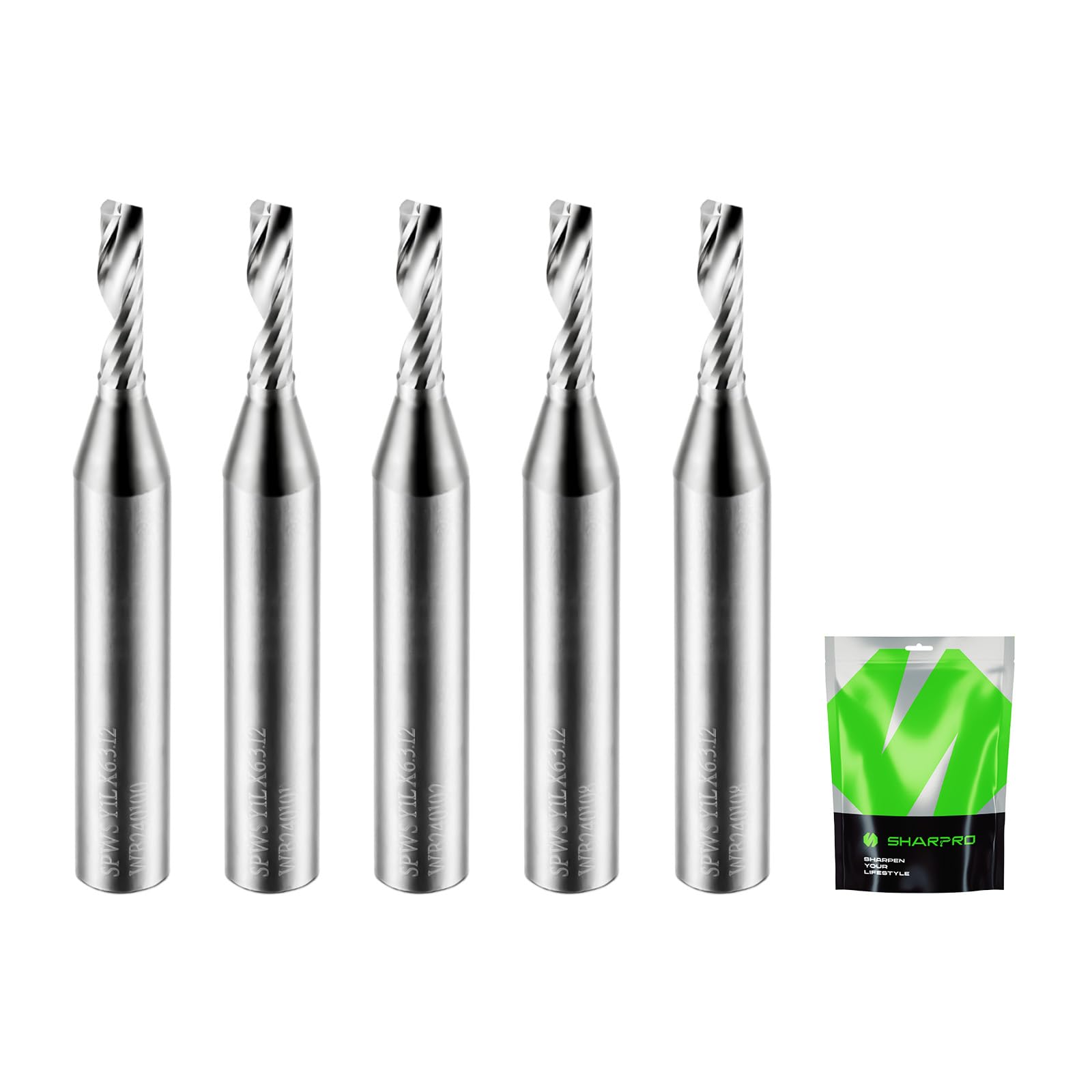
1/8 O Flute Up Cut CNC Bit: Best for compact upcut aluminum work
- 1/8 in O-flute upcut bit
- Single flute
- 1/4 in shank
A single O-flute upcut shape suits a focused aluminum setup where chip clearance and a 1/4 in shank matter.
Pros
- Single-flute O shape
- Upcut design
- 1/4 in shank
Cons
- One cutting style only
- Requires a 1/4 in collet
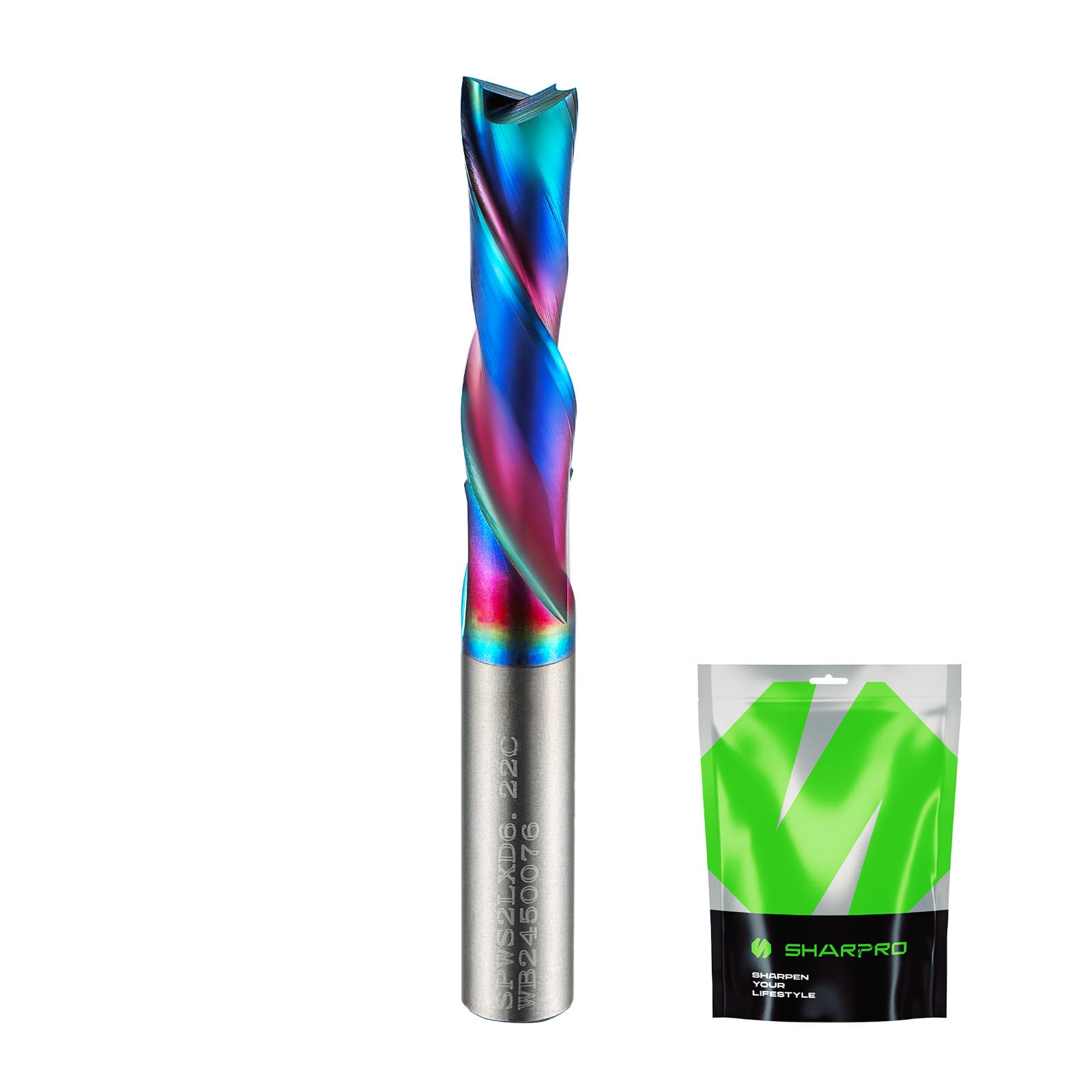
1/4 Downcut Router Bit 1/4 Shank: Best for controlled downcut passes
- 1/4 in downcut bit
- 1/4 in shank
- Carbide end mill
- Coating
This coated carbide downcut bit is aimed at buyers who want a downward spiral pattern for aluminum, acrylic, woodcraft, engraving and mortising.
Pros
- Downcut spiral
- Aluminum compatibility
- Coated carbide
Cons
- Downcut geometry needs careful chip management
- Not a mixed-size set
SpeTool Carbide O Flute Spiral Router Bit: Best for 1/8 in O-flute routing
- 1/8 in cutting diameter
- 1/4 in shank
- Carbide O-flute spiral
- Coating
This O-flute spiral bit gives you a dedicated 1/8 in cutting diameter for acrylic and non-ferrous metal work, including aluminum.
Pros
- O-flute spiral
- 1/8 in cutting diameter
- 1/4 in shank
Cons
- Fixed cutting diameter
- A dedicated bit may be less useful for mixed projects
Solid Carbide Single Flute End Mill 1/4”: Best for single-flute material range
- Solid carbide
- Single flute
- 1/4 in shank
- Upcut O-flute spiral
This solid carbide single-flute O-flute bit covers aluminum alongside several nonmetal materials for users who switch between projects.
Pros
- Solid carbide
- Single-flute O shape
- Broad material list
Cons
- No size range is stated here
- Upcut action needs a suitable setup
SpeTool O Flute CNC Router Bit 1/4: Best for extra-long cutting length
- 1/4 in shank
- 1 in cutting length
- Single flute
- Extra long life coating
The 1 in cutting length is the main reason to consider this SpeTool bit when your aluminum work needs more reach than a shorter cutter.
Pros
- 1 in cutting length
- Single O flute
- Coating described for extra long life
Cons
- Longer reach needs careful setup
- The title does not state a cutting diameter
FoxAlien 20/30/45/60/90deg 0.1mm Triangular CNC Router Bits: Best for aluminum lettering
- 10-piece set
- 1/8 in shank
- 20, 30, 45, 60 and 90 degree angles
- 0.1 mm triangular bits
Five V-bit angles give this set a clear role in fine lettering, signs and shallow decorative work on aluminum.
Pros
- Five angle choices
- 10-piece set
- Aluminum compatibility
Cons
- Designed for engraving rather than broad material removal
- Very fine 0.1 mm cutting diameter
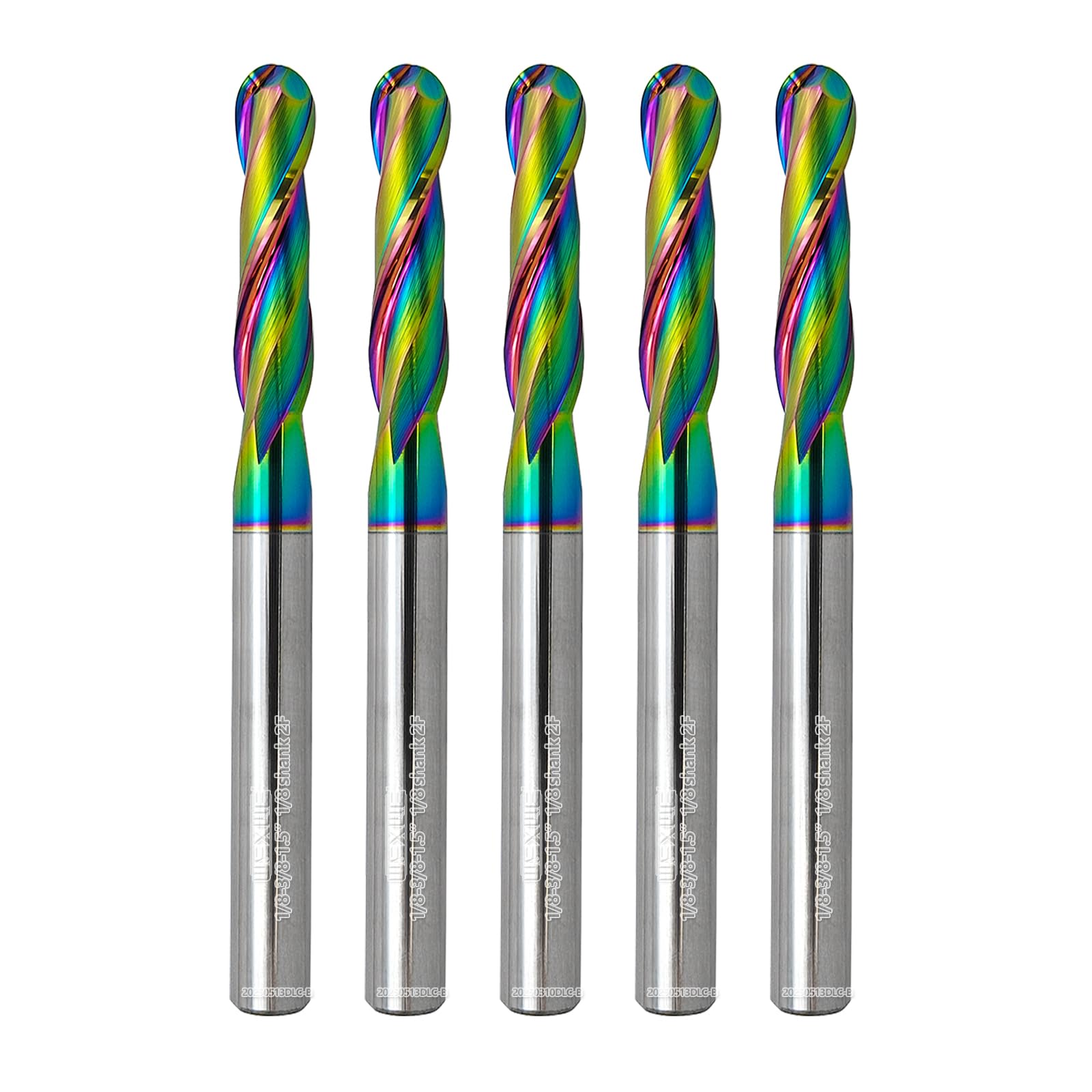
Tools Ball Nose Carbide End Mill: Best for aluminum 3D carving
- Carbide ball nose end mill
- DLC coating
- 2 flutes
- 1/8 in shank
- 5-piece format
A coated 2-flute ball nose format suits aluminum and wood cutting where rounded tool geometry is useful for 3D carving and engraving.
Pros
- Ball nose shape
- DLC coating
- 2-flute design
Cons
- Less suited to flat-bottom pocketing
- The title does not state the cutting diameter
How we compared CNC router bits for aluminum
Our score weighs listed specs, cutting geometry and fit for aluminum work against the needs of the searcher. We did not treat a larger set as automatically better, because a set can add useful choices or leave you with sizes you rarely use.
The highest score goes to the Genmitsu set because it combines a 40-piece format, 1/8 in shank, several cutting diameters, flat nose and ball nose shapes, and named aluminum compatibility. That range helps when one project needs a small cutter and another needs a different profile.
Its 0.8 to 3.0 mm size range is especially useful when the work changes from fine detail to a wider cut. The set also lists a 17 mm cutting length, so it is a compact end mill selection rather than a long-reach solution.
The SPEED TIGER EISE follows with a focused 1/4 in square end design, 4 flutes and an AlTiN coating. It is less flexible than a mixed set, but its purpose is clearer if you want a dedicated square end mill.
The O-flute picks score well because aluminum work often benefits from open chip space and single-flute geometry. The 1/8 O Flute Up Cut CNC Bit, SpeTool Carbide O Flute Spiral Router Bit and Solid Carbide Single Flute End Mill all focus on that format, but they do not offer the Genmitsu set's range of end shapes.
The FoxAlien set ranks lower for general cutting because its 0.1 mm triangular bits are more specialized for engraving and lettering. That specialization is a strength when the project is a sign or fine groove, but it makes the set a poor substitute for a pocketing end mill.
The Tools ball nose cutter occupies a similar specialist role. Its rounded end and 2-flute format suit 3D carving and engraving, while a square or flat nose tool is more direct for a flat-bottom pocket.
What bits should you use for CNC router aluminum?
For general aluminum routing, start with a carbide O-flute or a square end mill that matches your collet and the cut shape. The guide to what bits to use for a CNC router explains how end shape, flute count and cutting direction affect the job.
A square end mill is the clearer choice when the bottom of a pocket needs to be flat. For flattening a CNC spoilboard, compare spoilboard surfacing bits.
For through-cuts where both faces need a cleaner edge, compare CNC compression bits. An O-flute is more focused on an open chip path, and a ball nose is intended for rounded surfaces rather than broad flat-bottom removal.
O-flute bits for chip clearance
O-flute bits have an open spiral shape that leaves more room for chips than a closely packed multi-flute design. The 1/8 O Flute Up Cut CNC Bit, SpeTool Carbide O Flute Spiral Router Bit and Solid Carbide Single Flute End Mill all use single-flute O-flute formats.
These are useful when you want one cutting edge and a clear path for chips. A single flute does not make the setup automatic, though.
Feed, speed, depth and workholding still need to suit the machine, bit and aluminum.
The SpeTool 1/8 in O-flute option is the most specific of these choices because its cutting diameter is stated as 1/8 in. The Solid Carbide Single Flute End Mill is broader in its named material range, covering aluminum, plastic, acrylic, PVC and MDF.
Square end mills for flat-bottom cuts
Square end mills leave a flat cutting end for pockets, slots and other cuts where a flat floor matters. The SPEED TIGER EISE has a square end, 4 flutes, a 1/4 in shank and an AlTiN coating.
The Genmitsu set also includes spiral flat nose end mills. It gives you more size choices, but you need to identify the correct bit before each job and confirm that your machine accepts its 1/8 in shank.
The key difference is commitment. The SPEED TIGER EISE is a single dedicated format, while the Genmitsu set lets you change diameter and use ball nose tools from the same 40-piece selection.
V-bits for lettering
V-bits are for angled grooves, lettering and decorative lines. The FoxAlien set includes 20, 30, 45, 60 and 90 degree triangular bits, with 2 pieces at each angle and a 0.1 mm cutting diameter.
A narrow angle can create fine lettering, while a wider angle changes the shape and width of the groove. The bit's small cutting diameter makes it a specialist tool, not a replacement for a general end mill.
The five angles are useful when the appearance of a letter or sign matters more than material removal. The set includes 10 pieces total, so two bits are supplied for each angle rather than one single profile.
Ball nose bits for rounded details
Ball nose bits have a rounded end for 3D carving and curved transitions. The Tools Ball Nose Carbide End Mill has 2 flutes, a DLC coating and a 1/8 in shank, while the Genmitsu set includes both flat nose and ball nose options.
Choose a ball nose cutter when the design needs a rounded tool path. For flat-bottom pockets, a square or flat nose end mill is usually the more direct geometry.
The Tools cutter is the more focused ball nose choice, with a 5-piece format and DLC coating named in the title. Genmitsu is more suitable when ball nose work is only one part of a broader set of jobs.
How do you choose the right shank for aluminum?
Choose the shank that matches the collet on your CNC router, then verify that the bit can be held securely without looseness. The products here use either 1/8 in or 1/4 in shanks.
The shank is the part held by the collet, not necessarily the diameter that cuts the aluminum. This distinction matters with the SpeTool O-flute bit, which has a 1/4 in shank but a stated 1/8 in cutting diameter.
When to choose a 1/8 in shank
A 1/8 in shank suits machines with a matching 1/8 in collet. The Genmitsu MC40A set uses a 1/8 in shank and is named for compatibility with desktop CNC machines such as the Genmitsu 3018 Series, provided you select the correct-sized collet.
The FoxAlien V-bit set and Tools ball nose cutter also use 1/8 in shanks. Their smaller format fits the kind of fine work associated with engraving, lettering and detailed carving.
The Genmitsu set is unusual here because the 1/8 in shank is paired with multiple cutting diameters from 0.8 to 3.0 mm. That gives you more control over the width of the cut without changing to a different shank family.
When to choose a 1/4 in shank
A 1/4 in shank suits a machine with a 1/4 in collet. It appears on the dedicated O-flute bits, the SPEED TIGER EISE square end mill and the downcut router bit in this roundup.
A 1/4 in shank does not tell you the cutting diameter by itself. Check the cutting portion separately, since the shank and the part that enters the material serve different purposes.
The 1/4 in group contains the most dedicated aluminum-focused choices. It includes single-flute O-flute tools, a 4-flute square end mill, a downcut spiral and the long 1 in cutting-length SpeTool option.
Should you use an upcut or downcut bit for aluminum?
Choose upcut when you want the spiral to move chips upward, and choose downcut when downward cutting action fits the surface and workholding. Neither direction removes the need to clear chips or set a suitable cutting depth.
Cut direction should be considered alongside the material and workholding. A bit that moves chips upward may behave differently from one that pushes the cut downward, even when both have the same shank size.
Upcut geometry
The 1/8 O Flute Up Cut CNC Bit and Solid Carbide Single Flute End Mill use upcut O-flute formats. Upcut geometry can help carry chips away from the cut, but it may also pull material upward if the work is not held firmly.
The Genmitsu set includes spiral flat nose and ball nose end mills, so it gives more than one end shape without limiting you to a single dedicated bit.
The upcut O-flute choices are strongest when chip movement is the main reason for choosing them. The Genmitsu set is better when you are still deciding whether the job calls for flat nose, ball nose or a particular cutting diameter.
Downcut geometry
The 1/4 Downcut Router Bit uses a downcut spiral and names aluminum, acrylic and wood among its materials. Downcut action pushes the cut downward, which can suit some surface and edge needs.
Because chips still need somewhere to go, avoid treating downcut as a substitute for a clear cutting path. Watch the cut, remove chips safely and avoid allowing material to pack around the cutter.
This bit is a practical choice when the downward spiral is part of the reason for buying it. It is not the best choice merely because it is a 1/4 in carbide bit, since the O-flute options offer a different chip and cut direction.
What flute count works best for aluminum?
Flute count should match the cutter's geometry and the way your machine clears chips. The products here range from single-flute O-flute bits to 2-flute ball nose tools and a 4-flute square end mill.
More flutes do not automatically make a bit better for every aluminum job. Flute count changes the relationship between the cutting edges and the open space available around them, so it should be read with the end shape and cut style.
Single-flute O-flute cutters
Single-flute O-flute designs appear on the 1/8 O Flute Up Cut CNC Bit, SpeTool Carbide O Flute Spiral Router Bit, Solid Carbide Single Flute End Mill and SpeTool O Flute CNC Router Bit.
This format keeps the design focused on one cutting edge and an open flute. It suits buyers who want dedicated aluminum or non-ferrous-metal routing options and already know the bit size required.
The long SpeTool version adds a 1 in cutting length to that same single-flute direction. That makes it relevant only when extra reach is needed, since a longer cutting portion should not be chosen without a matching depth requirement.
Two-flute cutters
The Genmitsu set uses 2-flute spiral flat nose and ball nose end mills. The Tools ball nose cutter also uses 2 flutes.
Two-flute tools give you a different balance from a single-flute O-flute. They can be useful when the end shape matters as much as chip space, especially for ball nose work and mixed material projects.
The Genmitsu set also offers both Nano Blue and titanium coatings. Its value is therefore the combination of choices, not one single flute profile.
Four-flute square end mills
The SPEED TIGER EISE uses 4 flutes and a square end. That makes it the most focused multi-flute option in this group.
A 4-flute tool is not automatically the right choice for every aluminum cut. Choose it when the square end, 1/4 in shank and AlTiN coating fit the work more closely than an O-flute design.
Its main advantage in this comparison is specialization. If your project repeatedly calls for a 1/4 in square end mill, its focused format may be easier to manage than a mixed set with many unused pieces.
What coating should CNC router bits for aluminum have?
A coating can be a useful selection detail, but it does not replace the right geometry, collet and cutting setup. The products here name Nano Blue, titanium, AlTiN, DLC or a general coating.
The Genmitsu set includes Nano Blue and titanium coatings. The SPEED TIGER EISE uses AlTiN, the Tools ball nose cutter uses DLC, and several SpeTool or other picks use a coating without naming the material in the title.
Treat coating as one part of the decision. A coated bit with the wrong end shape may be less useful than an uncoated or differently coated cutter that matches the job.
Start with the cut, shank, diameter and flute shape, then use coating as a tie-breaker.
Coating details are most helpful when two tools already match the project in other ways. For example, the AlTiN coating is part of the case for the dedicated SPEED TIGER square end mill, while DLC helps distinguish the Tools ball nose option from other 1/8 in, 2-flute choices.
The product data does not provide one common coating standard across every pick. For that reason, coating should not be used to rank an O-flute, V-bit and ball nose cutter against each other without considering their different jobs.
Are long CNC router bits good for aluminum?
Long bits are useful when the required cutting length demands extra reach, but more reach also makes setup and workholding more important. The SpeTool O Flute CNC Router Bit has a 1 in cutting length and is the dedicated long option here.
Use a long cutter only when the material thickness or tool path calls for it. If a shorter cutter can reach the cut, it may be easier to control.
Our guide to best long CNC router bits covers the trade-offs of extra cutting length.
Measure the actual cutting depth you need before choosing a long bit. Do not select a 1 in cutting length merely because it sounds more capable.
The long SpeTool bit still uses a single O-flute format and a 1/4 in shank. It therefore combines extra reach with the same general geometry that makes dedicated O-flute cutters attractive for aluminum and other listed materials.
A long cutting length can also change how much unsupported tool is exposed during the pass. Keep the bit extension appropriate to the cut and make sure the workpiece is held securely before starting.
How should you set up CNC router bits for aluminum?
Start with a clean collet, a secure workpiece and a bit that matches the material and cut. Then make conservative passes, keep chips from packing around the cutter and adjust only after observing the result.
Check the collet size before inserting the tool. The Genmitsu set requires the correct-sized collet for the machine, while the other products separate into 1/8 in and 1/4 in shank groups.
Keep the bit seated correctly and avoid clamping over the cutting area. Secure workholding matters especially with upcut geometry, which can pull upward during a pass.
Use shallow, controlled passes when you are learning a new bit. Aluminum chips should leave the cut instead of being repeatedly recut, so pause safely when chips begin to collect around the tool.
The first setup decision is the tool path itself. A broad pocket points toward a flat nose or square end mill, fine lettering points toward the FoxAlien V-bit set, and rounded 3D surfaces point toward a ball nose cutter.
The second decision is reach. A 17 mm cutting length on the Genmitsu end mills is very different from the 1 in cutting length on the long SpeTool bit, so compare the required depth before loading the tool.
Clean the cutter after use and inspect the cutting edge under good light. A bit with packed material, damage or a dull edge is a poor starting point for the next job.
Can CNC router bits for aluminum also cut other materials?
Some of these bits are named for more than aluminum, but you should still match the geometry to the new material. The Genmitsu set names plastics, aluminum, circuit board and wood, while the Solid Carbide Single Flute End Mill names aluminum, plastic, acrylic, PVC and MDF.
The 1/4 Downcut Router Bit 1/4 Shank downcut bit names woodcraft, engraving, mortising, acrylic and aluminum. The FoxAlien V-bit names hardwood, plywood, acrylic, plastic fiber, resin, PCB and aluminum for engraving and sign work.
The material lists show where a bit may be useful, but they do not erase the difference between cutting styles. A V-bit listed for wood and aluminum remains an engraving tool, while an O-flute remains a focused single-flute cutter.
For wood-specific projects, compare these choices with our Best CNC Router Bits for Wood. Aluminum compatibility does not mean every bit is equally suited to a different material or cut style.
If your project includes angled lettering, see the best CNC router V-bits for a more focused comparison. If the project is aluminum engraving with a laser rather than a router, read Can You Laser Engrave Aluminum? and Best Laser Engraver For Anodized Aluminum.
Which CNC router bit should you buy?
Choose the Genmitsu 40pcs End Mills CNC Router Bits if you want the broadest range of 1/8 in shank end mill choices, including several cutting diameters and flat nose or ball nose shapes.
Choose the SPEED TIGER EISE for a dedicated 1/4 in, 4-flute square end mill with an AlTiN coating. Pick the 1/8 O Flute Up Cut CNC Bit or SpeTool Carbide O Flute Spiral Router Bit when a single-flute O-flute design is the better match.
Choose the 1/4 Downcut Router Bit when downward spiral geometry fits the cut. Pick the FoxAlien set for fine aluminum lettering, the Tools ball nose cutter for rounded 3D carving, or the SpeTool 1 in bit when you genuinely need extra cutting length.
The Solid Carbide Single Flute End Mill is the broad material-range choice among the dedicated O-flute options. It names aluminum, plastic, acrylic, PVC and MDF, so it suits a user who moves between aluminum and several nonmetal projects.
The best CNC router bits for aluminum are the ones whose shank, end shape, flute design and cutting length match the job. Start with those four details, then consider coating, set size and compatibility with the materials you plan to cut.
Our top 3 picks at a glance
-
1
Best for a varied aluminum bit set
Genmitsu 40pcs End Mills CNC Router Bits
9.7/10 our score
See it on Amazon -
2
Best for four-flute square cutting
SPEED TIGER EISE 1/4" Carbide Square End
9.6/10 our score
See it on Amazon -
3
Frequently asked questions
What type of CNC router bit is best for aluminum?
A sharp carbide bit with aluminum-suitable geometry is a strong starting point. Single-flute O-flute bits are useful when chip clearance matters, while square end mills suit flat-bottom cuts and ball nose bits suit rounded 3D carving.
Match the shank to your collet.
Are O-flute bits good for aluminum?
Yes, O-flute bits are commonly chosen for aluminum because the open flute shape gives chips more room to leave the cut. The products here include single-flute O-flute options with upcut or spiral designs.
Use the cutter with conservative settings and clear chips often.
What shank size do CNC router bits for aluminum use?
The picks here use either 1/8 in or 1/4 in shanks. A 1/8 in shank suits machines and collets built for that size, while a 1/4 in shank requires a matching collet.
Do not force a bit into the wrong collet.
Should you use a downcut bit on aluminum?
A downcut bit can be useful when you need downward cutting action, but it still needs careful chip management. The 1/4 Downcut Router Bit here is named for aluminum, acrylic and wood.
Choose it when its geometry matches the cut, not simply because it is downcut.
Can CNC router bits for aluminum also cut wood?
Some can. The Genmitsu set names plastics, aluminum, circuit board and wood, while several other picks name aluminum alongside acrylic, PVC, MDF or wood.
Check the intended materials and choose geometry for the current job rather than assuming every aluminum bit suits every material.