What Paint Should You Use on Laser Engraved Marble?
For most laser engraved marble, use a paint that fills the groove and wipes clean from the face: black tempera suits light marble and indoor signs, while a spray primer suits dark, even lines. Prep the groove, fill in thin layers, and wipe excess before it dries.
On this page (11 sections)
- What paint should you use on laser engraved marble for light stone?
- What paint use on laser engraving marble for dark stone?
- How deep should the engraving be before you add paint?
- How do you prep marble before paint fill?
- How do you apply tempera paint to engraved marble?
- How do you use spray paint on laser engraved marble?
- When does filler work better than paint on marble?
- How do you choose between tempera, spray, and filler?
- What mistakes make engraved marble lettering hard to read?
- How do you protect the fill after the paint dries?
- Final rule for paint on laser engraved marble
For what paint use on laser engraving marble, the best choice depends on where the piece will live and how deep the groove is: tempera gives high contrast on light stone for indoor work, spray paint gives an even coat for bold lines, and filler gives a solid plug for deeper marks. Marble does not absorb paint like wood or paper, so the groove does the holding work.
That simple fact shapes every step below. Your engraving settings decide depth, your stone color decides contrast, and your paint decides cleanup.
If any one of those is off, the fill looks streaky or lifts out.
If you are new to the material, start with Laser Engraving Marble: Techniques for Best Results so your groove depth is consistent before you add color.
Polished marble also reflects light, so a matte fill often reads better than a glossy one. That is why the products below are judged on matte finish, opaque coverage, and wipe behavior, not on shine.
What paint should you use on laser engraved marble for light stone?
Use black tempera or black spray paint on light marble for the strongest contrast. White and cream marble need a dark fill, because the stone itself is already bright.
Tempera is forgiving for beginners. It goes on thick, covers in one pass, and wipes off the polished face with a damp cloth.
It suits indoor signs, name plates, and gifts that will stay dry.
Spray paint suits bolder designs. It lays down an even layer without brush marks, and it reaches into narrow lines that a brush can miss.
It needs masking and good ventilation.
Creamy tempera also helps on marble because it stays where you put it for a moment. That short working time lets you push pigment into the groove before you wipe the face.
Tempera on light marble
Crayola Washable Tempera Paint For Kids comes in a 32 oz squeeze bottle of black paint. The squeeze tip lets you put a small amount right into the groove instead of loading a brush.
Crayola says the paint dries to a matte finish and gives opaque coverage. That matte finish reads well on lettering, because it does not shine back at the reader.
The trade-off is water resistance. Crayola lists this paint as not waterproof, so it is not the pick for outdoor stone or items that go in a sink.
Rule: pick black tempera for light marble that stays indoors and gets handled gently.
What paint use on laser engraving marble for dark stone?
Use a light or metallic fill on dark marble, because black on black will not read. The same groove that looks sharp in the laser can disappear once paint goes in.
Dark marble options include white tempera, light spray paint, and metallic spray in gold or silver tones. Metallic spray can look formal on black stone, but it can also show every stray spray dot on the face.
Test your color on an offcut first. Dark stone varies a lot, and a color that looks white in the bottle can read as gray once it sits in a shadowed groove.
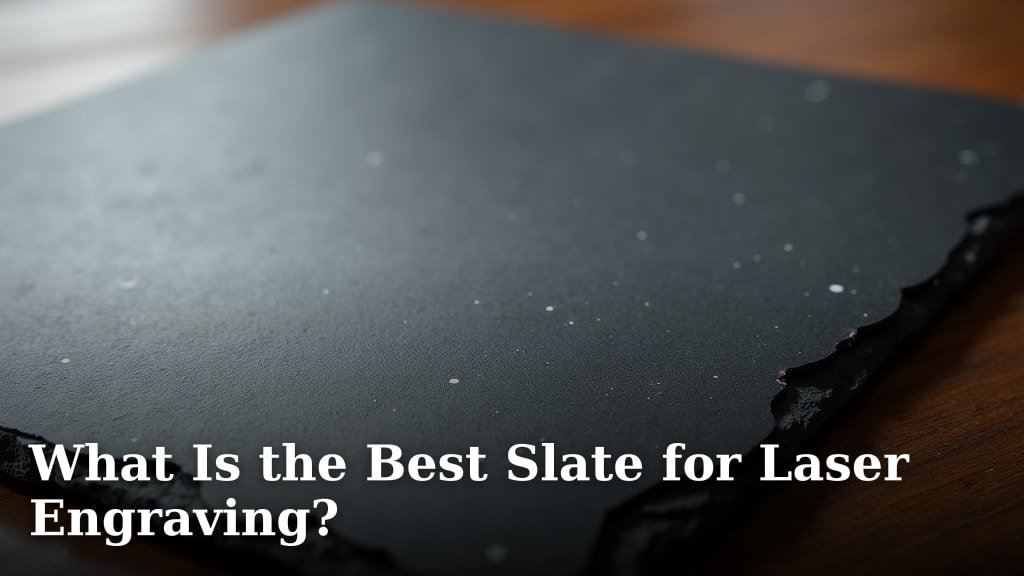
If you are comparing stones before you engrave, read What Is the Best Slate for Laser Engraving? for how dark materials change contrast.
Check your test piece under the same light where the finished piece will sit. A fill that reads well under bright workshop light can fade under warm indoor light behind glass.
Rule: match fill color to stone value first, and to style second.
How deep should the engraving be before you add paint?
Aim for a groove deep enough to hold paint but shallow enough to wipe clean. Too shallow and the paint lifts out with the first wipe, too deep and excess paint hides at the edges.
Most readers find a light first pass easier to fill than a deep single pass. You can deepen a groove in a second pass, but you cannot uncut a deep one.
Run a test piece with three areas at different depths. Fill all three with the same paint, wipe them the same way, and compare which one keeps color after a dry cloth rub.
Depth also affects lettering size. Small text needs a shallow groove, because a deep groove in a tiny letter turns into a blob once paint goes in.
Groove width matters as much as depth. A wide groove holds more paint and hides brush texture, while a narrow groove needs a thinner paint or a spray to enter without bridging across the top.
Rule: fill the shallowest groove that still holds color after wiping.
How do you prep marble before paint fill?
Clean the groove and the face, let the stone dry, and mask the face if you use spray. Dust and stone powder are the main reason paint fails to sit in marble.
Blow out the groove with compressed air or a dry brush. Then wipe the whole piece with a slightly damp cloth and let it dry fully.
A wet groove dilutes paint and can push pigment out of narrow lines.
Masking tape protects the polished face during spray work. Press the tape edges down firmly, because spray paint will creep under a loose edge and leave a fuzzy line.
Skip soap, oils, and stone polishes before filling. Those products coat the face and can make grip worse, not better.
A dry brush with stiff bristles works well for clearing powder from lettering without scratching the face. Work along the groove direction so you lift dust out instead of packing it into corners.
Rule: dry, dust-free, and masked beats any fancy prep product.
How do you apply tempera paint to engraved marble?
Apply tempera in thin layers, push it into the groove, and wipe the face before it fully dries. Thick single coats trap air and wipe unevenly.
Squeeze a small amount onto a flat card or plate. Use a small stiff brush, a cotton swab, or the edge of a card to push paint into the groove.
Work in short sections so you can wipe as you go.
Wipe with a flat, slightly damp cloth held around a block. A block keeps pressure even and stops your finger from pressing paint back out of the groove.
Let the first layer dry, then add a second thin layer if the color looks pale. Two thin layers usually beat one thick layer for even color.
Crayola describes this tempera as creamy and suitable for absorbent surfaces like construction paper, cardboard, and paper mache. On marble, that creamy body still helps the paint sit in the groove while you wipe the face.
Rule: thin layers, flat wipes, and a dry check between coats.
How do you use spray paint on laser engraved marble?
Use spray paint in light passes over a masked face, then pull the tape while the paint is still tacky. Spray work is fast, but it punishes rushed masking.
Hold the can at a steady distance and move in a steady sweep. Light passes build color without pooling, and pooling is what causes drips in narrow grooves.
Two or three light passes usually cover better than one heavy pass. Let each pass flash off for a few minutes before the next one.
Pull masking tape at a low angle once the last pass has set but before it fully hardens. That timing gives a cleaner edge than waiting until the paint is fully dry.
Vallejo Hobby Paint Spray in Black comes in a 400 ml can with two nozzles for different flow rates. The low flow nozzle suits small detail, and the medium flow nozzle suits larger surfaces.
Vallejo says the spray dries fast and gives a matte finish that respects fine detail. That fast dry helps when you need to pull tape soon after spraying.
Matching spray nozzles to groove size
Vallejo supplies one nozzle with low discharge flow for precise and small details. That setting suits narrow lettering where a full flow spray would flood the groove and blur the edges.
The medium discharge flow nozzle suits medium and larger surfaces. That setting suits wide decorative lines and broad filled areas where you want coverage without many passes.
The can also shows the original color on a colored ring around the top. That ring helps you confirm the shade before you spray a finished piece.
Rule: mask well, spray light, and pull tape while the paint is tacky.
When does filler work better than paint on marble?
Use a two-part filler when the groove is wide, deep, or chipped, because filler plugs the space instead of coating it. Paint coats a groove, while filler fills it level with the face.
Bondo Wood Filler comes as a 30 oz two-part formula with a 0.5 oz cream hardener. Bondo says the two-part formula bonds to the surface, cures in as little as 15 minutes, and can be sanded after curing.
Filler suits deep decorative grooves and repairs where stone has chipped at the edge of a design. It is less suited to tiny lettering, where a brush or spray gives cleaner control.
Filler also suits colored fills when you plan to sand the face flush. Sanding after curing helps remove excess and leaves a flat finish that paint alone cannot match.
Note the limits. Bondo describes this filler for wood based surfaces, so treat marble use as a test first on an offcut.
Check adhesion, color, and clean removal on a hidden area before you commit to a finished piece.
Bondo lists the filler as permanent, non shrinking, paintable, stainable, and water resistant after curing. Those traits explain why a filler plug can hold color in a deep groove better than a thin paint coat.
Rule: choose filler for wide or deep grooves, and paint for narrow lettering.
How do you choose between tempera, spray, and filler?
Choose by groove width, piece location, and how much cleanup you want to do. No single option wins on every piece.
| Groove type | Best fill | Why it fits |
|---|---|---|
| Narrow lettering | Tempera or spray | Both reach small lines with control |
| Wide decorative lines | Spray or filler | Both cover broad areas evenly |
| Deep grooves | Filler | Plugs the depth instead of coating it |
| Indoor signs | Tempera | Easy cleanup and matte contrast |
| Outdoor stone | Spray or filler, tested first | Needs better water resistance than tempera |
Think about your reader distance too. A sign read from across a room needs bolder lines than a small coaster.
Bolder lines can take spray or filler, while fine lines need tempera or a low flow spray nozzle.
Think about your cleanup tolerance. Tempera cleans up with water, spray needs masking and ventilation, and filler needs mixing and sanding.
Pick the cleanup you will actually do well.
Consider also the finish you want after filling. Tempera and spray both give a matte finish, while a sanded filler plug can sit flush with the stone and catch light differently at the edge.
Rule: narrow and indoors means tempera, bold and even means spray, deep and wide means filler.
What mistakes make engraved marble lettering hard to read?
Most readability problems come from pale fill, fuzzy edges, and paint left on the face. Each one has a simple fix before you move to the next piece.
Pale fill usually means the groove was too shallow or the paint layer was too thin. Add a second thin layer after the first dries, rather than flooding the groove with one thick coat.
Fuzzy edges usually come from loose masking or spray held too close. Press tape edges firmly, use light passes, and pull tape at a low angle while paint is tacky.
Paint on the face usually comes from wiping too early or too late. Wipe after the fill starts to set, use a flat block, and change cloths often so lifted paint does not smear back down.
Stone color can also cause low contrast. If your fill and stone are close in value, switch fill color before you change your engraving settings.
Overfilling a groove can also close counters in small letters. If the inside of a letter fills in, a thinner brush and a thinner layer will fix it better than a deeper cut.
Rule: fix contrast and edge quality before you deepen the cut.
How do you protect the fill after the paint dries?
Let the fill cure fully, then keep the piece dry if you used tempera, and avoid abrasive cleaners on any fill. Early handling is the most common way a good fill fails.
Tempera needs its full dry time before you stack, hang, or wipe the piece hard. Crayola lists a 24 hour dry time for its black tempera, so give indoor pieces a full day before heavy use.
Spray paint needs its cure time before you clean the face. Vallejo lists a full cure time of 1 hour for its black spray, and it describes the finish as fast drying.
Still, test a corner before you scrub the face.
Filler needs its full cure before sanding. Bondo says the filler can be sanded in 15 minutes, but painting or staining times can differ, so follow the timing on your package for each step.
For everyday care, dust with a soft dry cloth and clean with a barely damp cloth. Avoid soaking the piece, and keep tempera filled pieces away from sinks and outdoor rain.
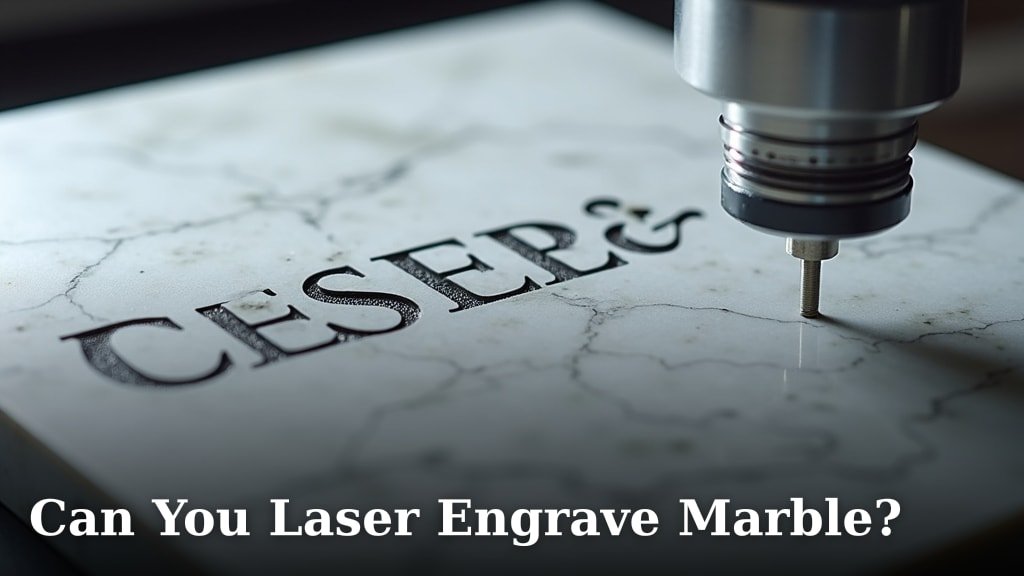
If you want to check whether your stone can take more laser work before you redo a piece, read Can You Laser Engrave Marble? and cutting marble with laser for the limits of the material.
A clear protective coat is sometimes considered for indoor pieces, but it can change the matte look. Test any coat on an offcut first, including how it changes contrast in the groove.
Rule: cure fully, clean gently, and keep non-water-resistant fills dry.
Final rule for paint on laser engraved marble
Pick the fill that matches your groove and your location, then test on an offcut before you fill the finished piece. That one test saves more time than any shortcut.
For light indoor marble with narrow lettering, black tempera in thin layers is the easiest start. For bold lines that need an even coat, masked spray paint gives cleaner coverage.
For wide or deep grooves, a two-part filler plugs the space and sands flush.
Your stone color sets the contrast you need, and your groove depth sets how much fill the mark can hold. Get those two right, and the paint choice matters far less.
Start with a small test tile, fill it, wipe it, and check it after it dries. Once that tile reads clearly, use the same method on your real piece with confidence.
Frequently asked questions
What paint should you use on laser engraved marble for outdoor use?
For outdoor marble, choose a paint or filler that resists water after it cures and seals the groove. Test a small area first, let it cure fully, then check color after rain or cleaning.
Keep the surface wiped clean so water does not sit in the engraving.
Does tempera paint stay on engraved marble?
Tempera stays in a clean, dry groove for indoor pieces, but it is not water resistant. Crayola says its black tempera dries to a matte finish and is not waterproof.
Use it for indoor signs, coasters kept dry, and practice pieces where easy cleanup matters most.
Can you paint fill marble instead of laser engraved marble?
You can apply the same fill method to a shallow laser mark, but depth changes the result. A shallow mark holds less paint and wipes cleaner, while a deeper groove holds more color and needs more cleanup.
Match your paint choice to groove depth, not just to the stone type.
Why does paint wipe off the face of marble?
Paint wipes off polished marble because the face is smooth and non-absorbent. The groove holds paint by depth and friction, while the face releases it when you wipe at the right time.
Work in small sections, wait until the fill starts to set, and use a firm, flat cloth.