Heat Transfer Vinyl vs Adhesive Vinyl: Which Do You Need? (November 2026)
Pick heat transfer vinyl for fabric and adhesive vinyl for smooth hard surfaces. Heat transfer vinyl vs adhesive vinyl comes down to the surface first. HTV bonds with heat and pressure to cloth, while adhesive vinyl sticks on its own to glass, walls, metal and plastic.
On this page (15 sections)
- Heat Transfer Vinyl vs Adhesive Vinyl at a Glance
- What Is Heat Transfer Vinyl and When Does It Win?
- What Is Adhesive Vinyl and When Does It Win?
- The Surface Test That Decides Heat Transfer Vinyl vs Adhesive Vinyl
- How Heat and Pressure Change the Result
- How Adhesive Backing Changes the Job
- Cutting and Weeding With Each Type
- Why Transfer Tape Matters for Adhesive Vinyl
- Best Heat Transfer Vinyl Uses on Fabric
- Best Permanent Adhesive Vinyl Uses on Hard Surfaces
- Can You Laser Cut Vinyl?
- Durability, Washing and Outdoor Use
- Setup, Care and Storage for Both
- Who Should Buy Which
- Heat Transfer Vinyl vs Adhesive Vinyl: Final Verdict
Pick heat transfer vinyl for fabric and adhesive vinyl for smooth hard surfaces. Heat transfer vinyl vs adhesive vinyl comes down to the surface first.
HTV bonds with heat and pressure to cloth, while adhesive vinyl sticks on its own to glass, walls, metal and plastic.
Our score weighs specs, features and buyer feedback against what you're shopping for. The HTVRONT roll scores 9.7 for fabric use, and the YRYM tape scores 9.6 for adhesive vinyl work.
You don't choose by color or by brand first. You choose by the surface the design must stay on.
Fabric calls for HTV. A smooth hard surface calls for adhesive vinyl.
 Best for t-shirts and fabric
HTVRONT Heat Transfer Vinyl White HTV Rolls
Heat Transfer Vinyl vs Adhesive Vinyl at a Glance
HTV uses heat and pressure on fabric. Adhesive vinyl uses its own backing on hard surfaces.
That one difference changes the tools, the prep and the care.
| Point | Heat Transfer Vinyl | Adhesive Vinyl |
|---|---|---|
| Main surface | Fabric such as shirts and tote bags | Smooth surfaces such as glass, walls and metal |
| How it bonds | Heat and pressure | Sticky backing |
| Tools | Cutter, heat press or iron, weeding tool | Cutter, weeding tool, transfer tape |
| Typical use | Apparel and fabric gifts | Decals, signs, stickers and labels |
| Removal | Peels from carrier after pressing | Peels off the surface by hand |
A vinyl cutting machine guide helps you see how both types start the same way. You cut a design with a cutter, weed the extra material, then apply it by the method your vinyl requires.
What Is Heat Transfer Vinyl and When Does It Win?
Heat transfer vinyl wins when the design must live on fabric. It bonds with heat and pressure, so it moves with cloth better than a surface sticker.
For Cricut material options, see best heat transfer vinyl for Cricut.
HTVRONT makes this white HTV in a 12 in x 20 ft roll. The width fits 12x12 in and 12x24 in cutting mats, and it works with all cutter machines.
You can cut it into repeated letters, logos or art designs without buying many small sheets.
The maker lists shirts, tote bags, sportswear, aprons, hats and pillows as uses. It also lists cotton, polyester and cotton blends, lycra/spandex, athletic mesh fabrics and other textiles.
That list tells you the real job of this roll.
Think of a team shirt, a work apron or a canvas tote. Those items flex, fold and go through the wash.
HTV is built for that kind of use because heat and pressure bond it into the fabric surface.
What Is Adhesive Vinyl and When Does It Win?
Adhesive vinyl wins when the design must live on a smooth hard surface. It has a sticky backing, so you place it by hand with no heat.
Use it for window decals, wall lettering, signs, labels, jars, tiles and car details. For a clear, lasting window decal, compare clear permanent adhesive vinyl.
The surface must be clean, dry and smooth so the backing can grip evenly.
Rough, dusty or flexible surfaces give weak contact.
Adhesive vinyl also needs a helper for accurate placement. Transfer tape lifts the cut design, keeps letters in line and lets you press the whole piece onto the surface at once.
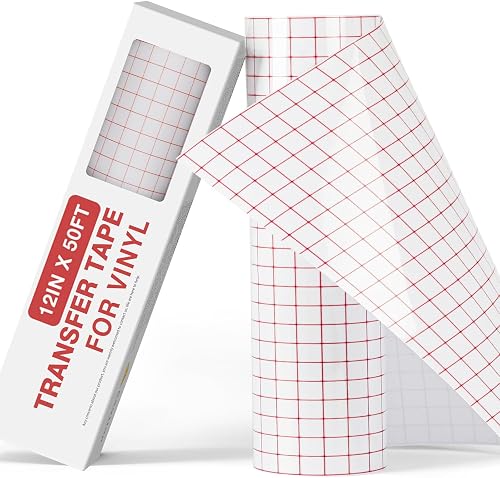
The YRYM HT tape in this guide is 12 in x 50 ft with medium tack. Its clear red grid helps you measure and cut straight cuts.
It is paper tape for adhesive vinyl, not a sheet of vinyl itself.
The Surface Test That Decides Heat Transfer Vinyl vs Adhesive Vinyl
Ask what the design must stick to before you buy anything. Fabric means HTV.
Glass, walls, metal, ceramic and smooth plastic mean adhesive vinyl.
Do not swap them because one roll is already in your cart. HTV will not bond to glass with heat in the way it bonds to a shirt.
Adhesive vinyl will not bond to a shirt in the way HTV does.
Make a short list of your next 3 projects. Write the surface next to each one.
If fabric fills the list, stock HTV first. If hard surfaces fill the list, stock adhesive vinyl and transfer tape first.
This surface test also saves money on extras. You do not need a heat press for a wall decal.
You do not need transfer tape for a pressed shirt design.
How Heat and Pressure Change the Result
HTV needs even heat and firm pressure for a clean bond. A heat press spreads that pressure across the whole design at once.
HTVRONT says its white HTV is sensitive to temperature and pressure. That warning matters.
Too little heat or pressure can leave edges that lift. Too much can change the finish of the design.
An iron can press small designs, but it is harder to keep pressure even across a wide print. A heat press is the better tool for repeat shirts, large prints and work you plan to sell.
Adhesive vinyl needs none of this. You squeegee it down by hand, check the edges and smooth out air bubbles.
That simple step is why adhesive vinyl suits quick decals and signs.
How Adhesive Backing Changes the Job
Adhesive vinyl sticks as soon as it touches a smooth surface. If you need a decal that can be removed later, compare removable adhesive vinyl for Cricut.
That makes placement fast, but it also means you must plan the position before you press it down.
Use transfer tape to hold the design in one piece. Cut the tape a little larger than the design, lay it over the cut vinyl, burnish it and lift the vinyl off its backing sheet.
The YRYM tape has medium tack. That level is sticky enough to lift the design but not so sticky that it fights you on small parts.
The maker says it releases with no residue and does not rip or tear the project.
Our guide to the best permanent adhesive vinyl helps you pick the vinyl itself. Transfer tape only moves it.
It does not change the vinyl type.
Cutting and Weeding With Each Type
Both types cut on a vinyl cutter, but they weed in different ways. HTV is often cut in reverse so it can be pressed face up.
Adhesive vinyl is usually cut face up for direct placement.
HTVRONT says its HTV weeds easily through designs and letters. Fine letters and tight corners still need a steady hand and good light.
A deep cut can make weeding harder, while a shallow cut can leave weak lines.
Adhesive vinyl weeding removes the background material around letters and shapes. Transfer tape then lifts only the parts you want to keep.
Small parts such as dots and inner letters need careful lifting.
If you plan to cut tape to size, our guide to laser transfer tape settings covers a different cutting method for tape. Most home crafters will use a vinyl cutter for these rolls.
Why Transfer Tape Matters for Adhesive Vinyl
Transfer tape keeps multi-part designs in line while you place them. Without it, letters drift and small parts land in the wrong spots.
Lay the tape over the weeded design and press it down with a squeegee. Lift slowly and check that every part came up with the tape.
Then line the design up on the surface and press it down from the center out.
The red grid on this YRYM roll helps you cut straight edges and measure spacing. That grid is useful for signs, alphabet sets and repeating patterns.
The maker says this tape works with indoor and outdoor adhesive vinyl and with machines such as Cricut Explore and Maker. It also says it cannot work with holographic vinyl, glitter vinyl or HTV.
Keep it for standard adhesive vinyl only.
Best Heat Transfer Vinyl Uses on Fabric
HTV is the right pick for apparel, bags and soft home items. Choose it when the finished piece will be worn, carried, folded or washed.
A white roll is a workhorse for one-color designs, names, numbers and simple logos. White shows well on dark fabric and can suit light fabric when you want a clean look.
HTVRONT lists cotton, polyester and cotton blends, lycra/spandex and athletic mesh. Check the fabric content of your shirt or bag before you press.
A fabric outside the listed types may need different settings or a different HTV.
For more options in this class, our guide to the best heat transfer vinyl covers other rolls and finishes. Use it when white alone will not serve your design plan.
Best Permanent Adhesive Vinyl Uses on Hard Surfaces
Adhesive vinyl is the right pick for decals, signs and labels. Choose it when the surface is smooth, hard and stays in one place.
Permanent adhesive vinyl suits items you want to keep in place for daily use. Think of a shop sign, a storage label, a window decal or a lettered wall.
Our guide to how to use permanent adhesive vinyl walks through cleaning the surface, placing the design and smoothing it down. Clean prep matters more than extra pressure.
If you use Oracal, the guide to how to use Oracal permanent adhesive vinyl covers that brand in more detail. Read it before your first large decal so you can plan for bubbles and alignment.
For Cricut users, the guide to the best permanent adhesive vinyl for Cricut helps you match vinyl to your machine and project. Match the vinyl to the surface first, then check machine fit.
Can You Laser Cut Vinyl?
You should check the vinyl type before you put any vinyl in a laser. Some vinyl materials release fumes that are not safe to cut, so this is a safety question, not just a machine question.
Our guide on whether you can laser cut vinyl explains the risk and what to check first. Do not assume a roll is safe because it looks like paper or plastic.
A vinyl cutter is the normal tool for HTV and adhesive vinyl. It cuts with a blade and does not create the same fume risk as a laser.
Use the tool made for the material.
Durability, Washing and Outdoor Use
HTV suits fabric that gets washed. Adhesive vinyl suits surfaces that stay outside or on display.
Match the vinyl to the wear it will face.
HTVRONT says its white HTV adheres to fabric and has held up in the wash without fading, peeling or cracking. The maker describes a home launder test at 40 degrees more than 50 times for 30 minutes each time.
Wash fabric items with the design side protected and follow the HTV instructions for heat care.
Adhesive vinyl faces wind, sun, rain and touch depending on where you place it. Indoor signs and outdoor decals need different vinyl types.
Read the vinyl packaging for its rated use before you apply it outside.
Neither type fixes a poor surface match. HTV on glass and adhesive vinyl on a washed shirt are both wrong choices, even if the first application looks fine.
Setup, Care and Storage for Both
Store both types flat, clean and away from dust and sharp bends. Good storage keeps cuts clean and edges ready to weed.
Keep HTV rolls dry and unrolled only as needed. Dust on the carrier sheet can affect how the design bonds.
Cut only the length you need and store the rest rolled without tight creases.
Keep adhesive vinyl and transfer tape in a clean area as well. Dust or fingerprints on the sticky backing can weaken contact.
The YRYM tape is water resistant as a paper tape, but that does not make the vinyl design waterproof by itself.
Wash your hands before handling cut designs. Skin oils and lint can get in the way of both heat bonding and adhesive contact.
Who Should Buy Which
Buy HTV if your projects are mostly fabric. Buy adhesive vinyl and transfer tape if most projects are hard surfaces.
Many crafters end up owning both, but the first buy should match your main surface.
Choose the HTVRONT roll if you make shirts, totes, aprons, hats or gifts for family and friends. Orders for events, teams and small shops also fit this roll because 20 ft covers many repeat designs.
Choose adhesive vinyl plus the YRYM tape if you make decals, signs, labels, window art or wall lettering. The 50 ft tape roll covers many placements and its grid helps with alignment.
Skip HTV if you have no heat press, no iron and no plan to press fabric. Skip adhesive vinyl if your surface list is all cloth.
The wrong type will not do the other type's job.
Heat Transfer Vinyl vs Adhesive Vinyl: Final Verdict
Pick heat transfer vinyl for fabric and adhesive vinyl for smooth hard surfaces. That rule settles most buys in this heat transfer vinyl vs adhesive vinyl choice.
For fabric work, the HTVRONT white roll gives you 12 in x 20 ft for shirts and other textiles. For decal work, adhesive vinyl plus medium tack transfer tape gives you straight placement on glass, walls and similar surfaces.
Start with the surface you have today. Then add the other type only when your project list asks for it.
Our vinyl cutting machine guide can help you plan the cutter side of either path.
Frequently asked questions
Is heat transfer vinyl the same as adhesive vinyl?
No. Heat transfer vinyl bonds to fabric with heat and pressure, while adhesive vinyl bonds with its own sticky backing to smooth hard surfaces.
Your project surface decides which type you need.
Use HTV for shirts and adhesive vinyl for decals, signs and stickers.
Can I use transfer tape with heat transfer vinyl?
No. This YRYM transfer tape is made for indoor and outdoor adhesive vinyl and the maker says it does not work with HTV.
Heat transfer vinyl is placed with heat and pressure and peeled from its carrier sheet.
Use transfer tape only for adhesive vinyl designs.
Which vinyl lasts longer on a shirt?
Heat transfer vinyl is the choice for a shirt because it is designed to bond to fabric with heat and pressure. HTVRONT says its white HTV is made for cotton, polyester, cotton blends, lycra/spandex and athletic mesh.
Adhesive vinyl is not made for fabric and will not bond the same way.
Can adhesive vinyl go on a wall or window?
Yes, adhesive vinyl is made for smooth hard surfaces such as walls, windows, glass, ceramics and metal. Use transfer tape to keep letters and parts in line while you place the design.
Make sure the surface is clean, dry and smooth before you apply it.
Do I need a heat press for HTV?
You need heat and pressure to apply HTV, so a heat press gives the most even result for repeat items. An iron can work for small projects if you use steady pressure and follow the HTV instructions.
Adhesive vinyl needs no heat at all.


