9 Best Laser Engravers Under 200 (November 2026)
The best laser engravers under 200 include the Creality Laser Engraver Enclosure 2.0 for enclosed indoor setups, the Creality Falcon 5W Laser Engraver Machine for larger beginner projects, and the Twotrees TTS-55 Pro Laser Engraver 5500mW Laser for speed and flexible control.
On this page (6 sections)
- The best laser engraver under 200 for each type of project
- How we compared laser engravers under 200
- Which laser output and work area should you choose?
- What should you prepare before using a diode laser?
- Is a laser engraver under 200 enough for a small business?
- Verdict: which is the best laser engraver under 200?
The best laser engraver under 200 for most buyers is the Creality Falcon 5W, with a 400 x 415 mm work area, 10,000 mm/min speed and support for more than 200 materials. Choose the Twotrees for its faster stated speed, or the ACMER S2 when you want a 7W machine with room to add accessories later.
This group includes compact machines for small craft projects, larger diode engravers for signs and batch work, and one enclosure for buyers who already have a laser and need a more contained setup. The right choice depends on work area, laser output, control method and the materials you plan to use.
If you need a lower budget, compare our guide to the Best Laser Engraver Under 150. For a smaller starting point, see how to choose a laser engraver under 100.
Our picks at a glance
-
1
 Best for enclosed indoor setups
Creality Laser Engraver Enclosure 2.0
9.7/10 our score
See it on Amazon -
2
 Best for larger beginner projects
Creality Falcon 5W Laser Engraver Machine
9.2/10 our score
See it on Amazon -
3
 Best for speed and flexible control
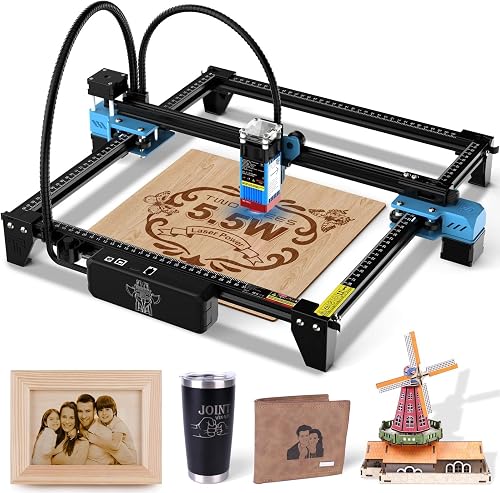
Twotrees TTS-55 Pro Laser Engraver 5500mW Laser
9.2/10 our score
See it on Amazon
- 4
 Check it
ACMER S1 Laser Engraver Machine
Best for compact beginner work - 5
 Best for a large work area on a budgetCheck it
- 6
 Best for growing project needsCheck it
- 7
 Check it
Carverall K15 Pro Laser Engraver 10W Laser
Best for small business craft batches - 8
 Check it
ATOMSTACK Swift 12W Laser Engraver and Cutter
Best for stronger cutting output - 9
 Best for small desktop projectsCheck it
The best laser engraver under 200 for each type of project
The best laser engraver under 200 depends on the size of your materials and the output you need. Before buying, compare current laser engraver deals.
The Creality Falcon 5W is the best all-around machine here, while Twotrees and ATOMSTACK focus on speed and the ACMER S1 and LONGER RAY5 save desk space.
Creality Laser Engraver Enclosure 2.0: Best for enclosed indoor setups
- 720 x 720 x 400 mm size
- 4000 RPM ventilation fan
- Blue light-blocking PVC windows
- Foldable assembly
This protective cover suits buyers who already own a compatible laser engraver and need a larger enclosed workspace. Its fan, flame-retardant fabric and blue light-blocking windows address common indoor setup concerns.
Pros
- Large 720 x 720 x 400 mm design
- 4000 RPM ventilation fan
- Foldable for storage
Cons
- An enclosure, not an engraving machine
- Confirm fit with your exact machine
The Creality Laser Engraver Enclosure 2.0 is the unusual pick in this roundup because it is a protective cover, not a laser machine. It suits a buyer who already owns a compatible engraver and wants a larger enclosed setup for indoor work.
Its dimensions are 720 x 720 x 400 mm, and Creality says it fits the Falcon series plus 95% of laser engravers on the market. Measure your machine before ordering because universal fit claims do not replace a direct dimension check.
A 4000 RPM ventilation fan is designed to extract smoke, particles and odors. The closed design also helps isolate operating noise.
The blue light-blocking PVC windows let you watch the work area without leaving the cover open.
The cover uses flame-retardant fabric and high-strength steel pipes. Its foldable assembly is useful when you need to store the enclosure after a project.
Choose it for a more contained indoor workspace, provided your machine fits within the stated dimensions. It is not a substitute for following laser safety instructions or for checking the ventilation needs of your material.
Creality Falcon 5W Laser Engraver Machine: Best for larger beginner projects
- 5W laser output
- 400 x 415 mm work area
- 10,000 mm/min speed
- Eye-protective cover and active stop
The Falcon 5W gives beginners one of the larger work areas here while keeping the laser output at 5W. It supports wood, leather and acrylic projects and includes offline usage.
Pros
- Largest machine work area here
- Fast 10,000 mm/min engraving
- Supports more than 200 materials
Cons
- Class 4 laser output needs careful safety practices
- Rotary roller and risers are extra
The Creality Falcon 5W is the best overall machine for many beginners because its 400 x 415 mm work area is larger than the common 300 x 300 mm size. That extra room helps when you move from small blanks to larger signs, decorations or grouped pieces.
Its 5000 mW laser output and 0.06 x 0.06 mm compression spot are aimed at detailed engraving and cutting. Creality lists a maximum engraving speed of 10,000 mm/min and support for more than 200 materials, including wood, leather and acrylic.
An eye-protective cover filters 97% of UV rays, and the active stop function pauses operation when movement is detected. The machine is still described as a Class 4 laser, so you need a careful workspace and safe operating routine.
The Falcon also supports offline usage. Rotary rollers and risers can expand the setup, but they are extra accessories.
Pick it for larger flat projects and a broad stated material range. Choose another machine if your main goal is the fastest possible engraving speed or the smallest desktop footprint.
Twotrees TTS-55 Pro Laser Engraver 5500mW Laser: Best for speed and flexible control
- 5500 mW laser
- 300 x 300 mm work area
- 30,000 mm/min speed
- Wi-Fi and TF card offline engraving
Twotrees stands out for its stated 30,000 mm/min maximum speed and several control methods. Its 300 x 300 mm area fits hobby work, small business projects and common flat blanks.
Pros
- Fastest stated speed here
- Wi-Fi and offline control
- Supports LightBurn and LaserGRBL
Cons
- Smaller work area than the Falcon 5W
- Air assist system integration is optional
The Twotrees TTS-55 Pro is the speed-focused choice, with a stated maximum of 30,000 mm/min. Its 5500 mW laser and 300 x 300 mm work area fit hobby projects, small business jobs and common flat materials.
Twotrees lists a 0.08 x 0.46 mm spot focus and engraving accuracy up to 0.1 mm. It supports wood, leather, acrylic, paper and stainless steel, with stated cutting limits of 5 mm plywood, 3 mm acrylic and 0.7 mm leather.
This model offers more control paths than a basic USB-only machine. You can use Wi-Fi, a TF card for offline engraving, a mobile app or computer web control.
It also works with LaserGRBL and LightBurn on supported systems.
The metal air-assist nozzle and red laser shield are included features. An air-assist system can be integrated, but the product data does not mean a separate pump is included.
Choose Twotrees if speed and wireless control matter most. Its work area is smaller than the Falcon 5W, so check the size of your usual material first.
ACMER S1 Laser Engraver Machine: Best for compact beginner work
- 2500 mW laser
- 130 x 130 mm work area
- 99% preassembled
- macOS, Windows and Linux support
The ACMER S1 is a small choice for buyers with limited desk or storage space. It arrives 99% preassembled and supports ACMER Studio, LightBurn and LaserGRBL.
Pros
- Compact 250 x 250 x 162 mm machine
- 2 kg body
- Broad operating-system support
Cons
- Smallest work area among the machines here
- Lower laser output than most picks
The ACMER S1 is the best compact beginner machine in this group. Its machine size is 250 x 250 x 162 mm, its weight is 2 kg and its 130 x 130 mm work area suits small projects and limited storage.
The 2500 mW laser has a 2 mm focal length, a stated speed of 10,000 mm/min and repeatable positioning accuracy of 0.01 mm. ACMER lists wood, bamboo, leather, plastic, PCB, aluminum oxide and ceramics among its supported materials.
The S1 arrives 99% preassembled, with a one-minute laser head installation. That can reduce the initial setup work for a first-time owner.
It supports ACMER Studio, LightBurn and LaserGRBL on macOS, Windows and Linux. The machine also works with NC, DXF, BMP, JPG and PNG files.
Pick it for small personalized gifts and a compact desk setup. Its 130 x 130 mm area is the main trade-off, so it is not the right fit for large signs or wide batches.
KENTOKTOOL Laser Engraver: Best for a large work area on a budget
- 5500 mW output
- 400 x 400 mm work area
- 6000 mm/min speed
- Tool-free focus adjustment
KENTOKTOOL suits buyers who want a broad 400 x 400 mm area for wood, acrylic and leather. Its magnetic protective cover and focus knob make the setup easier to adjust.
Pros
- Large 400 x 400 mm work area
- 5500 mW output
- Supports LightBurn and GRBL
Cons
- Slower stated speed than several picks
- Rotary work needs an extra roller
KENTOKTOOL gives you a 400 x 400 mm work area and 5500 mW output for a relatively broad range of flat projects. It suits buyers who want more space for wood, acrylic and leather without moving to a larger cutting system.
The machine uses a 0.08 mm square focus and has a stated speed of 6000 mm/min. A tool-free focus knob makes adjustment simpler, while the magnetic protective cover can be attached or removed as needed.
KENTOKTOOL lists wood, acrylic, glass, stainless steel, ceramic, stone, food, bamboo, plastic, leather, cardboard and round objects among its applications. A separate roller is needed for round objects.
The machine supports GRBL and LightBurn, with Windows and Mac support through LightBurn. It can cut wood up to 8 mm and black acrylic up to 5 mm according to the product data.
Choose it when work area matters more than maximum speed. Its 400 x 400 mm space is a strong match for wider craft pieces, but the 6000 mm/min speed is lower than several faster picks.
ACMER S2 Laser Engraver: Best for growing project needs
- 7000 mW laser
- 300 x 300 mm work area
- 10,000 mm/min speed
- Optional rotary, riser, enclosure and air assist
The ACMER S2 is a strong fit when you want more output than a small beginner machine and plan to expand later. It supports optional rotary, riser, enclosure and air-assist accessories.
Pros
- Highest stated laser output among the machines
- 0.08 x 0.08 mm spot
- Supports Windows, macOS and Linux
Cons
- Optional accessories add to the setup
- 300 x 300 mm area is not the largest here
The ACMER S2 is the best choice for buyers who want a stronger diode machine and a path to more advanced projects. It has a 7000 mW laser, a 300 x 300 mm work area and a stated speed of 10,000 mm/min.
Its 0.08 x 0.08 mm laser spot and claimed 0.01 mm engraving accuracy suit small text, logos and detailed patterns. ACMER lists wood, acrylic, leather and coated metal among the supported materials.
For cutting, ACMER states that the S2 can cut up to 13 mm paulownia wood or 6 mm black acrylic with multiple passes. Those limits depend on material preparation and settings, so start with a test piece.
ACMER Studio includes AI design tools on Windows and macOS, and LightBurn and LaserGRBL are also supported. Optional rotary modules, risers, enclosures and air-assist pumps let you expand the setup later.
Pick the S2 if you want higher output without giving up a manageable 300 x 300 mm size. Choose the Falcon or KENTOKTOOL if you need a larger flat work area from the start.
Carverall K15 Pro Laser Engraver 10W Laser: Best for small business craft batches
- 10W laser
- 11.8 x 7.9 in A4 workbed
- 15,000 mm/min speed
- One-touch smart focus
The K15 Pro targets repeated craft work with a compact A4 workbed, one-touch focus and a claimed 15,000 mm/min speed. It also supports optional upgrades such as an IR laser head, rotary roller and air pump.
Pros
- 10W laser output
- A4 workbed fits common craft projects
- Starter materials, tools and safety glasses included
Cons
- Workbed is smaller than 300 x 300 mm
- Bare metal work requires the optional IR head
The Carverall K15 Pro suits small business craft work because it combines a 10W laser, one-touch focus and a stated 15,000 mm/min speed. Its A4 workbed measures 11.8 x 7.9 inches, which fits many coasters, tags, signs and gift projects.
The machine works with wood, acrylic, leather and coated metal, and Carverall states support for more than 300 materials. It can cut through 12 mm plywood and 8 mm acrylic with multiple passes according to the product data.
CutLabX works on computers, tablets and phones, and the K15 Pro also supports LightBurn and LaserGRBL. Offline batch jobs can use a TF card, so a computer does not need to stay connected for every job.
The package includes safety glasses, materials and tools. The machine also has four heightening columns for taller objects, while the optional 1W IR head is intended for stainless steel tumblers and aluminum.
Choose it for repeat craft jobs and an A4-sized workspace. Its workbed is smaller than the 300 x 300 mm machines, and bare metal work needs the optional IR head.
ATOMSTACK Swift 12W Laser Engraver and Cutter: Best for stronger cutting output
- 12W laser output
- 300 x 300 mm work area
- 24,000 mm/min speed
- Magnetic cover and safety glasses
The ATOMSTACK Swift gives buyers the highest stated laser output in this group. Its 300 x 300 mm area, removable magnetic cover and support for app, PC, LightBurn and LaserGRBL suit varied DIY projects.
Pros
- 12W laser output
- Fast 24,000 mm/min speed
- Windows, Mac and smartphone control
Cons
- Safety glasses and cover still require careful operating habits
- A 300 x 300 mm area may limit larger signs
The ATOMSTACK Swift is the cutting-focused pick because its 12W laser output is the highest stated output among the machines here. It pairs that output with a 300 x 300 mm work area and a stated speed of up to 24,000 mm/min.
The 0.06 x 0.08 mm focal spot is designed for sharp engraving on wood, metal and dark acrylic. The machine also supports glass and leather engraving, but each material needs suitable preparation and settings.
A removable magnetic protective cover and professional safety glasses are included. Control options include Type-C, USB, the ATOMSTACK app and PC software, LightBurn, LaserGRBL and smartphone use.
The Swift is aimed at DIY crafts and small business work. Its 300 x 300 mm area is large enough for many common projects, but a 400 mm machine is a better match for wide signs.
Pick it when stronger cutting output and fast work matter more than maximum workspace. Keep the safety cover and glasses part of every operating routine.
LONGER RAY5 Laser Engraver: Best for small desktop projects
- 3500 mW laser
- 140 x 130 mm workspace
- 12,000 mm/min speed
- Wi-Fi, USB and offline control
The LONGER RAY5 is a compact option for coasters, keychains, signs and other small craft items. Its 140 x 130 mm workspace fits a small desk, while Wi-Fi, USB and offline modes add control choices.
Pros
- Compact desktop footprint
- 12,000 mm/min speed
- Supports LightBurn and LaserGRBL
Cons
- Small workspace
- Lower output than most machine picks
The LONGER RAY5 is the smallest machine choice for buyers who want a compact desktop engraver. Its 140 x 130 mm workspace is made for coasters, keychains, small signs and other craft items that do not need a full size bed.
The 3500 mW diode laser uses a 0.04 x 0.04 mm spot and has a stated accuracy of 0.01 mm. That fine spot suits small text and detailed patterns where detail matters more than deep cutting.
LONGER lists engraving speeds up to 12,000 mm/min, which helps when you run the same small design across a batch. In daily use, keep in mind that speed depends on the depth and detail you ask for, so test a blank first.
You can control it through Wi-Fi, USB, a mobile app or offline mode. It supports LaserGRBL and LightBurn on Windows, macOS and Linux, so you can use the workflow you already know.
Protective glasses and an emergency stop button are included features. The rigid frame is intended to keep the machine stable during daily use on a desk or in a classroom.
Set up on a flat, clear surface and leave room to load and unload small blanks without moving the frame. Wipe the work area after jobs and check that glasses and the stop button stay easy to reach.
Choose the RAY5 for small projects and limited desk space. Its work area is much smaller than the 300 x 300 mm and 400 x 400 mm machines, so measure your typical blanks before choosing it.
How we compared laser engravers under 200
We compared laser output, work area, stated speed, material support, software options and safety features. We also considered how each machine fits a beginner setup, a small craft business or a tight desktop.
Our score weighs specs, features and buyer feedback against what you're shopping for. The scores are not price ratings, and they do not mean every machine will produce the same result on every material.
Laser output helps with cutting potential, but it is not the only factor. Focus size, material thickness, number of passes, speed and power settings all affect the finished result.
Work area is just as important. A compact 130 x 130 mm machine may be easier to store, while a 400 x 400 mm machine can handle larger pieces without repositioning.
For a plain-language explanation of the process, read How Does a Laser Engraver Work?. Before starting a project, use How to Use a Laser Engraver? for setup and operating guidance.
Which laser output and work area should you choose?
Choose a 2.5W to 3.5W machine for small engraving projects, 5W to 7W for a balance of detail and cutting potential, and 10W to 12W when stronger cutting output is a priority. These ranges describe the machines in this roundup, not a guarantee for a specific material.
Laser output affects how you work, but it is only one part of the result. A lower output machine can still mark wood, leather and other materials well when focus, speed and power are set for the job.
A higher output machine gives you more room for thicker material and multiple pass cutting, but it also demands more care around setup and safety.
Think first about what you will make most often. Personalized tags, keychains and small gifts need fine detail and a compact footprint more than raw cutting power.
Signs, larger decorations and grouped blanks need a wider bed so you can place pieces without constant repositioning.
A 130 x 130 mm or 140 x 130 mm area works for small gifts, keychains and coasters. The ACMER S1 and LONGER RAY5 sit in this range, and both suit a desk where storage space is tight.
You trade project size for a setup that is easier to move and store.
Move to 300 x 300 mm for broader craft work. The Twotrees TTS-55 Pro, ACMER S2 and ATOMSTACK Swift use this size, which covers many common blanks, signs and decorative pieces.
This is a practical middle ground for hobby and small business work.
Choose 400 x 400 mm and 400 x 415 mm when you plan to make larger signs or grouped pieces. KENTOKTOOL offers 400 x 400 mm and the Creality Falcon 5W offers 400 x 415 mm.
That extra room reduces repositioning, but it also needs a larger clear surface and more room around the machine.
Spot size and speed also shape daily use. A fine spot helps with small text and sharp edges, while a higher stated speed can shorten long engraving runs.
Neither figure replaces a test on your actual material, since finish, thickness and settings change the outcome.
Check the machine's stated material support before using acrylic, coated metal, glass or reflective surfaces. Transparent materials may need preparation, and some materials can create dangerous fumes when heated.
Follow the listed limits for each model rather than assuming a stronger laser handles every surface.
Match the range to your routine, not just your largest idea. If most jobs are small, a compact machine will see more use.
If wider pieces are common, plan for the larger bed from the start and check that your desk and storage can support it.
What should you prepare before using a diode laser?
Start with a stable, clear work surface and enough room around the machine for safe access. Keep cables, tools and finished blanks away from the work area so nothing shifts during a job.
Use the cover, shield or glasses included with the machine when the product specifies them, and follow the machine's safety instructions. Set these items out before you load a file so protection is part of the routine, not an afterthought.
Ventilation matters because engraving can produce smoke, particles and odors. The Creality enclosure includes a 4000 RPM fan, but you still need to plan how air leaves the room and avoid engraving unknown materials.
Focus the laser carefully and test settings on a small offcut before using a finished piece. Change one setting at a time so you can see how speed, power and passes affect the result.
Keep an emergency stop or power switch easy to reach. Never leave an active laser unattended, and do not assume a protective cover makes every setup safe without checking the machine's instructions.
After the job, let the material cool, clear debris from the bed and store glasses and small parts where they will not be knocked or lost. A short cleanup after each run keeps the next setup faster and helps you spot loose parts or damage early.
Is a laser engraver under 200 enough for a small business?
Yes, a budget diode machine can suit small batches of tags, coasters, gifts and signs when the work area and output match your materials. The Carverall K15 Pro, Twotrees TTS-55 Pro and ATOMSTACK Swift offer features aimed at repeated craft work.
For a small business, the key question is not only what a machine can engrave once. It is whether it can repeat the same result across a batch without constant adjustment.
Work area, focus, speed and material handling all affect that repeat work.
Speed claims are maximum figures, not a promise that every job will finish at that rate. Thick material, multiple passes, detailed artwork and setup time can reduce actual output.
A design with dense detail will take longer than a simple name or logo, even on a fast machine.
Plan your workflow around the blanks you sell most. If your main products are coasters and tags, a compact or A4 bed may be enough.
If you take wider signs, a 300 x 300 mm or 400 x 400 mm bed will reduce repositioning and keep layouts consistent.
Material testing is part of running orders on time. Keep notes on settings for each material, including speed, power, passes and focus.
Test a small offcut before a customer piece, especially when you switch suppliers or use a new batch of blanks.
Software and control choices also matter for repeat jobs. Offline control can free your computer, while app or Wi-Fi control can make short runs easier to start.
Support for LightBurn or LaserGRBL may suit the files and designs you already use.
Care and cleanup should be built into your schedule. Clear debris, check glasses and covers, and allow time for ventilation after a run.
These steps protect the finish of the work and keep the setup ready for the next order.
Choose a machine that leaves enough workspace for your most common blanks and enough output for your typical material. That match will matter more for daily orders than chasing the highest stated speed or output in the group.
Verdict: which is the best laser engraver under 200?
The Creality Falcon 5W is the best laser engraver under 200 for most beginners because its 400 x 415 mm area, 10,000 mm/min speed and broad stated material support cover many common projects.
For larger flat work, that work area is the main reason to pick it. You can place bigger signs, decorations and grouped blanks without splitting a design across smaller pieces.
It also lists support for more than 200 materials, including wood, leather and acrylic, which suits a range of first projects.
Pick the Twotrees TTS-55 Pro if speed and wireless or offline control matter most. Its stated 30,000 mm/min speed is the fastest in this group, and Wi-Fi, TF card and app control give you several ways to run a job.
Its 300 x 300 mm area is smaller, so size your usual blanks first.
Choose the ACMER S1 or LONGER RAY5 for a compact desk. The S1 offers a 130 x 130 mm area in a 250 x 250 x 162 mm machine, while the RAY5 offers 140 x 130 mm with Wi-Fi, USB and offline control.
Both suit small gifts, keychains and coasters where storage space is limited.
Choose KENTOKTOOL for a 400 x 400 mm workspace. Its 5500 mW output and tool-free focus knob suit wider craft pieces, even though its stated 6000 mm/min speed is lower than several faster picks.
Choose ACMER S2 or ATOMSTACK Swift for higher stated laser output. The S2 lists 7000 mW with optional rotary, riser, enclosure and air assist expands, while the Swift lists 12W output with a 300 x 300 mm area and 24,000 mm/min speed.
Both suit buyers who plan to grow into more demanding cutting work.
If you already own a compatible machine and need a more contained indoor setup, the Creality Laser Engraver Enclosure 2.0 is the better match. Its 720 x 720 x 400 mm size, 4000 RPM fan and blue light-blocking windows address fumes, odors and eye protection, provided your machine fits.
For more options, compare the Top 6 Best Laser Engraver Under 300 roundup.
Our top 3 picks at a glance
-
1
Best for enclosed indoor setups
Creality Laser Engraver Enclosure 2.0
9.7/10 our score
See it on Amazon -
2
Best for larger beginner projects
Creality Falcon 5W Laser Engraver Machine
9.2/10 our score
See it on Amazon -
3
Best for speed and flexible control
Twotrees TTS-55 Pro Laser Engraver 5500mW Laser
9.2/10 our score
See it on Amazon
Frequently asked questions
What is the best laser engraver under 200 for beginners?
The Creality Falcon 5W is the strongest beginner pick here when you need a larger work area. It has a 400 x 415 mm area, 10,000 mm/min speed, an eye-protective cover and active stop.
Choose the ACMER S1 instead if your main limit is desk space.
Is a 5W laser engraver enough for wood?
A 5W diode laser can handle many wood engraving projects, but results depend on the wood, focus, speed and power settings. The Creality Falcon 5W supports wood work and has a 400 x 415 mm area.
Test a small offcut before starting a finished piece.
What work area should a beginner choose?
Choose a 300 x 300 mm area if you want room for signs, decorations and common craft blanks. A 130 x 130 mm or 140 x 130 mm machine takes less space but limits project size.
A 400 x 400 mm or 400 x 415 mm machine gives more room but needs a larger setup.
Do laser engravers need an enclosure?
An enclosure can help contain fumes, odors and some operating noise, but it does not replace safe laser practices or proper ventilation. The Creality Laser Engraver Enclosure 2.0 has a 4000 RPM fan, blue light-blocking windows and a foldable design.
Confirm that its dimensions fit your machine.
What software works with these laser engravers?
Support varies by model. Twotrees, KENTOKTOOL, ACMER, ATOMSTACK and LONGER list support for software such as LightBurn or LaserGRBL.
Some also support their own software, Wi-Fi, USB, mobile control, TF cards or offline engraving.
Check operating-system support before choosing.