9 Best Enclosed 20W Laser Engravers (November 2026)
The best enclosed 20W laser engravers include the xTool M2 20W Color Craft Laser Engraver for camera-guided color crafts, the xTool S1 40W Laser Cutter and Laser for larger enclosed projects, and the Creality Falcon A1 Pro 20W Laser Engraver for touchscreen control.
On this page (8 sections)
- How we chose these enclosed 20W laser engravers
- The best 20W enclosed laser engravers by use
- How do you choose the right 20W enclosed laser engraver?
- What should you prepare before the first job?
- How do you get cleaner, more repeatable results?
- What common buying and setup mistakes should you avoid?
- What can a 20W laser cut?
- Which best 20W enclosed laser engraver should you choose?
The xTool M2 is the best 20W enclosed laser engraver here for camera-guided crafts, with a combined laser and inkjet workflow. The Creality Falcon A1 Pro is another close match if you want touchscreen and app control, while several other picks have different power ratings or open-frame layouts.
“20W enclosed laser engraver” can describe machines with different layouts. Some pair an open frame with a protective cover, while others are designed as enclosed cabinets.
Check both the power and the enclosure before comparing features.
For cabinet-style options, compare this guide with our best enclosed laser engravers. If you want a desktop shortlist, see the Best Desktop Laser Engraver.
Our picks at a glance
-
1
 Best for camera-guided color crafts
xTool M2 20W Color Craft Laser Engraver
9.6/10 our score
See it on Amazon -
2
 Best for larger enclosed projects
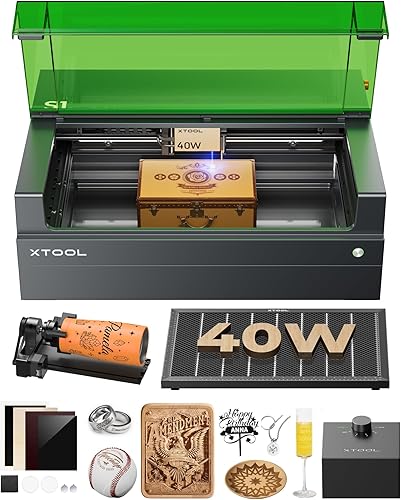
xTool S1 40W Laser Cutter and Laser
9.5/10 our score
See it on Amazon -
3
 Best for touchscreen control
Creality Falcon A1 Pro 20W Laser Engraver
9.3/10 our score
See it on Amazon
- 4
 Check it
LONGER Ray5 Laser Engraver and Cutter Machine
Best for broad flat layouts - 5
 Check it
Creality Falcon A1 10W Laser Engraver
Best for enclosed entry projects - 6
 Best for rotary projectsCheck it
- 7
 Check it
Woxcker Laser Engraver 20W Enclosure Laser Cutter
Best for compact workspaces - 8
 Check it
Twotrees TTS-20 Pro Laser Engraver
Best for oversized open-bed work - 9
 Check it
Longer RAY5 20W Laser Engraver with Air
Best for air-assist bundles
How we chose these enclosed 20W laser engravers
The best match depends on whether you need a true 20W machine, an enclosure and enough room for your projects. We compared stated power, enclosure details, work area, positioning tools and included features, and marked alternatives with different power classes or layouts.
The M2 and Falcon A1 Pro are the clearest matches to the requested combination of 20W output and an enclosure. Woxcker also combines a stated 20W module with an enclosed 300 x 300 mm work area.
Other picks offer useful comparisons, but they are not exact matches. The xTool S1 is 40W, the Falcon A1 is 10W, and the ATOMSTACK and Twotrees models are open-frame Class 4 machines.
| Product | Best for | Laser power | Enclosure | Positioning | Our score |
|---|---|---|---|---|---|
| xTool M2 20W Color Craft Laser Engraver | camera-guided color crafts | 20W diode | Fully enclosed, Class 1 | Dual cameras | 9.6 |
| xTool S1 40W Laser Cutter and Laser | larger enclosed projects | 40W | Protective cover | 9.5 | |
| Creality Falcon A1 Pro 20W Laser Engraver | touchscreen control | 20W blue laser | Fully enclosed, Class 1 | 9.3 | |
| LONGER Ray5 Laser Engraver and Cutter Machine | broad flat layouts | 20W | Full protective enclosure | 8.9 | |
| Creality Falcon A1 10W Laser Engraver | enclosed entry projects | 10W diode | Fully enclosed, Class 1 | 8.8 | |
| ATOMSTACK 20W Laser Engraver | rotary projects | 20W output | Removable magnetic eye shield | 8.6 | |
| Woxcker Laser Engraver 20W Enclosure Laser Cutter | compact workspaces | 20W | 360-degree enclosure | 8.5 | |
| Twotrees TTS-20 Pro Laser Engraver | oversized open-bed work | 20W optical | Open-frame design | 8.4 | |
| Longer RAY5 20W Laser Engraver with Air | air-assist bundles | 20W | Protective cover | 7.9 |
The best 20W enclosed laser engravers by use
The xTool M2 leads for its combination of a 20W diode laser, enclosure, cameras and CMYK inkjet module. The picks below are ordered by score, with differences in power and enclosure called out.
xTool M2 20W Color Craft Laser Engraver: Best for camera-guided color crafts
- 20W diode laser
- Enclosed Class 1 design
- Dual cameras
- CMYK inkjet module
The M2 combines a 20W diode laser with a CMYK inkjet module and dual cameras. It suits buyers who want an enclosed machine with print-to-cut crafting features.
Pros
- 20W diode laser
- Dual cameras for workspace preview
- CMYK inkjet module
Cons
- The 3W IR module is sold separately
- The workflow uses xTool Studio
The xTool M2 suits buyers who want an enclosed craft machine with camera-assisted placement. Its dual cameras preview the workspace, and xTool describes a “Place & Go” workflow that pairs the camera view with motion control.
It combines a diode laser with a CMYK inkjet module for color printing and laser work in one setup. xTool Studio includes templates and an AI image generator, which can help you start with an existing design instead of building every project from scratch.
This combination is especially useful for personalized crafts that mix printed color with cut or engraved shapes. Think through the order of operations before committing to a workflow: decide which parts need printing, which need engraving or cutting, and how the blank will sit in the work area.
The machine is described as a Class 1 enclosed design with real-time monitoring. Its optional 3W IR module is sold separately, so don't count on infrared marking as part of the standard setup.
Choose it for camera-guided crafts and print-to-cut work. For other 20W machine styles, compare it with our Best 20W Diode Laser Engraver guide.
xTool S1 40W Laser Cutter and Laser: Best for larger enclosed projects
- 40W laser
- 23.93 x 15.16 in bed
- Up to 600 mm/s
- Protective cover
The S1 is a higher-power alternative for projects that need a larger bed. Its 40W rating puts it outside the requested 20W class.
Pros
- Larger stated bed size
- Protective cover and lid-open stop
- Auto-focus
Cons
- 40W instead of 20W
- Rotary bundle adds a different setup focus
The xTool S1 has a larger bed for projects that need more room, but it is a 40W machine rather than a 20W model. The bed measures 23.93 x 15.16 in, and the protective cover has a lid-open stop and emergency stop button.
Auto-focus and speeds up to 600 mm/s may suit larger signs or batches where setup time and throughput matter. Those features don't make it a direct match if 20W output is a firm requirement.
The rotary bundle is aimed at projects involving tumblers and other curved objects. Plan for the machine's footprint and the rotary setup, and confirm the bundle configuration matches the work you want to do.
The S1 makes more sense for a buyer who has already decided that work area and higher power matter more than staying in the 20W class. If your work is mostly small gifts or tags, a larger machine may take up space without improving your day-to-day workflow.
Choose it when the larger work area and 40W rating matter more than staying in the 20W class. Our guide explains how much power a laser engraver uses.
Creality Falcon A1 Pro 20W Laser Engraver: Best for touchscreen control
- 20W blue laser
- Fully enclosed
- Touchscreen and app control
- HD camera
The A1 Pro pairs a 20W blue laser with an enclosure, touchscreen, app control and camera. Its optional 2W IR module is sold separately.
Pros
- 20W blue laser
- Camera and autofocus features
- Emergency stop and lid-open halt
Cons
- 2W IR module is not included
- Honeycomb panel compatibility is specific
The Creality Falcon A1 Pro is a 20W enclosed option with touchscreen, app control and an HD camera. Its camera helps preview object placement, and it also has autofocus and a red-dot ranging laser.
Creality describes its enclosure as Class 1 and says its dual protective covers filter 99% of light. Stated safety features include an emergency stop and a halt when the lid opens.
The controls are a strong fit if you want to adjust or monitor a job from the machine or an app. Before buying, check whether the software and control style fit how you plan to prepare artwork and send jobs.
The optional 2W IR module is not included. The machine is also compatible only with 460 x 346 mm honeycomb panels, so check that limit before planning an accessory upgrade or replacing the work surface.
Choose it if touchscreen control and camera positioning are priorities. For home workspace considerations, see our guide to the Best Laser Engraver For Home Use.
LONGER Ray5 Laser Engraver and Cutter Machine: Best for broad flat layouts
- 20W laser module
- 400 x 365 mm work area
- Full protective enclosure
- Touchscreen
The Ray5 offers a 20W module, a broad work area and a full protective enclosure. Its enclosure arrangement may affect where you can set it up.
Pros
- 400 x 365 mm work area
- Touchscreen and several connection options
- Protective enclosure included
Cons
- Enclosure arrangement differs from a fully enclosed cabinet
- Setup and software choice need planning
The LONGER Ray5 has a 20W module and a 400 x 365 mm work area for larger flat projects. It also has a 3.5 in touchscreen and USB, TF card, Wi-Fi and app connections.
LONGER says the package includes a full protective enclosure, safety goggles and setup tools. Check how the enclosure fits around the frame and whether its footprint works on your bench.
The machine supports LaserGRBL, LightBurn and LONGER's LaserBurn software. Choose your preferred software early, then confirm it supports the file types and job controls you need.
A broad work area can be helpful for panels, grouped small pieces or designs that would otherwise need to be split. Measure the material you use most often, not just the largest item you hope to make, and leave room around the machine for loading and unloading.
Choose it for a broad work area and multiple connection options. Consider the enclosure arrangement if you need a cabinet-style machine.
Creality Falcon A1 10W Laser Engraver: Best for enclosed entry projects
- 10W diode laser
- Fully enclosed, Class 1
- Built-in camera
- 15 x 12 in engraving area
The Falcon A1 has a fully enclosed design and camera, but its 10W laser is below the requested power class. Consider it if enclosure and the stated work area matter more than 20W output.
Pros
- Fully enclosed, Class 1 design
- Built-in camera
- Pre-assembled
Cons
- 10W instead of 20W
- Avoid highly reflective materials
The Creality Falcon A1 has a fully enclosed design and built-in camera, but its 10W diode laser is below the 20W class. Its engraving area is 15 x 12 in, with dual doors and side openings for loading materials.
It comes pre-assembled and is described as Class 1. Creality says it works with Falcon Design Space, LightBurn and LaserGRBL.
This is a reasonable alternative if you value an enclosed machine and camera positioning more than 20W output. A lower power rating may change the pace and cutting demands of your projects, so be realistic about material thickness and production volume.
Avoid it if 20W output is a firm requirement. Creality advises against highly reflective materials, including mirror-finished metals and mirrored acrylic.
Choose it when an enclosed 10W machine fits your needs better than a 20W option.
ATOMSTACK 20W Laser Engraver: Best for rotary projects
- 20W output
- Auto air assist
- R8 rotary chuck
- Class 4 laser
The ATOMSTACK bundle includes air assist and an R8 rotary chuck, but it is an open-frame Class 4 machine rather than an enclosed cabinet.
Pros
- Auto air assist
- R8 rotary chuck
- Linear guide structure
Cons
- Class 4, not an enclosed Class 1 machine
- Plan a suitable protective setup
The ATOMSTACK A20 Pro V2 bundle combines 20W output with auto air assist and an R8 rotary chuck. It may suit cylindrical projects, but it is an open-frame Class 4 machine rather than an enclosed laser engraver.
ATOMSTACK lists a linear guide structure, speeds up to 400 mm/s and a removable magnetic eye shield. The shield and safety glasses do not change its open-frame Class 4 design, so plan a suitable workspace and protective setup.
The bundle includes roller, chuck, sphere and ring modules for cylindrical engraving. That accessory mix is useful if you plan to work across different round shapes, but it adds setup decisions and needs space beside the machine.
Skip it if an enclosed cabinet is a must-have. If you're considering it because of the included rotary tools, compare the required workspace and safety approach with a purpose-built enclosed model first.
Choose it for the rotary features if an open-frame layout suits your setup.
Woxcker Laser Engraver 20W Enclosure Laser Cutter: Best for compact workspaces
- 20W laser module
- Enclosed design
- 300 x 300 mm work area
- Wi-Fi, USB, app and TF card options
Woxcker combines a 20W module with a 300 x 300 mm work area and an enclosure. Its compact area may suit smaller projects.
Pros
- Enclosed design
- 300 x 300 mm work area
- Several connection options
Cons
- Smaller work area than some picks
- Safety certification is not specified
Woxcker pairs a 20W laser module with a 300 x 300 mm work area and an enclosure. Its smaller work area can suit name tags, small signs and other compact pieces, but compare your largest material with the work area before choosing it.
The machine supports Wi-Fi, USB, app and TF card connections, plus LightBurn, LaserGRBL and Cutlabx. Multiple connection options can be convenient, but they don't remove the need to choose a reliable workflow for preparing, previewing and starting each job.
Woxcker describes a flame sensor and tilt detection, but a safety certification is not specified. Read the machine's safety instructions and plan ventilation based on the material and workspace.
A compact footprint may be easier to fit on a small bench, though the work area sets a clear limit on project size. Measure the usable bed and your blanks before assuming a compact machine can handle a particular sign or panel.
Choose it for compact projects where an enclosed 20W machine is the priority.
Twotrees TTS-20 Pro Laser Engraver: Best for oversized open-bed work
- 20W optical power
- 418 x 418 mm work area
- Wi-Fi, USB and TF card
- LightBurn and LaserGRBL compatibility
The TTS-20 Pro has a 418 x 418 mm work area, but it is an open-frame Class 4 machine and does not meet an enclosed-machine requirement.
Pros
- Large 418 x 418 mm work area
- Offline TF card operation
- LightBurn and LaserGRBL compatibility
Cons
- Open-frame Class 4 design
- Touchscreen and air assist are optional
The Twotrees TTS-20 Pro has 20W optical output and a 418 x 418 mm work area, but it is an open-frame Class 4 machine. Its large area can handle projects too broad for many compact cabinets, but it does not meet a fully enclosed-machine requirement.
It supports Wi-Fi, USB and TF card operation, along with LightBurn and LaserGRBL. A touchscreen, air assist kit and honeycomb panel are optional accessories.
This model is a poor fit if you are searching specifically for an enclosed setup. It can still be a useful comparison for makers who have space for an open frame and care most about a large bed and offline job transfer.
Think about the full operating area, not only the frame dimensions. You need clear access to the work surface, room for material handling and a workspace that suits an open-frame machine.
Choose it for the large work area if you have a suitable open-frame workspace.
Longer RAY5 20W Laser Engraver with Air: Best for air-assist bundles
- 20W laser module
- Air pump
- 17.3 x 17.3 in honeycomb table
- Protective cover and safety glasses
This RAY5 bundle includes an air pump and honeycomb table. Its protective cover is not described as a fully enclosed cabinet.
Pros
- Air pump included
- Honeycomb table included
- Protective cover and safety glasses
Cons
- Not a fully enclosed cabinet
- Large table needs matching workspace
This Longer RAY5 bundle includes a 20W module, air pump and 17.3 x 17.3 in honeycomb table. It also comes with a protective cover and safety glasses, but the cover is not described as a fully enclosed cabinet.
The air pump has adjustable airflow from 10 to 30 L/min. Longer says it can help suppress smoke and reduce burning during cutting, while the honeycomb table is designed to help move smoke away from the work.
The table is generous, so check your bench dimensions and the space needed around it. A large work surface can help with wide projects, but only if you can load stock safely and keep the setup clear.
This bundle can make sense if you already want an open frame and the included cutting accessories. If you want a fully enclosed cabinet, compare it with the M2, Falcon A1 Pro or Woxcker instead.
Choose it for the included air assist and work table if a protective cover meets your needs.
How do you choose the right 20W enclosed laser engraver?
Start with the enclosure you actually need, then check power, work area, positioning, controls and included accessories. These choices affect the space, materials and workflow you can manage more than a single headline number.
Best 20W enclosed laser engraver: match the enclosure to your room
“Enclosed” isn't a single layout. Some models have a full cabinet design, while others use a cover over a frame or a protective shield around an open work area.
Decide what you expect the enclosure to do for your setup. Consider access to the work surface, visibility during a job, how materials load, and how you will handle smoke and fumes.
An enclosure doesn't remove the need to follow the machine's safety instructions or plan ventilation.
If a fully enclosed format is essential, focus first on models described that way, such as the M2, Falcon A1 Pro and Woxcker. Treat the LONGER Ray5 and Longer RAY5 cover arrangement as a different setup to evaluate, and set aside the ATOMSTACK and Twotrees if an enclosure is non-negotiable.
Check the bed against your usual materials
Measure your most common blanks and compare those dimensions with the usable work area. A machine that fits your typical signs, panels or batches is usually more practical than one chosen for an occasional oversized project.
The Woxcker's 300 x 300 mm area is oriented toward compact pieces. The LONGER Ray5's 400 x 365 mm bed and Twotrees TTS-20 Pro's 418 x 418 mm area offer more room, but the Twotrees machine is open-frame.
For larger stock, also consider how you will load and position it. A bed measurement alone doesn't tell you whether the enclosure opening, table location or surrounding bench gives you enough working clearance.
Choose controls that fit your workflow
Camera previews can help place artwork on a blank, while a touchscreen or app can change how you control the machine. Software compatibility matters too, especially if you already prepare designs in a particular program.
The xTool M2 and Creality Falcon A1 Pro both emphasize camera-assisted placement. The Falcon A1 Pro also offers touchscreen and app control, while the LONGER Ray5 gives you touchscreen and several connection options.
Before choosing, map a typical job from design to finished piece. Note how you will import the file, position the material, preview the job, start it and repeat the process for the next blank.
This simple exercise can reveal whether a camera, offline card, app or computer-based workflow is most useful.
Compare included accessories with the work you plan to do
An accessory is valuable when it supports a real project you expect to make. Air assist can help with cutting, a honeycomb table supports certain flat material setups, and a rotary tool is for round objects.
The Longer RAY5 bundle includes an air pump and honeycomb table. The ATOMSTACK bundle includes rotary modules but is open-frame, and the xTool S1 rotary bundle is a 40W alternative rather than a 20W pick.
Check what is included before comparing bundles. Optional infrared modules, panels and other accessories can change the total setup you need, so don't assume a feature mentioned for a machine is part of the package.
What should you prepare before the first job?
Set up the machine on a stable, clear surface, connect it according to its instructions and prepare a small test design using a material approved for your model. Don't begin with a large, valuable blank or a complex batch.
Measure the bench and the machine's footprint before delivery. Leave room to open the enclosure or access the frame, place material, connect power and manage the exhaust or ventilation arrangement required by the machine and material.
Install the intended software and confirm that the computer, app or offline workflow can connect to the engraver. Import a simple design, use the machine's positioning tools, and check the job boundary before starting the laser.
Use a small scrap piece to learn how the material responds. Begin with the machine's guidance for that material, keep notes on settings and results, and adjust one variable at a time so you can tell what changed.
Keep the work area free of unrelated items and follow the manufacturer's safety instructions. Stay present during operation, and stop if something looks or smells wrong.
How do you get cleaner, more repeatable results?
Clean results begin with consistent material placement, focus and settings. Keep the blank flat, position it carefully and use the camera or other alignment tools to confirm where the design will land.
For repeated items, create a simple placement routine. Use the same reference edge, fixture or material stop for each blank, and save a layout that reflects the actual dimensions of the work area.
When a cut doesn't go through, don't immediately raise power or repeat the job without checking the cause. Confirm focus, material thickness and flatness first.
Check the machine's recommended settings as well, since a warped blank or incorrect focus can make an otherwise suitable setting produce uneven results.
Air assist and a honeycomb surface can help with cutting tasks when the machine supports them. Keep those parts clean and correctly positioned, and use ventilation that suits the material being processed.
What common buying and setup mistakes should you avoid?
The most common buying mistake is treating every 20W machine as an enclosed model. Power describes the laser output class; it doesn't tell you whether the work area is inside a cabinet, under a cover or open to the room.
Another mistake is choosing a bed by its largest dimension alone. Check the usable area, the size and shape of your blanks, and the room needed around the machine to load them.
Don't assume an optional accessory comes in the box. The Falcon A1 Pro's 2W IR module is sold separately.
The Twotrees touchscreen, air assist kit and honeycomb panel are optional, so verify bundle contents before making a plan around those features.
Avoid buying for a material claim without checking whether that material is suitable for your exact laser and process. Follow the machine's safety and material guidance, and never treat a broad compatibility statement as permission to process an unknown material.
Finally, don't skip ventilation planning because a machine has a cover. Enclosure styles and smoke handling vary.
The material affects what your workspace needs, so read Do Laser Engravers Need to Be Vented Outside? before choosing where the machine will run.
What can a 20W laser cut?
A 20W diode laser can cut some materials in multiple passes, but results depend on the material, thickness and machine setup. Use the guidance for your specific machine and material instead of assuming all 20W engravers cut alike.
The product options in this roundup describe different capabilities and limits. For example, the Creality Falcon A1 Pro gives stated examples for basswood and black acrylic, while LONGER describes its Ray5 as able to cut pine and acrylic at stated thicknesses.
These claims are model-specific and aren't a universal promise for every material or setup.
Cutting also differs from engraving. Engraving marks the surface or removes material in a controlled pattern, while cutting needs a continuous path through the stock.
Thick-material cutting as your main goal may call for comparing the machine's stated capability with your material and considering a different power class.
For a material-focused overview, read What Can a 20W Laser Cut?. Check material suitability and ventilation guidance before working with unfamiliar materials.
Which best 20W enclosed laser engraver should you choose?
Choose the xTool M2 for an enclosed 20W craft workflow with dual cameras and a CMYK inkjet module. Pick the Creality Falcon A1 Pro if touchscreen operation, app control and camera positioning fit your routine better.
Consider the Woxcker for compact enclosed projects, and review its safety instructions and ventilation needs. If you need a broader work area, the LONGER Ray5 offers more room with a protective enclosure, while the xTool S1 is a higher-power option with a different footprint.
Skip the ATOMSTACK and Twotrees if a closed cabinet is essential, since both are open-frame Class 4 machines. The Longer RAY5 bundle also has a protective cover rather than a described fully enclosed cabinet, so choose it only if that arrangement fits your workspace.
For a buyer who wants a true enclosed 20W setup with camera-guided placement, the M2 is the strongest match in this group. Choose by enclosure, bed size and workflow first, then use laser power to narrow the options.
Our top 3 picks at a glance
-
1
Best for camera-guided color crafts
xTool M2 20W Color Craft Laser Engraver
9.6/10 our score
See it on Amazon -
2
Best for larger enclosed projects
xTool S1 40W Laser Cutter and Laser
9.5/10 our score
See it on Amazon -
3
Best for touchscreen control
Creality Falcon A1 Pro 20W Laser Engraver
9.3/10 our score
See it on Amazon
Frequently asked questions
What is the best enclosed 20W laser engraver?
The xTool M2 is the closest match in this group for a 20W enclosed machine, with dual cameras and a combined diode laser and CMYK inkjet workflow. The Creality Falcon A1 Pro is another enclosed 20W option, with touchscreen and app control.
Check the enclosure design and included modules before choosing.
Is a 20W laser engraver enough for home crafts?
A 20W machine can suit home crafts involving engraving and cutting materials supported by that model. The picks differ in work area, enclosure and features, so match those details to your projects and workspace.
Consider machine layout and setup needs as well as power.
Does an enclosure make a laser engraver safe to use anywhere?
No. An enclosure is one part of a safe setup, and models differ in their design and stated protections.
Follow the machine's instructions and plan for smoke and fumes based on the materials you use.
Don't assume every enclosed machine has the same safety class or ventilation needs.