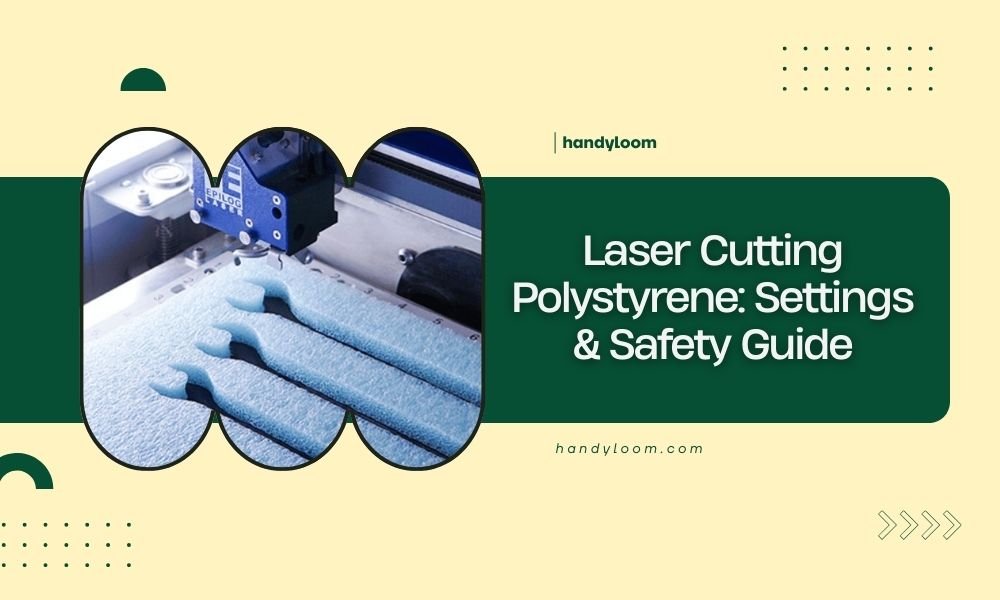
Can You Laser Cut 13mm Polystyrene?
Avoid cutting 13mm polystyrene with a laser cutter unless the exact foam is confirmed laser-safe by its manufacturer and your machine guidance. Thick polystyrene can melt, burn, produce unwanted fumes, and leave an uneven edge, so a sharp hand tool is usually the safer alternative.
On this page (9 sections)
- Can you laser cut 13mm polystyrene safely?
- Why does 13mm polystyrene behave differently from thin foam?
- What can go wrong when cutting polystyrene with a laser?
- How should you check foam before using a laser?
- What tools can replace a laser for 13mm foam?
- Which closed cell foam products suit hand-cut alternatives?
- How do you get cleaner hand-cut foam edges?
- Is a laser ever the right choice for thick foam?
- What is the safest answer for cutting 13mm polystyrene with a laser cutter?
Avoid cutting 13mm polystyrene with a laser cutter unless the exact foam is confirmed laser-safe by its manufacturer and your machine guidance. Thick polystyrene can melt, burn, produce unwanted fumes, and leave an uneven edge, so a sharp hand tool is usually the safer alternative.
A laser is not automatically suitable for every foam board or insulation sheet. For a different plastic sheet, see Can You Laser Cut 1/4-Inch Polypropylene?.
For broader plastic suitability, see which plastics can be laser cut. Foam chemistry, thickness, surface condition, and ventilation all affect the result.
Can you laser cut 13mm polystyrene safely?
13mm polystyrene is a poor material to test casually with a laser cutter. Its thickness gives the beam more material to heat, which can cause melting, charring, flare-ups, or an incomplete cut.
The name polystyrene covers different foams. Expanded polystyrene has a bead-like structure, while extruded polystyrene is more uniform.
For a different foam use, see laser engraving for foam models.
Neither should be treated as safe simply because it looks clean or cuts easily with a knife.
Check the exact material name, safety information, and machine guidance before placing foam on the bed. Apply the same checks to corrugated polypropylene laser cutting.
If you cannot confirm its composition and approved cutting method, choose a non-laser process.
Our guide to Can You Laser Cut Foam? explains why foam type matters more than appearance. An enclosure and exhaust system reduce exposure, but they do not make unknown foam safe.
Why does 13mm polystyrene behave differently from thin foam?
A 13mm sheet has more depth for heat to travel through, so it is harder to cut cleanly than thin foam. The top may appear cut while the lower section remains melted, fused, or attached.
The laser must deliver enough energy to reach the bottom. Increasing power or slowing the pass can enlarge the heat-affected area, soften the edge, and increase fire risk.
Thick foam may also lose its shape near the cut. Heat can round corners, widen narrow slots, or distort small details before the beam reaches the base.
Multiple passes add more heat to the same line. That is a poor trade when the foam's composition has not been approved for laser work.
Treat thickness as a warning sign, not merely a setting challenge. A sample from one foam board does not prove that another 13mm sheet will behave the same way.
What can go wrong when cutting polystyrene with a laser?
The main risks are melting, ignition, smoke, and an unusable edge. The result can fail as both a finished part and a safe machine operation.
Polystyrene may soften before the beam completes the cut. The kerf can close, the piece can stick to the bed, or thin bridges can collapse.
Burning foam can produce unpleasant or hazardous fumes. Use approved ventilation, keep the work area clear, and follow the machine and material instructions.
An open flame is a serious warning. Pause the job according to the machine instructions and do not restart with stronger settings until the material has been identified.
For more detail, read our Laser Cutting Polystyrene: Settings & Safety Guide. Never copy settings from another machine, sheet, or thickness without confirming that the material is the same.
How should you check foam before using a laser?
Identify the foam first, then check its safety information and test only when the manufacturer and machine guidance allow it. A small offcut can show how the material behaves, but it does not make an unknown foam safe.
Look for the material name and thickness. Note whether the sheet is expanded, extruded, laminated, coated, adhesive-backed, or mixed with another layer.
Avoid foam with an unknown coating or adhesive. A backing layer can react differently from the visible foam and create extra smoke or residue.
For an approved test, clear loose scraps, check the exhaust path, and use a small simple shape. Watch for swelling, darkening, flame, melted edges, and residue.
Can you laser cut extruded polystyrene?
Do not assume extruded polystyrene is safe to laser cut. Its uniform surface does not identify its chemical behavior.
Read our guide on can you laser cut extruded polystyrene before choosing a setting. If the material information is incomplete, use a knife, hot wire where appropriate, or another approved method.
What tools can replace a laser for 13mm foam?
A sharp utility knife, foam saw, or tool suited to the material is usually more practical for 13mm foam than a laser. The choice depends on whether you need a straight edge, curve, or repeated parts.
For a straight cut, mark the line, place the sheet on a stable surface, and use several light passes. Keep your free hand away from the cutting path.
For curves, use a template and shallow passes. Thick foam can compress under pressure, so check both sides instead of bending the sheet sharply.
A hot wire may suit some foam types, but it also creates heat and fumes. Confirm that the foam is intended for that process and provide the required ventilation.
Our guide on how to cut packing foam laser cutter covers the assessment steps before choosing a method.
Which closed cell foam products suit hand-cut alternatives?
Closed cell foam rolls can help with flexible padding, insulation, sound reduction, or custom-cut liners instead of rigid polystyrene. They are not replacements for every structural foam board, so match the product to the job.
It provides 36 square feet of coverage and measures 15.74 x 330.7 inches.
The material is intended for vehicle doors, roof, trunk, firewall, and floor. It is described as waterproof, lightweight, flexible, compressible, and suitable as a heat barrier up to 215°F.
Cut the roll with a sharp blade before removing the backing. This is a thin flexible liner, not a 13mm rigid foam board.
Choose Artilife when you need a 1/2-inch EPDM closed cell foam roll that can be cut into sheets or pads. It measures 13 x 60 inches and is intended for sound insulation, padding, sealing, weather stripping, gaskets, and pipe insulation.
Its thickness is close to 13mm, making it useful when the project needs a flexible foam layer rather than a rigid panel. The roll provides stated soundproofing coverage of 5.06 square feet.
Measure before cutting several pieces. A fresh blade helps keep the edge even, while a dull blade can compress the foam and change the finished size.
Who should choose XCEL Marine Foam Roll?
Choose XCEL when you need 1/4-inch black closed cell foam rubber with self-adhesive backing for padding, lining, insulation, or custom-cut seals. It measures 72 x 17 x 1/4 inches.
The listing describes a 1/4-inch black closed cell foam rubber roll with self-adhesive backing for custom padding, lining, insulation, seals, and craft projects.
The material is described as non-absorbent and buoyant, with uses including boat hulls, seats, furniture protection, trunk or truck bed lining, soundproofing, anti-skid surfaces, and gaskets.
XCEL is thinner than 13mm, so it suits lower-profile pads or liners. Choose Artilife for a thicker foam layer, or Siless for a long 4mm vehicle liner.
How do you get cleaner hand-cut foam edges?
Use a firm work surface, a sharp blade, and several controlled passes. Forcing one deep cut through 13mm foam can compress the sheet and leave a slanted edge.
Flatten a roll before measuring and let it relax. Hold the straightedge firmly, make the first pass lightly, and repeat along the same line while keeping the blade vertical.
For holes or inside corners, start with a small opening and widen it gradually. Do not twist the blade, since twisting can tear the edge.
For repeated pieces, make a template and compare the first finished piece with the required dimensions before cutting the rest.
Choose the material based on whether you need thickness, flexibility, adhesive backing, water resistance, cushioning, or sound reduction.
Is a laser ever the right choice for thick foam?
A laser may be suitable only when the exact foam is approved for that machine and process. The decision requires confirmed chemistry, safe ventilation, machine instructions, and a controlled test.
A laser can make sense for approved sheet materials when you need repeated shapes or fine details. It is less attractive when the foam melts easily, the edge must remain square, or the material identity is uncertain.
Do not use a laser for a simple straight cut that a sharp knife can handle. If your goal is a decorative panel, compare Top 7 Best Wood For Laser Cutting and Best Wood For Laser Cutting before changing materials.
What is the safest answer for cutting 13mm polystyrene with a laser cutter?
Do not laser cut 13mm polystyrene as an unknown material. Confirm the exact foam and approved process first, then follow the machine's ventilation, supervision, and safety instructions if laser cutting is explicitly allowed.
For most one-off cuts, a sharp hand tool gives better control over heat and avoids unnecessary fume and fire risks. Choose Artilife for a thicker flexible foam roll, Siless for a thin adhesive vehicle liner, or XCEL for a lower-profile self-adhesive foam rubber layer.
Start with Can You Laser Cut Foam? when assessing another foam. Identifying the material matters more than finding a faster setting for cutting 13mm polystyrene with a laser cutter.