9 Best Respirators for Laser Cutting and Engraving (October 2026)
The best respirators for laser cutting and engraving include the 3M P100 Respirator Cartridge/Filter for compatible 3M facepieces, the 3M Rugged Comfort Quick Latch Half Facepiece for adjustable reusable masks, and the AirGearPro G-500 Reusable Respirator Mask with A1P2 for matched vapor and particles.
On this page (8 sections)
- How we compared respirators for laser cutting and engraving
- Which respirator fits your laser cutting and engraving setup?
- How do you choose a respirator for laser cutting and engraving?
- How should you set up and wear a laser respirator?
- How do you care for a reusable respirator?
- What mistakes should you avoid when using a laser respirator?
- Can a respirator replace laser exhaust?
- Which respirator should you choose for laser cutting engraving?
The best respirator for laser cutting engraving is the one whose filters match the emissions and whose facepiece seals to your face. Use an enclosure and exhaust to capture smoke first, then use respiratory protection as an added control when the hazard calls for it.
Laser cutting and engraving can produce different emissions depending on the material and process. Before choosing a mask, identify what you plan to cut, check the material safety information, and confirm what the respirator’s filters cover.
A respirator cannot make an unsafe material safe to process, and it does not replace ventilation. For a room-level overview, read Is Laser Engraving Safe Indoors?.
Our picks at a glance
-
1
 Best for compatible 3M facepieces
3M P100 Respirator Cartridge/Filter
9.7/10 our score
See it on Amazon -
2
 Best for adjustable reusable masks
3M Rugged Comfort Quick Latch Half Facepiece
9.6/10 our score
See it on Amazon -
3
 Best for matched vapor and particles
AirGearPro G-500 Reusable Respirator Mask with A1P2
9.5/10 our score
See it on Amazon
- 4
 Check it
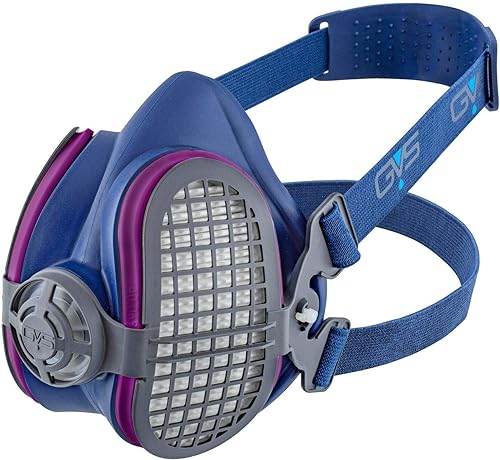
GVS SPR457 Elipse P100 Dust Half Mask
Best for compact particle protection - 5
 Check it
Parcil Distribution Full Face Respirator Mask
Best for full face coverage - 6
 Best for bundled eye protectionCheck it
- 7
 Check it
Tesoro Moda Respirator Mask for Spray Painting
Best for a reusable silicone mask - 8
 Check it
Miller ML00894 Lpr-100 Respirator W/Filters
Best for welding helmet setups - 9
 Best for disposable particle protectionCheck it
How we compared respirators for laser cutting and engraving
The most useful comparison is filter coverage, facepiece fit, and how the mask works with your shop setup. We compared those features against common decisions a laser user needs to make, while treating each respirator’s stated coverage as specific to its listed contaminants.
The scores reflect how well each option’s stated features match this guide’s buying needs. They do not measure protection in a particular laser workspace.
| Product | Best for | Filter type | Connection | Compatible facepieces | Our score |
|---|---|---|---|---|---|
| 3M P100 Respirator Cartridge/Filter | compatible 3M facepieces | P100 cartridge/filter | Bayonet style | 3M 6000, 7000, FF-400 series; specified Scott models with adapter | 9.7 |
| 3M Rugged Comfort Quick Latch Half Facepiece | adjustable reusable masks | 9.6 | |||
| AirGearPro G-500 Reusable Respirator Mask with A1P2 | matched vapor and particles | 9.5 | |||
| GVS SPR457 Elipse P100 Dust Half Mask | compact particle protection | P100 | 9.2 | ||
| Parcil Distribution Full Face Respirator Mask | full face coverage | 9.0 | |||
| LAUCO Premium Respirator Kit | bundled eye protection | 8.7 | |||
| Tesoro Moda Respirator Mask for Spray Painting | a reusable silicone mask | 8.5 | |||
| Miller ML00894 Lpr-100 Respirator W/Filters | welding helmet setups | 8.3 | |||
| VEVOX™️ N95 Mask | disposable particle protection | 8.0 |
Which respirator fits your laser cutting and engraving setup?
The 3M P100 cartridge/filter and 3M Rugged Comfort facepiece lead this roundup for users who can build a compatible 3M system. The AirGearPro G-500 is the clearest bundled option here for buyers whose identified hazards match A1P2 filtration.
3M P100 Respirator Cartridge/Filter: Best for compatible 3M facepieces
- NIOSH approved for certain organic vapors, acid gases, and particulates
- Bayonet-style connection
- Use with compatible 3M facepieces
A cartridge/filter option for compatible facepieces when its approved contaminant coverage matches the work. It does not replace ventilation or cover every possible laser emission.
Pros
- NIOSH approved for certain named contaminants
- Twist-on bayonet connection
- Works with multiple specified facepiece series
Cons
- Requires a compatible facepiece
- Not for IDLH environments
The 3M P100 cartridge/filter suits users who already have a compatible 3M facepiece and need coverage for certain named vapors, acid gases, and particulates. Its bayonet connection works with compatible 3M half and full facepieces in the 6000, 7000, and FF-400 series.
Its NIOSH approval covers certain organic vapors, chlorine, hydrogen chloride, sulfur dioxide, hydrogen sulfide, hydrogen fluoride, and oil and non-oil particulates. That is a defined set of contaminants, not a guarantee that it covers every compound from every laser material.
This cartridge is not for immediately dangerous to life or health environments. It also does not include the facepiece, so check that your mask is compatible and fits correctly.
Choose it if you already own a compatible facepiece and the identified contaminants match its approved coverage. Keep exhaust as the main control, and see how to vent a laser engraver for source capture basics.
3M Rugged Comfort Quick Latch Half Facepiece: Best for adjustable reusable masks
- NIOSH approved with compatible 3M cartridges, filters, or supplied air systems
- Quick latch drop-down mechanism
- Adjustable head harness
This reusable half facepiece has an adjustable harness and a quick latch for putting it on and taking it off. Choose compatible filters for the identified contaminants and confirm that the mask fits.
Pros
- Quick latch design
- Adjustable head cradle
- Low-profile design
Cons
- Requires compatible cartridges or filters
- Half facepiece does not cover the eyes
The 3M Rugged Comfort Quick Latch is a reusable half facepiece for buyers who want an adjustable mask body that accepts compatible 3M filters. Its NIOSH approval applies when used with compatible 3M cartridges, filters, or supplied air systems.
An adjustable harness, three-size head cradle, and silicone faceseal help you set up a stable fit. The quick latch lets you drop the facepiece away from your face with one hand when moving in and out of contaminated areas.
You must choose a compatible filter for the specific contaminants in your process. A half facepiece leaves your eyes uncovered, so use separate eye protection appropriate to your laser setup.
For blue diode eyewear, see how to choose safety glasses.
Pick this facepiece if you want a reusable 3M system and will select its filters based on a hazard review. Skip it if you want an all-in-one respirator kit or cannot confirm which cartridges match your work.
AirGearPro G-500 Reusable Respirator Mask with A1P2: Best for matched vapor and particles
- A1P2 dual filtration system
- P2 filter stated to filter at least 98% of airborne particles
- Reusable mask with replaceable filters
The G-500 combines an A1 vapor filter with a P2 particle filter and includes safety goggles. Check that its filter classes suit the materials and fumes from your specific laser task.
Pros
- Dual filtration system
- Replaceable filters
- Safety goggles included
Cons
- Filter claims do not identify every laser fume
- Confirm fit and filter suitability for your materials
The AirGearPro G-500 suits buyers who want a reusable mask with a combined vapor and particle filter class. AirGearPro describes the A1 filter for organic vapors with boiling points above 65°C and says its P2 filter captures at least 98% of airborne particles.
Those filter classes describe specific protection categories. Check the materials you plan to process and confirm that the combination covers their emissions before relying on it.
The mask has adjustable straps, replaceable filters, and includes safety goggles. Choose it when those features and the filter classes fit your hazard review; skip it if you need confirmed protection beyond the stated classes.
If smoke remains in the room, address the extraction system before relying on a mask. How to reduce smoke when laser engraving covers practical controls.
GVS SPR457 Elipse P100 Dust Half Mask: Best for compact particle protection
- NIOSH approval number TC-84A-6949
- Replaceable and reusable filters included
- Compact design with adjustable headband
This compact half mask has replaceable filters and a stated NIOSH approval number. Check that its approved use matches the hazard, since a particulate filter alone does not cover every vapor.
Pros
- P100 filters included
- Compact shape and full range of vision
- Filters are replaceable
Cons
- M/L size may not fit every face
- Particulate filtration does not guarantee vapor protection
The GVS Elipse P100 Dust Half Mask fits users seeking a compact reusable mask for a particle hazard. It includes replaceable filters, has a stated NIOSH approval number, and comes in M/L size.
A P100 filter handles particulates, not every vapor or gas. The mask’s description covers dust and fumes, but that wording does not identify protection against all emissions from laser cutting and engraving.
Its compact shape is described as allowing a full range of vision without interfering with other eye or ear protection. Still, face shape matters, so check fit and sealing instructions before choosing it.
Choose the Elipse if its particle protection matches the hazard and the M/L size fits you. Skip it when your hazard review identifies vapors that require a suitable cartridge; read how to protect your lungs from laser engraving fumes for broader control steps.
Parcil Distribution Full Face Respirator Mask: Best for full face coverage
- Full-face design
- Bundled filters
- Adjustable 5-point head strap
This full-face design adds eye coverage when its included filters match the hazard. It is not designed for eyeglasses, so check compatibility before choosing it.
Pros
- Covers the face and eyes
- Adjustable head strap
- Built-in voice amplifier
Cons
- Not designed for eyeglasses
- Confirm filter suitability for laser emissions
The Parcil Distribution Full Face Respirator suits users who need a full-face design and can wear it without eyeglasses. It has bundled filters, a five-point adjustable head strap, and a dome-shaped lens described as ANSI Z87.1 impact resistant.
The full-face design adds eye coverage along with respiratory protection, but the filters must still match the hazard. A broad lens and anti-fog feature do not tell you what gases, vapors, or particles the included filters capture.
Check the filter type, fit, and instructions before using it around a laser. This is a poor fit for someone who needs to wear eyeglasses with the mask, because it is not designed for them.
Choose it when full-face coverage matters and its filter specifications suit your identified emissions. Skip it if you cannot confirm the filters’ approved use.
LAUCO Premium Respirator Kit: Best for bundled eye protection
- Half face shield and safety glasses
- Dual filtration system
- Includes replaceable filters
This kit bundles a half-face respirator, safety glasses, and several filters. Verify cartridge and filter suitability for laser-related contaminants before relying on it.
Pros
- Safety glasses included
- Replaceable filters and cartridges
- Several work types named
Cons
- Filter compatibility needs checking
- Particle percentage alone does not describe vapor protection
The LAUCO Premium Respirator Kit suits buyers who want a half-face respirator bundled with safety glasses and replacement parts. The kit includes 10 cotton filters, 2 cartridges, and 2 filter covers.
Its dual filtration system is described as blocking 97% of airborne particles. That percentage does not identify which vapors or gases the cartridges address, so confirm the filter type and approved contaminants before using the kit for laser work.
The kit’s included glasses handle a separate part of your setup, while the respirator needs a secure fit and suitable filters. Choose safety glasses for green lasers rated for your equipment.
Choose it only when you can verify the cartridges match your material’s emissions.
Skip this kit if you need a clearly specified filter class and cannot confirm what the included cartridges capture. Use an enclosure and exhaust to limit exposure at the source.
Tesoro Moda Respirator Mask for Spray Painting: Best for a reusable silicone mask
- Reusable half-face mask
- Clear safety glasses included
- 10 replacement filters
This reusable half-face mask comes with replacement filters and safety glasses. Confirm the filter class and its approved uses before choosing it for laser fumes.
Pros
- Reusable facepiece
- Safety glasses included
- Replacement filters included
Cons
- Filter class is not specified here
- Confirm compatibility with the intended contaminant
The Tesoro Moda is a reusable silicone half-face mask supplied with 10 replacement filters and clear safety glasses. Its described uses include spray painting, woodworking, welding, dust, and general safety.
The filter class and the contaminants addressed are not specified here. That gap matters for laser work, where you need to identify whether the filter covers particles, vapors, or both for your materials.
The adjustable headband is intended to secure the facepiece, but a good seal depends on your face and correct adjustment. Treat the included glasses as separate eye protection, not as proof of the mask’s filter coverage.
This is a secondary option only if you can confirm the exact filter type and fit. Skip it if that information is unavailable or does not cover your identified hazard.
Miller ML00894 Lpr-100 Respirator W/Filters: Best for welding helmet setups
- Includes HEPA air filters
- Fits under most welding helmets
- Large non-return exhaust valve
This half mask includes HEPA filters and is described for dust particles, fumes, and metal mist. Its Small/Medium size may suit some users, but confirm fit and hazard coverage for your laser task.
Pros
- Filters included
- Designed to fit under most welding helmets
- Large non-return exhaust valve
Cons
- Small/medium size
- Confirm suitability for laser-generated contaminants
The Miller ML00894 Lpr-100 suits some users who need a half mask that fits under a welding helmet. It includes HEPA filters and is described for hazardous and toxic dust particles, fumes, and metal mist.
Its Small/Medium sizing is a key buying constraint: the mask must fit your face securely. The named uses do not guarantee coverage for every vapor produced by a laser process, so match its approved use to the specific material and exposure.
A large non-return exhaust valve is described as reducing user fatigue. The welding-helmet fit is useful only if that combination is part of your work setup.
Choose it if the size fits and its filter use matches the particle hazard. Skip it if you need vapor protection that its filter specifications do not guarantee.
VEVOX™️ N95 Mask: Best for disposable particle protection
- NIOSH-approved N95 claim
- Described as filtering at least 95% of airborne non-oil particulates
- Valved design
This disposable N95 is described for non-oil particulates, not as a vapor filter. It is a limited option when an N95 suits the identified particle hazard, but it does not replace fume extraction.
Pros
- Disposable particulate respirator
- Valved design
- Described as NIOSH approved
Cons
- Does not filter vapors
- Not a replacement for source capture
The VEVOX N95 is a disposable option for a suitable non-oil particulate hazard. VEVOX describes it as filtering at least 95% of airborne non-oil particles and includes an exhalation valve.
An N95 does not filter gases or vapors. Laser processing can create mixed emissions, so an N95 alone is not a complete answer to laser fumes.
Fit still matters: follow the instructions and check the seal for gaps. Choose it only when an N95 is suitable for the identified particle hazard; skip it when the process also requires vapor or gas protection.
Even with a suitable particulate mask, keep source extraction in place. A disposable respirator is not a substitute for an enclosure or exhaust.
How do you choose a respirator for laser cutting and engraving?
Choose by the material’s emissions, the filter’s approved use, and the facepiece’s fit. Start with the material rather than the mask label: “P100,” “P2,” and “N95” refer to particulate filtration, while vapor and gas coverage depends on the cartridge or filter combination.
First, identify the material and process. Check material safety information and machine guidance, especially before processing unfamiliar plastics, coatings, adhesives, or treated materials.
Second, match the hazard to the complete respirator. A particle filter does not become a vapor filter because it is fitted to a reusable mask, and a cartridge that covers some vapors does not necessarily cover all of them.
Third, check the facepiece and filter connection. Confirm that the filters fit the mask model, that the mask size suits your face, and that you can follow the maker’s fit and use instructions.
If the emissions are unclear, pause and seek qualified safety advice before operating the laser. Do not choose by the broadest-sounding label or by how comfortable a mask feels.
How should you set up and wear a laser respirator?
Set up the enclosure and exhaust first, then put on a compatible respirator according to its instructions. Respiratory protection is an added control, not a replacement for capturing fumes where they form.
Before work, inspect the facepiece, straps, valves, and filter connections for damage or poor attachment. Make sure the filters are the right type for your hazard, are installed in the correct direction if applicable, and have not passed their stated service life.
Adjust the straps so the mask sits evenly and seals around your face. Follow the maker’s seal-check instructions every time you put it on; facial hair on the sealing surface can prevent a close fit.
Use separate eye protection when wearing a half mask, and confirm it works with your machine’s eye-safety requirements. Keep the work area and exhaust running as intended, and stop if the respirator shifts, becomes damaged, or no longer seals.
For workplace use, follow the required respiratory protection program, including fit testing where applicable. A comfortable feel is not the same as a verified fit.
How do you care for a reusable respirator?
Care for a reusable respirator by following its maker’s cleaning, inspection, and filter replacement instructions. Do not wash or reuse filters unless their instructions specifically allow it.
After each use, inspect the facepiece and straps for cracks, wear, or damage. Clean the mask as directed, let it dry fully, and store it away from dust, sunlight, heat, and chemicals that could affect the materials.
Replace filters when the manufacturer’s instructions call for it, or sooner if they are damaged or breathing becomes difficult. Keep compatible replacement filters on hand so you are not tempted to continue with a worn or unsuitable filter.
Disposable respirators follow different care rules. Do not treat a disposable N95 as a reusable mask unless its instructions explicitly allow reuse.
What mistakes should you avoid when using a laser respirator?
The biggest mistake is treating a respirator rating as a complete answer to every laser emission. A P100, P2, or N95 particulate rating does not, by itself, establish vapor or gas protection.
Another mistake is choosing a filter before identifying the material. Different materials and coatings can create different emissions, so use material safety information and qualified advice when the hazard is unclear.
A third mistake is wearing a mask that does not seal. Loose straps, a wrong size, a damaged facepiece, or facial hair along the seal can let contaminated air bypass the filter.
Do not rely on smell as a filter-life indicator, assume goggles are laser-rated because they are included with a respirator, or use a mask to justify poor ventilation. Keep source capture, eye safety, and material selection in the same safety plan.
Can a respirator replace laser exhaust?
No. Use an enclosure and exhaust to capture fumes at the source, then add respiratory protection when the hazard assessment calls for it.
A room that smells less smoky is not proof that every harmful contaminant has been removed. For more on exposure concerns, read Is Laser Engraving Toxic? and What Safety Equipment Do You Need for Laser Engraving?.
Which respirator should you choose for laser cutting engraving?
Choose the 3M P100 cartridge with a compatible facepiece if its named contaminant coverage matches your hazard review. Consider the AirGearPro G-500 when its A1P2 filters match the identified emissions, or the GVS Elipse when a P100 particulate mask suits the task.
Pick the Parcil full-face option if you need face coverage and can wear it without eyeglasses, but first confirm its filters. If you cannot verify filter suitability, seek qualified guidance before cutting or engraving, and keep enclosure and exhaust at the center of your safety plan.
Our top 3 picks at a glance
-
1
Best for compatible 3M facepieces
3M P100 Respirator Cartridge/Filter
9.7/10 our score
See it on Amazon -
2
Best for adjustable reusable masks
3M Rugged Comfort Quick Latch Half Facepiece
9.6/10 our score
See it on Amazon -
3
Best for matched vapor and particles
AirGearPro G-500 Reusable Respirator Mask with A1P2
9.5/10 our score
See it on Amazon
Frequently asked questions
Does a respirator make laser engraving safe indoors?
No. A respirator is one part of exposure control, and its filter must match the material and contaminants.
Use an enclosure and effective exhaust to capture fumes at the source, then follow the laser and material safety instructions.
A mask does not make an otherwise unsuitable room safe for engraving.
Is a P100 filter enough for laser cutting fumes?
Not by itself in every case. P100 refers to particulate filtration, while some respirator cartridges also cover certain vapors or gases.
Match the complete respirator and filter to the material's emissions and exposure conditions.
A filter label alone does not identify every substance produced by laser work.
How should a respirator fit?
It should seal to your face without gaps, and you should follow the maker's fit and use instructions. Facial hair can interfere with the sealing surface, and different facepieces fit different faces.
For workplace use, follow applicable respirator program requirements, including fit testing where required.
Can an N95 mask protect against laser fumes?
An N95 filters certain airborne particles when properly fitted, but it does not filter gases or vapors. Laser processes can create a mix of emissions depending on the material, so an N95 alone may not address the full hazard.
Use source extraction and choose respiratory protection based on the specific contaminants.