
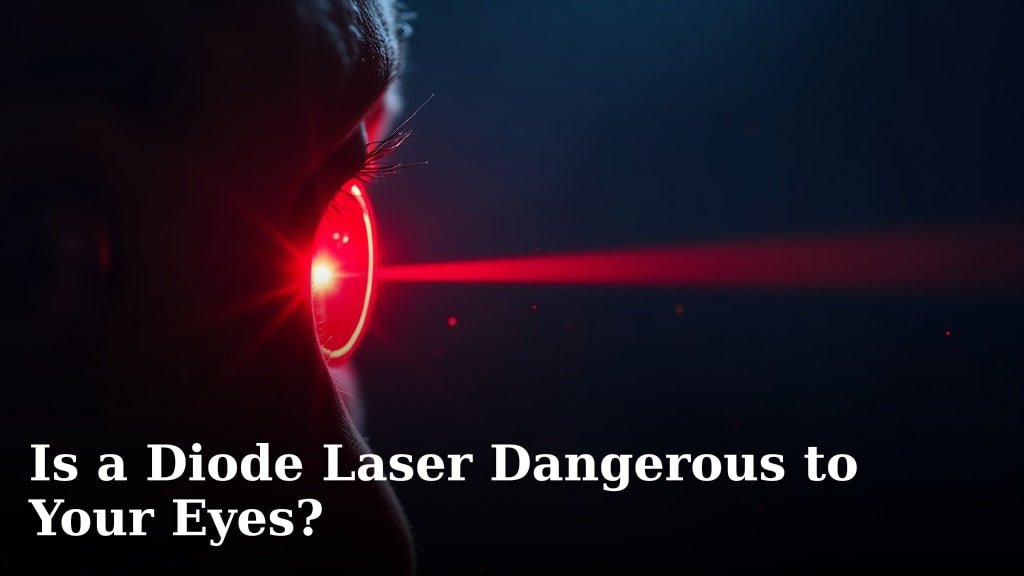
Yes, diode lasers can be dangerous to your eyes if you’re not careful. Direct or reflected beams can cause permanent vision damage very quickly. Always wear the correct protective eyewear for the specific laser you are using.
Even low-power diode lasers, like those found in pointers or CD players, emit concentrated light. This light can overwhelm your eye’s natural defenses. It’s not just about bright flashes; even a brief, invisible exposure can be harmful if it hits the retina. Understanding the risks and safety measures is key.
- Diode lasers can cause permanent eye damage.
- Always wear appropriate safety glasses.
- Even low-power lasers pose a risk.
- Reflected beams are also dangerous.
- Know the laser’s power level and wavelength.
Let’s walk through exactly why diode lasers can be a threat to your eyesight and what you can do to stay safe.
Understanding the Dangers of Diode Lasers to Your Eyes
Diode lasers are everywhere, from your remote control to industrial equipment. But how dangerous are they, really? Many people wonder about the safety of diode lasers, especially concerning their eyes. The short answer is: yes, they can be dangerous.
Direct exposure to a diode laser beam, even for a split second, can cause permanent vision loss. It’s not just the super-powered lasers that are a threat. Even lower-power devices can cause harm if you’re not careful. This guide will help you understand why and how to protect your sight.
How Diode Lasers Affect Your Eyes
Diode lasers produce a highly concentrated beam of light. This focused light is much more intense than regular light. When this beam enters your eye, it can overwhelm the delicate tissues. Your eye’s natural defenses simply can’t cope with such intensity.
The Retina: A Vulnerable Target
The main danger zone is your retina. This is the light-sensitive tissue at the back of your eye. It’s responsible for sending visual signals to your brain. A concentrated laser beam can burn or damage retinal cells instantly. This damage is irreversible.
Think of your eye like a magnifying glass. The cornea and lens focus light onto the retina. A laser beam is already focused. When it hits your eye, it’s like shining a super-bright flashlight directly onto that sensitive screen. The result is often a permanent blind spot.
Different Wavelengths, Different Risks
Diode lasers come in various wavelengths. Some are visible, appearing as red, green, or blue light. Others are invisible, like infrared lasers. Invisible lasers can be particularly deceptive. You might not see the beam, but it can still cause severe damage.
Visible lasers are easier to avoid because you can see the beam. However, the temptation to stare or test their limits can be strong. Invisible lasers remove that visual warning. This makes them a silent threat to your vision. Always know the wavelength of the laser you are using.
Power Levels and Their Impact
The power of a diode laser is measured in milliwatts (mW). This number tells you how much energy the laser emits. Higher milliwatt ratings mean a more powerful and dangerous laser.
Low-Power Lasers: Still a Concern
You might think a small laser pointer isn’t a big deal. Many common laser pointers are less than 5 mW. While they are less likely to cause immediate, severe injury, they are not harmless. A direct hit to the eye from a 5 mW laser can still cause temporary flash blindness or minor retinal damage.
The key here is direct exposure. Staring at the spot projected by a low-power laser is generally safe. However, if the beam itself hits your eye directly, there’s a risk. Always avoid pointing any laser, no matter how weak, at people or animals.
High-Power Lasers: Serious Danger
Lasers used in industry, research, or for entertainment can be much more powerful. These range from tens of milliwatts to watts. A laser with a power of 50 mW or higher can cause instantaneous and permanent eye damage. Even a brief exposure can be devastating.
For these high-power lasers, specialized protective eyewear is absolutely mandatory. We’ll discuss this more later. Never assume a laser is safe without knowing its power rating and wavelength. Many experts strongly advise against using high-power lasers without proper training and safety protocols.
The Role of Reflections
Eye damage from diode lasers doesn’t only happen from direct beams. Reflected beams can be just as dangerous. When a laser hits a shiny surface, it can bounce off at an angle.
These reflections can be diffuse or specular. A diffuse reflection scatters the light in many directions. A specular reflection acts like a mirror, creating a concentrated beam. Shiny surfaces like metal, mirrors, or even water can create dangerous reflections. You might not be looking at the laser source, but a reflected beam could still hit your eye.
Why Reflections Are Tricky
Reflected beams can appear unexpectedly. You might be working with a laser, and it hits a tool or a piece of equipment. The bounced beam could then travel across the room. It might hit someone’s eye who wasn’t even aware of the laser’s original path.
This is why you must be mindful of your entire work environment. Clear away any unnecessary reflective materials. Always assume that a reflection could be hazardous. It’s better to be overly cautious than to risk permanent vision loss.
Safety First: Essential Protective Measures
Protecting your eyes from diode lasers is straightforward but requires diligence. The most important step is using the correct protective eyewear. This is not optional; it’s a requirement for safe laser use.
Choosing the Right Eyewear
Laser safety glasses are designed to block specific wavelengths and power levels. They are not like regular sunglasses. They have special filters that absorb or reflect the laser light. Standard safety glasses offer no protection against laser beams.
Each pair of laser safety glasses is rated for certain wavelengths (in nanometers, nm) and Optical Density (OD). The OD rating tells you how much the glasses reduce the laser’s intensity. For example, an OD of 4+ means the glasses reduce the laser power by a factor of 10,000 or more.
It is absolutely critical that your safety glasses match the wavelength and power of the laser you are using. A pair of glasses designed for a red laser will not protect you from a green or infrared laser. Always check the specifications. Reputable sources, like the American National Standards Institute (ANSI), provide guidelines for laser safety.
General Safety Practices
Beyond specialized glasses, some general rules apply:
- Never point a laser at anyone’s eyes. This is the golden rule.
- Be aware of your surroundings. Look for potential reflective surfaces.
- When using a laser, try to use it at the lowest power setting necessary for the task.
- Do not use lasers if you have vision impairments that make it hard to judge distances or spot beams.
- Educate everyone who might be around the laser about the risks.
- Avoid using lasers in uncontrolled environments where people might not be wearing protection.
Are All Diode Lasers Equal in Danger?
No, not all diode lasers pose the same level of risk. The danger depends primarily on two factors: power (mW) and wavelength (nm).
A Class 1 laser is considered safe under reasonably foreseeable use. Class 2 lasers (typically <1mW) are also generally safe if you blink within a second of exposure, but direct staring is still not advised. Class 3R lasers (1-5mW) carry a risk of injury with direct viewing. Class 3B lasers (5-500mW) can cause serious eye injury quickly. Class 4 lasers (>500mW) are the most dangerous and can cause severe burns and permanent vision loss very rapidly.
Here’s a quick look at how power relates to risk:
| Laser Class | Power Range (Typical) | Eye Hazard | Notes |
|---|---|---|---|
| Class 1 | < 0.4 mW | Very Low | Safe under normal use. |
| Class 1M | Beam diameter > 7mm | Low (when viewed with optics) | Safety depends on viewing conditions. |
| Class 2 | < 1 mW | Low (visible light only) | Hazard from accidental exposure; blink reflex usually protects. |
| Class 2M | Beam diameter > 7mm | Low (visible light only) | Hazard from accidental exposure with optics. |
| Class 3R | 1 mW – 5 mW | Moderate | Risk of injury with direct viewing; reflections can be hazardous. |
| Class 3B | 5 mW – 500 mW | High | Serious eye injury possible from direct or specular reflection. |
| Class 4 | > 500 mW | Very High | Can cause permanent blindness, skin burns, and fire hazard. |
Always confirm the laser classification before use. Many laser pointers sold online are mislabeled or exceed legal power limits. This is a major concern for consumer safety.
Invisible Lasers: The Silent Threat
As mentioned, invisible infrared (IR) or ultraviolet (UV) lasers are a special concern. Your eye’s natural aversion response, like blinking or turning away, doesn’t trigger because you can’t see the beam. This means you could stare directly into an invisible laser beam for a prolonged period without realizing it.
The damage from these lasers can be insidious. You might not feel pain or see anything immediately. The injury might not become apparent until later. This is why proper identification and protective eyewear rated for the specific invisible wavelength are so important. Research by organizations like the National Institutes of Health (NIH) highlights the danger of invisible radiation to the eyes.
A Quick Safety Checklist for Diode Laser Use
To keep your vision safe when working with diode lasers, remember these key points:
- Always wear the correct laser safety glasses for the specific wavelength and power of the laser.
- Never point a laser at any person or animal, regardless of its power.
- Be aware of reflective surfaces that could bounce the beam unexpectedly.
- Know the laser’s classification (Class 1, 3R, 4, etc.) before you use it.
- Do not rely on the laser being visible; invisible beams are a major risk.
- Avoid using lasers in uncontrolled public spaces or where others are not properly protected.
Conclusion
Your eyesight is precious, and understanding the risks of diode lasers is your first line of defense. We’ve seen how concentrated light, whether direct or reflected, can cause lasting harm, especially to your retina. Remember that even low-power lasers demand respect, and invisible beams require extra vigilance.
The good news is that protection is simple: always wear the correct, rated laser safety glasses. Make it a habit to know your laser’s power and wavelength before you ever turn it on. Protect your vision by being informed and practicing safe habits every time.
Frequently Asked Questions
Can a laser pointer permanently damage my vision?
Yes, even a standard laser pointer, if pointed directly at your eye, can cause permanent damage. While many pointers are low-power, prolonged or direct exposure can harm the retina. Always avoid pointing them at people or animals.
What is the difference between visible and invisible diode lasers concerning eye safety?
Visible lasers give you a visual cue, so you can often avoid looking directly at the beam. Invisible lasers, like infrared, lack this warning, making accidental exposure and damage much more likely without proper protection.
Are reflections from diode lasers as dangerous as direct beams?
Absolutely. Shiny surfaces can reflect a laser beam, turning it into a hazardous hazard. These reflections can travel unpredictably and cause severe eye injury just as easily as a direct beam.
How do I know which type of safety glasses to buy for a diode laser?
You need laser safety glasses specifically rated for the wavelength (in nanometers) and Optical Density (OD) of the laser you are using. Regular sunglasses or safety glasses offer no protection against laser light.
What does a laser’s “Class” rating mean for my eyes?
A laser’s class indicates its potential hazard. Class 1 lasers are generally safe, while higher classes (like 3B and 4) represent significant risks of serious and permanent eye injury, even from brief exposure.
