

The best wood for laser engraving for most people is basswood: it’s pale, low in resin, and takes a clean, dark burn on any diode or CO2 laser. In bulk, the Ninekong Basswood Sheets 12×12 (36-Pack) is the pick. When you want dark hardwood contrast, step up to VKIZA Walnut Plywood Sheets 12×12 (10-Pack).
As an Amazon Associate, I earn from qualifying purchases.
This guide gives you the numbers most pages skip: the 6-8% moisture target, the real formaldehyde limits for MDF, and one honest rule about hardwood on a small laser.
Our picks come from each product’s specs and owner feedback, scored on a simple materials rubric. We have not lasered these materials ourselves, so treat every setting here as a starting point to test on a scrap.
Why Wood Choice Matters More Than Your Laser Settings
Put two boards under the same laser at the same power and speed, and you can still get two different results. Density, resin and water content decide how the energy lands.
A dense growth ring resists the beam; a wet patch turns energy into steam instead of char. So a clean pale offcut engraves crisp while a random piece of scrap comes out patchy.
Buying wood sold for laser work saves you that guesswork. Purpose-cut sheets and blanks are milled flat, dried down, and picked for even grain, so your settings behave the same sheet after sheet.
The picks below are all sold for laser cutting or burning. Match the species and format to your project, and most of the battle is won before the beam fires.
Best Wood for Laser Engraving at a Glance
Here are the three picks most people reach for first. The full table below lays all seven side by side.

Ninekong Basswood Sheets 12×12 (36-Pack)
Pale, low-resin basswood takes a clean dark burn on any laser, and this box keeps a lot of it on hand for the lowest cost per sheet.
See it on Amazon
VKIZA Walnut Plywood Sheets 12×12 (10-Pack)
Real walnut gives you light-on-dark depth that no basswood can match, ideal for signs and plaques.
See it on Amazon
DIYDEC Thin Basswood Sheets 1/16 in (6-Pack)
The thinnest gauge here, great for delicate cutouts and cheap enough to burn through while you dial in settings.
See it on Amazon| Photo | Material | Best for | Score | Buy |
|---|---|---|---|---|
|
Ninekong Basswood Sheets 12×12 (36-Pack) | All-Purpose Basswood in Bulk | 7.8/10 | Check price |
 |
Blisstime Poplar Wood Squares 4×4 (50-Pack) | Pre-Cut Squares for Batch Work | 7.6/10 | Check price |
|
VKIZA Walnut Plywood Sheets 12×12 (10-Pack) | Dark Hardwood Contrast | 7.1/10 | Check price |
|
DIYDEC Thin Basswood Sheets 1/16 in (6-Pack) | Thin Stock for Fine Detail | 7.1/10 | Check price |
 |
LESUMI Kiln-Dried Wood Slices with Bark (20-Pack) | Rustic Natural-Edge Rounds | 7.1/10 | Check price |
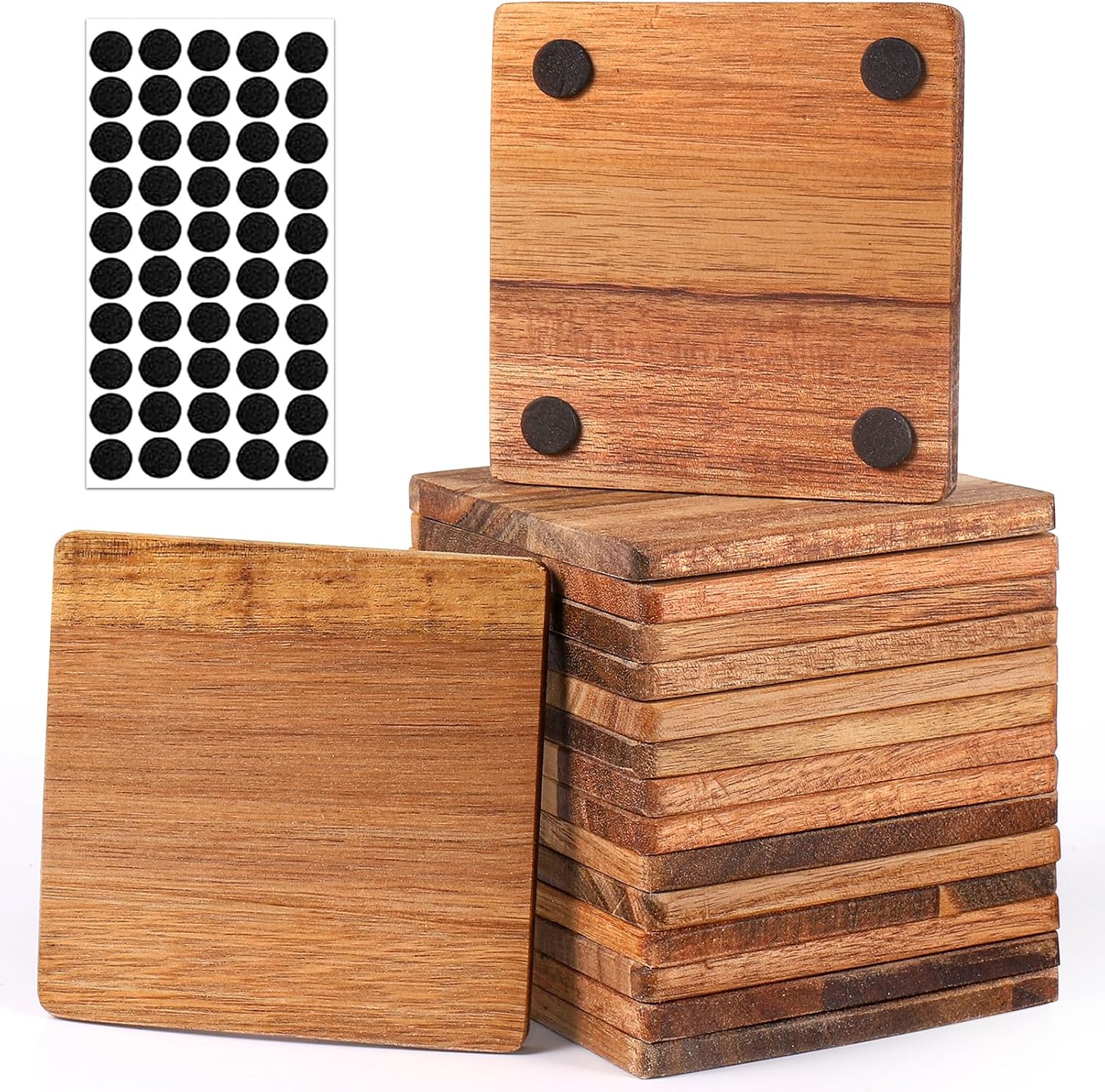 |
Aweyka Acacia Wood Coasters 4 in (16-Pack) | Hardwood Coaster Blank | 6.9/10 | Check price |
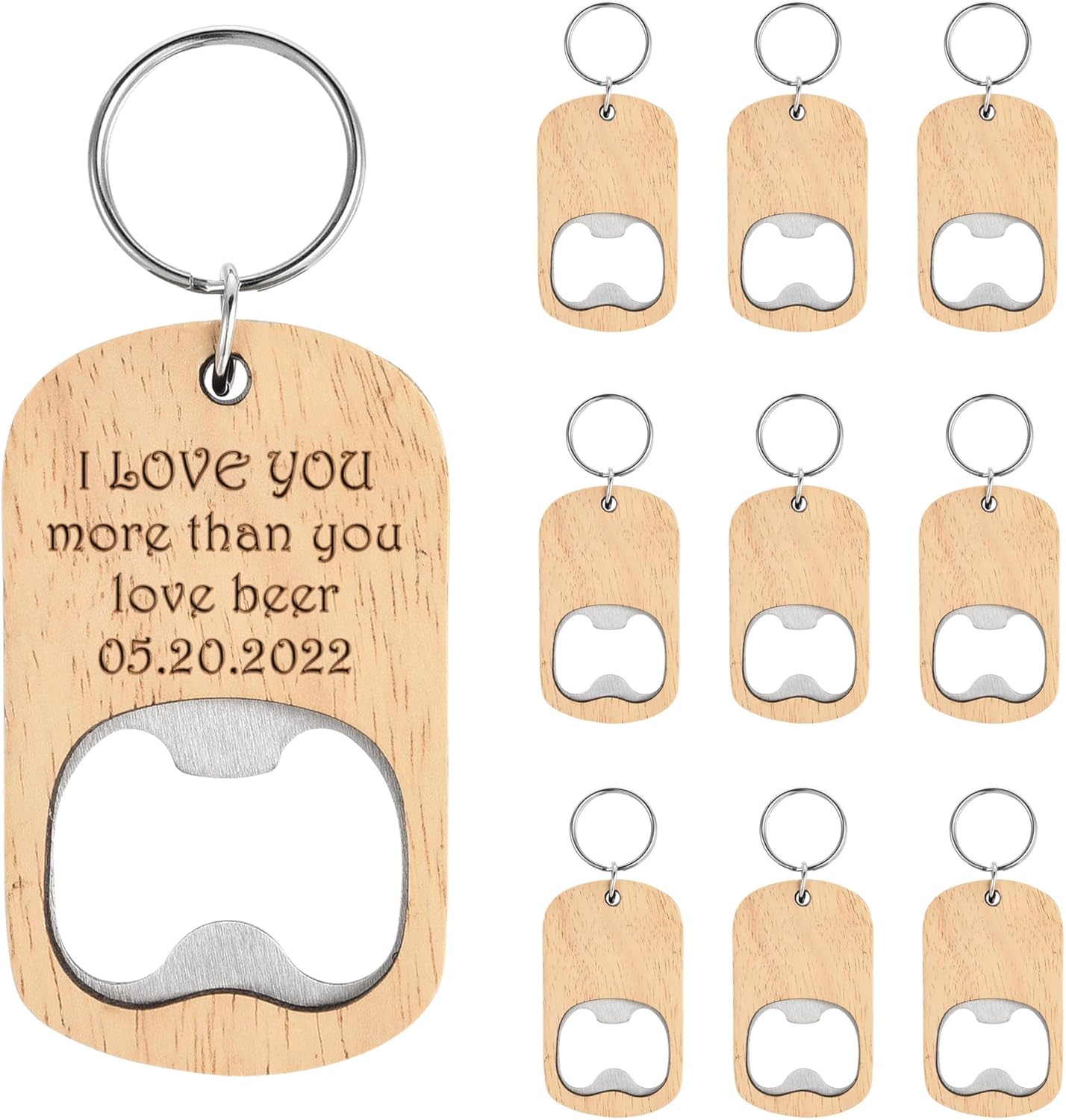 |
CozyCabin Wooden Keychain Blanks (10-Pack) | Small Blanks with Hardware | 6.8/10 | Check price |
Scroll sideways to see every column.
The 7 Best Woods for Laser Engraving, Reviewed
The lineup runs from full sheets down to finished blanks, so pick by species and format. Each card covers what the wood does under the beam and who it suits.
VKIZA Walnut Plywood Sheets 12×12 (10-Pack): Best Dark Hardwood Contrast
VKIZA Walnut Plywood Sheets 12×12 (10-Pack)
This is the one true walnut in the roundup, and it earns the top spot for anyone who wants their engraving to look like fine woodwork. The dark base tone and open grain give you depth basswood simply can’t.
The 12 x 12 inch sheets fit most enclosed diode and CO2 hobby beds, and they cut straight and burr-free, so there’s little prep before you burn. Walnut needs more power than basswood, so it rewards a settings test first.
- The only real walnut option here: a dark base tone and open grain pale basswood and poplar can’t match
- 12 x 12 inch sheets fit the bed of most enclosed diode and CO2 hobby lasers
- Cut straight and burr-free, so there’s little prep before you engrave
- The longest track record of any walnut sheet in this guide
- Sold only in 3 mm (1/8 in), so you’ll look elsewhere for a different gauge
- Walnut wants controlled storage or it can warp, more babysitting than basswood
- A 10-sheet pack, so the cost per sheet runs higher than the big basswood boxes
- Species
- Walnut plywood
- Thickness
- 3 mm (1/8 in)
- Sheet size
- 12 x 12 in
- Sheets per pack
- 10
Best for: anyone who wants a dark, high-contrast hardwood grain for signs and plaques instead of pale wood.
Ninekong Basswood Sheets 12×12 (36-Pack): Best All-Purpose Basswood in Bulk
Ninekong Basswood Sheets 12×12 (36-Pack)
If you asked one wood to be the answer to this keyword, it’s basswood, and this is the box to buy it by. Pale and low in resin, it burns clean and dark on any laser without much fuss.
Thirty-six full 12 x 12 inch sheets is the biggest basswood pack here, so the cost per sheet drops and you stop reordering mid-project. The edges come smooth enough to skip re-sanding.
- Pale, low-resin basswood takes a clean, dark burn on any diode or CO2 laser
- 36 full 12 x 12 inch sheets is the biggest basswood box here, dropping the cost per sheet
- Edges come smooth enough that you can skip re-sanding
- Sold for both laser cutting and engraving, not just generic craft use
- Backed by a 90-day warranty
- Only 3 mm (1/8 in), so there’s no thinner sheet for fine detail
- A big box to commit to if you only need a handful of sheets
- Its pale tone means low-contrast designs can look faint without a dark fill
- Species
- Basswood
- Thickness
- 3 mm (1/8 in)
- Sheet size
- 12 x 12 in
- Sheets per pack
- 36
Best for: the all-purpose default, high-volume engraving on any laser where you want a lot of clean basswood on hand.
DIYDEC Thin Basswood Sheets 1/16 in (6-Pack): Best Thin Stock for Fine Detail
DIYDEC Thin Basswood Sheets 1/16 in (6-Pack)
When your design lives or dies on fine lines, thin stock helps. At 1/16 inch this is the thinnest basswood in the roundup, so delicate cutouts fall out clean and layered pieces stack flat.
It’s also the cheapest way to test. Burn a settings grid on one of these before you touch a thicker, pricier sheet. Want thin sheet stock beyond 1/16 inch basswood? See our guide to thin plywood for laser cutting.
- At 1/16 in it’s the thinnest basswood here, great for delicate cutouts and layered pieces
- Still a full 12 x 12 inch sheet, so it fits the same beds as thicker stock
- Cheap enough to burn through while you dial in power and speed
- Polished smooth and burr-free straight out of the pack
- Only 6 sheets per pack, the smallest quantity of the basswood options
- Thin stock warps easily and won’t hold up as a structural part
- No stated grade or void-free core, so it’s best for light craft work
- Species
- Basswood
- Thickness
- 1.5 mm (1/16 in)
- Sheet size
- 12 x 12 in
- Sheets per pack
- 6
Best for: fine-detail cutouts and cheap settings tests where a thin sheet beats thick stock.
Blisstime Poplar Wood Squares 4×4 (50-Pack): Best Pre-Cut Squares for Batch Work
Blisstime Poplar Wood Squares 4×4 (50-Pack)
Making the same small item over and over? Skip the cutting. These 4 x 4 inch poplar squares come laser-cut and ready to engrave, 50 to a pack, so you go straight to burning.
Poplar is a different species from the basswood and walnut sheets here: pale, even and easy to color. It suits coasters, tags, ornaments and small signs. For more choices, see our best poplar for laser engraving guide.
- Poplar burns evenly and pale, a different species from the basswood and walnut sheets here
- Pre-cut 4 x 4 inch squares mean no cutting step before you engrave
- Laser-cut with clean, burr-free edges straight from the pack
- 50 pieces per pack keeps the per-piece cost low for batch runs
- Ready for coasters, tags, ornaments and small signs
- Fixed 4 x 4 inch size, so you can’t cut custom shapes from a bigger sheet
- At 3 mm it’s too thin for anything structural
- No grade or void-free-core detail, so treat it as craft stock
- Species
- Poplar
- Thickness
- 3 mm (1/8 in)
- Piece size
- 4 x 4 in
- Pieces per pack
- 50
Best for: batch projects like coasters and tags where pre-cut poplar squares save you the cutting step.
LESUMI Kiln-Dried Wood Slices with Bark (20-Pack): Best Rustic Natural-Edge Rounds
LESUMI Kiln-Dried Wood Slices with Bark (20-Pack)
For a rustic look, nothing beats a real natural edge. These pine rounds keep their bark, which gives engraved coasters, ornaments and centerpieces a woodsy charm a rectangular sheet can’t fake.
They’re kiln-dried, which is exactly what you want: dry wood engraves crisp and stays flat. Both faces come pre-sanded, so they’re ready to burn. If you like pine, our pine blanks for laser engraving roundup has more.
- Kiln-dried pine holds its shape better than air-dried slices, so less warping
- Pre-sanded on both faces, ready to engrave with no extra work
- Natural bark edge gives a rustic look no rectangular sheet can copy
- Each batch is checked for size, thickness and finish
- Real bark and grain mean every round looks a little different, not a uniform blank
- Diameter runs 3.5-4 in, so sizes vary slightly across the pack
- Fixed 0.4 in thickness, on the thick side for fine-line detail
- Species
- Pine (kiln-dried, with bark)
- Thickness
- 0.4 in
- Diameter
- 3.5-4 in
- Pieces per pack
- 20
Best for: rustic, natural-edge coasters and ornaments where the bark is part of the look.
Aweyka Acacia Wood Coasters 4 in (16-Pack): Best Hardwood Coaster Blank
Aweyka Acacia Wood Coasters 4 in (16-Pack)
These are the only true hardwood blanks in the lineup, and it shows in the hand. Acacia is dense and tough, so a coaster made from it stands up to daily use in a way soft craft squares don’t.
They come with non-slip silicone dots, so the finished coaster is ready to sell or gift with no extra sourcing. Acacia is denser than basswood, so run a test grid to find the right power.
- Acacia is a true hardwood, denser and tougher than basswood or poplar squares
- Comes with non-slip silicone dots, so the coasters are ready to sell or gift
- Sold specifically for wood engraving among its craft uses
- Backed by a 90-day warranty
- A shorter track record than any sheet or slice pack here, with far fewer reviews behind it
- Fixed 4 in square only, no bigger format for larger designs
- Natural grain means color and figure vary from piece to piece
- Species
- Acacia hardwood
- Thickness
- 0.28 in
- Piece size
- 4 x 4 in
- Pieces per pack
- 16
Best for: sell-ready hardwood coasters that need to stand up to daily use.
CozyCabin Wooden Keychain Blanks (10-Pack): Best Small Blanks with Hardware
CozyCabin Wooden Keychain Blanks (10-Pack)
For favors and keepsakes, a finished blank with hardware already attached saves real time. These keychain tags arrive with the bottle-opener piece and key ring in place, so you just engrave and hand them out.
The small 1.22 inch tag engraves fast, which matters when you’re running a party batch or a small shop. Just know the wood species isn’t given, so you can’t judge grain or hardness before it arrives.
- Sold as bulk laser-engraving blanks, the most direct laser framing in this lineup
- Bottle-opener hardware and key ring come attached, no separate parts to source
- Small 1.22 x 1.22 inch size engraves fast for party favors and small-shop runs
- A finished keepsake blank, not raw sheet you have to cut down
- The wood species isn’t given, so you can’t judge hardness or grain before buying
- One of the shortest track records here, with few reviews so far
- 10 pieces per pack, the smallest quantity of the finished-blank options and the highest cost per finished piece
- Material
- Wood with steel hardware
- Thickness
- 0.25 in
- Tag size
- 1.22 x 1.22 in
- Pieces per pack
- 10
Best for: small engraved keepsakes and favors where the hardware is already done for you.
How to Pick the Right Wood for Laser Engraving
Four things decide how a board behaves under the beam. Read them in order and the picks above sort themselves.
Density and Grain Consistency
Even, fine grain burns even. Basswood and poplar show little contrast between their growth rings, so the beam removes material at a steady rate and your lines stay uniform.
Woods with strong ring patterns, like oak or construction pine, fight you. The hard, dark rings resist the beam while the soft wood between them burns faster, so one pass reads dark in one spot and light in the next. BlazeX Laser names grain direction, growth rings and moisture as the main reasons engraving comes out uneven.
Resin and Sap Content
Resin is what makes some woods smoke, spit and scorch. High-resin softwoods flare at the cut edge and leave a sticky, dark halo around your design.
Low-resin, pale species keep the contrast clean, which is the real reason basswood shows up on nearly every laser-wood list. If a board smells strongly of pine sap, expect more smoke and more cleanup.
Moisture Content: Aim for 6-8%
Wagner Meters puts interior, furniture-grade lumber at 6-8% moisture; general building lumber often sits near 15%, and fresh green wood runs 40-200%.
Wagner measures wood, not lasers, but the consequence follows from the physics: water soaks up laser energy as steam instead of turning it into char. Wetter stock burns lighter and blotchier at the very same settings.
So buy wood sold as laser-grade or kiln-dried. A cheap pin-style moisture meter costs less than the big piece you’d otherwise ruin, and if your beam suddenly stops biting, damp stock is a common culprit (see laser not cutting through wood).
Color and Burn Contrast
Pale woods give you dark-on-light: a dark burn that pops against a light background, best for text and line art. Basswood and poplar are the obvious picks.
Walnut flips it to light-on-dark, where the engraved area lifts a warmer tone out of a dark board, which reads as depth on signs and plaques. Mid-tone woods can look muddy, so match the species to whether your design needs a dark burn to be readable.
On a Small Diode Laser? Start Here
New to this, or running a small laser? Start cheap and forgiving, then graduate.
Buy First: Basswood and Laser-Grade Plywood
On a 5-10W diode or your first project, basswood and laser-grade plywood are the right call. They burn at low power, throw off little smoke, and cost almost nothing to waste on tests. The Ninekong basswood and thin DIYDEC sheets above are made for exactly this.
Save for Later: Maple, Cherry and Solid Walnut
Solid maple, cherry and walnut are worth the wait, not off-limits. They need more passes and more power, and each pass makes more smoke than a beginner wood.
That’s a lot to handle on a low-watt diode with no real extraction. Come back to them once you’ve run a test grid and set up proper fume removal. If the machine itself is the limit, our best laser engraver for home use guide can help.
Laser Settings for Wood: One Real Table and the Test-Grid Method
Nobody can hand you verified numbers for every species, so here’s the one material with a real sourced table, plus the method that works for everything else.
A Worked Example: 3mm MDF on 10-40W Diode Lasers
Laser Tinkerer compiled cut-and-engrave settings for 3 mm MDF across 10-40W diode lasers, anchored to the xTool D1 Pro 20W and Sculpfun S30 Pro Max. Here’s the 20W cutting baseline.
| Setting | 3 mm MDF, cutting, 20W diode |
|---|---|
| Power | 100% |
| Speed | 480 mm/min |
| Passes | 2-3 |
Scroll sideways to see every column.
On a 10W machine, expect slower speed and more passes; on 33-40W, fewer. These numbers are for 3 mm MDF on a diode laser and nothing else. They will not carry over to basswood, walnut, acacia or any blank above, and copying them onto solid wood just wastes stock.
The Test-Grid Method for Every Other Wood
For every wood without a published table, make your own in five minutes. On a scrap offcut of the exact stock, engrave a grid: vary power along one axis and speed along the other, and label each cell.
Read off the cleanest square, then commit those numbers to the real piece. It’s the repeatable answer to “what settings for basswood, walnut or acacia,” and it beats any chart because it’s calibrated to your machine, your lens and today’s board. Our how to laser engrave wood step by step guide walks the whole process.
Woods and Boards You Should Not Laser (and How to Buy Safer MDF)
Some boards ruin your air, your lens or your lungs. Keep these off the bed.
Never Laser These
- Pressure-treated lumber: its preservatives release toxic fumes when burned.
- PVC-coated or vinyl-faced boards: they give off chlorine gas, which harms you and corrodes your machine.
- Heavily resinous fresh softwood: it flares and coats optics in sticky soot.
- Wet or green wood: it steams, blotches and barely marks.
- Driftwood or salvaged wood of unknown history: you can’t know what soaked into it.
MDF and Plywood: Read the Label, Know the Numbers
MDF and glued plywood aren’t automatically off-limits, but the glue is the problem. Burning it releases formaldehyde, and the limits are real: the US caps board emissions at 0.11 ppm and the EU at 0.07 ppm, while OSHA sets workplace exposure at 0.75 ppm over 8 hours and 2 ppm short-term (Laser Engraving Tips).
So read the label. Look for NAF (no-added-formaldehyde) or E0/E1-rated MDF, and choose true void-free Baltic birch over big-box construction plywood, which uses a higher-formaldehyde bond. No brand of MDF is verified safe here, so the label is your only guide.
Ventilation Is Ducted or Filtered, Not a Dust Mask
A cracked window is not extraction. Engraving MDF or any glued board needs air ducted outside or a carbon-filter extractor rated for formaldehyde, running the whole time.
A dust mask does nothing against formaldehyde gas. If you can smell the burn, your setup isn’t moving enough air. Our guide on ventilation for a laser engraver covers how to size it.
FAQ
What is the best wood for laser engraving?
Basswood for most people: it’s pale, low in resin, and takes a clean dark burn on any laser. Choose walnut plywood instead when you want dark hardwood contrast for signs and plaques.
Is MDF safe to laser engrave?
Only with real extraction. Its glue releases formaldehyde, so use NAF or E0/E1-rated board and exhaust that is ducted outside or filtered for formaldehyde. The US caps board emissions at 0.11 ppm and the EU at 0.07 ppm.
How dry should wood be for laser engraving?
Aim for 6-8% moisture content, which is kiln-dried interior-grade stock. Construction lumber near 15% and green wood far higher engrave lighter and blotchier at the same settings, because the water absorbs energy as steam instead of char.
Can a 5-10W diode laser engrave hardwood?
Yes, but expect multiple passes and more smoke per pass. Start with basswood or laser-grade plywood, and move up to maple, cherry or walnut only after you’ve run a test grid and set up proper fume extraction.
What laser settings should I use for wood?
There’s no universal number, so run a labeled power-versus-speed test grid on a scrap of the exact stock and read off the cleanest cell. Verified published settings exist only for a few materials, like 3 mm MDF on diode lasers.
Do I need to sand wood blanks before engraving?
Usually not with purpose-sold laser blanks, since most are pre-sanded or cut burr-free. Generic craft wood is another story, so run a finger along the edge and surface before you buy.
