
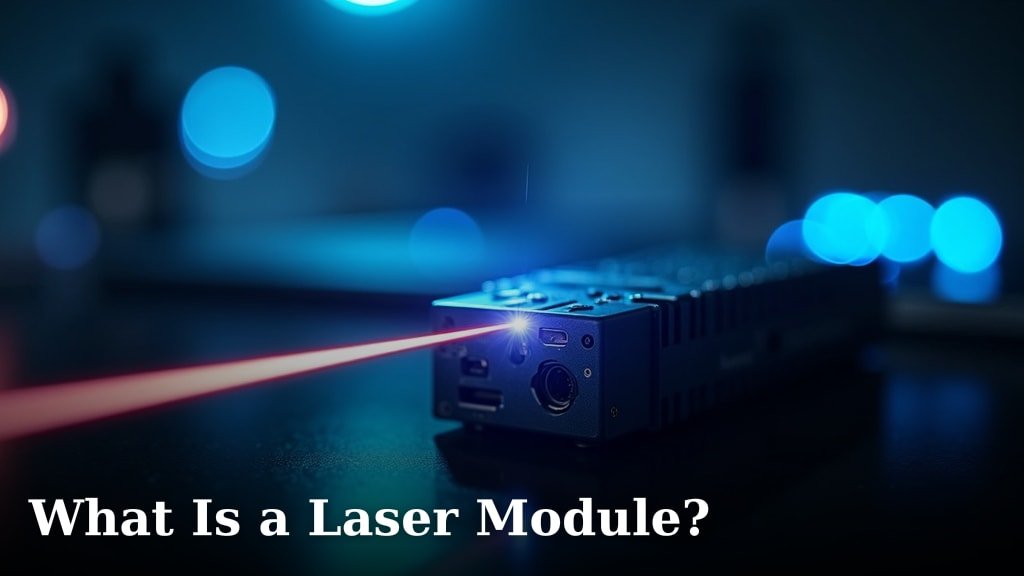
A laser module is essentially the core component that generates and emits a laser beam. Think of it as the “engine” of any device that uses a laser. It’s a self-contained unit, often compact, that houses everything needed to produce that focused light, including the laser source itself and often its power supply and cooling. You’ll find them powering everything from barcode scanners to industrial cutting tools.
These laser modules come in many shapes and sizes, designed for different jobs. Some produce a visible red dot for simple alignment tasks. Others emit invisible infrared beams for high-precision manufacturing. Research shows that the choice of laser module depends heavily on the required wavelength, power output, and beam quality needed for a specific application.
- A laser module is the main part of a laser device.
- It creates and sends out the laser beam.
- Modules are designed for different uses and powers.
- They are essential in many types of equipment.
Ready to understand exactly what makes these little light-makers tick? Let’s break down the different types and how they work.
Understanding the Core of Laser Technology
So, what exactly is a laser module? At its heart, it’s the powerhouse that makes a laser work. Think of it as the tiny brain and muscle behind the focused beam you see. This self-contained unit holds all the essential parts needed to create and project that special kind of light. It’s not just the light source; it often includes the circuitry to power it and even mechanisms to keep it cool. We found that these modules are the unsung heroes in countless devices you use every day.
You might encounter them in simple tools or highly sophisticated machinery. Their job is straightforward: generate a laser beam. But how they do it, and the kind of beam they produce, can vary dramatically. The type of laser module you need depends entirely on its intended purpose and performance requirements. We’ll dive into what makes them tick.
The Essential Components of a Laser Module
Every laser module, no matter how simple or complex, contains a few key elements that work together. These components are critical for generating and controlling the laser light.
1. The Laser Source (Gain Medium)
This is where the magic begins. The laser source is the material that actually produces the laser light. It’s often called the gain medium. When energy is supplied, this material gets “excited” and then releases that energy as light. Different types of materials are used for different lasers.
Common Gain Mediums
- Solid-state crystals: Think of materials like Nd:YAG (neodymium-doped yttrium aluminum garnet). These are common in higher-power lasers for industry.
- Semiconductors (Diodes): These are incredibly common, especially in smaller devices. They are essentially specialized LEDs that produce laser light. You’ll find them in everything from laser pointers to barcode scanners.
- Gases: Some lasers use gases like helium-neon (HeNe) or carbon dioxide (CO2). These are often used for scientific or industrial applications.
- Fibers: Fiber lasers use optical fibers as the gain medium. They are known for their excellent beam quality and efficiency.
2. The Energy Source (Pumping Mechanism)
The gain medium needs energy to produce light. This energy input is called pumping. The method of pumping varies depending on the laser type.
Pumping Methods
- Electrical Pumping: This is very common for semiconductor (diode) lasers and gas lasers. An electric current or voltage is applied.
- Optical Pumping: This uses light from another source, like a flash lamp or another laser, to energize the gain medium. Solid-state lasers often use optical pumping.
- Chemical Pumping: Less common in typical modules, but some advanced lasers use chemical reactions to provide energy.
We found that the efficiency of the pumping mechanism directly impacts the overall power output and heat generated by the module.
3. The Optical Cavity (Resonator)
This is a clever arrangement of mirrors. Usually, two mirrors are placed at either end of the gain medium. One mirror is almost perfectly reflective, while the other is partially reflective. This setup does a few critical things:
- Amplification: Light bounces back and forth through the gain medium, stimulating more light emission. This amplifies the light signal.
- Collimation: It helps create a beam that travels in a straight line.
- Wavelength Selection: It can filter light to produce a specific wavelength.
The partially reflective mirror allows a portion of the amplified light to escape as the laser beam. It’s like a controlled echo chamber for light, making it stronger and more focused. Many experts say this cavity is essential for achieving the unique properties of laser light (Stanford University).
4. Control and Cooling Systems
Generating laser light can produce a lot of heat. To keep the module working reliably and prevent damage, cooling systems are often integrated. These can range from simple heat sinks to more complex fans or even liquid cooling systems for high-power modules.
Control electronics are also vital. They manage the power supply, regulate the pumping mechanism, and sometimes control the output power or pulsing of the laser. We found that reliable control is key to consistent performance.
Types of Laser Modules You Might Encounter
Laser modules aren’t one-size-fits-all. They are engineered for specific tasks, and this means they come in a wide variety of types, distinguished by their output and physical characteristics.
Based on Wavelength and Color
The wavelength of light determines the color you see (if it’s visible) and how the laser interacts with different materials. Shorter wavelengths are higher energy, while longer wavelengths interact differently.
- Visible Lasers: These emit light in the visible spectrum (roughly 400-700 nanometers). Red (630-670 nm) is very common in pointers and alignment tools. Green and blue lasers are also available, often used for display or measurement applications.
- Infrared (IR) Lasers: These emit light we can’t see (wavelengths longer than 700 nm). They are widely used in telecommunications, industrial cutting, welding, and medical applications because they can penetrate certain materials or deliver high energy.
- Ultraviolet (UV) Lasers: These emit light with shorter wavelengths than visible light (< 400 nm). They are used for precise material processing, sterilization, and scientific research due to their high energy.
We found that selecting the correct wavelength is a primary consideration for most applications.
Based on Power Output
Laser modules are rated by their power output, typically measured in milliwatts (mW) for low-power devices or watts (W) for higher-power industrial or scientific systems. Power dictates what the laser can do.
- Low Power (mW range): Used for laser pointers, barcode scanners, optical mice, and basic alignment. These are generally safe for momentary viewing, though direct eye exposure should always be avoided (FDA guidance).
- Medium Power (tens to hundreds of mW): Found in some measurement tools, engraving devices, and specialized industrial alignment.
- High Power (watts and above): Used for cutting, welding, engraving materials, medical surgery, and scientific research. These pose significant safety hazards and require strict protocols.
Based on Beam Quality and Shape
Not all laser beams are created equal. Beam quality refers to how well-collimated and focused the beam is. Beam shape can also be tailored.
- Gaussian Beam (TEM00): This is the most common and well-behaved beam profile, with a single, brightest spot in the center that tapers off. It has excellent focusability.
- Shaped Beams: Some modules are designed to produce specific beam shapes, like lines or dots, for alignment and targeting systems.
Key Specifications to Consider
When you’re looking at laser modules, several technical specifications will tell you what it’s capable of. Understanding these helps you pick the right one for your needs.
Wavelength
As discussed, this is fundamental. It’s measured in nanometers (nm). For instance, a common red laser pointer might be 650 nm. An infrared laser used for communication could be 1550 nm.
Output Power
This is the power of the laser beam itself. It’s usually listed in milliwatts (mW) or watts (W). Make sure this is the beam power, not the input power required by the module.
Beam Diameter/Divergence
Beam diameter tells you how wide the beam is at a certain distance. Divergence is how quickly the beam spreads out. A lower divergence means the beam stays narrow for longer, which is important for distance applications.
Operating Voltage and Current
These are electrical specifications. You need to ensure your power supply can meet the module’s requirements. Different modules have wildly different needs, from a few volts to many amps.
Operating Temperature
Lasers can be sensitive to temperature. This spec tells you the range in which the module will function correctly. It’s closely related to the cooling needs.
| Feature | Red Diode Module | Green DPSS Module | Infrared CO2 Module |
|---|---|---|---|
| Typical Wavelength | 635-670 nm | 532 nm | 10,600 nm |
| Visible Light? | Yes (Red) | Yes (Green) | No (Infrared) |
| Typical Power | 1-5 mW (pointers) up to 1W+ (industrial) | 5-50 mW (pointers) up to 100W+ (industrial) | 10W to kW+ (industrial) |
| Common Applications | Pointers, alignment, scanners | Pointers, presentation, scientific | Cutting, welding, engraving |
| Complexity | Low | Medium (uses frequency doubling) | High (gas-based) |
Safety First: Always Handle with Care
It’s crucial to remember that lasers, even low-power ones, can cause eye damage. Direct or reflected beams can be harmful. Always follow the manufacturer’s safety guidelines and any relevant regulations, such as those from the U.S. Food and Drug Administration (FDA) regarding laser products.
We found that wearing appropriate laser safety eyewear is essential when working with higher-power modules or in situations where stray reflections are possible. Never point a laser at a person or animal. Treat every laser module with the respect its powerful light deserves. Always follow the manufacturer’s safety guidelines and any relevant regulations when working with lasers.
Checklist: Key Things to Remember About Laser Modules
- They are the core component generating laser light.
- Essential parts include the gain medium, energy source, and optical cavity.
- Wavelength determines color and interaction with materials.
- Power output dictates what the laser can achieve.
- Always prioritize safety and use protective eyewear when necessary.
- Consider specifications like beam divergence and operating temperature.
Conclusion
You’ve now seen how a laser module is the central component that makes laser technology possible. We’ve covered its essential parts like the gain medium and optical cavity, and how they work together. Understanding the different types based on wavelength and power output helps you appreciate their wide range of uses. Remember, these modules power everything from your barcode scanner to industrial lasers.
Always prioritize safety when working with lasers, as eye damage is a real risk. Keep these specifications in mind for your next project. Ready to build or select your own laser system? Now you have a solid foundation.
Frequently Asked Questions
What’s the difference between a laser diode module and a gas laser module?
A laser diode module uses a semiconductor material to produce light and is generally smaller and more power-efficient. Gas laser modules, like CO2 lasers, use a gas mixture and are often larger and used for higher power industrial applications.
Can I get a laser module that emits light in multiple colors?
Typically, a single laser module is designed to emit light at a specific wavelength, which corresponds to a single color or an invisible spectrum. To achieve multiple colors, you would generally need multiple laser modules or a more complex system that combines different laser sources.
How do I know if a laser module will be too powerful for my project?
You’ll need to check the module’s output power specification, usually listed in milliwatts (mW) or watts (W). Consult safety guidelines for your specific application and region; for example, the FDA has regulations for laser product power.
Are all laser modules safe to look at directly?
No, absolutely not. Even low-power laser modules can cause eye damage if viewed directly. Always avoid direct eye exposure to any laser beam, whether visible or invisible. Safety glasses are recommended for certain power levels and applications.
What does “beam divergence” mean for a laser module?
Beam divergence refers to how much a laser beam spreads out over a distance. A low divergence means the beam stays narrow and focused for a longer range, which is important for applications requiring precision at a distance.
