
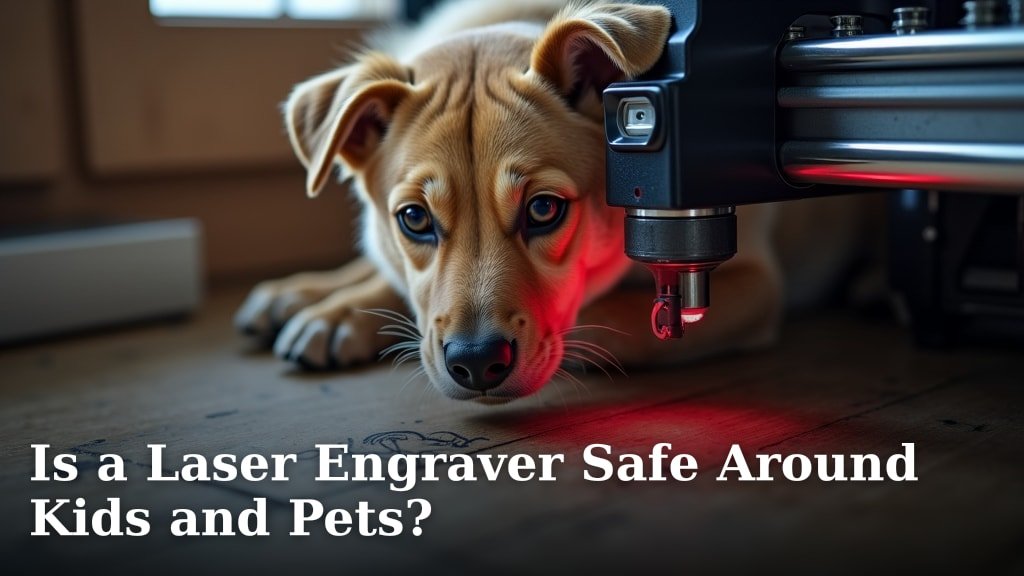
No, a laser engraver is not safe to operate around kids and pets without proper precautions. We found that direct supervision and strict safety measures are always needed. They can cause serious injury if safety rules aren’t followed.
You might be wondering about the dangers involved. Laser engravers create fumes, emit bright light, and involve hot parts. These elements pose risks to young ones and animals who might not understand the hazards.
- Laser engravers require constant adult supervision.
- Keep kids and pets out of the room during operation.
- Fumes and smoke can be harmful.
- The laser itself can cause eye damage or burns.
- Hot components are a burn risk.
Let’s walk through everything you need to know about keeping everyone safe when you’re using your laser engraver. We’ll help you understand the risks and how to manage them effectively.
Keeping Kids and Pets Safe Near Laser Engravers
You want to enjoy your laser engraver, but also protect your loved ones. We found that the biggest issue is the unpredictable nature of children and pets. They don’t understand danger like adults do. Your responsibility as an owner is to create a safe zone and enforce strict rules.
Think of a laser engraver like a hot stove or a sharp tool. You wouldn’t leave those unsupervised around kids or pets, right? The same logic applies here. It’s all about prevention and supervision.
Understanding the Core Risks of Laser Engravers
Before we dive into solutions, let’s understand the specific hazards. It’s not just one thing; there are several elements that make laser engravers dangerous. Being aware helps you guard against them.
Eye and Skin Damage from the Laser Beam
This is perhaps the most obvious and frightening risk. The laser beam itself is incredibly powerful. Even brief exposure can cause severe harm.
- Eye damage: The laser can burn the retina, causing permanent blindness. This can happen quickly, even with a reflected beam (OSHA).
- Skin burns: While less common for casual exposure, direct contact can cause serious burns to skin.
Most laser engravers have enclosures and safety features, but these can be bypassed or fail. You can’t rely on them as your sole protection, especially with curious little ones or animals.
Respiratory Hazards from Fumes and Smoke
When a laser engraver cuts or engraves materials, it creates fumes and smoke. These aren’t just unpleasant; they can be harmful to breathe.
- Toxic chemicals: Different materials release different chemicals. Engraving plastics, for example, can release styrene or PVC fumes, which are known irritants (CDC).
- Particulate matter: Tiny particles suspended in the air can irritate lungs and worsen conditions like asthma.
- Odor: Even if not highly toxic, strong odors can cause headaches or nausea.
Proper ventilation is a must for anyone operating a laser engraver, let alone kids or pets. Their respiratory systems are often more sensitive than an adult’s.
Fire Risk and Hot Components
A laser engraver uses concentrated energy to cut or mark materials. This process generates heat, and sometimes, actual flames.
- Material ignition: Certain materials can catch fire during engraving. This is why you should never leave a machine unattended.
- Hot surfaces: Parts of the machine itself, like the laser head or the bed, can become very hot. Accidental touching can cause burns.
A small fire can quickly get out of control, especially if flammable materials are nearby. This is a risk for your home and everyone in it.
Establishing a Safe Operating Environment
Okay, so you know the risks. Now, what do you do about them? Creating a dedicated and controlled environment is your first line of defense.
Dedicated “No-Go” Zone for Engraver Operation
The simplest rule: the engraver’s space is not a play space. This means a separate room or a clearly defined area where only adults operate the machine.
- Locked room: If possible, operate your engraver in a room that can be locked. This prevents accidental entry.
- Physical barrier: Use baby gates or pet gates to block off the area if a separate room isn’t an option.
- Signage: While kids might not read, clear signs can reinforce the “stay out” message for older children and guests.
This physical separation is key to preventing accidental exposure to any of the hazards we discussed.
Ventilation Systems and Air Quality
You need to manage those fumes. A window fan isn’t usually enough for a laser engraver. You need a more robust system.
- Fume extractor: These systems pull air directly from the engraving area and filter it, removing harmful particles and gases.
- External venting: Ducting fumes directly outside is another good option, ensuring they don’t linger in your home. Learn more about the specific requirements for safely using a laser engraver indoors.
- Air quality monitoring: Consider a simple air quality monitor to ensure levels of particulate matter remain safe, especially if you have sensitive individuals in your home.
Even with good ventilation, it’s wise to limit time spent in the immediate vicinity during operation.
Supervision is Non-Negotiable
We found that constant adult supervision is the single most important safety measure. You cannot walk away, even for a moment, when the machine is running.
- Never unattended: If you need to leave the room, even for a minute, pause or shut down the engraver.
- Educate older kids: For older children, explain the dangers clearly. Teach them to never touch the machine or look at the laser.
- Pet management: Keep pets securely in another part of the house during engraving. Don’t rely on them to stay put in the same room.
Think of yourself as the machine’s guardian. Your vigilance protects everyone.
Safety Equipment and Protocols for Operators
While this post focuses on kids and pets, your own safety sets the example. Using proper gear protects you and models safe behavior. Our guide on proper safety equipment for laser engraving provides a comprehensive list of what you need.
| Safety Item | Purpose | Why it Matters for Kids/Pets |
|---|---|---|
| Laser Safety Glasses | Protects eyes from direct/reflected laser light. | Models proper safety; shows the seriousness of the laser. |
| Fire Extinguisher | Quickly puts out small fires. | Critical for preventing house fires, protecting everyone. |
| Gloves & Mask (if needed) | Protects hands from hot parts; reduces fume inhalation. | Minimizes personal exposure; reinforces caution. |
| First Aid Kit | For minor burns or cuts. | Readiness for accidents, even small ones. |
Having these items ready and using them consistently sends a clear message. It shows that this isn’t just a toy; it’s a powerful tool that demands respect.
Checklist for a Kid- and Pet-Safe Laser Engraving Session
Before you even power on your machine, go through this quick mental checklist. It helps ensure you’ve covered all your bases.
- Are all kids and pets secured in a different, safe area of the house?
- Is the engraving room door locked or barricaded?
- Is your ventilation system fully operational and clear?
- Are your safety glasses on and ready?
- Is a fire extinguisher within easy reach?
- Have you removed all flammable materials from the immediate work area?
Running through these steps takes only a moment but can save a lot of heartache. It’s about being prepared, not paranoid.
When to Consider Not Using Your Engraver
There will be times when it’s just not practical or safe to operate your laser engraver. Recognizing these situations is a sign of a responsible owner.
- When you’re distracted: If you’re tired, sick, or simply have too much on your mind, postpone your project. Distraction leads to mistakes.
- When kids/pets cannot be secured: If for any reason you can’t guarantee children or pets will stay away, don’t use the machine.
- During family gatherings: A busy house means more opportunities for accidents. Choose quiet times when you can focus.
We found that being honest about your limits is a key part of safety. It’s better to wait for the right moment than to risk an injury.
Conclusion
Operating a laser engraver safely around kids and pets requires vigilance and planning. You’ve learned about the significant risks, from eye damage to fire hazards. Establishing a dedicated workspace, ensuring proper ventilation, and maintaining constant supervision are non-negotiable steps. Your responsibility extends to understanding when to postpone engraving, prioritizing the safety of your family. Always remember that prevention and preparedness are your best tools against potential accidents. By following these guidelines, you can enjoy your crafting safely.
Frequently Asked Questions
Can an enclosed laser engraver still harm kids or pets?
Yes, an enclosed engraver reduces risks but doesn’t eliminate them. Enclosures can fail or be opened, exposing curious individuals to the laser or hot components. You still need proper supervision and a safe, restricted operating area.
What if my pet is always in another room during engraving? Is that enough?
While helpful, keeping pets in another room might not be enough on its own. Fumes and airborne particles can travel through ventilation systems or under doors. Ensure you have robust air filtration and external venting to protect sensitive respiratory systems throughout your home.
Are smaller, hobby-grade laser engravers less dangerous for kids and pets?
No, even smaller hobby-grade laser engravers pose serious risks. Their lasers are still powerful enough to cause eye damage or burns. All the same precautions regarding supervision, ventilation, and restricted access apply, regardless of machine size.
How can I explain the dangers of a laser engraver to my older child?
Explain that the laser is like a powerful, invisible light that can hurt eyes and skin very quickly. Compare it to staring at the sun or touching a very hot stove. Emphasize that it’s an adult tool, not a toy, and they must always stay away when it’s in use.
What’s the absolute minimum distance kids and pets should be from an operating engraver?
Ideally, kids and pets should be in a separate, closed-off room, not just a certain distance. If a separate room isn’t possible, a physical barrier like a locked gate should ensure they are completely out of the engraver’s room. No direct line of sight or access should ever be permitted.
