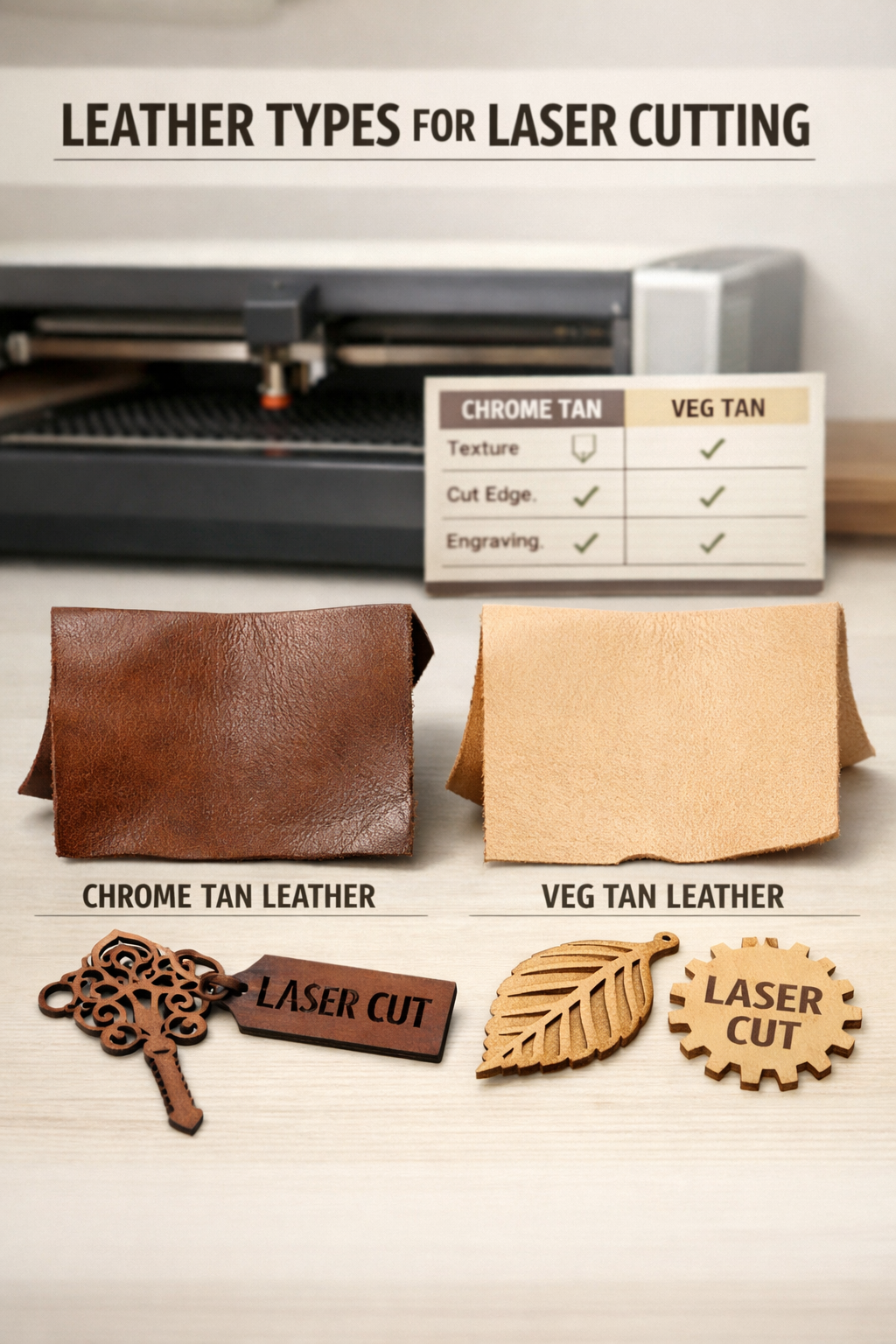
Chrome tan leather works best for laser cutting because it’s uniform, stable, and produces clean edges with minimal charring.
Veg tan leather can be laser cut but requires more careful settings due to its natural oils and varying density that may cause uneven results.
What Makes Leather Good for Laser Cutting?
Your laser cuts better when the material behaves predictably. Think of it like baking – you want ingredients that react the same way every time.
Good laser-cutting leather needs three things: consistent thickness, low moisture content, and minimal chemical treatments that create toxic fumes.
Thickness Consistency Matters Most
Uneven leather thickness makes your laser work harder in some spots. This creates burn marks in thin areas while thick sections stay uncut.
Chrome tan leather typically has better thickness consistency than veg tan. The industrial tanning process controls this better.
Chrome Tan Leather: The Laser Favorite
Chrome tanned leather uses chromium salts to transform raw hide into finished leather. This process creates uniform, stable material.
Why Chrome Tan Cuts So Well
The chromium tanning process removes most natural oils and moisture. Your laser beam cuts through without fighting wet spots or oil pockets.
Chrome tan also has consistent density throughout each piece. You can set your laser once and trust it will cut evenly.
Clean Edge Quality
Chrome tan produces sealed, smooth edges when laser cut. The heat melts the leather fibers slightly, creating a finished look without additional edge treatment.
Speed and Reliability
You can run higher speeds with chrome tan leather. Less variation means fewer test cuts and less wasted material.
Chrome Tan Downsides for Crafters
Chrome tan doesn’t take tooling or stamping well after laser cutting. The tanning chemicals make the surface harder to work.
Some crafters find chrome tan feels less natural or authentic for traditional leather projects.
Veg Tan Leather: Traditional but Tricky
Vegetable tanned leather uses tree bark extracts and natural tannins. This creates beautiful, workable leather that ages well.
Veg Tan Challenges for Lasers
Natural tanning leaves more oils and moisture in the leather. Your laser has to work around these inconsistencies.
Thickness varies more in veg tan leather. Hand-finishing processes create slight variations that affect laser cutting.
Oil Content Issues
Natural oils in veg tan can cause flare-ups during cutting. These create darker burn marks and uneven edge sealing.
You’ll need to test different power settings across each piece of veg tan leather.
Moisture Variations
Veg tan holds moisture differently in various areas. Wet spots resist cutting while dry areas may burn too quickly.
When Veg Tan Works Better
If you plan to tool, stamp, or wet-form your leather after laser cutting, veg tan is your only choice.
Veg tan also takes dyes and finishes much better than chrome tan. Your finished project will have richer color depth.
Laser Settings Comparison
Different leather types need different laser approaches. Here’s what I found works best from researching leather crafting forums and laser cutting guides.
| Leather Type | Power Setting | Speed Setting | Passes Needed |
|---|---|---|---|
| Chrome Tan | 60-70% | Fast (80-100%) | 1-2 passes |
| Veg Tan | 40-60% | Slower (50-70%) | 2-3 passes |
Testing Your Settings
Always test on scraps first. Cut small squares with different settings until you find what works for your specific leather.
Write down successful settings on each leather piece. Natural materials vary even within the same hide.
Safety Considerations
Leather cutting produces fumes that need proper ventilation. Both leather types create smoke, but the content differs.
Chrome Tan Fume Concerns
Chrome tanned leather may release chromium compounds when heated. Good ventilation is essential for any leather laser cutting.
Many laser cutting experts recommend treating all leather cutting as potentially hazardous and using appropriate safety measures.
Ventilation Requirements
Use exhaust fans that pull air away from your work area. Don’t just circulate the air – remove it completely from your workspace.
Cost and Availability Factors
Chrome tan leather costs less and comes in more consistent grades. You can buy larger quantities knowing they’ll all cut similarly.
Veg tan leather costs more but offers premium quality for traditional crafting. You’re paying for the slower, more natural tanning process.
Sourcing Quality Leather
Look for leather suppliers who understand laser cutting needs. They can recommend specific grades and treatments that work well.
Ask about thickness tolerance when ordering. Laser cutting works best with ±0.5mm thickness variation or less.
Project Type Recommendations
Your project goals should drive your leather choice more than cutting convenience.
Choose Chrome Tan For:
- High-volume production runs
- Items that won’t need additional tooling
- Projects where consistent results matter most
- Wallets, bags, and functional items
Choose Veg Tan For:
- Custom tooled or stamped pieces
- Items you’ll wet-form or mold
- Premium quality heirloom pieces
- Projects that need rich dye colors
Preparation Tips for Better Results
Proper preparation makes any leather cut better on your laser.
Conditioning Before Cutting
Let veg tan leather reach room temperature and stable humidity before cutting. This reduces moisture variations.
Store chrome tan leather flat to prevent warping that affects laser focus distance.
Surface Preparation
Clean leather surfaces with a slightly damp cloth before cutting. Remove any surface oils or fingerprints that might affect cutting quality.
Conclusion
Chrome tan leather gives you the most reliable laser cutting experience with consistent results and clean edges. It’s perfect for production work and functional items.
Veg tan leather requires more patience and testing but opens up traditional crafting techniques that chrome tan can’t match. Choose based on your final project goals, not just cutting convenience.
Both leather types can produce excellent laser cut results when you match your technique to the material. Start with chrome tan if you’re new to leather laser cutting, then experiment with veg tan as your skills develop.
Can I laser cut both leather types on the same project?
Yes, but you’ll need different settings for each type. Cut them separately and assemble afterward rather than trying to cut mixed materials in one pass.
How thick can I laser cut leather safely?
Most hobby lasers handle up to 6mm leather thickness effectively. Thicker pieces need multiple passes or industrial laser power levels.
Does leather thickness affect the choice between veg tan and chrome tan?
Thicker leather amplifies the differences between types. Chrome tan stays more predictable in thick pieces, while thick veg tan becomes harder to cut evenly.
Can I dye laser-cut chrome tan leather effectively?
Chrome tan takes dyes poorly compared to veg tan. The tanning chemicals resist absorption, leading to uneven color and poor penetration.
What’s the shelf life difference between these leather types for laser cutting?
Chrome tan stays stable longer in storage and maintains consistent cutting properties. Veg tan can dry out or change texture over time, affecting laser performance.