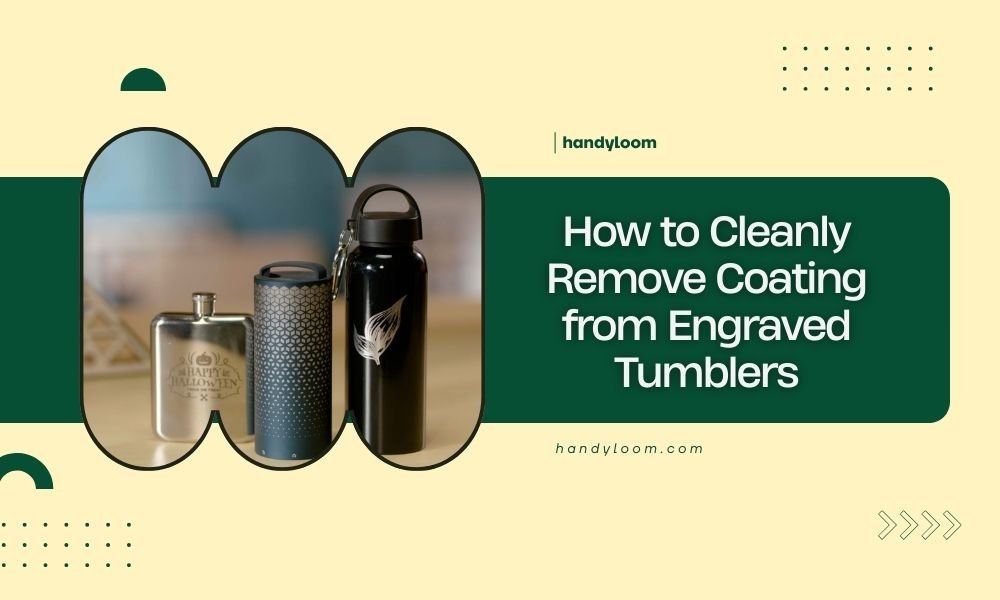
To cleanly remove coating from engraved tumblers, use acetone or nail polish remover with a soft cloth, working in gentle circular motions around the engraved areas.
Heat methods like hair dryers can also soften protective coatings, making them easier to peel off without damaging your tumbler’s engraved design.
Why Coating Removal Matters for Your Tumblers
You spent time creating beautiful engravings on your tumblers. Now you want that design to shine through clearly.
Many tumblers come with protective coatings that keep them scratch-free during shipping. But these coatings can make your engravings look dull or cloudy.
Removing coating properly shows off your work. It also helps paint, vinyl, or other decorations stick better if you plan to add them later.
What Type of Coating Are You Dealing With
Different tumblers have different protective layers. Knowing what you’re working with helps you pick the right removal method.
Plastic Film Coatings
These look like clear stickers covering the tumbler surface. You can usually see the edges where the film starts and stops.
They peel off easily when you find the right starting point. Sometimes heat makes them come off even smoother.
Spray-On Protective Coatings
These coatings get applied as liquid then dry to form a clear layer. They don’t have visible edges like films do.
You’ll need solvents or scraping methods to remove these types. They take more patience than film coatings.
Factory Lacquer Finishes
Some manufacturers add lacquer over their entire tumbler surface. This creates a glossy protective shell.
Lacquer needs stronger solvents or sanding to come off completely. Go slow with these to avoid damaging the metal underneath.
Tools You’ll Need for Clean Removal
Having the right supplies makes coating removal much easier. You probably have most of these items at home already.
- Acetone or nail polish remover
- Soft cloths or paper towels
- Plastic scraper or old credit card
- Hair dryer
- Fine steel wool (0000 grade)
- Rubber gloves
- Well-ventilated workspace
Method 1: Solvent Removal for Spray Coatings
This method works best for spray-on coatings and some lacquer finishes. The solvent dissolves the coating so you can wipe it away.
Safety First
Put on rubber gloves and work in a space with good air flow. Acetone fumes can give you headaches in closed spaces.
Keep acetone away from heat sources. It catches fire easily.
Apply the Solvent
Soak a soft cloth with acetone. Don’t flood the tumbler – just get the cloth damp enough to work with.
Dab the coating around your engravings first. Let the acetone sit for 30 seconds to start breaking down the coating.
Work in Small Sections
Rub gently in circular motions. You’ll see the coating start to dissolve and come off on your cloth.
Keep your cloth damp with fresh acetone. Dried solvent won’t dissolve coating as well.
Focus on Engraved Areas
Pay extra attention to the grooves and lines of your engraving. Coating can hide in these small spaces.
Use a cotton swab dipped in acetone for detailed areas. This gives you better control than a cloth.
Method 2: Heat and Peel for Film Coatings
Film coatings come off beautifully with this method. The heat softens the adhesive so the film peels cleanly.
Warm the Surface
Set your hair dryer to medium heat. Hold it about 6 inches from the tumbler surface.
Move the dryer around so you don’t overheat any one spot. Warm for 30-60 seconds at a time.
Find a Starting Edge
Look for places where the film edge is visible. These usually appear near the rim or bottom of the tumbler.
Gently lift the edge with your fingernail or a plastic scraper. Don’t use metal tools – they can scratch the tumbler.
Peel Slowly and Steadily
Pull the film at a 45-degree angle. This angle helps prevent tearing.
If the film starts to tear, stop and apply more heat to that area. Then continue peeling.
Deal with Stubborn Spots
Some areas might not want to come off. Apply more heat and try peeling from a different direction.
You can also use a plastic scraper to help lift stubborn edges. Keep the scraper flat against the surface.
Method 3: Mechanical Removal for Tough Coatings
Sometimes solvents and heat aren’t enough. You might need to physically scrub the coating off.
Start with Fine Steel Wool
Use only 0000 grade steel wool. Coarser grades will scratch your tumbler permanently.
Work in straight lines, not circles. Circular scrubbing creates swirl marks that are hard to remove.
Apply Light Pressure
Let the steel wool do the work. Pressing hard won’t remove coating faster – it just risks damaging your tumbler.
Check your progress every few strokes. You want to remove coating, not tumbler material.
Combine with Solvents
Dampen your steel wool with acetone while scrubbing. This combination works better than either method alone.
The solvent softens the coating while the wool removes it mechanically.
Working Around Engraved Details
Your engraved areas need special attention. The coating can hide in grooves and make your design look fuzzy.
Use Cotton Swabs for Precision
Dip cotton swabs in acetone for detailed cleaning. These reach into engraved lines where cloths can’t go.
Roll the swab as you work. This uses fresh cotton surface and prevents reapplying dissolved coating.
Try Toothpicks for Tight Spaces
Wrap a small piece of cloth around a toothpick tip. This makes a tiny cleaning tool for the smallest engraved details.
Be gentle – you don’t want to scratch the inside of your engraved lines.
Common Problems and Solutions
Even with good technique, you might run into issues. Here’s how to handle the most common problems.
Coating Won’t Come Off
Try a different solvent. Some coatings resist acetone but dissolve in rubbing alcohol or denatured alcohol.
You might also need to let the solvent work longer. Some thick coatings need several minutes to soften.
Streaky or Cloudy Residue
This usually means you didn’t remove all the coating. Go back over these areas with fresh solvent.
Sometimes the coating dissolves but doesn’t get wiped away completely. Clean cloths help prevent this problem.
White Haze on Dark Tumblers
Dark anodized tumblers can develop white haze during cleaning. This happens when solvents affect the anodizing.
Try gentler solvents like rubbing alcohol first. If haze appears, stop and switch methods.
Testing Your Coating Removal Method
Always test your chosen method on a hidden area first. This prevents surprises on the visible parts of your tumbler.
Pick a spot on the bottom or back where mistakes won’t show. Try your solvent or scraping method there first.
Wait a few minutes after testing to see if any discoloration appears. Some reactions take time to show up.
Cleaning Up After Coating Removal
Once you’ve removed the coating, your tumbler needs a final cleaning to look its best.
Remove Solvent Residue
Wash the tumbler with warm soapy water to remove acetone or other solvents. These can leave their own residue if not cleaned off.
Dry completely with a clean cloth. Water spots can look like coating problems if you’re not careful.
Polish if Needed
Some tumblers benefit from light polishing after coating removal. Use metal polish appropriate for your tumbler material.
Follow the polish manufacturer’s directions. Too much polishing can wear down fine engraved details.
When to Leave Coating in Place
Not every coating needs to come off. Sometimes leaving it protects your work better than removing it.
If your engraving shows clearly through the coating, consider leaving it. The coating prevents scratches during normal use.
Tumblers that will see heavy use often benefit from keeping their protective coatings intact.
Professional vs DIY Removal
Most coating removal is simple enough to do yourself. But some situations call for professional help.
| DIY Removal | Professional Removal |
|---|---|
| Clear plastic films | Multiple coating layers |
| Light spray coatings | Baked-on finishes |
| Single tumblers | Large production runs |
| Standard materials | Exotic metal alloys |
Conclusion
Removing coating from engraved tumblers doesn’t have to be stressful. Start with gentle methods like acetone for spray coatings or heat for film coatings. Work slowly around your engraved areas using cotton swabs for precision. Test your method on a hidden spot first, and don’t be afraid to try different approaches if your first choice doesn’t work. Clean up thoroughly when you’re done, and you’ll have beautifully clear engravings that showcase your craftsmanship. Remember that sometimes leaving protective coating in place is the better choice for tumblers that will see heavy daily use.
How long should I let acetone sit on the coating before wiping?
Let acetone sit for 30-60 seconds on most coatings. Thicker coatings might need up to 2 minutes. If you see the coating starting to bubble or dissolve, it’s ready to wipe away.
Can I use a heat gun instead of a hair dryer for film removal?
Heat guns get much hotter than hair dryers and can damage your tumbler or cause coatings to bond permanently. Stick with hair dryers on medium heat for safer results.
Will coating removal void my tumbler’s warranty?
Most manufacturers expect you to remove protective shipping coatings. But permanent finishes like anodizing are different. Check your warranty terms before removing anything that might be a permanent finish.
What if the coating removal damages my tumbler’s color?
Stop immediately and try a gentler solvent like rubbing alcohol. Some colored finishes are more fragile than others. If damage occurs, contact the tumbler manufacturer about refinishing options.
How do I know if my tumbler coating is meant to be removed?
Protective shipping coatings usually have visible edges and peel easily when heated. Permanent finishes are smooth with no visible edges and feel like part of the tumbler surface itself.