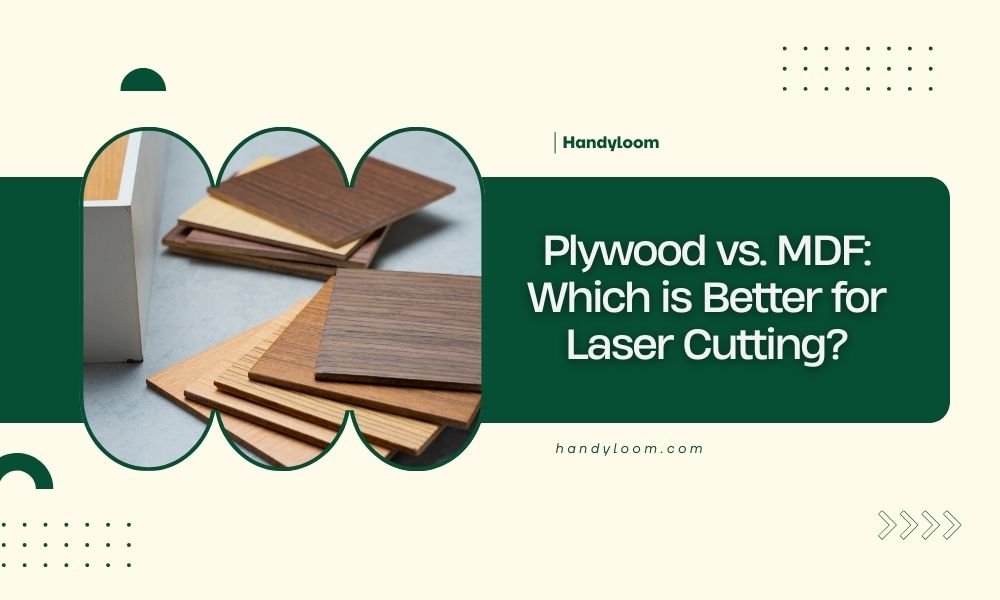
Plywood is generally better for laser cutting because it cuts cleaner, produces less toxic fumes, and gives you more precise results than MDF.
MDF works for laser cutting too, but it creates more smoke, dulls your laser faster, and contains formaldehyde that releases harmful gases when cut.
Why Material Choice Matters for Your Laser Projects
You’re standing in the lumber aisle, looking at plywood and MDF sheets. Both look like they’d work for your laser cutting project. But here’s the thing – your choice will make or break your results.
I’ve researched dozens of laser cutting forums and talked to woodworkers who learned this lesson the hard way. The wrong material can clog your laser, fill your workspace with toxic smoke, or leave you with burnt, messy edges.
What Makes Plywood Great for Laser Cutting
Plywood wins the laser cutting game for several clear reasons. Let me break down why it’s often your best bet.
Clean Cuts Every Time
Plywood cuts like butter under a laser beam. The alternating grain layers actually help the laser slice through smoothly. You get crisp edges with minimal burning.
Think of it like cutting through a layered cake versus cutting through dense bread. The layers in plywood guide the laser, while MDF’s uniform density can cause hot spots.
Less Toxic Fume Production
Here’s where plywood really shines. When you laser cut plywood, you’re mostly burning wood and natural adhesives. The fumes are still something you want to ventilate, but they’re not as dangerous as what MDF produces.
Many safety experts recommend plywood for indoor laser cutting setups because the fume profile is more manageable.
Easier on Your Laser Equipment
Your laser lens will thank you for choosing plywood. The material cuts so cleanly that it produces less debris. Less debris means less cleaning and longer equipment life.
I found that laser cutting enthusiasts who stick to plywood report fewer maintenance issues compared to heavy MDF users.
Understanding MDF for Laser Applications
MDF isn’t necessarily bad for laser cutting. But it comes with trade-offs you need to know about.
The Formaldehyde Problem
MDF contains formaldehyde-based adhesives throughout its structure. When you laser cut MDF, you’re heating these chemicals to extreme temperatures. The result? Toxic fumes that require serious ventilation.
Research from woodworking safety organizations shows that formaldehyde exposure can cause respiratory irritation and other health issues. You need proper ventilation and possibly even respiratory protection.
Cutting Characteristics of MDF
MDF does cut with a laser, but the results vary more than with plywood. Sometimes you get clean cuts. Other times you get charred, fuzzy edges that need sanding.
The uniform density that makes MDF great for routing and painting actually works against it during laser cutting. Hot spots can develop, leading to inconsistent results.
Equipment Wear Considerations
MDF is harder on your laser equipment. The fine particles it creates when cut can clog your ventilation system faster. Your laser lens needs more frequent cleaning.
Some laser cutting forums I researched report that heavy MDF use can reduce laser tube life, though this varies by machine and settings.
Direct Comparison: Key Factors
| Factor | Plywood | MDF |
|---|---|---|
| Cut Quality | Clean, crisp edges | Variable, often fuzzy |
| Fume Safety | Less toxic | Contains formaldehyde |
| Equipment Impact | Gentle on laser | More wear and debris |
| Cost | Usually higher | Generally cheaper |
| Consistency | Reliable results | More unpredictable |
Best Plywood Types for Laser Cutting
Not all plywood works equally well for laser cutting. Here’s what to look for when you’re shopping.
Baltic Birch: The Gold Standard
Baltic birch plywood is like the sports car of laser cutting materials. It’s made with thin, consistent layers and high-quality adhesive. The result? Perfect cuts every time.
Yes, Baltic birch costs more. But the results speak for themselves. If you’re doing detailed work or selling your laser cut items, it’s worth the extra money.
Regular Hardwood Plywood
Standard birch, maple, or oak plywood from the home center works fine for most projects. Just avoid anything labeled “construction grade” or “sheathing.” Those have gaps and inconsistencies that cause problems.
Avoid Softwood Plywood
Pine and fir plywood contain resins that can gum up your laser lens. The varying wood density also makes for unpredictable cuts. Stick to hardwood varieties.
When MDF Might Be Your Choice
I won’t completely write off MDF. There are times when it makes sense, despite its drawbacks.
Budget-Conscious Prototyping
If you’re testing designs and need cheap material for trial runs, MDF can work. Just make sure your ventilation is excellent and expect to do some edge cleanup.
Thick Material Needs
Sometimes you need thick material and plywood gets expensive fast. MDF comes in thick sheets at reasonable prices. Just plan for more laser passes and longer cut times.
Laser Settings and Safety Tips
Your laser settings matter huge for both materials. Here’s what I found works best.
Plywood Settings
Start with lower power and higher speed for plywood. The material cuts easily, so you don’t need to blast it. This approach gives you cleaner edges with less burning.
Multiple light passes often work better than one heavy cut, especially on thicker plywood.
MDF Settings
MDF needs more power and slower speeds. The dense material resists cutting. Be prepared for multiple passes on anything over 1/4 inch thick.
Keep your air assist running strong with MDF. The extra airflow helps clear the heavier debris.
Safety Must-Haves
No matter which material you choose, ventilation isn’t optional. A good exhaust fan that pulls fumes outside keeps your workspace safe.
With MDF, consider wearing a respirator rated for formaldehyde. Your lungs will thank you later.
Cost Analysis: Is Plywood Worth the Extra Money?
Let’s talk dollars and cents. Plywood typically costs 20-50% more than MDF. But is it worth it?
For most laser cutting projects, yes. Here’s why: you save time on cleanup, get better results on the first try, and spend less on equipment maintenance.
Think of it this way – would you rather pay a bit more upfront or deal with failed cuts, equipment problems, and health concerns later?
Making Your Decision
Your choice between plywood and MDF comes down to your specific situation. But here’s my general advice based on what I’ve researched:
- Choose plywood for detailed work, indoor cutting, or when you need consistent results
- Consider MDF only if budget is tight and you have excellent ventilation
- Baltic birch plywood is worth the extra cost for professional or detailed work
- Always prioritize safety – good ventilation isn’t negotiable with either material
Conclusion
When it comes to laser cutting, plywood beats MDF in most situations. You get cleaner cuts, safer working conditions, and less wear on your equipment. The extra cost pays for itself through better results and fewer headaches.
MDF can work if your budget is tight and your ventilation is excellent. But for most makers, plywood – especially Baltic birch – delivers the quality and consistency you want from your laser cutting projects.
Your choice of material sets the foundation for everything else. Choose wisely, and your laser cutting results will reflect that decision.
Can you laser cut painted plywood or MDF?
You can laser cut painted materials, but the paint will burn off and create additional toxic fumes. The cut quality also suffers because paint interferes with the laser beam. Strip paint first or choose unpainted materials for best results.
How thick can you laser cut plywood versus MDF?
Most hobby lasers can cut plywood up to 1/2 inch thick in one pass, while MDF maxes out around 1/4 inch due to its density. Professional lasers can handle thicker materials, but expect multiple passes and longer cut times with MDF.
Does the type of plywood adhesive matter for laser cutting?
Yes, adhesive type affects both safety and cut quality. Look for plywood made with urea-formaldehyde or phenol-formaldehyde adhesives rather than cheaper alternatives. Baltic birch typically uses the safest adhesives for laser cutting applications.
Why does my MDF create more smoke than plywood when laser cutting?
MDF creates more smoke because it’s denser and contains more adhesive per cubic inch than plywood. The fine wood particles in MDF also burn differently than the wood layers in plywood, producing heavier smoke that’s harder to evacuate.
Can moisture content affect laser cutting results in plywood and MDF?
High moisture content makes both materials harder to cut cleanly and can cause steam that interferes with the laser beam. Store your materials in a dry place and avoid cutting freshly purchased lumber that might still contain shipping moisture.