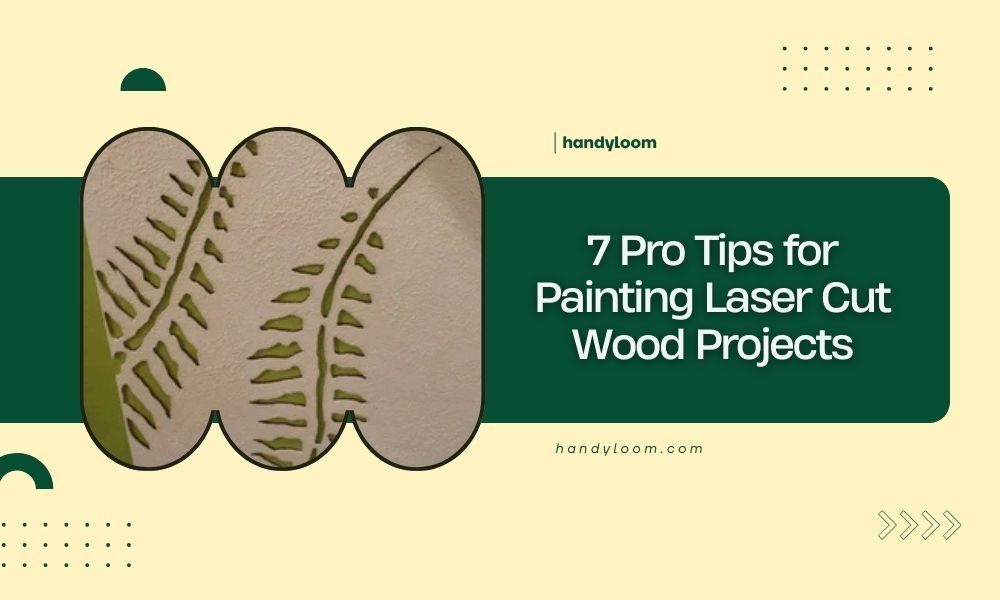
The key to painting laser cut wood projects is proper surface preparation and choosing the right paint type for your specific wood material.
Most laser cut wood projects need light sanding, primer application, and thin paint coats to achieve professional-looking results without obscuring fine details.
Why Laser Cut Wood Needs Special Paint Techniques
Laser cutting creates unique challenges you won’t face with regular wood projects. The intense heat burns wood edges, leaving a dark residue that can bleed through paint.
I found that many crafters skip the prep work and end up with uneven coverage. Your beautiful laser-cut details get lost under thick, gloppy paint layers.
Here’s what makes laser cut wood different from regular lumber:
- Burned edges need special cleaning
- Heat damage can make wood more porous
- Fine details require careful paint application
- Some woods react differently to laser heat
Tip 1: Clean Those Burn Marks First
Those dark, sooty edges aren’t just cosmetic issues. They’ll make your paint look muddy and prevent proper adhesion.
Quick Cleaning Method
Grab a damp cloth and gently wipe all laser-cut edges. For stubborn residue, try these steps:
- Use fine steel wool on burned areas
- Wipe with denatured alcohol
- Let dry completely before moving forward
What About Deeper Burns?
Some woods like cherry or walnut burn deeper than others. Light sanding with 220-grit paper usually handles this. Don’t go crazy – you just want to remove the char, not reshape your piece.
Tip 2: Sand Smart, Not Hard
You don’t need aggressive sanding on laser cut wood. The goal is creating a smooth base for paint, not removing material.
Best Sanding Approach
Start with 220-grit sandpaper. Work in light, circular motions. Pay extra attention to flat surfaces where paint coverage matters most.
Skip sanding on intricate details. You might damage delicate curves or small features. A light cloth cleaning usually works fine for detailed areas.
Sanding Different Wood Types
Hardwoods like oak need more sanding than soft woods like pine. I researched and found that laser-cut pine often needs just a quick once-over, while maple might need more attention.
Tip 3: Prime Like Your Project Depends on It
Primer isn’t optional with laser cut wood. It’s your insurance policy against bleed-through and uneven coverage.
Choosing the Right Primer
Water-based primers work great for most projects. They dry fast and don’t add strong odors to your workspace.
For woods that bleed tannins (like cedar or redwood), use a stain-blocking primer. Regular primer won’t stop those brown stains from coming through.
Primer Application Tips
- Use thin coats – thick primer obscures details
- Let each coat dry completely
- Light sanding between coats if needed
Special Cases for Different Woods
| Wood Type | Primer Needs | Special Notes |
|---|---|---|
| Pine/Poplar | Standard water-based | Easy to work with |
| Oak/Cherry | Stain-blocking primer | Prevents tannin bleed |
| MDF | High-build primer | Seals porous edges |
Tip 4: Paint Selection Makes or Breaks Your Project
Not all paints work well on laser cut wood. You need something that flows smoothly but doesn’t run into fine details.
Acrylic Paint: Your Best Friend
Acrylic paints offer the best balance of coverage, durability, and ease of use. They clean up with water and don’t smell up your workspace.
Look for high-quality craft acrylics or artist-grade paints. Cheap paints often lack the pigment density you need for solid coverage.
What About Spray Paint?
Spray paint can work, but it’s tricky with detailed pieces. The overspray tends to fill in small gaps and fine details. Save spray paint for simple shapes or large, flat areas.
Specialty Paint Options
Chalk paint creates a nice matte finish and goes on thick enough to hide minor imperfections. Milk paint gives a more rustic look but requires mixing.
From what I read, many woodworkers prefer chalk paint for decorative pieces because it’s forgiving and doesn’t require perfect surface prep.
Tip 5: Master the Art of Thin Coats
This might be the most important tip of all. Thin coats preserve your laser-cut details while building up solid color coverage.
Why Thick Paint Fails
Think of paint like frosting on a cake. Too much and you lose all the fine decorative work underneath. Your precise laser cuts become blobs of color.
Thin coats let you control the build-up. You can always add more, but you can’t easily remove excess paint from detailed areas.
Application Technique
- Load your brush with paint, then remove excess on paper
- Apply in smooth, even strokes
- Work quickly to maintain a wet edge
- Let each coat dry completely before adding the next
How Many Coats Do You Need?
Most projects need 2-3 thin coats for solid coverage. Dark colors might cover in two coats, while lighter colors often need three.
Don’t rush this step. Each coat needs proper drying time, or you’ll get streaks and uneven coverage.
Tip 6: Choose Your Brush Wisely
The right brush makes painting laser cut wood so much easier. You need something that holds paint well but fits into detailed areas.
Best Brush Types for Different Areas
Flat brushes work great for large, smooth surfaces. They hold plenty of paint and give even coverage on flat areas.
Round detail brushes are perfect for intricate cuts and curved edges. Get a few different sizes – you’ll use them more than you think.
Brush Quality Matters
Cheap brushes shed bristles and leave streak marks. You don’t need professional artist brushes, but avoid the bargain bin options.
I found online that synthetic brushes work better with water-based paints than natural bristles. They’re also easier to clean.
Foam Brushes: When They Work
Foam brushes give super smooth finishes on flat surfaces. They don’t work well for detailed areas, but they’re great for base coats on simple shapes.
Tip 7: Finishing Touches That Make the Difference
Your paint job is almost done, but these final steps separate amateur work from professional-looking results.
Protecting Your Paint Job
A clear protective coat keeps your paint looking fresh longer. Water-based polyurethane works well and doesn’t yellow over time.
For decorative pieces that won’t get much handling, you might skip this step. But anything that gets touched regularly needs protection.
Matte vs. Gloss Finishes
Matte finishes hide minor imperfections but show fingerprints easily. Gloss finishes are easier to clean but highlight every flaw.
Satin finish splits the difference – it’s durable but not too shiny for most home decor projects.
Detail Work and Touch-ups
Even with careful work, you might need touch-ups. Keep some of your paint mixed and ready for small fixes.
Use a tiny artist brush for detail work. Sometimes adding a contrasting color to small features makes your laser-cut details pop.
Common Problems and Quick Fixes
- Paint buildup in corners: Use a dry brush to remove excess
- Uneven coverage: Add another thin coat
- Brush marks: Light sanding and re-coating usually fixes this
Troubleshooting Common Paint Problems
Even following all these tips, sometimes things go wrong. Here’s how to fix the most common issues.
Paint Bleeding Through Primer
This usually means you need a stronger stain-blocking primer. Sand lightly, apply stain-blocker, and start over with your paint coats.
Details Getting Clogged with Paint
Your coats are too thick. Use a toothpick or craft knife to carefully clean out small areas while the paint is still wet.
Prevention is Better Than Fixing
Most paint problems come from rushing the process. Take your time with prep work and thin coats. Your patience will show in the final result.
Conclusion
Painting laser cut wood projects doesn’t have to be frustrating. Clean preparation, quality materials, and thin coats will give you professional results every time. Remember that each coat needs proper drying time, and don’t skip the primer step. With these seven tips, your laser cut wood projects will look amazing and last for years. Take your time, enjoy the process, and be proud of the beautiful results you create.
What type of primer works best for laser cut MDF?
High-build primers work best for MDF because they seal the porous cut edges effectively. Regular primers often soak into MDF and don’t provide enough barrier protection for paint adhesion.
Can you use spray paint directly on laser cut wood without primer?
You can, but the results won’t be as good or long-lasting. Spray paint without primer often leads to uneven coverage, color bleeding, and poor adhesion, especially on burned laser-cut edges.
How long should you wait between paint coats on laser cut projects?
Wait at least 2-4 hours between thin coats, depending on humidity and temperature. The paint should feel completely dry to the touch before applying the next coat to avoid streaking or lifting.
What’s the best way to paint very small laser cut details?
Use small round detail brushes and very little paint. Load the brush, remove excess on paper, then carefully dab or stroke the small areas. Work slowly and clean mistakes immediately with a damp cloth.
Should you sand between paint coats on laser cut wood?
Light sanding between coats isn’t usually necessary if you’re applying thin, even coats. Only sand between coats if you notice brush marks or rough texture that needs smoothing.