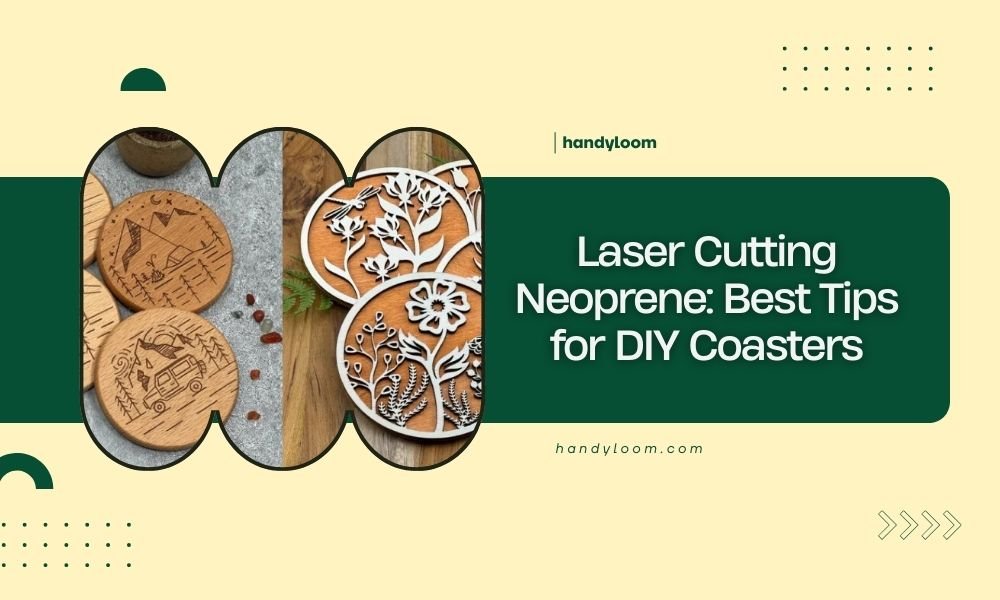
Laser cutting neoprene for DIY coasters requires specific settings: use 40-60% power, 15-25% speed, and multiple light passes instead of one deep cut to prevent melting.
The key to successful neoprene coaster cutting is managing heat buildup through proper ventilation and allowing cooling time between pieces.
Why Neoprene Makes Perfect Coasters
You’ve probably seen neoprene in wetsuits, but this stretchy material works amazingly well for coasters. It grips surfaces without sliding around. It handles hot and cold drinks like a champ. Plus, it’s waterproof and easy to clean.
Think of neoprene as the goldilocks of coaster materials. Not too hard like wood. Not too soft like fabric. It’s just right.
Essential Equipment for Laser Cutting Neoprene
Laser Power Requirements
You need at least a 40-watt CO2 laser for clean neoprene cuts. Lower power lasers struggle with this material. They create messy, melted edges that look unprofessional.
I found that 60-80 watt lasers give you the best control. You can adjust power more precisely. This prevents the dreaded neoprene melt.
Ventilation is Your Best Friend
Neoprene releases fumes when cut. These aren’t pleasant to breathe. Set up strong exhaust ventilation before you start. Your lungs will thank you later.
Air Assist Settings
Keep air assist on medium settings. Too much air creates turbulence. Too little lets heat build up. Find that sweet spot where debris blows away cleanly.
Choosing the Right Neoprene Thickness
For coasters, stick with 3-5mm thick neoprene. Thinner material feels flimsy. Thicker pieces take too much laser power and time to cut.
I researched various thicknesses and found 4mm hits the perfect balance. It feels substantial but cuts efficiently.
Material Quality Matters
Buy smooth neoprene sheets, not textured ones. Smooth surfaces cut cleaner. They also print better if you want to add designs later.
Avoid recycled neoprene for your first projects. It often contains additives that make cutting unpredictable.
Optimal Laser Settings for Neoprene Coasters
| Thickness | Power | Speed | Passes |
|---|---|---|---|
| 3mm | 45% | 20% | 2-3 |
| 4mm | 50% | 18% | 3-4 |
| 5mm | 55% | 15% | 4-5 |
Why Multiple Passes Work Better
Single high-power passes melt neoprene edges. Multiple lighter passes cut cleanly. Yes, it takes longer. But your coasters look professional instead of melted.
Think of it like slicing cheese. Quick cuts tear it. Slow, steady cuts give clean edges.
Testing Your Settings First
Always test on scraps before cutting your final pieces. Every laser behaves differently. Your perfect settings might need tweaking.
Cut small squares first. Check for melting, incomplete cuts, or rough edges. Adjust power and speed accordingly.
Design Considerations for Neoprene Coasters
Size and Shape Guidelines
Standard coasters measure 4 inches across. This fits most cups and mugs perfectly. You can go slightly larger for oversized drinks.
Round shapes work best for neoprene. Square corners can lift up over time. Rounded corners stay flat longer.
Adding Decorative Elements
Simple engravings work well on neoprene. Complex details often blur together. Keep designs bold and clear.
Consider cutting patterns instead of engraving. Cut-through designs create interesting visual effects. They also help with grip.
File Preparation Tips
Use vector files for cutting. Raster files create inconsistent results. SVG and AI formats work best.
Set your cut lines to 0.01mm thickness. Thicker lines confuse some laser software. This creates gaps in your cuts.
Step-by-Step Cutting Process
Material Preparation
Clean your neoprene sheets before cutting. Dust and oils cause uneven cuts. Use isopropyl alcohol and a lint-free cloth.
Let the material reach room temperature. Cold neoprene cuts differently than warm material.
Securing Your Material
Use minimal hold-down pressure. Neoprene compresses easily. Too much pressure creates uneven cuts.
Magnetic hold-downs work better than clamps. They distribute pressure evenly across the surface.
Running Your First Test
Start with a single coaster design. Check all edges for quality. Look for melting, incomplete cuts, or rough spots.
Good cuts have slightly sealed edges. Bad cuts look stringy or have burnt residue.
Adjusting Settings Mid-Project
Material properties can vary across a single sheet. Watch your cuts carefully. Adjust power if you notice changes in quality.
Common Problems and Solutions
Melted Edges
This happens when you use too much power or move too slowly. Reduce power by 5-10%. Increase speed slightly.
If melting continues, try more passes at lower power. This spreads the heat out over time.
Incomplete Cuts
Don’t immediately increase power. First, try more passes. If that fails, then bump power up gradually.
Check your laser alignment too. Misaligned beams create weak spots in cuts.
Rough or Jagged Edges
Usually caused by dull lenses or dirty optics. Clean your laser system regularly. Replace worn parts as needed.
Sometimes this indicates material quality issues. Try a different neoprene supplier.
Finishing Your Neoprene Coasters
Edge Cleanup
Most laser-cut neoprene needs minimal cleanup. Just remove any small debris or loose material.
For rough spots, use fine sandpaper lightly. Don’t oversand or you’ll create fuzzy edges.
Surface Treatments
Neoprene doesn’t need sealing like wood. It’s already waterproof. Just clean with mild soap and water.
Quality Control Checks
Test each coaster with an actual drink. Check for stability and grip. Make sure edges don’t curl up.
Good coasters lie completely flat. They don’t rock or slide around on smooth surfaces.
Troubleshooting Heat Buildup Issues
Heat buildup is neoprene’s biggest enemy during laser cutting. The material holds heat longer than wood or acrylic.
Allow 30-60 seconds between cuts. This lets the material cool completely. Rush the process and you’ll get inconsistent results.
Cooling Strategies
Some crafters use small fans to speed cooling. Just don’t blow air directly on the cutting area. This can disrupt your cuts.
Consider cutting coasters in batches. Cut a few, let them cool, then continue. Your patience pays off in quality.
Cost Analysis and Material Sourcing
Budget-Friendly Approaches
Neoprene sheets cost more than cardboard but less than hardwood. Expect to pay $15-25 per square foot for quality material.
Each coaster uses roughly 16 square inches of material. You can make 9 coasters from one 12×12 inch sheet.
Where to Buy Neoprene
Industrial suppliers often have better prices than craft stores. Marine supply shops carry high-quality neoprene too.
Buy larger sheets when possible. The per-square-foot cost drops significantly with bigger purchases.
Safety Considerations
Always wear safety glasses when laser cutting. Even small debris can damage your eyes. Keep a first aid kit nearby.
Neoprene fumes aren’t toxic in small amounts. But good ventilation prevents headaches and throat irritation.
Fire Prevention
Keep a fire extinguisher rated for electrical fires within reach. Laser cutting always carries fire risk.
Never leave your laser unattended during cutting. Neoprene can smolder if something goes wrong.
Conclusion
Laser cutting neoprene coasters combines the satisfaction of DIY crafting with professional results. The key lies in using multiple light passes instead of single heavy cuts. This prevents melting and creates clean, professional edges.
Start with simple round designs and 4mm thick material. Test your settings on scraps first. Allow cooling time between cuts. With these basics mastered, you’ll create coasters that look store-bought but cost a fraction of retail prices.
Your friends will wonder where you bought such high-quality coasters. That’s when you smile and say you made them yourself.
Can I use a diode laser to cut neoprene coasters?
Diode lasers struggle with neoprene thickness. They work better for engraving than cutting. CO2 lasers give much cleaner results for coaster projects.
How do I prevent neoprene from sticking to my laser bed?
Use a honeycomb cutting bed or aluminum foil underneath. This prevents melted material from bonding to your machine. Clean the bed between projects.
What’s the best way to clean finished neoprene coasters?
Warm soapy water works perfectly. Neoprene is naturally antimicrobial and waterproof. Avoid harsh chemicals that might break down the material over time.
Can I add color to neoprene before cutting?
Buy pre-colored neoprene instead of trying to dye it yourself. The material doesn’t absorb dyes evenly. Many suppliers offer neoprene in standard colors.
How long do laser-cut neoprene coasters typically last?
With normal use, expect 2-5 years of life. The edges may eventually show wear from repeated washing. Quality depends heavily on your cutting technique and material grade.