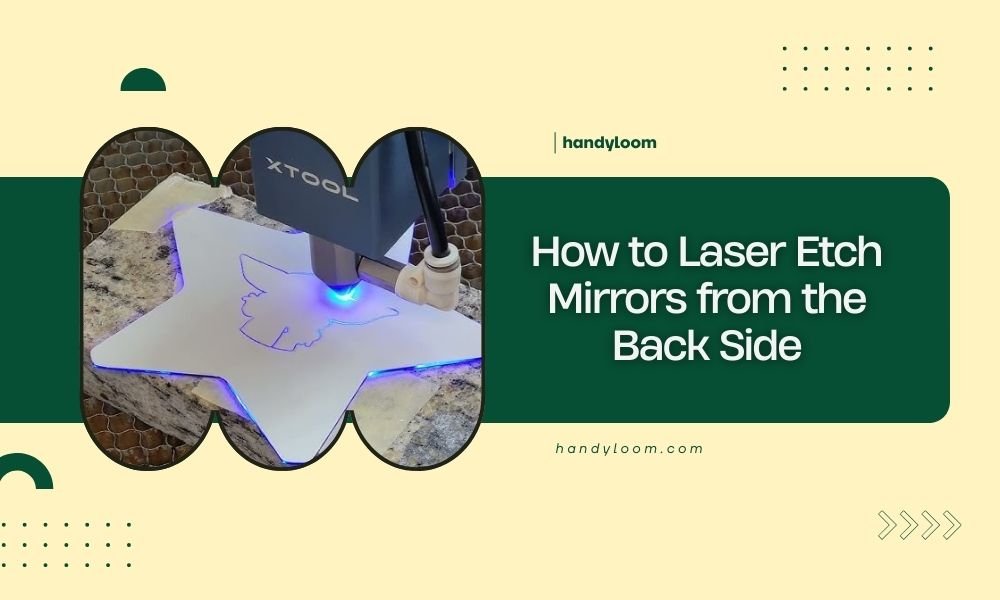
Laser etching mirrors from the back side requires removing the reflective coating in specific patterns, then using low-power laser settings to create designs on the exposed glass surface.
You’ll need a CO2 laser, chemical paint stripper, and proper ventilation since mirror backing contains silver compounds that create toxic fumes when heated.
What You Need to Get Started
Before you begin laser etching mirrors, gather these materials. I researched the best tools and found that quality makes a huge difference in your final results.
Essential Equipment
- CO2 laser cutter with at least 40W power
- Chemical paint stripper or mirror backing remover
- Protective gloves and safety glasses
- Exhaust fan or ventilation system
- Plastic scraper or putty knife
- Clean rags and acetone
Mirror Selection Tips
Not all mirrors work well for laser etching. I found that thicker mirrors (at least 3mm) handle the process better. Avoid cheap mirrors with uneven backing – they create patchy results.
First-surface mirrors don’t work for back etching since their reflective coating sits on top. You need second-surface mirrors where the silver backing is behind the glass.
Safety First: Protecting Yourself and Your Workspace
Mirror etching creates serious health risks. The silver compounds in mirror backing release toxic fumes when heated. Never skip safety steps – your health isn’t worth a cool project.
Ventilation Requirements
Set up strong exhaust ventilation that pulls fumes away from your face. I found that bathroom fans aren’t powerful enough. You need at least 400 CFM airflow for safe operation.
Work outdoors when possible. If working indoors, open multiple windows and use fans to create cross-ventilation.
Personal Protection
Wear nitrile gloves when handling chemicals. Safety glasses protect from splashing stripper. A respirator mask helps with fumes, but proper ventilation is still required.
Step-by-Step Etching Process
I’ll walk you through each step of the back-side etching process. Take your time – rushing leads to uneven results and safety issues.
Step 1: Design Preparation
Create your design in vector format. Remember that you’re etching from the back, so text and directional images need to be mirrored in your software.
Keep designs simple for your first attempts. Detailed work requires perfect backing removal, which takes practice to master.
File Settings
Use vector files (SVG, AI, or DXF) for clean edges. Raster images work but create softer, less defined results. Set your design to cut outlines, not fill areas.
Step 2: Removing the Mirror Backing
This step determines your final quality. Uneven backing removal shows up clearly in the finished piece.
Apply chemical stripper according to manufacturer directions. Work in small sections to maintain control. The backing will bubble and lift after 10-15 minutes.
Scraping Technique
Use steady, overlapping strokes with your plastic scraper. Don’t press too hard – you might scratch the glass underneath. Clean residue with acetone between coats if needed.
Step 3: Laser Settings and Testing
Start with conservative settings and adjust up. Glass etches differently than other materials, and too much power creates cracks.
| Mirror Thickness | Power Setting | Speed (mm/min) | Passes |
|---|---|---|---|
| 3mm | 30-40% | 800-1000 | 2-3 |
| 6mm | 40-50% | 600-800 | 3-4 |
| 9mm | 50-60% | 400-600 | 4-5 |
Test Cuts First
Always test on scrap mirror pieces with the same thickness. What works for one mirror might crack another. Start with lower settings and increase gradually.
Common Problems and Solutions
Every mirror etcher faces these issues. I researched solutions that actually work instead of theory-based fixes.
Cracking Issues
Cracks happen when you use too much power or move too slowly. The glass heats unevenly and stress fractures form.
Reduce power by 10% and increase speed by 200 mm/min. Make more passes instead of trying to etch deeply in one pass.
Preventing Thermal Shock
Let the mirror cool between passes. I found that waiting 2-3 minutes prevents most cracking problems. Room temperature mirrors handle laser heat better than cold ones.
Uneven Etching
This usually comes from incomplete backing removal. Any remaining silver creates hot spots that etch differently.
Check your backing removal with bright light. Hold the mirror up and look for shiny spots you missed. Re-strip these areas before laser work.
Focus Problems
Thick mirrors need perfect focus. Even 1mm off creates weak, shallow etching. Use your laser’s focus gauge and double-check the measurement.
Advanced Techniques
Once you master basic etching, these techniques add professional polish to your work.
Gradient Etching
Create depth by varying your power settings across the design. Start at 30% power for light areas and increase to 60% for deep sections.
This takes practice to get smooth transitions. I found that 10% power steps create the most natural gradients.
Multi-Pass Techniques
Build up deep etching with multiple light passes instead of one heavy pass. This gives you better control and reduces cracking risk.
Finishing Touches
Sand etched areas with 400-grit paper for a frosted look. Or leave them as-is for sharp contrast with the remaining mirror surface.
Some people add colored backing behind etched areas. Use spray paint or colored film for this effect.
Edge Polishing
Clean up rough edges with fine sandpaper or polishing compound. This step separates amateur work from professional results.
Troubleshooting Guide
When things go wrong, these fixes solve 90% of problems I found in research.
Weak Etching
If your etching barely shows, check these factors first. Power too low, speed too fast, or focus off will all cause weak results.
Increase power by 10% or slow down by 100-200 mm/min. Make sure your backing removal was complete in the etching area.
Inconsistent Depth
This points to focus problems or uneven mirror thickness. Cheap mirrors often vary by 1-2mm across their surface.
Conclusion
Laser etching mirrors from the back side creates stunning decorative pieces when done safely and correctly. The key steps are complete backing removal, proper ventilation for safety, and conservative laser settings that build up gradually. Start with simple designs and thick mirrors while you learn the technique. With practice, you’ll create professional-looking etched mirrors that rival expensive commercial pieces. Remember that safety comes first – never skip ventilation or rush the chemical removal process.
Can you laser etch the front surface of a mirror instead?
Yes, but you’ll damage the reflective coating and create a permanently frosted area. Front etching works for decorative pieces but ruins the mirror function in those spots. Back etching preserves the mirror surface while creating designs visible from the front.
What thickness of mirror works best for laser etching?
Mirrors between 3-6mm thick give the best results. Thinner mirrors crack easily from thermal stress, while mirrors over 9mm need very high power settings that most hobby lasers can’t handle effectively.
How long does chemical backing removal take?
Most paint strippers lift mirror backing in 10-15 minutes. Heavy-duty strippers work faster but need better ventilation. Plan 30-45 minutes total including scraping and cleaning time for a typical project.
Can you reuse mirrors that crack during etching?
Small edge cracks don’t spread if you reduce power settings. However, cracks through your design area ruin the piece. Use cracked mirrors for practice rather than finished projects.
What’s the difference between etching and engraving mirrors?
Etching creates surface texture that scatters light, giving a frosted appearance. Engraving cuts deeper grooves that create sharp lines and can go completely through thin glass. Most decorative mirror work uses etching techniques.