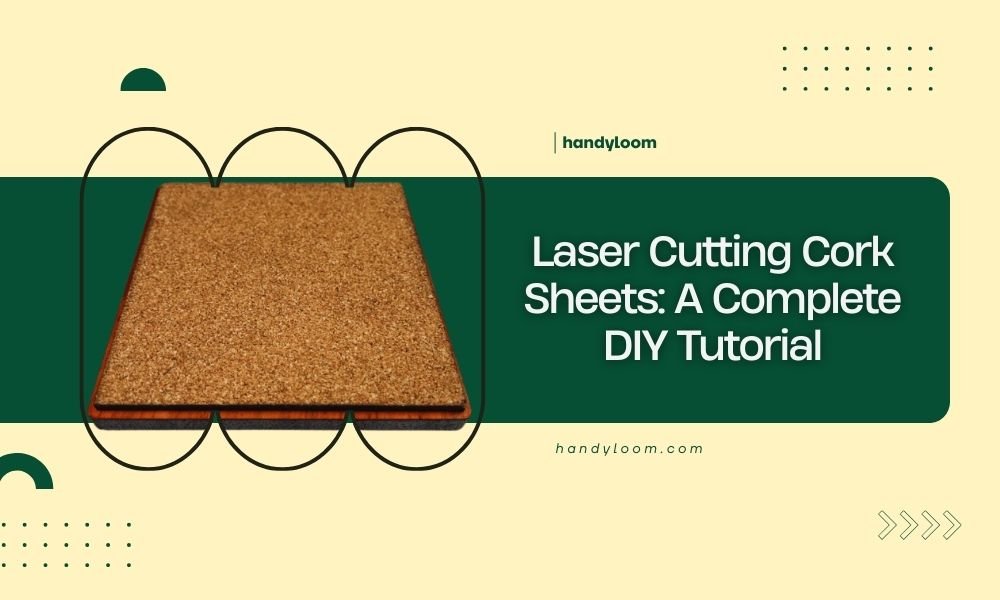
Laser cutting cork sheets requires a CO2 laser cutter with 10-40 watts power, operating at low speeds (100-300 mm/min) to prevent burning the natural material.
You’ll get clean, precise cuts in cork by setting your laser to 20% power and 200 mm/min speed, making it perfect for coasters, jewelry, and decorative crafts.
What Makes Cork Perfect for Laser Cutting
Cork responds beautifully to laser cutting because of its natural cellular structure. The material cuts cleanly without melting like plastics do.
You can create amazing projects with cork sheets. Think custom coasters, intricate wall art, or personalized keychains. The possibilities are endless.
Types of Cork Sheets You Can Use
Natural cork sheets work best for laser cutting. They’re available in different thicknesses from 1mm to 6mm.
Composite cork sheets also work well. These blend cork particles with binders, giving you more color options.
Thickness Guidelines for Different Projects
Choose 1-2mm cork for delicate jewelry and small decorations. Pick 3-4mm for coasters and functional items. Use 5-6mm thickness for sturdy decorative pieces.
Essential Equipment You’ll Need
A CO2 laser cutter is your main tool. Desktop models work perfectly fine for cork cutting projects.
You don’t need the most expensive machine. Many hobbyists get great results with entry-level CO2 lasers.
Laser Power Requirements
A 40-watt CO2 laser handles most cork projects easily. Even 20-watt machines can cut thin cork sheets.
Higher wattage isn’t always better with cork. Too much power burns the material and creates rough edges.
Additional Tools and Supplies
You’ll want these items on hand:
- Air assist system to blow away debris
- Masking tape to protect surfaces
- Fine sandpaper for edge finishing
- Design software like Inkscape or Adobe Illustrator
Step-by-Step Cork Cutting Process
Start by preparing your workspace. Make sure your laser bed is clean and level.
Place your cork sheet flat on the cutting bed. Any warping will cause uneven cuts.
Setting Up Your Design File
Create your design in vector format. SVG and DXF files work best with most laser software.
Keep line weights thin – 0.1mm or less. Thick lines confuse the laser about what to cut versus engrave.
Design Tips for Better Results
Avoid tiny details smaller than 1mm. Cork’s natural texture makes very fine features hard to see.
Leave at least 3mm between cut lines. This prevents pieces from breaking during cutting.
Optimal Laser Settings for Cork
Here are the settings I found work best for different cork thicknesses:
| Cork Thickness | Power (%) | Speed (mm/min) | Passes |
|---|---|---|---|
| 1-2mm | 15-20% | 300-400 | 1 |
| 3-4mm | 20-25% | 200-300 | 1-2 |
| 5-6mm | 25-35% | 100-200 | 2-3 |
Making Test Cuts First
Always run a small test cut before starting your main project. Cork varies between suppliers and batches.
Cut a simple square in a corner of your sheet. Check if it cuts completely through without burning.
Common Problems and Solutions
Burning edges happen when your power is too high or speed too slow. Reduce power by 5% and try again.
Incomplete cuts mean you need more power or slower speed. Sometimes a second pass works better than higher power.
Dealing with Cork Dust and Debris
Cork creates lots of fine dust when cut. Your air assist system helps, but some cleanup is normal.
Use a soft brush to remove debris from cut edges. Compressed air works well too.
Preventing Warping During Cutting
Pin down your cork sheet at the corners. Small weights work if your laser allows them.
Warped cork causes focus problems and uneven cuts. Flat sheets give much better results.
Finishing Your Cork Projects
Light sanding with 220-grit paper smooths any rough edges. Work gently – cork tears easily.
You can seal cork with clear acrylic spray for outdoor projects. This protects against moisture.
Adding Color and Texture
Cork takes wood stains beautifully. Water-based stains work best and dry quickly.
Acrylic paints also work well. Use thin coats to avoid clogging cork’s natural texture.
Assembly Tips for Multi-Part Projects
Wood glue bonds cork pieces permanently. Contact cement works for flexible joints.
Double-sided tape is perfect for temporary assemblies or testing fit.
Popular Cork Project Ideas
Coasters are the perfect beginner project. They’re simple to design and always useful.
Wall art using layered cork pieces creates beautiful dimensional effects. Research from craft communities shows these are very popular (Pinterest craft data).
Functional Items You Can Make
Trivets for hot dishes work great in thick cork. The material naturally insulates against heat.
Bulletin boards and pin boards are classic cork projects. Cut decorative edges for a custom look.
Decorative and Gift Items
Personalized keychains make thoughtful gifts. Add names or dates with laser engraving.
Cork ornaments for holidays are lightweight and safe. Kids love helping with these projects.
Safety Considerations
Cork dust can irritate your lungs. Always use proper ventilation when laser cutting.
I found that many safety guidelines recommend dust masks even with good ventilation (OSHA workplace safety standards).
Fire Prevention
Cork rarely catches fire, but it can smolder. Never leave your laser unattended during cutting.
Keep a water spray bottle nearby. It’s perfect for stopping any smoldering spots quickly.
Conclusion
Laser cutting cork sheets opens up a world of creative possibilities. With the right settings and techniques, you’ll create professional-looking projects at home.
Start with simple designs and work your way up to complex pieces. Practice makes perfect, and cork is forgiving material for beginners.
Your cork cutting skills will improve with each project. Soon you’ll be creating custom pieces that amaze friends and family.
What thickness of cork sheet is best for beginners?
Start with 3mm cork sheets for your first projects. This thickness cuts easily, handles mistakes well, and works for most beginner designs like coasters and simple decorations.
Can I laser cut cork without an air assist system?
You can cut cork without air assist, but results won’t be as clean. The system blows away debris and prevents dust buildup on your lens, giving you much better cut quality.
How do I prevent cork from crumbling at cut edges?
Use lower power settings and make multiple passes instead of one high-power cut. Sharp laser focus also helps – check your lens is clean and properly focused before cutting.
What’s the difference between natural and composite cork for laser cutting?
Natural cork has more texture variation and may have small gaps, while composite cork cuts more uniformly. Both work well, but composite gives more predictable results for detailed designs.
How long do laser-cut cork projects typically last?
Indoor cork projects can last decades with normal use. Outdoor projects need sealing and may last 2-5 years depending on weather exposure and maintenance.