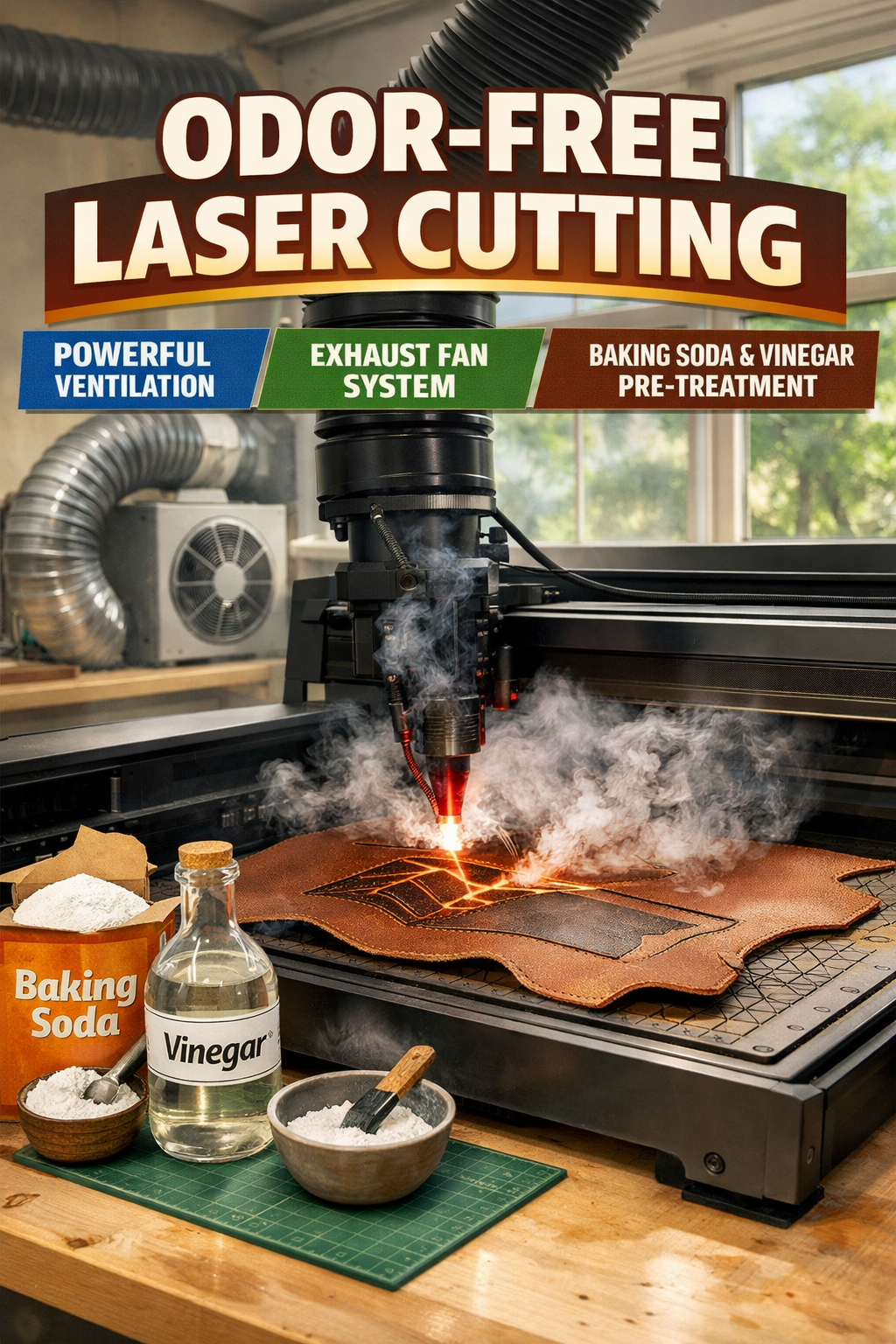
You can laser cut leather without smell by using proper ventilation, lower power settings, and pre-treating your leather with baking soda solution.
The key to odor-free laser cut leather projects lies in controlling temperature, airflow, and choosing the right leather types for your cuts.
Why Laser Cut Leather Smells in the First Place
When you laser cut leather, you’re burning organic material at high temperatures. This creates smoke and that distinct burnt smell we all know.
The smell comes from proteins and tanning chemicals breaking down. Different leather types produce different odors. Vegetable-tanned leather smells less harsh than chrome-tanned varieties.
The Science Behind the Stink
Think of it like cooking meat on high heat. The faster and hotter you go, the more smoke you get. Your laser works the same way.
From what I researched, the burning temperature of leather ranges from 200-300°C. At these temperatures, chemical compounds release gases that create strong odors.
Pro Tip 1: Master Your Ventilation Setup
Good airflow is your best friend. You need to pull that smoke away before it builds up and sticks to everything.
Exhaust Fan Positioning
Place your exhaust fan to pull air across your cutting area, not just above it. This creates a steady airflow that carries smoke away from your workspace.
I found that positioning fans at a slight angle works better than straight vertical pulls. You want the air to sweep across the leather surface.
Creating Cross-Ventilation
Open windows or doors on opposite sides of your workspace. This creates natural airflow that helps your exhaust system work better.
Even a small desk fan pointing toward your exhaust can double your ventilation power.
Air Filtration Systems
Consider adding an air purifier with activated carbon filters near your cutting station. These filters grab odor molecules before they spread.
Many crafters I heard from online use shop air filtration systems designed for woodworking. They work great for leather too.
Pro Tip 2: Optimize Your Laser Settings
Lower power and multiple passes create less smell than high power single cuts. It’s like the difference between searing and slow cooking.
Finding Your Sweet Spot Settings
Start with 40-60% power instead of maxing out your laser. Yes, it takes longer, but the smell reduction is worth it.
Run test cuts on scraps first. You’ll find the lowest power that still cuts cleanly through your leather thickness.
Speed vs Power Balance
Faster cuts at lower power often smell less than slow cuts at high power. The goal is less heat buildup in one spot.
| Leather Thickness | Recommended Power | Speed Setting | Passes Needed |
|---|---|---|---|
| 1-2mm | 45-55% | Medium-Fast | 1-2 |
| 3-4mm | 60-70% | Medium | 2-3 |
| 5mm+ | 70-80% | Slow-Medium | 3-4 |
Pulse Settings for Less Heat
If your laser has pulse options, use them. Pulsing gives the leather time to cool between burns, reducing overall heat and smell.
Pro Tip 3: Pre-Treatment Methods That Work
You can actually treat leather before cutting to reduce odors. It’s like marinating meat – preparation makes all the difference.
Baking Soda Solution Method
Mix 2 tablespoons of baking soda in 1 cup of water. Lightly dampen a cloth and wipe your leather surface before cutting.
Let it dry completely – about 30 minutes. The baking soda neutralizes some acids that create strong smells when burned.
Vinegar Pre-Treatment
White vinegar works too, but use it sparingly. Mix 1 part vinegar with 3 parts water. Test on a hidden area first.
The acid in vinegar can change leather color slightly, so always test before treating your main project.
Cooling Your Leather
Store your leather in the refrigerator for an hour before cutting. Cold leather burns less aggressively and produces less immediate smoke.
Just make sure it’s back to room temperature before you start cutting to avoid condensation issues.
Pro Tip 4: Choose the Right Leather Types
Not all leather smells the same when cut. Some types are naturally less offensive than others.
Vegetable-Tanned Leather Wins
Vegetable-tanned leather creates the mildest cutting odors. The natural tanning process uses tree bark instead of harsh chemicals.
It costs more upfront but saves you from dealing with chemical smells that stick around for days.
Avoid Chrome-Tanned for Indoor Work
Chrome-tanned leather is cheaper but smells much worse when cut. The chromium salts create sharp, chemical odors.
If you must use chrome-tanned leather, double your ventilation efforts and consider working outdoors.
Thickness Matters Too
Thinner leather means less material to burn, which means less smell. Choose the thinnest leather that still works for your project.
Natural vs Synthetic Options
Some synthetic leather alternatives cut with almost no smell at all. They won’t give you that authentic leather look, but they’re great for practice cuts.
Pro Tip 5: Post-Cutting Odor Control
What you do after cutting matters just as much as your cutting technique. Quick action prevents smells from setting in.
Immediate Ventilation
Keep your exhaust running for at least 10 minutes after you finish cutting. This clears out lingering smoke particles.
Don’t close up your workspace right away. Let fresh air circulate for a while.
Surface Cleaning Protocol
Wipe down your laser bed and surrounding surfaces with a damp cloth. Smoke residue sticks to everything and keeps producing odors.
Clean your laser lens and mirrors more often when cutting leather. Smoke buildup affects performance and smell.
Storing Cut Pieces
Don’t stack freshly cut leather pieces right away. Spread them out to air dry and off-gas before storage.
A light dusting of baking soda on cut edges helps neutralize remaining odors. Brush it off after 30 minutes.
Common Mistakes That Make Smells Worse
I found online that many crafters make the same ventilation mistakes. Here’s what to avoid.
Recirculating Instead of Exhausting
Your ventilation must pull air outside, not just move it around the room. Recirculation spreads the smell instead of removing it.
Cutting Too Fast Without Testing
Jumping straight to full power creates unnecessary smoke. Always test cut first to find your minimum effective settings.
Ignoring Leather Prep
Cutting dirty or oily leather makes smells much worse. Clean your leather before cutting, even if it looks fine.
Equipment Upgrades That Help
Sometimes the solution is better gear. These upgrades make the biggest difference for smell control.
Dedicated Fume Extractors
Purpose-built fume extractors work better than general exhaust fans. They’re designed specifically for laser cutting applications.
Air Assist Systems
Air assist blows compressed air across your cut line, pushing smoke away immediately. Many laser cutters have this as an optional upgrade.
When to Work Outdoors Instead
Sometimes indoor cutting just isn’t practical. Here’s when to take your project outside.
Large Projects
Cutting multiple pieces or thick leather generates more smoke than indoor ventilation can handle effectively.
Sensitive Neighbors
If you live close to others, outdoor cutting prevents complaints about drifting odors.
Conclusion
You don’t have to put up with terrible smells when laser cutting leather. These five pro tips – proper ventilation, optimized settings, pre-treatment, smart leather choices, and post-cutting care – will transform your crafting experience.
Start with better ventilation and lower power settings. These two changes alone will cut your odor problems in half. Then add the other techniques as you get more comfortable with the process.
Remember, every workspace is different. What works perfectly for one crafter might need tweaking for another. The key is starting with these proven methods and adjusting them to fit your specific setup.
Can I completely eliminate all smell when laser cutting leather?
You can reduce smell by 80-90%, but some odor is normal when burning organic material. The goal is making it manageable, not completely odorless.
How long do leather cutting smells typically last in a workspace?
With good ventilation, smells clear in 1-2 hours. Without proper airflow, odors can linger for days and get absorbed into furniture and walls.
Is the smell from laser cut leather harmful to breathe?
Short-term exposure to leather cutting fumes isn’t dangerous for most people, but long-term exposure without ventilation could cause respiratory irritation. Always use proper ventilation.
Which leather thickness produces the least smell when cut?
Thinner leather (1-2mm) produces less smell because there’s less material burning. Thick leather (5mm+) creates significantly more smoke and odor.
Can I use scented candles or air fresheners to mask leather cutting smells?
Masking odors doesn’t remove the actual smoke particles. Focus on ventilation and extraction first, then add light air freshening if needed after the workspace is clear.