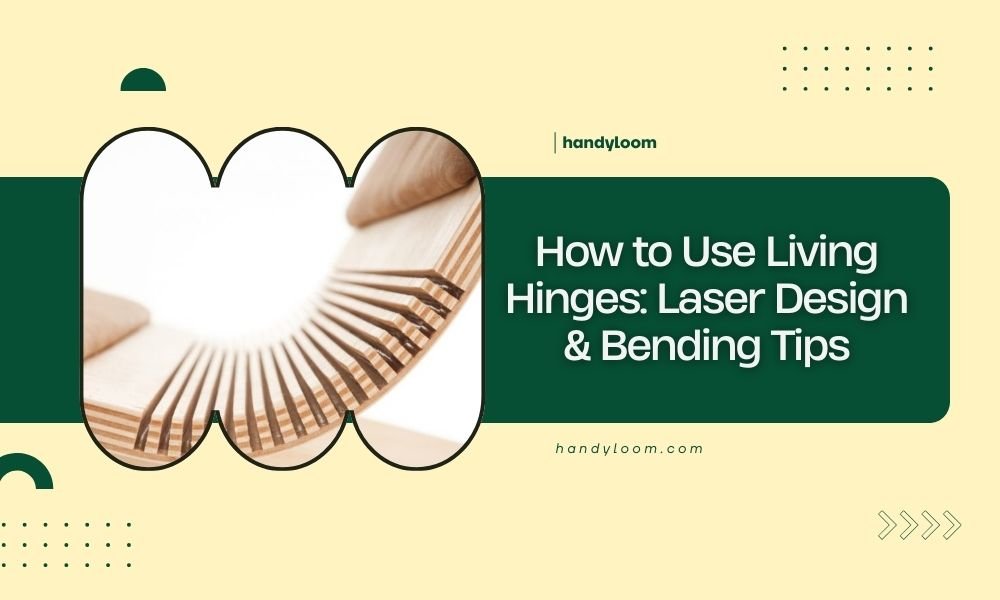
Living hinges are flexible connections laser-cut as a series of cuts that let rigid materials bend like plastic or paper.
You create living hinges by cutting parallel lines, waves, or geometric patterns that remove material while keeping thin connecting strips intact.
What Are Living Hinges and Why Use Them
Think of living hinges like the spine of a paperback book. The spine bends because it’s made of flexible material. Living hinges work the same way, but you create the flexibility by cutting patterns into stiff materials.
You might wonder why anyone would want to make rigid wood or acrylic bend. The answer is simple: it opens up design possibilities you never had before.
Common Uses for Living Hinges
- Box lids that open smoothly
- Curved lamp shades from flat wood
- Flexible phone stands
- Bendable jewelry pieces
- Accordion-style room dividers
Best Materials for Living Hinges
Not all materials work well for living hinges. Some crack when you bend them. Others don’t hold their shape.
Top Material Choices
Thin plywood works great because the wood fibers run in different directions. This gives you strength and flexibility. Baltic birch plywood around 3mm thick is perfect for beginners.
Acrylic can work, but it’s tricky. It tends to stress and crack at the hinge points. If you use acrylic, keep it thin and don’t bend it too far.
Materials to Avoid
- Thick hardwoods – they snap instead of bend
- Brittle plastics – they crack under stress
- Very thin veneers – they tear easily
Living Hinge Design Patterns
The pattern you cut determines how your material bends. Different patterns give you different types of movement.
Straight Line Pattern
This is the simplest design. You cut parallel lines across the material, leaving thin strips between each cut. The thinner the strips, the more flexible your hinge becomes.
I found that spacing lines 2-3mm apart works well for most projects. Go closer for tighter bends, wider for gentler curves.
Wave Pattern
Wave patterns look more interesting than straight lines. They also distribute stress better across the hinge. The material bends more smoothly and lasts longer.
Creating Wave Patterns
Make your waves shallow and consistent. Deep waves can create weak spots that tear. Keep the wave height around 1-2mm for best results.
Diamond Pattern
Diamond patterns let your material bend in multiple directions. This works great for projects that need to curve and twist.
The diamonds should be small and evenly spaced. Large diamonds leave too much solid material that resists bending.
Laser Settings for Living Hinges
Getting your laser settings right makes the difference between a smooth hinge and a pile of broken pieces.
Power and Speed Settings
You want to cut completely through your material, but not burn the edges. Start with lower power and higher speed than your normal cutting settings.
For 3mm plywood, try starting at 60% power and 80% speed. Adjust from there based on your results.
Multiple Pass Technique
Sometimes one pass isn’t enough to cut through cleanly. Multiple light passes often work better than one heavy pass. This reduces burning and gives you cleaner edges.
Kerf Width Considerations
Your laser beam has a width called kerf. This affects how much material you remove with each cut. Wider kerfs make more flexible hinges but weaker ones too.
| Material Thickness | Recommended Cut Spacing | Expected Kerf |
|---|---|---|
| 3mm plywood | 2-3mm | 0.2-0.3mm |
| 6mm plywood | 4-5mm | 0.3-0.4mm |
| 3mm acrylic | 1-2mm | 0.1-0.2mm |
Design Software Tips
Creating living hinge patterns in design software can be tedious if you do it manually. Most CAD programs have tools to make this easier.
Using Array Functions
Draw one cut line, then use your software’s array function to copy it multiple times. This ensures perfect spacing every time.
Parametric Design Benefits
Parametric design lets you change spacing, length, and pattern type with a few clicks. This saves hours when you need to adjust your design.
Free Design Resources
Many makers share living hinge patterns online. You can download these and modify them for your projects. Just make sure they match your material thickness.
Bending and Assembly Techniques
Cutting the hinge is only half the job. You need to bend and assemble it properly too.
Pre-bending Your Hinges
Fresh-cut hinges can be stiff. Gently flex them back and forth a few times before final assembly. This breaks in the hinge and makes it move more smoothly.
Don’t force it. If you hear cracking sounds, you’re pushing too hard.
Heat Forming
Some materials bend better when slightly warm. A hair dryer can make stubborn hinges more flexible. This works especially well with acrylic.
Steam Treatment for Wood
Wood hinges benefit from light steam treatment. Hold them over a steaming kettle for a few seconds. The moisture makes the wood fibers more flexible.
Common Problems and Solutions
Even experienced makers run into issues with living hinges. Here are the most common problems and how to fix them.
Hinges That Crack
Cracking usually means your cuts are too far apart or your material is too thick. Try closer spacing or thinner material next time.
Hinges That Won’t Bend
Stiff hinges often have too much solid material between cuts. Increase your cut frequency or make your pattern more aggressive.
Burn Marks on Edges
Burned edges make hinges brittle. Reduce laser power or increase speed to get cleaner cuts.
Testing Your Designs
Always test your hinge patterns on scrap material first. This saves expensive materials and prevents project failures.
Making Test Strips
Cut small test strips with different spacing or patterns. Bend each one to see how it performs. Keep notes about which settings work best.
Stress Testing
Bend your test pieces back and forth multiple times. Good hinges should handle hundreds of cycles without failing.
Load Testing
If your hinge needs to support weight, test it with the actual load. Some patterns that bend easily can’t handle much weight.
Advanced Living Hinge Techniques
Once you master basic living hinges, you can try more advanced techniques.
Variable Flexibility
You can make hinges that bend more in some areas than others. Change your cut spacing across the hinge length to create this effect.
Multi-Directional Hinges
Some patterns let material bend in multiple directions. These work great for complex curved surfaces.
Compound Curves
You can create bowl shapes or spherical surfaces by combining different hinge patterns. This takes practice but creates amazing results.
Maintenance and Durability
Living hinges wear out over time, especially with heavy use. Here’s how to make them last longer.
Lubrication Options
A light coating of wax or oil can reduce friction and wear. Don’t use too much – it attracts dust and debris.
Replacement Planning
Design your projects so worn hinges can be replaced easily. This extends the life of your overall project.
Conclusion
Living hinges open up amazing design possibilities for laser cutting projects. Start with simple straight-line patterns on thin plywood to learn the basics. Test different materials and settings to find what works best for your projects.
Remember that good living hinges come from practice and experimentation. Don’t expect perfect results on your first try. Keep testing, keep learning, and soon you’ll be creating flexible designs that seemed impossible before.
What’s the minimum material thickness for living hinges?
You can make living hinges in materials as thin as 1.5mm, though 3mm works better for beginners. Thinner materials are more flexible but also more fragile and prone to tearing.
How many times can a living hinge bend before breaking?
Well-designed living hinges in quality plywood can handle 500-1000+ bending cycles. The exact number depends on material choice, cut spacing, and bending angle. Acrylic hinges typically last for fewer cycles.
Can you make living hinges without a laser cutter?
Yes, you can create living hinges with CNC routers, scroll saws, or even careful hand cutting. Laser cutters just make the process faster and more precise, especially for complex patterns.
What happens if you cut living hinge lines too close together?
Lines that are too close create very flexible hinges that may be too weak for practical use. The thin connecting strips between cuts can tear easily under normal use or even during initial bending.
Do living hinges work better along or against the wood grain?
Living hinges generally work better when cut perpendicular to the wood grain direction. This takes advantage of wood’s natural flexibility. Baltic birch plywood works well because its alternating grain layers provide strength in all directions.