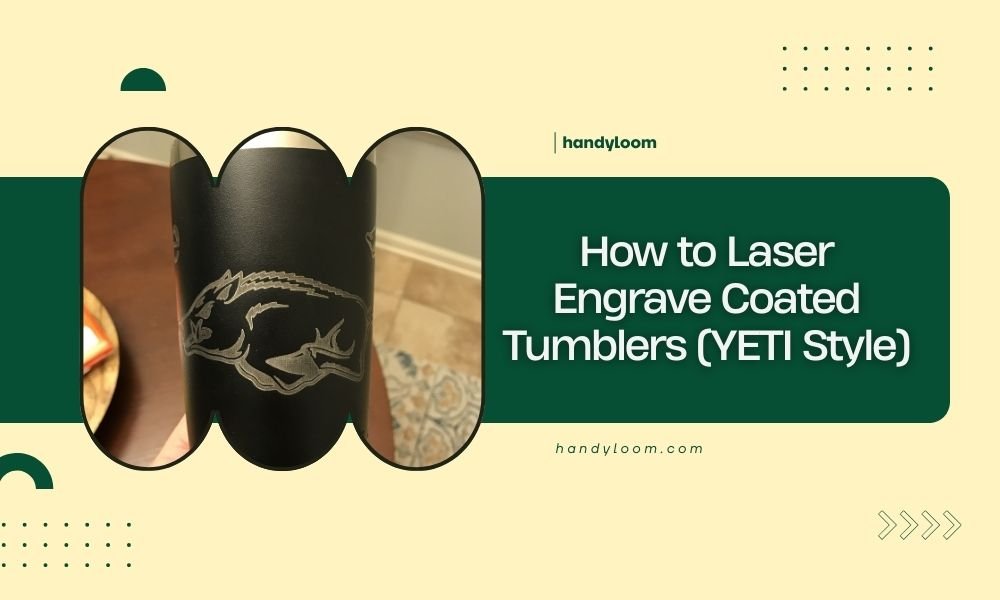
To laser engrave coated tumblers like YETI-style cups, you need to remove the powder coating first using your laser at high speed and low power before engraving the metal underneath.
The process requires two passes: first strip the coating at 80-90% speed with 10-15% power, then engrave the exposed metal at 30-40% speed with higher power settings.
Understanding Coated Tumbler Construction
Most YETI-style tumblers have a powder-coated finish over stainless steel. This coating protects the metal but creates challenges for laser engraving.
The coating acts like a barrier. Your laser can’t reach the metal directly. You’ll need to remove it first in the areas you want to engrave.
Types of Coatings You’ll Encounter
I found that most quality tumblers use powder coating. This gives them that smooth, durable finish you see on popular brands.
Some cheaper tumblers use paint or vinyl wraps. These are easier to remove but give different results.
Powder Coating Characteristics
Powder coating is tough. It’s designed to resist scratches and fading. Your laser settings need to account for this durability.
The thickness varies by manufacturer. Some coatings are thin, others are thick. You’ll need to test each new batch.
Essential Equipment and Settings
You’ll need a CO2 laser with at least 40 watts of power. Lower wattage machines struggle with coated surfaces.
A rotary attachment is essential for cylindrical tumblers. Without it, you can only engrave flat sides.
Recommended Laser Settings
| Process | Speed | Power | Purpose |
|---|---|---|---|
| Coating Removal | 80-90% | 10-15% | Strip powder coating |
| Metal Engraving | 30-40% | 60-80% | Engrave stainless steel |
| Light Marking | 50-60% | 40-50% | Surface marking only |
Power Considerations
Higher power doesn’t always mean better results. Too much power can damage the tumbler or create uneven surfaces.
Start with lower settings and increase gradually. It’s easier to do multiple passes than fix burned material.
Step-by-Step Engraving Process
Preparation is half the battle. Clean your tumbler with alcohol to remove oils and residue that might affect laser performance.
Mount the tumbler securely in your rotary attachment. Loose mounting causes alignment issues and poor results.
Setting Up Your Design
Keep designs simple for your first attempts. Complex designs are harder to align and more likely to have problems.
Size your design appropriately. Most tumblers have a sweet spot about 3-4 inches wide for best visibility.
Design File Preparation
Use vector files when possible. They scale better and give cleaner results than raster images.
Set your design to outline mode for coating removal. Fill mode works better for the actual engraving pass.
First Pass: Coating Removal
Run your first pass at high speed and low power. You’re not trying to engrave yet, just remove the coating.
Watch for color changes in the coating. When it turns from colored to silver or metallic, you’ve reached the metal.
Checking Your Progress
Stop the laser and check your progress regularly. Coating thickness varies, even on the same tumbler.
Use a soft brush to remove loose coating particles. This helps you see what areas need more work.
Second Pass: Metal Engraving
Now you’re ready to engrave the exposed metal. Use slower speeds and higher power for this pass.
The exposed stainless steel should engrave cleanly, creating a permanent mark that contrasts with the remaining coating.
Troubleshooting Common Problems
Uneven coating removal is the most common issue. This usually means inconsistent laser power or focus problems.
Check your lens cleanliness first. Dirty lenses cause power variations across your engraving area.
Dealing with Stubborn Coatings
Some coatings resist laser removal. Try multiple light passes instead of one heavy pass.
Adjust your focus slightly. Sometimes a slightly defocused beam works better for coating removal.
Heat Management Issues
Tumblers can get hot during engraving. Hot metal expands, throwing off your alignment and focus.
Allow cooling time between passes. Some operators use compressed air to speed cooling.
Alignment Problems with Rotary Attachments
Rotary alignment takes practice. Start with simple designs until you master the setup.
Mark your tumbler position before starting. This helps if you need to reposition during the process.
Safety Considerations
Powder coating removal creates particles and fumes. Always use proper ventilation when laser engraving coated items.
Some coatings contain materials you don’t want to breathe. Research shows that laser processing can release various compounds into the air.
Protective Equipment
Wear safety glasses rated for your laser wavelength. CO2 lasers operate at 10.6 microns.
Keep a fire extinguisher nearby. Powder coatings can sometimes ignite if overheated.
Finishing and Quality Control
Clean your finished tumbler with alcohol again. This removes any coating residue and shows your final results clearly.
Inspect the engraving under good lighting. Look for incomplete coating removal or uneven engraving depth.
Protecting Your Work
The engraved area is now exposed metal. It may need protection in high-use applications.
Some operators apply clear coating over the engraved area. Others leave it natural for the contrast effect.
Advanced Techniques
Once you master basic engraving, try multi-color effects using different removal depths.
Partial coating removal creates interesting visual effects. The coating becomes translucent before complete removal.
Production Efficiency Tips
Batch similar tumblers together. Once you dial in settings, process multiple pieces without changing setup.
Keep detailed notes on settings for different tumbler brands. Each manufacturer uses slightly different coatings.
Conclusion
Laser engraving coated tumblers requires patience and practice, but the results are worth the effort. The two-pass technique of coating removal followed by metal engraving gives professional-quality results that customers love. Start with simple designs and work your way up to more complex projects as your skills develop. Remember that each tumbler brand may need slightly different settings, so keep good notes and always test on scrap pieces first.
Can I engrave coated tumblers without removing the coating first?
No, you need to remove the powder coating to reach the metal underneath. Trying to engrave through the coating will only damage the surface without creating a permanent mark.
What happens if I use too much laser power on the coating removal pass?
Excessive power can burn or melt the coating, creating an uneven surface that’s difficult to clean and may affect the final engraving quality. It can also damage the metal underneath.
Why does my rotary attachment keep going out of alignment during engraving?
This usually happens when the tumbler isn’t secured tightly enough or when heat expansion causes the metal to shift. Make sure your tumbler is firmly mounted and allow cooling time between passes.
How do I know when I’ve completely removed the powder coating?
The coating will change from its original color to silver or metallic when you reach the stainless steel underneath. You should see a clear contrast between coated and uncoated areas.
Is it safe to laser engrave all types of powder-coated tumblers?
Most standard powder coatings are safe to laser process with proper ventilation, but always research the specific coating type if possible and ensure you have adequate fume extraction in your workspace.