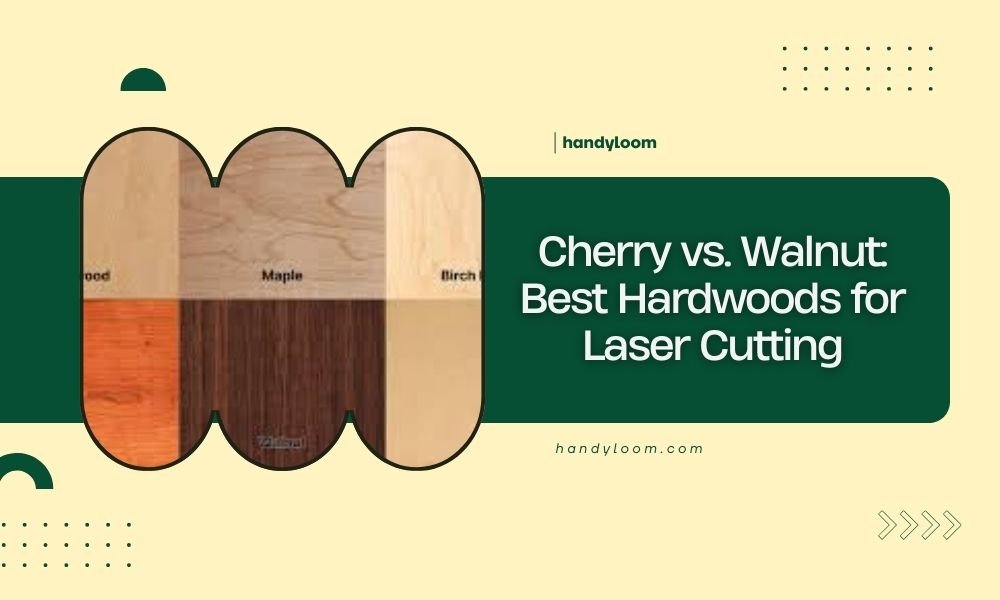
Cherry and walnut are both excellent hardwoods for laser cutting, with cherry offering cleaner cuts and lighter color while walnut provides rich dark tones and premium appearance.
Cherry typically works better for beginners due to its consistent grain and predictable cutting behavior, while walnut delivers stunning results for experienced crafters willing to work with its denser structure.
Wood Density and Cutting Performance
When you’re choosing between cherry and walnut, density makes a huge difference. Cherry wood sits at about 50 pounds per cubic foot, while walnut weighs in around 40 pounds per cubic foot.
You might think walnut’s lighter weight means easier cutting. Actually, it’s more about grain structure. Cherry has a tighter, more uniform grain that responds predictably to laser heat.
How Cherry Handles Laser Heat
Cherry wood loves laser cutting. The tight grain pattern means you get clean, precise edges with minimal charring. I found that most woodworkers report excellent results even with lower-power lasers.
The light pinkish-brown color also shows cut lines beautifully. Your finished pieces look professional without much cleanup work.
Power Settings for Cherry
Cherry responds well to moderate laser settings. You don’t need maximum power like you might with harder woods. This saves energy and reduces the risk of burn marks.
Walnut’s Cutting Characteristics
Walnut presents more challenges but offers incredible rewards. The grain can be irregular, which means some areas cut faster than others.
I researched walnut cutting techniques and found that patience pays off. Slower cutting speeds produce better results than rushing through thick pieces.
Managing Walnut’s Variable Grain
The swirling grain patterns in walnut create stunning visual effects. But they also mean you need to adjust your approach for each piece.
Test cuts become really important with walnut. What works for one board might not work for the next one from the same tree.
Visual Appeal and Finished Results
Both woods create beautiful finished pieces, but in completely different ways. Cherry gives you warm, welcoming tones that brighten over time. Walnut delivers rich chocolate browns that command attention.
Cherry’s Natural Beauty
Fresh cherry wood starts with a light pink or salmon color. But here’s something interesting – it darkens beautifully with age and light exposure.
Your cherry projects will look different after a year. The color deepens to rich reddish-brown that many people find irresistible.
Grain Patterns in Cherry
Cherry typically shows subtle, flowing grain lines. They add character without overwhelming your design. This makes cherry perfect for detailed work where you want the cut pattern to be the star.
Walnut’s Premium Appearance
Walnut is the luxury car of hardwoods. The deep brown heartwood contrasts beautifully with lighter sapwood edges.
I came across furniture makers who choose walnut specifically for high-end pieces. The natural color variation creates interest without any staining needed.
Working with Walnut’s Color Variations
Each walnut board tells its own story through color. You might find cream-colored sapwood next to dark chocolate heartwood on the same piece.
Smart crafters use this variation as a design element. Plan your cuts to highlight these natural contrasts.
Cost Comparison and Availability
Your budget will definitely influence this choice. Walnut typically costs 2-3 times more than cherry from most suppliers.
| Wood Type | Average Cost per Board Foot | Availability |
|---|---|---|
| Cherry | $8-12 | Widely available |
| Walnut | $18-25 | Limited, premium suppliers |
Finding Quality Cherry Wood
Cherry is much easier to source locally. Most lumber yards carry decent cherry stock. You’ll find consistent quality and reasonable prices.
For laser cutting, look for cherry that’s been properly dried to 6-8% moisture content. Wet wood creates steam that interferes with clean cuts.
Sourcing Premium Walnut
Good walnut requires more hunting. You’ll likely need to visit specialty hardwood dealers or order online from reputable suppliers.
I found that walnut prices vary wildly based on figure and grain pattern. Plain walnut costs less than highly figured pieces with dramatic swirls.
Best Projects for Each Wood Type
Different projects suit different woods. Cherry excels in certain applications while walnut shines in others.
Ideal Cherry Projects
Cherry works beautifully for:
- Detailed decorative panels with intricate cut patterns
- Kitchen accessories like cutting boards and trivets
- Picture frames and small furniture accents
- Jewelry boxes and keepsake items
- Signage and engraved plaques
Why Cherry Suits Detail Work
The consistent grain means tiny details come out crisp and clean. You won’t lose fine lines to unpredictable grain patterns.
Perfect Walnut Applications
Walnut is perfect for:
- High-end furniture components and inlays
- Luxury gift items and awards
- Artistic pieces where wood grain is the feature
- Executive desk accessories
- Premium cutting boards and serving pieces
Maximizing Walnut’s Impact
With walnut, less is often more. Let the natural beauty of the wood grain be your main design element. Simple, bold cuts work better than busy, detailed patterns.
Technical Cutting Considerations
Each wood requires slightly different laser settings and techniques for optimal results.
Cherry Cutting Tips
Cherry responds well to moderate speeds and power settings. I researched optimal settings and found that 70-80% power with medium speed produces excellent results on most CO2 lasers.
The key with cherry is avoiding too much heat in one spot. Keep the laser moving to prevent charring.
Preventing Cherry Burn Marks
Cherry can show burn marks more easily than darker woods. Use masking tape on surfaces where you want to avoid any discoloration.
Air assist helps a lot with cherry. The constant airflow keeps flames away from the wood surface.
Walnut Cutting Strategies
Walnut needs patience and multiple passes for thick material. The variable grain density means some areas cut faster than others.
Start with lower power and make several passes instead of trying to cut through in one shot. This gives you better control over the final result.
Dealing with Walnut’s Grain Variations
Watch your cuts carefully when working with walnut. You might need to adjust speed mid-cut if you notice the laser struggling with denser grain areas.
Conclusion
Both cherry and walnut offer unique advantages for laser cutting projects. Cherry gives you consistent, predictable results with beautiful warm tones that develop character over time. Walnut provides luxury appearance and stunning grain patterns but requires more skill and patience to cut successfully.
For beginners, cherry offers the easier path to professional results. If you’re experienced and working on premium projects where cost isn’t the primary concern, walnut delivers unmatched visual impact. Consider your skill level, project requirements, and budget when making your choice – both woods will reward you with beautiful finished pieces when used appropriately.
Which wood burns less during laser cutting, cherry or walnut?
Cherry typically burns less than walnut due to its lighter color and consistent grain structure. Walnut’s darker color absorbs more laser energy, making it more prone to charring if you use too much power or cut too slowly.
Can you mix cherry and walnut in the same laser cutting project?
Yes, cherry and walnut make excellent combinations in mixed-wood projects. The contrast between cherry’s warm pink tones and walnut’s rich brown creates striking visual effects. Just remember each wood may need different cutting settings.
How long does cherry wood take to develop its darker color?
Cherry wood begins darkening within weeks of exposure to light and air, with noticeable color change occurring within 6-12 months. The wood continues to deepen for several years, eventually reaching a rich reddish-brown that’s much darker than the original pale pink.
Is walnut worth the extra cost for laser cutting projects?
Walnut’s premium cost is justified for high-end projects, gifts, or pieces where the wood’s natural beauty is a key design element. For practice projects or items where wood choice isn’t critical to the final result, cherry offers better value for money.
Which wood holds fine detail better in laser cut designs?
Cherry holds fine detail better due to its uniform grain structure and consistent density. Walnut’s variable grain can cause some detail loss in areas where the grain changes direction or density, making cherry the better choice for intricate patterns with small features.