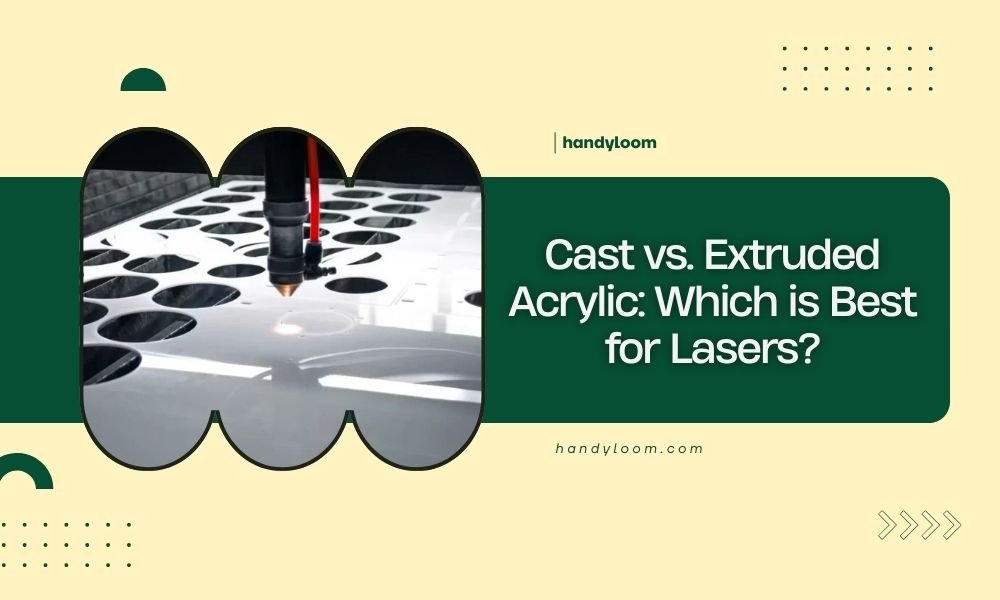
Cast acrylic delivers cleaner cuts and fewer cracks when laser cutting, while extruded acrylic is more affordable but produces rougher edges and flame-polished surfaces.
Your choice between cast vs. extruded acrylic depends on your project needs: pick cast for precision work and professional results, choose extruded for practice projects and cost savings.
The Main Differences Between Cast and Extruded Acrylic
Think of cast and extruded acrylic like two different ways to make pancakes. Cast acrylic is like pouring batter into a pan and letting it cook slowly. Extruded acrylic is like pushing batter through a machine really fast.
This manufacturing difference changes everything about how they behave under your laser beam. Cast acrylic gets poured as liquid between glass sheets and cures slowly. Extruded acrylic gets pushed through heated rollers at high speed.
Manufacturing Process Impact
The slow casting process creates a more uniform material structure. Research from plastics manufacturers shows this leads to better optical clarity and less internal stress.
Fast extrusion creates internal tensions in the material. These show up as stress marks and can cause cracking during laser cutting.
How Each Type Responds to Laser Cutting
Your laser essentially melts and vaporizes acrylic to create cuts. The material’s internal structure determines how cleanly this happens.
Cast Acrylic Laser Performance
Cast acrylic cuts like butter under a laser beam. You get sharp, clean edges with minimal heat-affected zones. The material doesn’t fight the cutting process.
I found that most professional laser cutting services prefer cast acrylic. It produces consistent results with fewer failed cuts.
Edge Quality Results
Cast acrylic edges come out crystal clear after laser cutting. They look polished and professional without additional finishing work.
The uniform material structure prevents stress fractures during cutting. You won’t see the spider web cracks that plague other materials.
Extruded Acrylic Laser Performance
Extruded acrylic fights back more during laser cutting. The internal stresses can cause unexpected cracking or rough edges.
You might notice flame-polished surfaces that look cloudy or uneven. This happens because the material doesn’t melt uniformly under the laser heat.
Common Cutting Issues
Stress cracking appears most often with extruded acrylic. The laser heat releases built-in tensions, creating fractures beyond your cut line.
Edge quality varies more with extruded material. Some areas might cut cleanly while others look rough or melted.
Cost Comparison and Budget Planning
Money talks, and extruded acrylic speaks your wallet’s language. It typically costs 20-30% less than cast acrylic of the same thickness.
Initial Material Costs
Cast acrylic runs higher in price because of the slower manufacturing process. You’re paying for that uniform quality and better performance.
Extruded acrylic offers significant savings upfront. For large projects or practice work, this difference adds up quickly.
Hidden Costs to Consider
Failed cuts and wasted material can eat up your extruded acrylic savings fast. Cast acrylic’s reliability might save money in the long run.
Time spent fixing rough edges or dealing with cracks has value too. Professional projects often justify cast acrylic’s higher cost.
Project-Specific Recommendations
Your project type should drive your acrylic choice. Not every application needs premium cast acrylic performance.
When Cast Acrylic Makes Sense
Professional displays and signage demand cast acrylic’s superior edge quality. Customers notice the difference in finished appearance.
Precision parts and mechanical components benefit from cast acrylic’s dimensional stability. The material won’t surprise you with stress-related changes.
High-End Applications
- Jewelry and decorative items
- Optical components
- Architectural elements
- Medical device housings
When Extruded Acrylic Works Fine
Practice projects and prototypes don’t need perfect edges. Extruded acrylic lets you learn without breaking the bank.
Large background pieces or hidden structural elements can use extruded material. Imperfections won’t show in the final product.
Budget-Friendly Projects
- Hobby crafts and experiments
- Templates and jigs
- Paint masking stencils
- Test cuts and calibration pieces
Laser Settings and Technique Adjustments
Each acrylic type responds differently to laser parameters. Smart settings can improve your results with either material.
Cast Acrylic Laser Settings
Cast acrylic handles higher speeds and lower power settings well. The uniform structure cuts cleanly without excessive heat buildup.
I found online that many operators use 15-20% higher cutting speeds with cast acrylic. This reduces heat-affected zones and improves edge quality.
Extruded Acrylic Laser Settings
Extruded acrylic benefits from slower speeds and multiple light passes. This reduces thermal stress and minimizes cracking.
Lower power settings help prevent flame polishing effects. You want to vaporize material gradually rather than melting it aggressively.
Stress Reduction Techniques
Pre-heating extruded acrylic can reduce internal stresses before cutting. Some shops warm sheets to 160-180°F before laser processing.
Relief cuts and strategic sequencing help manage stress buildup during complex cutting patterns.
Quality Control and Inspection Tips
Knowing what to look for helps you catch problems early and adjust your approach accordingly.
Visual Inspection Methods
Hold cut pieces up to light to check edge clarity. Cast acrylic edges should look like glass, while extruded edges might appear cloudy.
Look for micro-cracks extending from cut edges. These indicate stress problems that might worsen over time.
Performance Testing
Test pieces under mechanical stress to verify cut quality. Bend samples gently to reveal hidden stress concentrations.
Check dimensional accuracy with calipers. Cast acrylic typically holds tighter tolerances after laser cutting.
| Feature | Cast Acrylic | Extruded Acrylic |
|---|---|---|
| Edge Quality | Crystal clear, polished | May appear cloudy |
| Cracking Risk | Very low | Moderate to high |
| Cost | Higher | 20-30% less |
| Best Use | Professional projects | Practice and budget work |
Storage and Handling Considerations
Proper material handling affects your laser cutting success regardless of acrylic type.
Pre-Cutting Preparation
Remove protective film carefully to avoid static buildup. Static attracts dust that can interfere with laser cutting.
Allow material to acclimate to room temperature before cutting. Cold acrylic is more prone to stress cracking.
Material Inspection Before Use
Check for existing stress marks using polarized light. These appear as rainbow patterns in stressed areas.
Inspect edges for chips or cracks that might propagate during laser cutting. Replace damaged sheets when possible.
Conclusion
Your choice between cast and extruded acrylic comes down to balancing quality needs against budget constraints. Cast acrylic delivers superior laser cutting results with clean edges, minimal cracking, and consistent performance. It’s the smart choice for professional work, precision parts, and visible applications where quality matters.
Extruded acrylic makes financial sense for practice projects, prototypes, and applications where perfect edges aren’t necessary. With adjusted laser settings and proper technique, you can get acceptable results while saving money.
Consider your project requirements, timeline, and budget when making this choice. Sometimes paying more upfront for cast acrylic saves time and material waste later. Other times, extruded acrylic’s cost savings make it the practical winner.
Can you mix cast and extruded acrylic in the same project?
Yes, but use cast acrylic for visible edges and precision parts while using extruded for hidden structural elements. This hybrid approach balances cost and quality effectively.
How can you tell cast from extruded acrylic by looking at it?
Cast acrylic has superior optical clarity and shows no stress patterns under polarized light. Extruded acrylic often has slight cloudiness and may show rainbow stress patterns when viewed through polarized lenses.
Does acrylic thickness affect the cast vs extruded choice?
Thicker materials amplify the differences between cast and extruded acrylic. Stress cracking and edge quality issues become more pronounced in thick extruded sheets, making cast acrylic more important for thick applications.
Can laser settings compensate for extruded acrylic’s limitations?
Slower speeds, lower power, and multiple passes can improve extruded acrylic results, but won’t completely eliminate stress cracking or achieve cast acrylic’s edge quality. Settings help but don’t overcome fundamental material differences.
Is there a minimum project value where cast acrylic becomes worth the extra cost?
Projects valued over $100-200 often justify cast acrylic’s premium, especially when labor costs for edge finishing or remake work could exceed the material price difference. Consider your time value and project importance when deciding.