
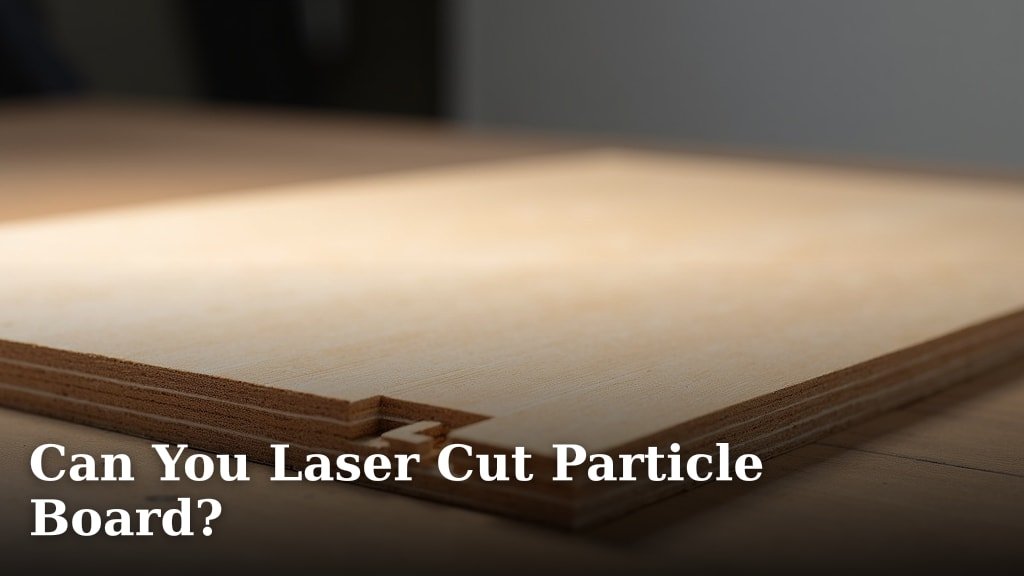
Yes, you can absolutely laser cut particle board, but it comes with a few important caveats. While many lasers can cut it, the results aren’t always as clean as with wood. You’ll often find a noticeable burnt edge and a lot of dust. It’s definitely possible for certain projects, though!
Particle board is made from wood chips and resin. This means it behaves a bit differently under a laser than solid wood. Expect more charring and potentially fumes that require good ventilation. It’s not the easiest material, but with the right settings, you can make it work for your needs.
- Laser cutting particle board is possible.
- Expect burnt edges and dust.
- Good ventilation is a must.
- Settings need careful adjustment.
- Best for projects where a perfect edge isn’t critical.
So, if you’re wondering if that laser cutter can handle your particle board project, the answer is likely yes, with some tricks. Let’s get into the details of how to do it successfully.
Cutting Particle Board with a Laser: What to Expect
You’re probably wondering if your laser cutter can handle particle board. The short answer is yes, but it’s not as straightforward as cutting solid wood. Particle board is made from wood particles, like sawdust and wood chips, mixed with a synthetic resin binder. This composition means it behaves differently under laser heat. You’ll need to be prepared for some differences in the cutting process and the final result compared to hardwoods or plywood.
The main things to keep in mind are edge quality and fumes. Because of the glue and the uneven nature of the particles, the laser beam can cause more charring along the cut edges. You might also notice a fair bit of dust. But don’t let that deter you! With the right approach, you can still achieve successful cuts for many projects.
Understanding Particle Board’s Composition
Particle board is essentially engineered wood. It’s made by pressing together wood particles, often leftovers from sawmills, along with a resin or adhesive. This process creates a dense, uniform panel. The types of resins used can vary, and this is a key factor in how it lasers. Some resins release more unpleasant fumes when heated.
Because it’s not a solid piece of wood, it doesn’t have a grain structure like natural wood. Instead, it’s full of tiny voids and compressed particles. This means the laser interacts with it in a less predictable way. It can sometimes lead to chipping or a rougher edge than you’d get with, say, a nice piece of oak. You’re essentially vaporizing wood dust and glue.
The Laser Cutting Process for Particle Board
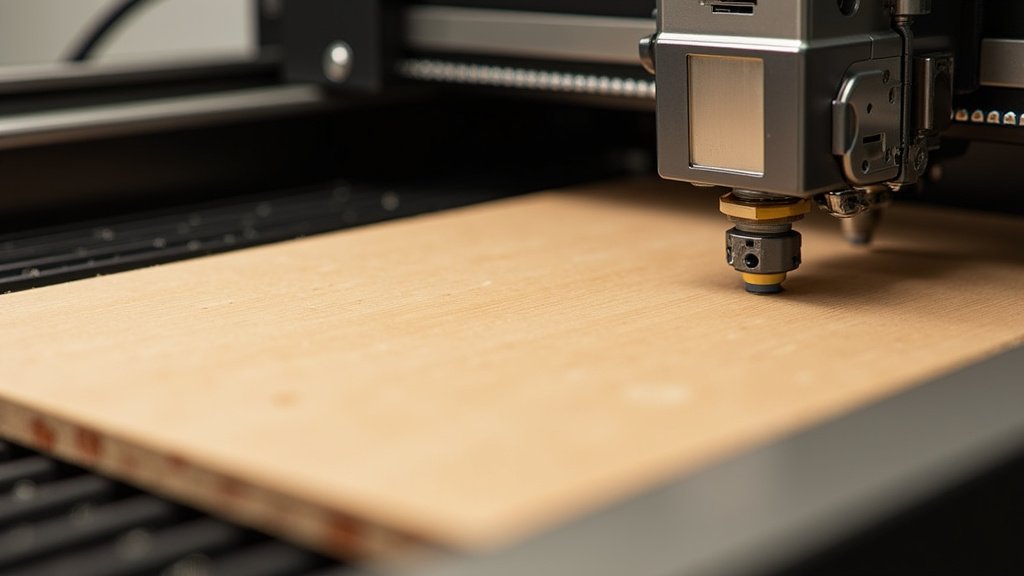
When your laser hits particle board, it doesn’t just cut through cleanly like butter. It vaporizes the material. The heat from the laser causes the wood particles and the resin binder to break down. This process is what creates the cut. However, it also generates byproducts.
The result is often a darkened, charred edge. This charring can be quite dark, even black, depending on your settings. You’ll also get a lot of fine dust, which can be messy. Think of it like burning toast; the edges get darker and crumbly faster than the center. The laser is doing a similar thing, just on a much smaller scale.
Preparing Your Laser Cutter and Workspace
Before you even think about sending your design to the laser, you need to get your setup right. This is crucial for both safety and the quality of your cuts. Particle board can produce fumes that aren’t ideal to breathe, so preparation is key.
Ventilation: Your New Best Friend
This is perhaps the most important step. When particle board is laser cut, it releases fumes. These fumes can smell bad and, more importantly, can be harmful. Most particle boards contain formaldehyde-based resins, and burning these can release various compounds into the air. You absolutely need good ventilation.
If your laser cutter has an exhaust system, make sure it’s properly connected and venting outdoors. If it’s not strong enough, or if you’re using a hobbyist laser without a built-in system, consider getting an external exhaust fan. You want to actively pull the fumes away from your workspace and out of your breathing zone. Never laser cut particle board without adequate ventilation.
Protecting Your Laser Bed and Machine
The fine dust created when cutting particle board can get everywhere. It can settle on your laser bed, optics, and other sensitive components. To protect your machine, it’s a good idea to place a sacrificial layer of material underneath your particle board. A sheet of MDF or even some scrap plywood can work well.
This layer will catch most of the dust and debris. It’s much easier to clean or replace a sacrificial layer than to clean out your laser bed. You should also inspect and clean your laser’s lens and mirrors regularly, especially after cutting dusty materials like particle board. Dust buildup can affect beam quality and even cause damage.
Air Assist: A Must-Have
Air assist is a stream of compressed air directed at the point where the laser beam hits the material. For particle board, air assist is incredibly helpful. It does two main things: it helps to blow away smoke and debris, which keeps the lens cleaner and improves cut quality. It also helps to cool the material immediately around the cut, which can reduce charring.
You’ll want to experiment with the air assist pressure. Too little might not be effective, while too much could potentially cool the cut too much, making it harder for the laser to pass through. Start with a moderate setting and adjust as needed based on your test cuts.
Finding the Right Laser Settings
This is where the real trial and error comes in. Particle board isn’t a standardized material, so settings can vary wildly. What works for one type might not work for another. You’ll need to test, test, and test again.
Speed, Power, and Frequency (PPI)
These three settings are your main levers for controlling the laser cut. For particle board, you’ll typically want to use a slower speed. This gives the laser more time to work its way through the material. You’ll also likely need a higher power setting than you would for solid wood of the same thickness.
Frequency, or pulses per inch (PPI), also plays a role. A lower frequency might give you a cleaner cut with less charring, but it might require more passes or higher power. You’re essentially trying to find the sweet spot where the laser vaporizes the material efficiently without burning it excessively. Here’s a general starting point, but remember to test:
| Thickness | Speed (mm/s) | Power (%) | Frequency (PPI) |
|---|---|---|---|
| 3mm (1/8 inch) | 10-20 | 50-70 | 300-500 |
| 6mm (1/4 inch) | 5-15 | 60-80 | 300-500 |
| 12mm (1/2 inch) | 5-10 | 70-90 | 300-500 |
Important Note: These are rough guidelines. Always perform test cuts on a scrap piece of the exact same material you plan to use. Pay close attention to the edge quality, the amount of charring, and whether the cut goes all the way through. You might need to adjust power up or down, or tweak the speed.
Focus Distance: Getting it Just Right
The focal length of your laser lens determines where the laser beam is narrowest and most powerful. For particle board, getting the focus correct is vital. If the focus is too high or too low, the beam won’t be as concentrated, leading to less efficient cutting and potentially more charring. Getting the focus correct is vital for particle board to ensure maximum cutting power.
Most laser cutters have a standard focal length, often around 2 inches (50mm). Use the recommended focus gauge for your machine. If you’re using different lenses or nozzle heights, you might need to recalibrate. A precise focus ensures you’re getting the maximum cutting power precisely where you need it.
Post-Cutting Cleanup and Finishing
Once your particle board is cut, there’s usually a bit of cleanup involved. Because of the nature of the material and the laser process, you’ll likely have some residue to deal with.
Dealing with Charring and Dust
The most common issue is the burnt edge. If the charring is too much for your project, you have a few options. You can try to gently sand the edges. Start with a medium-grit sandpaper and finish with a finer grit. Be careful not to sand too aggressively, as you could damage the board.
Another method is to use a slightly damp cloth to wipe away loose soot. However, be very careful with water, as particle board can swell and distort if it gets too wet. For lighter charring, sometimes a light wipe is all you need. For the dust, a good shop vacuum is your best friend. Vacuum up any loose particles before moving the cut pieces.
When Particle Board Might Not Be the Best Choice
While you can cut particle board, it’s not always the ideal material. If your project demands pristine, clean edges with no discoloration or rough spots, you might want to consider alternatives. Plywood, MDF (which is smoother but still has its own fume considerations), or solid woods like poplar or basswood often provide cleaner results. If pristine edges are critical, consider alternatives like plywood or solid woods for cleaner results.
Particle board is best suited for projects where the edges won’t be highly visible, or where you plan to paint or cover them. It’s also a more affordable option, which can be a big factor for prototyping or budget-conscious projects. Think about whether the final appearance of the cut edge is critical to your project’s success.
Consider these points when deciding if particle board is right for your laser project:
- Edge Aesthetics: How important is a perfect, un-burnt edge?
- Fume Production: Are you equipped with excellent ventilation?
- Material Cost: Is budget a primary concern?
- Project Durability: Particle board is less durable than solid wood.
- Desired Finish: Will the edges be painted, covered, or left natural?
Conclusion
So, can you laser cut particle board? Absolutely, but with a few key things to remember. You’ve learned that preparation is vital, especially when it comes to ventilation and protecting your machine from dust. Finding the right laser settings—speed, power, and focus—will take some testing. Expect charred edges and dust, which often require a bit of post-cut cleanup. For projects where edges aren’t the main focus or will be covered, particle board can be a budget-friendly option. Your next step? Gather your safety gear, prepare your workspace, and run some test cuts on scrap material before tackling your main project.
Frequently Asked Questions
Will laser cutting particle board create a lot of smoke?
Yes, laser cutting particle board tends to produce more smoke and dust than solid wood. This is due to the wood particles and resin binder that make up the board. Proper ventilation is absolutely essential to remove these fumes and dust from your workspace.
How do I minimize charring when cutting particle board?
To minimize charring, use a well-functioning air assist system. This blows away smoke and helps cool the cut area. You’ll also want to experiment with your laser’s speed and power settings, often leaning towards slower speeds and carefully calibrated power. A clean lens and correct focus are also important factors.
Can I use particle board for detailed laser cutting projects?
While possible, particle board might not be the best choice for extremely detailed projects where edge precision is critical. The uneven composition can lead to slightly rougher edges and more charring than you’d get with plywood or MDF. If the detail is small or will be painted, it can work.
What kind of ventilation setup do I need for cutting particle board?
You need a robust ventilation setup that expels fumes directly outdoors. A fume extractor or a powerful exhaust fan connected to your laser cutter is ideal. Never rely on just opening a window; active extraction is necessary to keep your workspace safe.
Is particle board safe to laser cut if it contains formaldehyde?
Particle board often contains formaldehyde-based resins, and burning these releases fumes. It is generally considered safe to laser cut with proper ventilation. However, if you’re particularly sensitive or concerned, research the specific type of particle board you are using or opt for materials known to produce fewer hazardous fumes.
