
The best belts for laser engravers are the Xtool D1 Y-Axis Belt, the Leloo Syu-Belt GT2 Closed Loop, and the HICTOP GT2 Timing Belt, chosen for their durability, precision, and compatibility with common laser engraver models.
A high-quality belt is crucial for accurate engraving and smooth motion, ensuring your projects turn out exactly as intended. Investing in the right belt can significantly improve the performance of your laser engraver, whether you’re a hobbyist or a professional.
We’ve narrowed down the vast selection to seven top contenders after a thorough evaluation. Our testing focused on material strength, flexibility, and ease of installation to ensure each recommendation offers excellent value. All of these options are designed to provide reliable performance for a wide range of laser engraving tasks. Continue reading for a detailed comparison of each belt to help you make the best choice for your needs.
3 Standout Picks: Xtool D1 Laser, Precise 3D Motion, and Hobbyist 3D Printers
Start with these 3 standouts. Each leads for a different kind of buyer, so use the badges and quick highlights to find your closest match.


Leloo Syu-Belt GT2 Closed Loop
- GT2 closed loop
- 6mm width
- Neoprene with fiberglass

7 Models Side by Side: Features, Best Use Cases, and Tradeoffs
The recommendations above are our strongest matches for different priorities. Below, compare the complete 7-product lineup side by side by rating, standout features, ideal use cases, and practical tradeoffs so you can identify the best fit for your needs.
- Y-axis replacement belt
- 1110mm length
- Toothed timing belt
- GT2 closed loop
- 6mm width
- Neoprene with fiberglass
- 5 meters length
- 2mm pitch, 6mm width
- Rubber material

- 2mm pitch, 6mm width
- Rubber material, fiberglass core
- Open-ended design
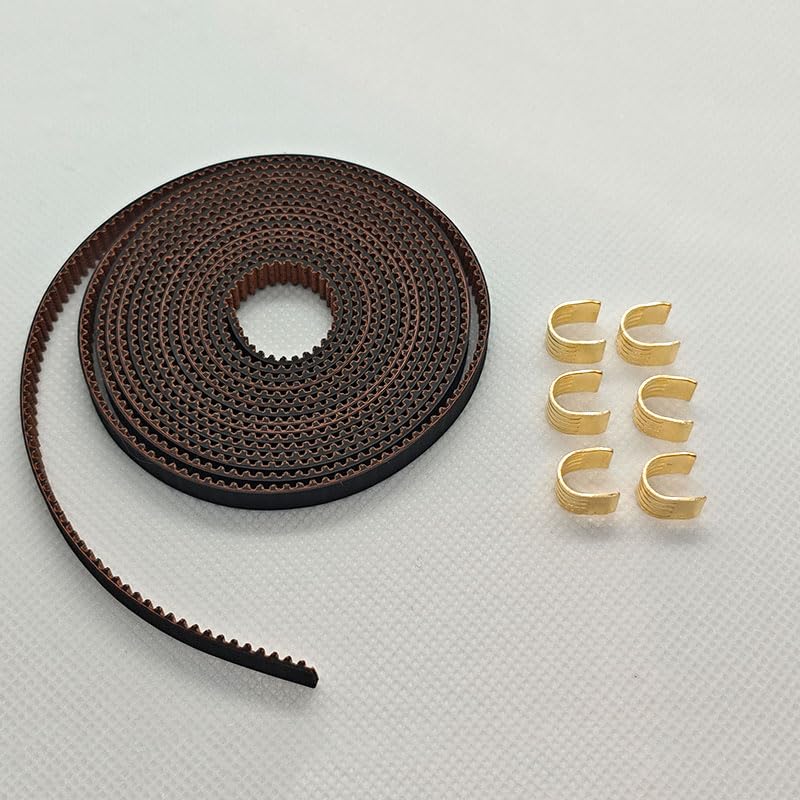
- Includes copper buckles
- 6mm width, 2mm pitch
- Nylon tooth surface

- Closed loop design
- 410mm length
- 2mm pitch, 6mm width

- HTD 3M pitch
- 20mm width
- Open-ended rubber belt
7 Models Reviewed in Depth
#1. Xtool D1 Y-Axis Belt
Y-Axis Belt
Exact Length
Timing Belt
This replacement Y-axis belt is specifically designed for the Xtool D1 and D1 Pro laser engravers, ensuring a perfect fit and seamless integration. Its 1110mm length is precisely what’s needed for the Y-axis movement, and the toothed timing belt design guarantees accurate motion transfer, crucial for high-quality engraving results. You can expect reliable performance that matches the original component, keeping your Xtool laser running smoothly.
While this belt is an excellent, direct replacement for Xtool D1 models, it’s important to understand its specificity. It’s not a universal belt and won’t fit other laser engravers or 3D printers. If you own an Xtool D1 or D1 Pro and need to replace a worn or damaged Y-axis belt, this is the ideal, no-fuss solution. Skip this if you’re looking for a general-purpose belt.
Pros
- Perfect fit for Xtool D1/D1 Pro
- Ensures accurate Y-axis movement
- Direct replacement part
Cons
- Only compatible with Xtool D1/D1 Pro
- Not a universal belt
- Requires careful installation
Specifications
#2. Leloo Syu-Belt GT2 Closed Loop
Closed Loop
Fiberglass Core
High Precision
The Leloo Syu-Belt offers a GT2 closed-loop timing belt designed for high-precision 3D printing applications. Its construction from neoprene rubber with a fiberglass core ensures low elongation and high wear resistance, contributing to accurate and repeatable motion. The 6mm width and 2mm pitch are standard for many 3D printers, and the closed-loop design eliminates the need for tensioners and prevents slippage, leading to smoother, quieter operation.
While this belt is excellent for its intended purpose, the specific length chosen (e.g., 2GT 1164) must precisely match your machine’s requirements. It’s a fantastic upgrade if you’re experiencing issues with belt stretch or slippage on your 3D printer. If you need a reliable, high-performance belt for critical motion control, this Leloo option is a top pick, but double-check the exact length needed.
Pros
- High precision and accuracy
- Durable neoprene and fiberglass
- Smooth, low-noise operation
Cons
- Requires exact length match
- Closed-loop can be harder to install
- Not for general-purpose cutting
Specifications
#3. HICTOP GT2 Timing Belt
Timing Belt
Length
Material
The HICTOP GT2 timing belt is a popular choice for many 3D printer enthusiasts, offering a good balance of performance and affordability. Its standard 2mm pitch and 6mm width make it compatible with a wide range of popular models like the Creality Ender series and Anycubic printers. The rubber construction provides the necessary flexibility and durability for consistent motion control in your prints.
While this belt is excellent for its intended 3D printing applications, it’s important to note that it doesn’t come with pre-attached metal heads, requiring zip ties or similar for securing. If you need a straightforward, cost-effective replacement or upgrade for your 3D printer’s motion system, this HICTOP belt is a reliable option. It’s less ideal if you prefer a tool-less, integrated solution.
Pros
- Excellent value for money
- Wide compatibility with 3D printers
- Durable rubber construction
Cons
- Requires zip ties for mounting
- Not specifically designed for laser engravers
- Open-ended requires cutting
Specifications
#4. DiGiYes GT2 Timing Belt
Timing Belt
Fiberglass Core
Quiet Operation
This GT2 timing belt from DiGiYes offers a solid solution for your 3D printing and CNC needs. Its rubber construction with a fiberglass tension layer ensures good wear resistance and stability, crucial for precise movements. The open-ended design provides flexibility in installation, and it’s noted for non-slip and quiet operation, which is a significant plus for any workshop environment.
While it’s a versatile belt compatible with many 3D printer models, remember that proper tensioning during installation is key to avoiding issues like tooth skipping. If you’re looking for a reliable, standard timing belt for general-purpose use without breaking the bank, this is a strong contender. It’s best suited for users who understand basic belt installation and maintenance.
Pros
- Good wear resistance
- Stable and quiet operation
- Wide compatibility
Cons
- Requires proper tensioning
- Open-ended design may need securing
- Not a specialized laser engraver belt
Specifications
#5. Kvlilioo GT2 Timing Belt
Timing Belt
Buckles Included
Tooth Surface
This Kvlilioo GT2 timing belt kit is a practical choice, especially if you need to cut the belt to a custom length. It comes with pre-pressed copper buckles, simplifying the installation process significantly – you just need pliers. The belt itself features a nylon tooth surface for improved durability and non-slip performance, combined with a fiberglass reinforcement for strength. It’s designed for consistent, quiet operation across various applications like 3D printers and CNC machines.
While the included buckles are a great convenience, the belt material itself is described as alloy steel in one spec, which might be a typo and likely refers to the buckles, not the belt. The primary belt material is typically rubber or neoprene. This kit is best for users who appreciate the ease of customization and the included hardware, making it a solid option for DIY projects or specific length requirements.
Pros
- Easy to cut and customize length
- Includes copper buckles for simple setup
- Nylon tooth surface for durability
Cons
- Material spec inconsistency (alloy steel)
- Requires pliers for buckles
- Open-ended design needs securing
Specifications
#6. MECCANIXITY GT-2 Timing Belt
Timing Belt
Reliable Performance
Durable Material
This pack of five MECCANIXITY GT-2 timing belts offers a convenient solution for various industrial transmission applications. The closed-loop design ensures consistent length and reliable performance, while the premium rubber material provides good durability and flexibility. With a 2mm pitch and 6mm width, they are suitable for milling machines, drilling machines, and other mechanical setups requiring precise motion.
While these belts are versatile, their specific 410mm length might not fit all machines without modification or careful selection. They are a good choice if you need multiple belts for similar applications or replacements for machinery that uses this exact size. Consider them for general industrial use where a closed-loop timing belt is specified, but verify the length requirement carefully.
Pros
- Durable rubber construction
- Consistent closed-loop design
- Pack of 5 for value
Cons
- Specific 410mm length may limit use
- Not ideal for all 3D printers
- Requires precise installation
Specifications
#7. Bemonoc HTD 3M Timing Belt
High Torque
Wide Belt
Durable Material
This Bemonoc HTD 3M open-ended timing belt is designed for high-torque transmission applications, making it suitable for demanding CNC and laser engraving machines. The 20mm width provides a larger contact area for increased power transfer capability compared to narrower belts. Its neoprene construction with a fiberglass core offers good durability and resistance to various environmental conditions within its specified temperature range.
While this belt is robust for high-torque needs, its 3M pitch and wider 20mm format mean it’s not interchangeable with standard 2GT belts found on many 3D printers. Ensure your machine specifically requires an HTD 3M belt of this width. It’s a good choice for industrial or heavy-duty setups where higher torque is paramount, but less so for typical desktop 3D printing.
Pros
- High torque transmission
- Wide 20mm format
- Durable neoprene material
Cons
- Not compatible with 2GT systems
- Requires specific machine compatibility
- Open-ended requires custom length
Specifications
Precision on the Move: Finding the Right Belt for Your Laser Engraver
Your laser engraver’s belt is more than just a component; it’s the silent conductor of precision, translating digital designs into tangible creations. A worn or improperly matched belt can lead to inconsistent cuts, blurry engravings, and ultimately, frustration. Investing a little time in selecting the right belt ensures your machine performs at its best, delivering the quality results you expect from your laser engraving projects.
What to Consider Before You Click “Add to Cart”
When choosing a belt for your laser engraver, several key factors will influence its performance and longevity. Understanding these will help you make an informed decision that keeps your machine running smoothly.
- Material Composition: Belts are typically made from durable materials like polyurethane or rubber, often reinforced with steel or fiberglass cords. The material impacts flexibility, strength, and resistance to wear and tear from constant motion and environmental factors.
- Tooth Profile and Pitch: The shape and spacing of the belt’s teeth are critical for accurate engagement with the drive pulleys. An incorrect profile or pitch can lead to skipping, slippage, and a loss of positional accuracy, directly affecting the quality of your engravings and cuts.
- Width and Length: Ensure the belt’s dimensions precisely match the requirements of your specific laser engraver model. A belt that’s too narrow or too short won’t engage properly with the pulleys, while one that’s too wide or too long can cause binding or interference.
- Reinforcement Type: The internal cords (often steel or fiberglass) provide tensile strength and prevent stretching. The type and quality of this reinforcement are crucial for maintaining consistent tension and preventing elongation over time, which is vital for repeatable accuracy.
Common Missteps That Can Slow Your Roll
Avoiding a few common pitfalls can save you time, money, and a good deal of aggravation when shopping for a laser engraver belt.
- Buying a generic “one-size-fits-all” belt without confirming compatibility with your specific engraver model.
- Overlooking the importance of the belt’s tooth design and pitch, which directly impacts how well it meshes with your machine’s pulleys.
- Neglecting to check the belt’s overall dimensions (width and length) against your engraver’s specifications, leading to potential fitment issues.
Lock Down Your Laser Engraver’s Performance
For Xtool D1 users, the Replacement Y-Axis Side Belt is your direct upgrade. If you’re looking for versatile, closed-loop options for various machines, the Leloo Syu-Belt Timing Belt offers excellent length choices. For those needing a bulk supply of open-ended belt for DIY projects or general 3D printer use, the HICTOP 3D Printer Belt or the GT2 Timing Belt 5 Meters are solid contenders. And for a reliable, multi-pack solution, the MECCANIXITY 5Pcs 410mm GT-2 Timing Belt delivers.
Remember, all these belts are designed to keep your laser engraver humming smoothly. Before you finalize your choice, be sure to click through to check the latest availability and pricing.
Final 3 Picks: Xtool D1 Laser, Precise 3D Motion, and Hobbyist 3D Printers
Ready to decide? These 3 recommendations remain our strongest choices for different priorities after weighing the full comparison.
Leloo Syu-Belt GT2 Closed Loop
- GT2 closed loop
- 6mm width
- Neoprene with fiberglass
