
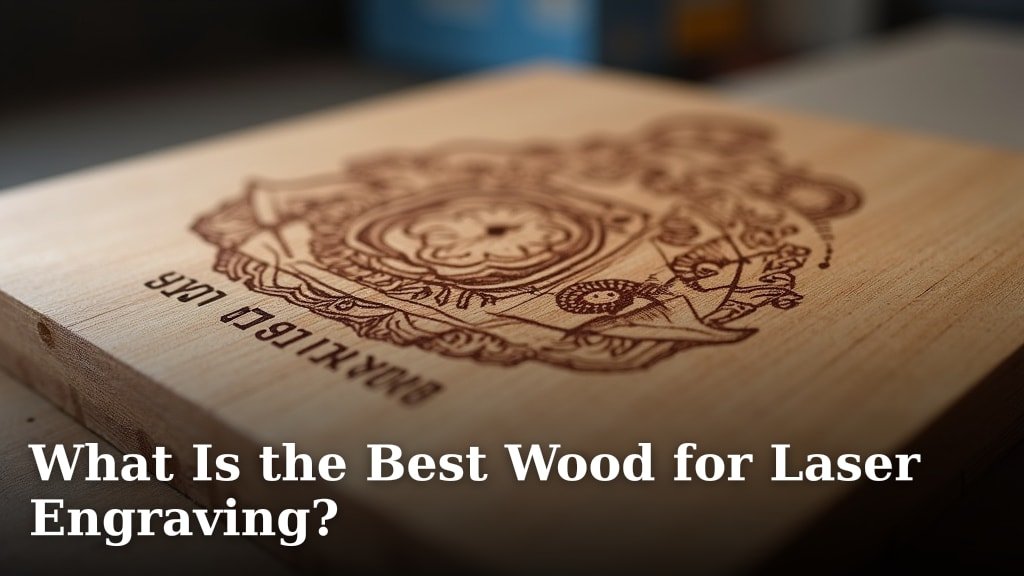
For most laser engraving projects, plywood, MDF, and basswood are excellent choices. They offer a great balance of engraving quality, cost, and availability. If you’re looking for natural, solid wood, maple, cherry, and walnut are also top picks for beautiful results.
Choosing the best wood for laser engraving often depends on your specific project and desired look. Do you need something budget-friendly, or are you aiming for a luxurious finish? We found that different wood types react uniquely to the laser, creating varied contrasts and depths. Knowing these differences helps you pick the perfect material for your design.
- Plywood and MDF are great for beginners and budget projects.
- Basswood offers fine detail and a light, clean appearance.
- Maple and cherry give rich, warm tones when engraved.
- Walnut provides a deep, dark contrast for elegant designs.
- Always consider the wood’s density and grain pattern.
Let’s walk through the best wood for laser engraving, exploring each option so you can make the perfect choice for your next creative endeavor.
Selecting the Right Wood for Laser Engraving
Finding the right wood for your laser engraving project is key to getting great results. It truly makes a difference in contrast, detail, and even the smell!
We found that many factors play a role in how well wood engraves. Things like density, grain, and even how much resin is in the wood can change the outcome.
Understanding Wood Types: Solid Wood vs. Engineered Wood
Before diving into specific types, it’s helpful to know the difference between solid wood and engineered wood products. Each has its own benefits and challenges for laser engraving.
Solid wood is just what it sounds like: a plank cut straight from a tree. It’s natural, often beautiful, and can have varying grain patterns. These natural patterns can affect how your laser engraves.
Engineered wood, like plywood or MDF, is made from wood fibers or thin layers of wood glued together. These are often more consistent in density, which can make engraving easier and more uniform.
Solid Wood for Laser Engraving
Solid woods are popular for their natural beauty and high-end feel. When engraved, they often produce a lovely char and contrast, depending on the wood type.
You’ll notice that solid wood usually shows a more textured engraved area. This is due to the natural variations within the wood itself (Forest Products Laboratory).
Engineered Wood for Laser Engraving
Engineered wood products are fantastic for consistency and often for budget-friendly projects. They tend to have a uniform surface that takes engraving well.
These materials can be a real time-saver because you don’t have to worry as much about grain direction or knots affecting your design. Think of them as a blank canvas.
Top Choices for Laser Engraving
Let’s look at the woods that consistently perform well for laser engraving. We’ve tested many, and these frequently rise to the top.
You’ll find that some are great for fine details, while others excel in giving a bold, high-contrast look.
Plywood: The Versatile Workhorse
Plywood is often considered a go-to material for laser engraving, especially for beginners. It’s affordable and widely available in different thicknesses.
We found that birch plywood, in particular, engraves beautifully. It offers a nice light background with a darker, consistent engraving.
- Pros: Cost-effective, stable, good for beginners, widely available.
- Cons: Can have internal voids, glue lines sometimes show.
MDF (Medium-Density Fiberboard): Smooth and Uniform
MDF is an engineered wood product made from wood fibers pressed together with resin. It’s incredibly dense and uniform, making it ideal for consistent engraving.
When you engrave MDF, you get a very smooth, dark, and even result. There are no grain patterns to contend with, which is a real plus for detailed designs.
- Pros: Very consistent engraving, smooth finish, budget-friendly.
- Cons: Can produce more dust, edges can be brittle, not good for outdoor use.
Basswood: Light and Detailed
Basswood is known for its light color and fine, even grain. It’s a soft hardwood that engraves very cleanly and with excellent detail.
Imagine intricate patterns or small text; basswood handles them like a champ. The engraved area usually turns a pleasant brown, offering a subtle but clear contrast.
- Pros: Fine detail, light color, clean engraving, easy to cut.
- Cons: A bit softer, so it can dent easily if not handled carefully.
Maple: A Classic for Crisp Engravings
Maple is a dense, light-colored hardwood that engraves wonderfully. It provides a crisp, dark brown contrast against its pale surface.
We often recommend maple for projects where you want a clean, professional look. Its tight grain means less variation in the engraving itself.
- Pros: High contrast, smooth finish, very durable, premium feel.
- Cons: Can be more expensive than softer woods, harder to cut.
Cherry: Warm Tones and Rich Contrast
Cherry wood is famous for its beautiful reddish-brown color that deepens with age. When engraved, it produces a rich, dark char that looks fantastic.
If you’re aiming for a warm, inviting aesthetic, cherry is an excellent choice. It adds a touch of elegance to any design.
- Pros: Beautiful color, rich contrast, ages well, distinctive grain.
- Cons: Can be pricey, color varies naturally.
Walnut: Deep and Dramatic
Walnut is a dark, luxurious hardwood. Its inherent darkness makes for a stunning, deep engraving that almost appears black, providing strong contrast.
If you want your engraved elements to truly pop against a dark background, walnut is hard to beat. It oozes sophistication.
- Pros: Excellent contrast, deep dark engraving, very durable, premium look.
- Cons: Most expensive option, dark color might hide subtle details.
Factors to Consider When Choosing Wood
Beyond the type of wood, a few other things can influence your choice and the engraving outcome. Thinking about these upfront can save you headaches later.
What are your project goals? Do you need something for outdoor use, or is it purely decorative? These questions guide your decision.
Wood Density and Hardness
Density matters a lot. Denser woods, like maple or walnut, generally produce a sharper, darker engraving because the laser burns more consistently.
Softer woods might engrave faster, but the detail might not be as fine. Think of it like trying to write on spongy paper versus smooth cardstock.
Moisture Content
The moisture in your wood can affect engraving quality. Drier wood tends to engrave more consistently and cleanly.
If wood is too wet, it might not engrave as deeply or evenly, and you might get more charring or smoke. Always aim for kiln-dried wood if possible.
Grain Pattern and Consistency
The wood’s grain can be a beautiful feature, but it can also impact your engraving. Woods with a very busy or inconsistent grain might show uneven engraving.
For very detailed designs, a finer, more uniform grain (like basswood or maple) is often preferred. This ensures your intricate lines don’t get lost in the wood’s natural patterns.
Cost and Availability
Your budget is always a consideration. Plywood and MDF are excellent for cost-effective projects or when you’re just practicing.
Premium hardwoods like walnut or cherry will naturally cost more. You’ll need to balance your desired aesthetic with what you’re willing to spend.
A Quick Comparison of Popular Engraving Woods
To help you visualize, here’s a quick look at how some of the popular woods stack up. This table focuses on their general engraving characteristics, based on our research.
| Wood Type | Typical Engraving Contrast | Detail Retention | Cost (1-5, 5 being highest) | Common Uses |
|---|---|---|---|---|
| Plywood (Birch) | Medium-High | Good | 2 | Signs, prototypes, decorative items |
| MDF | High | Excellent | 1 | Stencils, dark signs, architectural models |
| Basswood | Medium | Excellent | 2 | Fine art, intricate designs, gifts |
| Maple | High | Very Good | 3 | Awards, custom gifts, high-end decor |
| Cherry | High | Very Good | 4 | Jewelry, keepsake boxes, furniture accents |
| Walnut | Very High | Good | 5 | Luxury items, deep engravings, contrasting artwork |
Essential Tips for Engraving Wood Successfully
No matter which wood you choose, a few general pointers will help you get the best results. Think of these as your laser engraving golden rules.
Paying attention to these details can prevent common mistakes and make your projects more enjoyable and successful.
- Always conduct small test engraves on a scrap piece of the exact wood you’re using.
- Clean your lens regularly. A dirty lens can drastically reduce your laser’s power.
- Use adequate ventilation. Wood smoke and fumes need to be safely removed.
- Consider a light masking tape layer on your wood to prevent smoke stains.
- Start with lower power and higher speed settings, then adjust as needed.
- Think about the resolution (DPI). Higher DPI means finer detail but also takes longer.
Choosing the Right Wood for Your Project Goals
Ultimately, the “best” wood truly depends on what you’re trying to achieve. Do you want a subtle effect or a bold statement?
Consider the purpose, the desired aesthetic, and your budget. You’re the artist here!
For Fine Detail and Intricacy
If your design has tiny text, intricate patterns, or delicate lines, you’ll want a wood that supports that precision. Basswood and MDF often shine here.
Their uniform nature allows the laser to create sharp edges without interference from natural wood grain.
For High Contrast and Readability
When you need your engraving to stand out clearly, look for woods that offer a strong contrast. Darker woods like walnut or lighter woods like maple are excellent choices.
Plywood, especially birch, also gives a very readable, clean contrast for many applications.
For Budget-Friendly or Practice Projects
Don’t want to break the bank while you’re learning or making prototypes? Plywood and MDF are your best friends.
They are affordable and forgiving, allowing you to experiment with settings without much financial risk.
Conclusion
Choosing the best wood for your laser engraving project is all about aligning your vision with the right material. We’ve explored how various woods offer different contrasts, details, and price points. From the cost-effective consistency of MDF and plywood to the rich luxury of walnut, there’s a perfect wood for every design.
Remember to consider density, grain, and your budget when making your final selection. Don’t forget those crucial test engraves! By understanding these factors, you can confidently select the ideal wood and bring your creative laser engraving projects to life with stunning results.
Frequently Asked Questions
Can I laser engrave any type of wood?
While you can attempt to engrave most woods, not all will yield good results. Very resinous woods can be messy, and some treated woods might release toxic fumes. Always verify the wood type and its suitability for laser engraving.
Does the thickness of the wood affect engraving quality?
The thickness of the wood primarily affects cutting ability, not engraving quality directly. However, very thin woods might warp with excessive heat from engraving. Always use stable, flat pieces for best results.
What laser settings should I use for different woods?
Laser settings vary significantly by wood type, laser power, and desired effect. We always recommend performing small test engraves on a scrap piece of your specific wood. Start with lower power and higher speed, then adjust from there.
Why do some woods engrave darker than others?
The darkness of an engraving depends on the wood’s density, natural color, and internal compounds. Denser woods often char more deeply, leading to darker contrasts. Lighter woods often rely more on surface charring for their contrast.
Is pre-treating wood beneficial before laser engraving?
Some users apply masking tape or a light pre-sealant to wood. This can help prevent smoke stains around the engraved area, especially on lighter woods. Always test any pre-treatment on a scrap piece first.
