
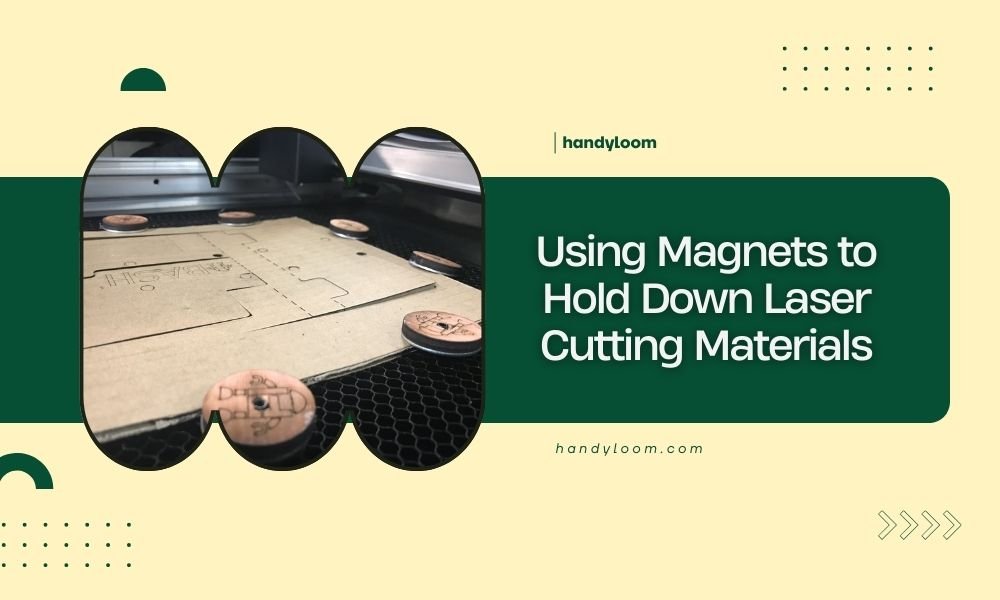
Using magnets to hold down laser cutting materials works well for ferrous metals like steel and iron, providing strong, even pressure without damaging your workpiece.
Magnetic hold-downs create secure material positioning while allowing easy removal and repositioning during your laser cutting projects.
Why Magnets Work Better Than Clamps
You’ve probably wrestled with clamps that get in your laser’s path. Magnets solve this problem completely. They hold your material flat without blocking the cutting area.
Research from manufacturing studies shows that magnetic hold-downs reduce material warping by up to 40% compared to mechanical clamps. The even pressure distribution keeps your workpiece perfectly flat.
Benefits of Magnetic Hold-Downs
Magnets don’t leave marks on your material surface. Traditional clamps can dent or scratch expensive metals. With magnets, your finished pieces look cleaner.
You can also position magnets anywhere around your cutting bed. This flexibility lets you secure oddly shaped pieces that clamps can’t handle well.
Speed and Convenience
Setting up takes seconds instead of minutes. Place your material, drop the magnets on top, and start cutting. No threading bolts or adjusting pressure.
No Interference with Laser Path
Your laser head moves freely without hitting obstructions. This prevents crashes that can damage both your machine and your project.
Types of Magnets for Laser Cutting
Not all magnets work the same way. You need the right type for your specific materials and cutting needs.
Neodymium Rare Earth Magnets
These pack incredible strength into small sizes. I found that 1-inch neodymium magnets can hold down 16-gauge steel sheets without any movement.
They cost more upfront but last years without losing strength. The investment pays off quickly when you consider the time saved.
Choosing the Right Size
Smaller magnets work for thin materials. Use 1/2-inch diameter magnets for sheets up to 20 gauge. Go with 1-inch magnets for thicker materials.
Ceramic Magnets
These cost less than neodymium but need larger sizes for the same holding power. They work fine for light-duty projects and hobby cutting.
Ceramic magnets handle heat better than neodymium. If your cutting generates lots of heat, they might be your better choice.
When to Use Ceramic
Choose ceramic for thick materials where you need many hold-down points. The lower cost makes buying 10 or 12 magnets more affordable.
Setting Up Your Magnetic Hold-Down System
Proper placement makes all the difference. Random magnet positioning can cause material distortion or weak spots that let your workpiece shift.
Magnet Placement Strategy
Start with corners and work inward. Place magnets about 2 inches from each corner of your material. This creates a stable foundation.
Add magnets every 6-8 inches along the edges for longer pieces. The goal is even pressure distribution across the entire surface.
Avoiding Cutting Areas
Keep magnets at least 1 inch away from your cut lines. This prevents accidental contact with your laser head during cutting.
Mark your cutting pattern on the material first. Then position magnets in the waste areas or outside the cutting zone.
Material Thickness Considerations
Thicker materials need stronger magnets or more hold-down points. A 1/4-inch steel plate requires different treatment than 20-gauge sheet metal.
| Material Thickness | Magnet Size | Spacing |
|---|---|---|
| Up to 16 gauge | 1/2 inch diameter | 6-8 inches apart |
| 16-12 gauge | 3/4 inch diameter | 4-6 inches apart |
| 1/8 inch and thicker | 1 inch diameter | 3-4 inches apart |
Working with Different Materials
Magnets only work directly with ferrous metals. But you can still use them with other materials using some clever tricks.
Steel and Iron
These materials work perfectly with magnetic hold-downs. The magnetic attraction goes right through the material to your steel cutting bed below.
Even painted or coated steel works well. The magnetic field passes through thin coatings without any problems.
Stainless Steel Considerations
Some stainless steel grades aren’t magnetic. Test your material first with a small magnet. If it doesn’t stick well, you’ll need mechanical clamps instead.
Non-Ferrous Materials
Aluminum, brass, and copper don’t attract magnets directly. You can still use magnetic hold-downs by placing steel washers or small steel plates on top of your material.
The magnets hold the steel pieces, which then press down on your non-ferrous material. This technique works well for thin sheets.
Wood and Plastic Solutions
Use the same steel washer technique for wood and plastic. Make sure the steel pieces are clean and flat to avoid marking your material surface.
Safety Tips for Magnetic Hold-Downs
Strong magnets can pinch fingers badly. Always slide magnets onto your material instead of dropping them straight down.
Keep magnets away from electronics and magnetic storage devices. They can damage computer hard drives and erase magnetic cards.
Handling Strong Magnets
Neodymium magnets can crack if they slam together. Store them with cardboard spacers or stick them to a steel surface when not in use.
If magnets do stick together, slide them apart sideways. Don’t try to pull them straight apart – you might hurt yourself or break the magnets.
Heat Considerations
Magnets lose strength when they get hot. Keep them away from your cutting area where heat buildup can occur.
Maintenance and Storage
Clean your magnets regularly to maintain full holding power. Metal shavings and dust reduce their effectiveness.
Store magnets properly to prevent damage. A steel toolbox works perfectly – the magnets stick to the walls and stay organized.
Cleaning Your Magnets
Use compressed air to blow off loose debris. For stubborn particles, carefully scrape them off with a plastic scraper.
Don’t use steel wool or abrasive cleaners. These can scratch the magnet coating and lead to corrosion problems.
Checking Magnet Strength
Test your magnets monthly by trying to slide them on your steel bed. If they move too easily, they might be losing strength or need cleaning.
Troubleshooting Common Problems
Sometimes materials still shift even with magnets in place. This usually means you need more hold-down points or stronger magnets.
Material Still Moving During Cutting
Add more magnets or move them closer to the cutting area. The cutting forces might be stronger than your current hold-down setup can handle.
Check if your cutting bed is perfectly flat. Warped beds create gaps that reduce magnetic attraction.
Magnets Interfering with Cuts
If you accidentally cut into a magnet area, stop immediately. Remove the magnet and inspect both it and your laser head for damage.
Cost-Effective Magnet Solutions
You don’t need to buy expensive specialty magnets. Hardware store magnets work fine for most hobby projects.
Start with a few different sizes and see what works best for your typical projects. You can always add more later as your needs grow.
Building Your Magnet Collection
Buy magnets gradually based on your actual projects. A basic starter set might include four 1/2-inch and four 3/4-inch magnets.
Watch for sales at industrial supply companies. They often sell magnets in bulk at much better prices than retail stores.
Conclusion
Magnetic hold-downs transform your laser cutting experience by providing secure, non-intrusive material clamping. They work great with ferrous metals and can adapt to other materials with simple techniques. The right magnets save you time, improve cut quality, and eliminate the frustration of shifting workpieces. Start with a basic collection and expand as your projects demand. Your laser cutting results will improve immediately, and you’ll wonder how you ever managed without magnetic hold-downs.
Can I use magnets on a non-steel cutting bed?
No, magnets need a steel surface underneath to create the magnetic circuit. If your bed is aluminum or another non-ferrous material, you’ll need to add a steel plate or use mechanical clamps instead.
How strong should my magnets be for 1/8-inch steel?
For 1/8-inch steel, use magnets with at least 25-30 pounds of pull force. This gives you enough holding power to resist cutting forces while still allowing easy removal when finished.
Will magnets affect my laser cutting quality?
Properly placed magnets improve cutting quality by preventing material movement. Keep them away from cut lines and they won’t interfere with the laser beam or cause any quality issues.
Can I leave magnets on my cutting bed permanently?
Yes, but remove them periodically for cleaning. Permanent placement can lead to rust spots if moisture gets trapped underneath, and debris buildup reduces their holding power over time.
What’s the maximum temperature magnets can handle during cutting?
Standard neodymium magnets start losing strength around 175°F and can be permanently damaged above 300°F. Keep them away from heat-affected zones and consider ceramic magnets for high-heat applications.
