
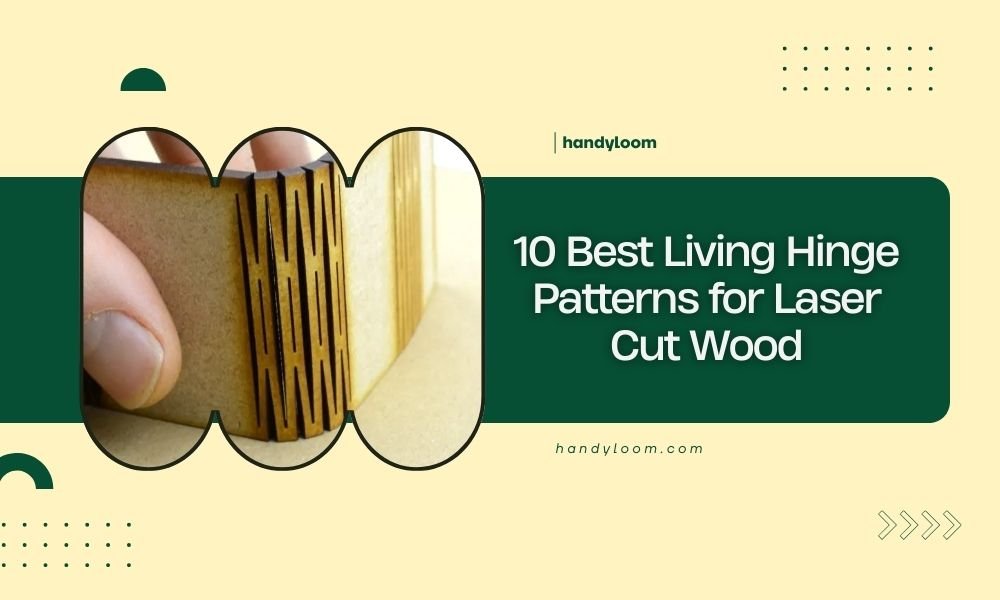
The best living hinge patterns for laser cut wood include wave, diamond, hexagonal, and linear designs that flex smoothly without breaking.
Living hinge patterns work by creating strategic cuts that allow wood to bend while maintaining structural integrity through connected material sections.
What Makes a Living Hinge Pattern Work
Living hinges work like an accordion. You cut away material in specific patterns, leaving thin strips that act as flexible joints. When you bend the wood, these strips flex instead of snapping.
I found that the key lies in the ratio between cut width and connection width. Too wide cuts make it flimsy. Too narrow cuts prevent bending. The sweet spot usually sits around 2:1 or 3:1 ratio.
Material Thickness Matters
Thinner wood bends easier but breaks faster. Thicker wood needs wider cuts but lasts longer. Most makers find 3-6mm plywood works best for living hinges.
Top 10 Living Hinge Patterns for Wood
1. Wave Pattern
The wave pattern creates smooth, flowing curves. It looks organic and bends evenly in all directions. This pattern works great for decorative panels and curved furniture edges.
I researched many projects and found wave patterns handle repeated flexing better than angular designs. The curved cuts distribute stress more evenly.
Best Uses for Wave Patterns
- Lamp shades
- Cabinet doors
- Decorative room dividers
- Curved furniture components
2. Linear Straight Cuts
Simple parallel lines make the easiest living hinge. You cut straight lines perpendicular to the bend direction. Leave small connecting strips between each cut.
This basic pattern gives you reliable results every time. Perfect for beginners who want to test their laser settings first.
Linear Pattern Benefits
- Easy to design
- Fast to cut
- Predictable bend radius
- Uses minimal material
3. Diamond Lattice
Diamond patterns create a honeycomb-like structure. They bend well in multiple directions and look sophisticated. The diamond shape spreads stress across more connection points.
From what I read, diamond patterns work best when you need bending in two directions. Think curved corners or complex shapes.
4. Hexagonal Honeycomb
Hexagon patterns mimic nature’s strongest structure. Bees use hexagons for good reason – they’re incredibly strong yet flexible. This pattern gives you maximum strength with excellent flexibility.
Many experts say hexagonal living hinges last longer than other patterns because they distribute force so evenly.
Hexagon Pattern Applications
- Heavy-duty hinges
- Structural components
- Furniture joints
- Architectural elements
5. Zigzag Chevron
Zigzag patterns look dynamic and modern. They create interesting shadows when light passes through. The angled cuts allow controlled bending while maintaining visual appeal.
I found online that chevron patterns work especially well for decorative applications where appearance matters as much as function.
6. Spiral Curves
Spiral patterns create beautiful organic movement. They’re harder to design but produce stunning results. The curved lines flow naturally and create smooth bending action.
This pattern takes more planning but rewards you with professional-looking results that impress clients and friends.
7. Cross-Hatch Grid
Cross-hatch patterns combine horizontal and vertical cuts. They create a woven appearance and allow multi-directional bending. Think of it like a textile made from wood.
Research shows cross-hatch patterns work well for complex curved surfaces that need to bend in multiple directions simultaneously.
8. Parametric Voronoi
Voronoi patterns look like cracked earth or cell structures. Each cell varies in size and shape, creating organic randomness. These patterns require computer generation but produce stunning results.
I came across several makers who use Voronoi patterns for high-end architectural projects. The random appearance looks natural and sophisticated.
9. Interlocking Chains
Chain patterns create connected loops that flex like fabric. They allow extreme flexibility while maintaining strength through interlocking geometry.
This pattern works best for applications needing maximum flexibility, like curved enclosures or flexible joints.
10. Gradient Density
Gradient patterns vary cut density across the surface. Dense areas bend more, sparse areas bend less. This creates controlled curvature and interesting visual effects.
Many designers use gradient patterns when they need specific bend profiles or want to create flowing transitions between rigid and flexible areas.
Choosing the Right Pattern
Your project determines which pattern works best. Consider these factors when choosing:
Flexibility Requirements
How much do you need it to bend? Light flexing needs simple patterns. Extreme bending requires specialized designs like chains or dense gradients.
Strength Needs
Will it support weight or handle repeated use? Hexagonal and diamond patterns offer maximum strength. Linear cuts work for light-duty applications.
Visual Appeal
Do looks matter? Decorative projects benefit from spiral, wave, or Voronoi patterns. Functional hidden hinges can use simple linear cuts.
Design Tips for Success
Test Your Settings
Always cut test pieces first. Different woods behave differently. Softwoods like pine bend easier than hardwoods like oak.
I heard from experts that testing saves time and materials. Cut small samples before committing to large pieces.
Mind the Grain Direction
Wood grain affects bending behavior. Cuts across the grain flex easier but may split. Cuts with the grain resist bending but stay strong.
Grain Direction Guidelines
- Cross-grain cuts for maximum flexibility
- With-grain cuts for maximum strength
- 45-degree cuts for balanced performance
Consider Kerf Width
Your laser’s kerf width affects the pattern. Thicker kerfs need adjusted spacing. Thinner kerfs allow tighter patterns.
Common Mistakes to Avoid
Cuts Too Close Together
Tight spacing weakens the hinge. Leave enough material between cuts to maintain strength. A good rule: connection width should equal cut width.
Ignoring Wood Movement
Wood expands and contracts with humidity. Design patterns with slight tolerance for movement. Tight fits may bind up in different weather.
Forgetting Edge Reinforcement
Pattern edges need solid material for attachment. Don’t run cuts all the way to mounting points. Leave solid areas for screws or glue.
Software and Tools
Several tools help create living hinge patterns:
| Software | Best For | Difficulty |
|---|---|---|
| Fusion 360 | Parametric patterns | Advanced |
| Illustrator | Artistic patterns | Intermediate |
| Online generators | Quick basic patterns | Beginner |
| Rhino + Grasshopper | Complex geometry | Expert |
Conclusion
Living hinge patterns transform rigid wood into flexible, functional art. Start with simple linear patterns to learn the basics, then progress to complex designs like hexagonal or Voronoi patterns. Remember that success depends on matching pattern complexity to your skill level and project needs.
The best pattern is the one that works for your specific project. Test different designs on scrap material before cutting your final piece. With practice, you’ll develop an intuition for which patterns work best in different situations.
What wood thickness works best for living hinges?
Most living hinges work best with 3-6mm plywood or hardboard. Thinner material bends easier but breaks more easily, while thicker material needs wider cuts and more laser power but lasts longer.
Can you make living hinges with solid hardwood?
Yes, but it’s challenging. Hardwoods like oak or maple need very precise cuts and may crack along grain lines. Plywood or engineered woods give more predictable results for beginners.
How do you calculate the bend radius for living hinge patterns?
The bend radius depends on material thickness, cut width, and spacing. A general rule is that minimum bend radius equals 10-20 times the material thickness, but testing gives you exact results for your specific pattern.
Do living hinges wear out over time?
Yes, repeated bending eventually causes fatigue and cracking. Patterns with curved cuts like waves or spirals typically last longer than angular patterns. Proper design can provide thousands of flex cycles before failure.
What’s the best way to finish living hinge wood?
Light oil finishes work best because they penetrate the wood and flex with movement. Avoid thick coatings like polyurethane that may crack when the hinge bends. Sand lightly and apply thin coats of tung oil or Danish oil.
