
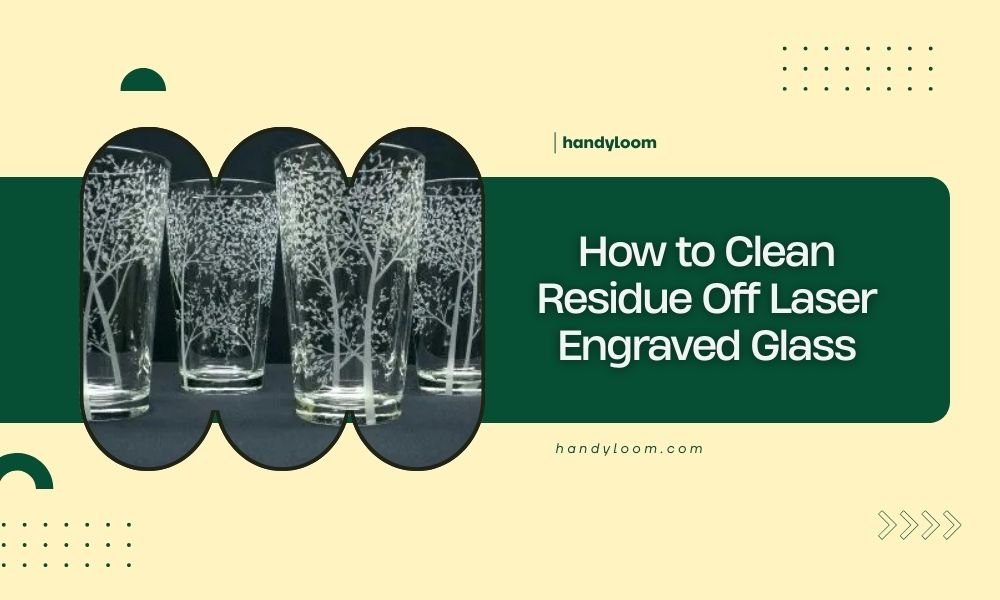
To clean residue off laser engraved glass, use isopropyl alcohol (70% or higher) with a lint-free cloth, gently wiping in circular motions to avoid scratching the engraved areas.
For stubborn residue, create a paste with baking soda and water, apply it to the affected area, let it sit for 10 minutes, then wipe clean with a damp cloth.
Got cloudy residue on your beautiful laser engraved glass? You’re not alone. This sticky situation happens to most people who work with laser engraving.
The good news? You can fix this without damaging your artwork. Let me walk you through the safest and most effective methods.
Why Residue Forms on Laser Engraved Glass
Laser engraving creates microscopic debris when it vaporizes glass material. This debris, combined with heat, forms a thin film on your glass surface.
Sometimes protective tape leaves adhesive behind. Other times, cleaning products create streaks that look like residue.
Common Types of Glass Residue
You’ll typically see three types of residue:
- White chalky film from glass particles
- Sticky adhesive from protective tape
- Oily fingerprints and smudges
Essential Cleaning Supplies You’ll Need
Before you start, gather these basic items:
- Isopropyl alcohol (70% or 91%)
- Lint-free microfiber cloths
- Cotton swabs for detailed areas
- Baking soda
- Distilled water
- Soft-bristled toothbrush
What to Avoid When Cleaning
Never use these on engraved glass:
- Abrasive cleaners or scrubbers
- Paper towels (they scratch)
- Ammonia-based cleaners
- Steel wool or metal brushes
Method 1: Isopropyl Alcohol Treatment
This is your go-to method for most residue problems. Research shows that isopropyl alcohol effectively dissolves oils and removes glass particles without damage.
Step-by-Step Alcohol Cleaning
Start by dampening your microfiber cloth with isopropyl alcohol. Don’t soak it – you want it moist, not dripping.
Gently wipe the glass surface using small circular motions. Work from the outside of the engraved area toward the center.
For detailed engraved sections, dip a cotton swab in alcohol and carefully clean around the edges.
Why This Method Works
Alcohol evaporates quickly, leaving no streaks. It also breaks down adhesive residue and dissolves oils from fingerprints.
Method 2: Baking Soda Paste for Stubborn Residue
When alcohol isn’t enough, baking soda becomes your best friend. I found that many glass restoration experts recommend this gentle abrasive approach.
Creating the Perfect Paste
Mix three parts baking soda with one part distilled water. You want a thick paste that won’t run off the glass.
Apply this paste only to areas with heavy residue buildup. Let it sit for 10-15 minutes to soften the debris.
Gentle Scrubbing Technique
Use a soft-bristled toothbrush to gently work the paste in circular motions. Apply light pressure – let the baking soda do the work.
Rinse with distilled water and dry immediately with a clean microfiber cloth.
Method 3: Removing Adhesive Tape Residue
Protective tape can leave sticky residue that attracts dirt and looks terrible. Here’s how to tackle it safely.
Heat and Peel Method
Use a hair dryer on low heat to warm the adhesive slightly. This makes it easier to remove without leaving residue.
Peel the tape slowly at a 45-degree angle. If residue remains, move to the next step.
Oil-Based Removal
Apply a tiny amount of coconut oil or olive oil to the sticky area. Let it sit for five minutes, then wipe clean with alcohol.
This two-step process breaks down the adhesive without damaging your engraved design.
Deep Cleaning Engraved Details
Those intricate engraved areas need special attention. Residue loves to hide in corners and fine lines.
Cotton Swab Technique
Dip cotton swabs in isopropyl alcohol and trace along engraved lines. Replace swabs frequently as they pick up debris.
Work in sections, cleaning a small area completely before moving on.
Toothbrush Detail Work
For deeper engravings, use a clean soft toothbrush with alcohol. Brush gently along the grain of the engraved pattern.
Professional Tips for Different Glass Types
Not all glass responds the same way to cleaning. Here’s what I learned from glass professionals:
Tempered Glass Considerations
Tempered glass can handle slightly more aggressive cleaning. You can use a bit more pressure with your cloth.
Thin Glass Precautions
Wine glasses and thin decorative pieces need extra care. Use minimal pressure and work slowly.
Colored Glass Special Care
Some colored glasses have surface coatings. Test your cleaning method on a hidden area first.
Common Mistakes That Make Things Worse
I’ve seen people accidentally damage their engraved glass by making these errors:
Using Too Much Pressure
Scrubbing hard won’t remove residue faster. It will scratch your glass and ruin the engraved details.
Wrong Cloth Choice
Paper towels and rough cloths create microscratches that make your glass look cloudy.
Not Drying Properly
Air drying leaves water spots that look like residue. Always hand dry with a clean microfiber cloth.
Prevention Tips for Future Projects
Want to avoid this headache next time? Here are some smart prevention strategies.
Better Masking Techniques
Use high-quality transfer tape designed for glass. Remove it within 24 hours of engraving.
Proper Storage
Store engraved glass in a dust-free environment. Cover pieces with soft cloth when not displayed.
Regular Maintenance
Clean your engraved glass weekly with alcohol wipes. This prevents residue buildup.
When to Seek Professional Help
Sometimes DIY cleaning isn’t enough. Consider professional restoration if you see:
- Deep scratches in the engraved areas
- Permanent clouding that won’t clear
- Cracks or chips around the engraving
Glass restoration specialists have tools and compounds that aren’t available to consumers.
Safety Considerations
Always work in a well-ventilated area when using alcohol or other solvents. Wear gloves if you have sensitive skin.
Keep your workspace clean and organized. Broken glass cleanup becomes much harder if you’re working in clutter.
Conclusion
Cleaning residue off laser engraved glass doesn’t have to be stressful. Start with isopropyl alcohol for light residue, then move to baking soda paste for stubborn buildup. Remember to work gently, use the right tools, and take your time with detailed areas.
Your engraved glass artwork deserves proper care. With these methods, you’ll keep those pieces looking crystal clear for years to come. The key is patience and the right technique – not brute force.
Can I use vinegar instead of isopropyl alcohol to clean glass residue?
While vinegar can clean glass, it’s more acidic than alcohol and may damage some glass coatings. Stick with isopropyl alcohol for the safest results on engraved pieces.
How often should I clean my laser engraved glass items?
Clean your engraved glass weekly with a dry microfiber cloth for dusting, and monthly with alcohol for deeper cleaning. This prevents residue buildup and keeps engravings sharp.
What should I do if the engraved areas look cloudy after cleaning?
Cloudiness usually means water spots or cleaning product residue. Wipe the piece again with isopropyl alcohol and immediately dry with a clean microfiber cloth.
Is it safe to put laser engraved glass in the dishwasher?
Avoid dishwashers for engraved glass. The high heat and harsh detergents can damage the engraved areas and leave permanent clouding. Hand washing is always safer.
Can I use a magic eraser on stubborn residue?
No, magic erasers are abrasive and will scratch your glass surface and damage engraved details. Stick with the baking soda paste method for stubborn residue instead.
