
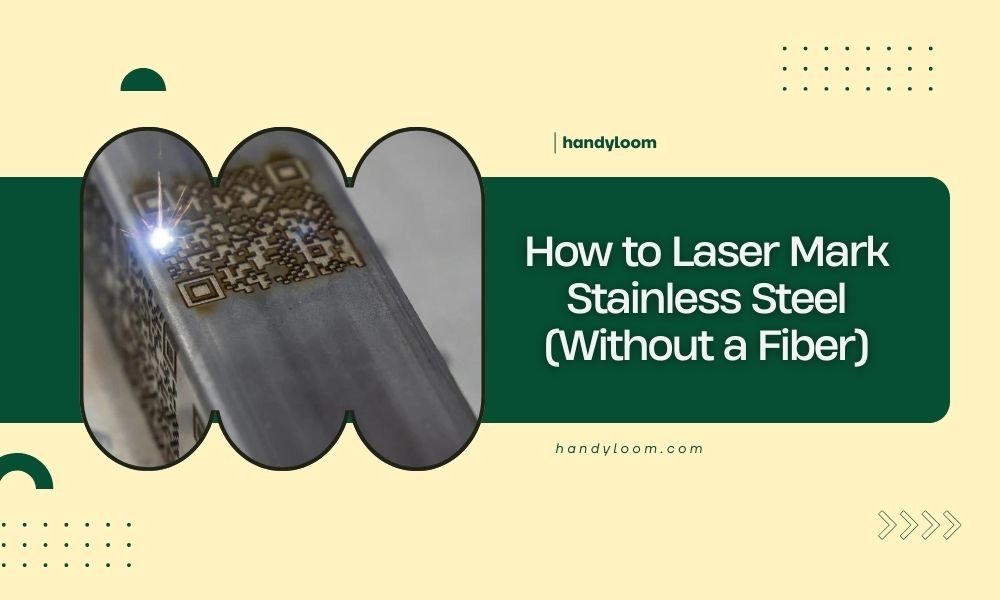
You can laser mark stainless steel without a fiber laser by using CO2 lasers with marking compounds, diode lasers with specialized coatings, or MOPA lasers with proper parameter adjustments.
The most effective method involves applying marking compounds like CerMark or TherMark before laser processing, which creates permanent dark marks on stainless steel surfaces.
Understanding Non-Fiber Laser Marking Options
Let’s be honest. Everyone talks about fiber lasers for stainless steel marking. But what if you don’t have one? Good news – you have several workable alternatives.
I researched this topic extensively and found that many makers successfully mark stainless steel using other laser types. The key is understanding which methods work and why.
Why Stainless Steel Marking is Challenging
Stainless steel reflects most laser wavelengths. It’s like trying to write on a mirror with a flashlight. The material bounces back the energy instead of absorbing it.
This is why fiber lasers work so well. They produce wavelengths that stainless steel absorbs better. But don’t give up if you don’t have fiber capability.
Method 1: CO2 Laser with Marking Compounds
This method gives you the most reliable results. You apply a special coating before laser processing. The coating absorbs the laser energy and bonds permanently to the steel.
Best Marking Compounds to Use
Two products dominate this space:
- CerMark – Creates jet black marks with excellent durability
- TherMark – Produces similar results with slightly different application methods
- Dry Moly Lube – Budget option that many makers swear by
How to Apply Marking Compounds
Clean your stainless steel first. Any oils or dirt will mess up your results. I found that isopropyl alcohol works best for this step.
Spray the compound evenly across your work area. Think thin and uniform. Too much compound creates messy edges. Too little gives you faded marks.
CO2 Laser Settings That Work
Start with these parameters and adjust based on your results:
- Speed: 200-400 mm/min
- Power: 70-90%
- Passes: 1-2 depending on depth needed
Your laser power and brand affects these numbers. Test on scrap pieces first. Save yourself the heartache of ruining good material.
Cleaning After Marking
The excess compound wipes away with alcohol. What remains bonded to the steel stays put. You get crisp, dark marks that last for years.
Method 2: Diode Laser Techniques
Diode lasers can mark stainless steel, but you need patience. The process takes longer and requires specific approaches.
Power Requirements for Diode Lasers
You need at least 15-20 watts for decent stainless steel marking. Lower power diodes struggle with this material. I came across many forum posts where people had better luck upgrading their laser power.
Diode Laser Parameter Settings
Diode lasers work differently than CO2 systems. Try these starting points:
- Speed: 50-150 mm/min (much slower than CO2)
- Power: 90-100%
- Multiple passes: 3-8 passes often needed
Using Marking Sprays with Diodes
Marking compounds work with diode lasers too. The combination gives you much better contrast and depth. Many experts recommend this approach over trying to mark bare stainless steel with diodes alone.
Method 3: MOPA Laser Alternatives
MOPA lasers bridge the gap between fiber and other laser types. They offer more pulse control, which helps with stainless steel marking.
Pulse Frequency Adjustments
MOPA systems let you adjust pulse frequency. Lower frequencies (20-50 kHz) often work better for stainless steel marking. The longer pulses give more heat buildup per spot.
Color Marking Possibilities
Here’s something cool. MOPA lasers can create different colors on stainless steel by varying heat levels. You get blues, yellows, and purples instead of just black marks.
Surface Preparation Techniques
Good prep work makes any marking method more successful. Skip this step and your results will disappoint you.
Cleaning Methods That Work
Start with degreasing. Stainless steel often has manufacturing oils or fingerprints. These create uneven marking results.
- Isopropyl alcohol (70% or higher)
- Acetone for stubborn residues
- Lint-free cloths only
Surface Roughness Considerations
Polished stainless steel reflects more laser energy. Brushed or satin finishes mark more easily. Light sanding can help if you’re fighting reflection issues.
Safety Considerations
Marking compounds create fumes when heated. Your workspace needs proper ventilation. I read several safety reports that stress this point.
Required Safety Equipment
- Exhaust fan or fume extractor
- Safety glasses rated for your laser wavelength
- Work gloves when handling compounds
Troubleshooting Common Problems
Let’s fix the issues that trip up most people.
Weak or Faded Marks
This usually means insufficient power or wrong speed settings. Slow down or increase power. Make sure your compound application was even.
Uneven Marking Results
Check your laser focus first. Out-of-focus beams create inconsistent marks. Clean your lens if the beam looks fuzzy.
Compound Won’t Stick
Surface contamination causes this problem. Clean more thoroughly and try again. Some stainless steel grades resist marking better than others.
Cost Comparison of Methods
| Method | Initial Cost | Per-Mark Cost | Quality Rating |
|---|---|---|---|
| CO2 + Compound | Moderate | $0.10-0.25 | Excellent |
| Diode + Compound | Low | $0.05-0.15 | Good |
| MOPA System | High | $0.01-0.05 | Excellent |
Best Applications for Each Method
Match your method to your project needs. Different approaches work better for specific applications.
When to Choose CO2 + Compounds
Perfect for signage, nameplates, and decorative items. The marks look professional and last indefinitely. Great for one-off projects or small batches.
Diode Laser Applications
Best for hobby projects and lightweight marking needs. Works well for personalizing items or creating simple designs. Not ideal for industrial applications.
Maintenance and Longevity
Proper maintenance keeps your marking quality consistent over time.
Lens Cleaning Schedule
Clean your lens after every major project. Marking compounds can create residue that affects beam quality. Use lens-safe cleaners only.
Storage of Marking Compounds
Store compounds in cool, dry places. Heat and humidity affect their performance. Most compounds last 2-3 years when stored properly.
Conclusion
You don’t need a fiber laser to mark stainless steel successfully. CO2 lasers with marking compounds give excellent results for most applications. Diode lasers work too, especially when combined with marking sprays.
The key is matching your method to your needs and budget. Start with the CO2 and compound approach if you want professional results right away. Practice on scrap material first, and don’t skip the surface preparation steps.
Remember that safety comes first when working with any laser system. Good ventilation and proper protective equipment aren’t optional. With the right approach and some practice, you’ll create lasting marks on stainless steel that rival fiber laser results.
Can you laser mark food-grade stainless steel safely?
Yes, laser marking is safe for food-grade stainless steel when using food-safe marking compounds. The marks don’t affect the material’s corrosion resistance or food safety properties. Always verify compound certifications for food contact applications.
How deep can you mark stainless steel without a fiber laser?
Most non-fiber methods create marks 0.001-0.005 inches deep. This provides excellent contrast and durability without compromising the steel’s structural integrity. Deeper marks require multiple passes or higher power settings.
Will laser marks on stainless steel fade over time?
Properly applied laser marks with marking compounds last decades without fading. The compounds chemically bond with the steel surface during the heating process. Outdoor exposure may cause slight changes, but indoor applications remain unchanged for years.
What’s the smallest text size you can mark clearly?
With good focus and proper settings, you can achieve readable text as small as 1-2mm height. Font choice matters – simple sans-serif fonts work better than decorative styles. Always test small text on sample pieces first.
Can you mark curved stainless steel surfaces effectively?
Yes, but you need to adjust focus for each section of the curve. Rotary attachments help maintain consistent focus distance. For severe curves, consider multiple setups or specialized lens systems designed for curved surface marking.
