
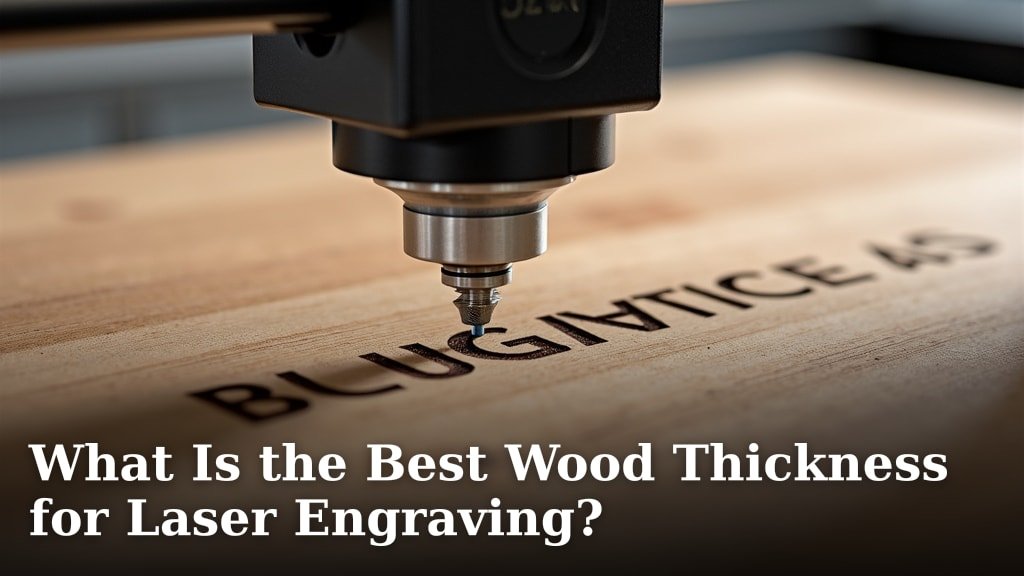
The best wood thickness for laser engraving typically falls between 1/8 inch and 1/4 inch. This range offers a great balance for most projects. Thicker woods can be challenging to engrave deeply. Thinner woods might warp or burn through too easily. Finding the right thickness ensures clean, crisp results for your laser creations.
When choosing your wood, consider the laser’s power and the desired depth of your engraving. We found that lighter woods like basswood or maple engrave well at these common thicknesses. For projects requiring more detail or a deeper cut, you might need to adjust settings or try slightly different wood thicknesses. It’s all about getting that perfect engraving effect.
TL;DR:
- 1/8 inch to 1/4 inch is the sweet spot.
- Thicker wood can be hard to engrave.
- Thin wood risks warping and burn-through.
- Consider your laser’s power.
- Test your settings for best results.
Ready to get down to the nitty-gritty? Let’s look closer at the wood thicknesses that work best for laser engraving and why.
Choosing the Right Wood Thickness for Your Laser Engraving Projects
Selecting the perfect wood thickness is key to stunning laser engravings. It directly impacts the quality and depth of your designs. You want a thickness that lets your laser work its magic without causing problems. Let’s break down what works best.
The Ideal Range: Why 1/8″ to 1/4″ Works Wonders
For most laser engraving tasks, a wood thickness between 1/8 inch (around 3mm) and 1/4 inch (about 6mm) is your sweet spot. This range offers a fantastic balance.
The Sweet Spot for Detail and Depth
Why this specific range? It’s a happy medium. Thinner materials can be too delicate. Thicker materials can make deep engraving a real challenge for many lasers. You get a good amount of material to work with, but it’s still manageable for your laser’s power.
Less Warping, More Stability
Thicker woods, like 1/2 inch or more, tend to be more stable. They are less prone to warping when the laser’s heat is applied. This stability means your project stays flat and true, leading to more accurate engravings. It’s like building on a solid foundation – things just turn out better.
Balancing Burn-Through and Depth
Engraving is essentially burning away a thin layer of material. With wood that’s too thin, you risk burning all the way through. That’s a project killer, right? A thickness of 1/8″ to 1/4″ allows you to achieve noticeable depth without piercing the material.
Factors Influencing Your Wood Thickness Choice
While 1/8″ to 1/4″ is a great starting point, other factors can influence your decision. Thinking about these will help you fine-tune your choices.
Your Laser Cutter’s Power Matters
This is a big one. A more powerful laser cutter (higher wattage) can handle thicker materials with ease. A lower-power laser might struggle to engrave deeply into anything thicker than 1/8 inch. You might need to make multiple passes on thicker woods, which can sometimes lead to less crisp results.
We found that lasers in the 40-60 watt range perform very well with 1/8″ and 1/4″ plywood or solid woods. If you have a 100+ watt laser, you might find yourself experimenting with 1/2 inch wood for certain projects. It really comes down to your machine’s capabilities.
The Type of Wood You’re Using
Different wood species react differently to laser engraving. Some woods are denser than others. Denser woods might require more power or slower speeds, and thickness becomes even more critical.
Softwoods vs. Hardwoods
Softwoods, like pine, are easier to engrave. They are less dense. You can often get away with slightly thicker pieces of softwood. However, pine can also have more inconsistencies, like knots, which can affect the engraving. Hardwoods, such as maple or cherry, are denser. They engrave beautifully but might require more precise settings for depth. For hardwoods, sticking to the 1/8″ to 1/4″ range is often safest.
Plywood Considerations
Plywood is a popular choice for laser engraving. It’s stable and comes in consistent thicknesses. Baltic birch plywood is a favorite. It has many thin layers, which makes it strong and less prone to splintering. You’ll find it in 1/8″, 1/4″, and 1/2″ thicknesses. For general engraving and cutting, 1/8″ and 1/4″ are perfect.
Desired Engraving Depth and Effect
What are you trying to achieve? For a light, subtle engraving, even thinner wood might work if you’re careful. For a deep, high-contrast engraving that you can feel with your finger, you’ll want a thickness that allows for multiple passes without burning through.
Shallow Engravings
If you just want a light mark or a surface-level design, you have more flexibility. You could even use wood as thin as 1/16 inch for very delicate projects. Just be extremely cautious with your settings to avoid burn-through.
Deep Engravings
To achieve a deep, three-dimensional effect, you need to remove a significant amount of material. This is where 1/4 inch or even slightly thicker woods become useful. You can make multiple passes, gradually increasing the depth. For really deep work, say 1/8″ or more of engraving depth, you’ll likely be using wood that’s at least 1/4″ thick.
Common Wood Thicknesses and Their Uses
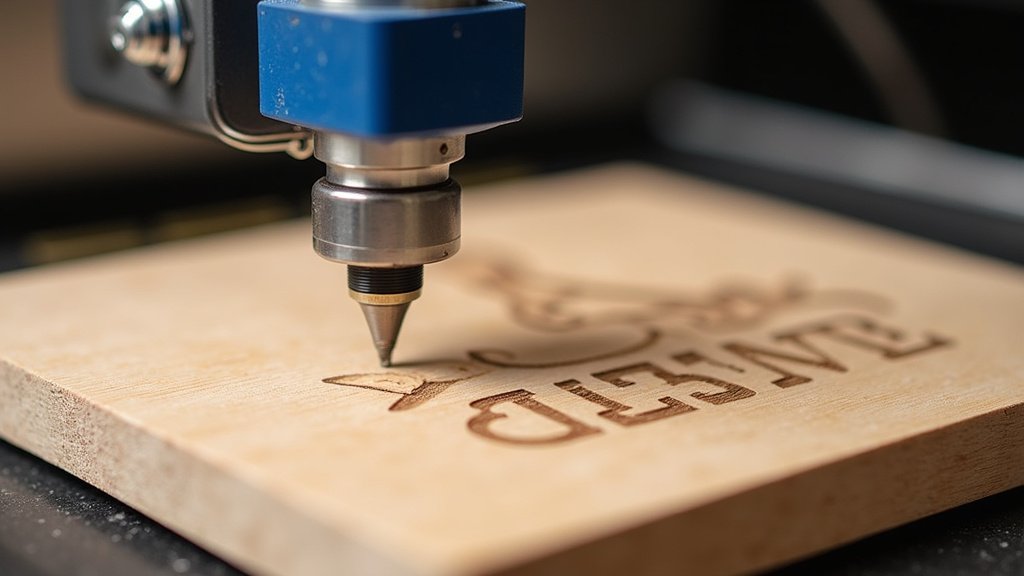
Let’s look at some standard wood thicknesses and what they’re typically good for in laser engraving.
| Thickness | Common Uses | Considerations |
|---|---|---|
| 1/16 inch (~1.5mm) | Very thin crafts, delicate inlays, layered projects where extreme thinness is needed. | High risk of burn-through. Warps easily. Requires very low power and careful settings. |
| 1/8 inch (~3mm) | Signs, coasters, keychains, small decorative items, layered art. A very common size. | Good balance of detail and robustness. Can be cut through easily by many lasers. Prone to some warping if not secured. |
| 3/16 inch (~4.5mm) | Slightly more robust signs, small boxes, thicker coasters, components for larger projects. | Offers a bit more depth than 1/8″. Still manageable for most lasers. Good compromise for strength. |
| 1/4 inch (~6mm) | Larger signs, durable coasters, box lids, plaques, functional items. Excellent for deep engraving. | Very stable and less likely to warp. Can require more laser power or multiple passes for clean cuts. Engraves beautifully with good depth. |
| 1/2 inch (~12mm) | Larger 3D projects, thick signage, substantial decorative pieces, structural components. | Requires a powerful laser cutter for deep engraving or clean cuts. Significant weight. Best for projects where thickness is a feature. |
Tips for Success with Different Thicknesses
No matter what thickness you choose, a few tips can help you get the best results from your laser.
Always Test Your Settings
This is non-negotiable. Every wood type, and even different batches of the same wood, can behave differently. Always do a small test piece before committing to your main project. Check engraving depth, line crispness, and cutting ability.
Secure Your Material Properly
Wood can move when heated. Warping is more common with thinner materials or when making multiple passes. Use hold-downs, magnets, or tape to keep your wood perfectly flat on the laser bed. This is essential for consistent engraving and cutting. Use hold-downs, magnets, or tape to keep your wood perfectly flat on the laser bed; our guide on using magnets explains how.
Consider Multiple Passes for Depth
If you want a deep engraving on a thicker piece of wood, don’t try to do it all in one go. Multiple passes at a lower power setting can achieve greater depth with cleaner results than a single high-power pass. This technique is like sanding – slow and steady wins the race for a smooth, deep finish.
Manage Focus Height Carefully
The focus of your laser beam is critical. The distance between the lens and the material surface affects beam width and power. Ensure your laser is properly focused for the specific thickness of the wood you are using. Many lasers have autofocus features, but manual focusing can sometimes yield better results for precise work. Ensure your laser is properly focused for the specific thickness of the wood you are using; our guide explains how to focus your laser beam.
Ventilation is Your Friend
Engraving wood produces smoke and fumes. Good ventilation is not just about safety; it keeps your laser lens clean and prevents smoke from re-depositing on your project, which can darken the engraving in unwanted ways. Make sure your exhaust system is working efficiently.
Experimentation is Key
Don’t be afraid to try slightly different thicknesses or to push the boundaries of your laser. You might discover that a particular wood at 7/32″ thickness gives you the exact depth you’re looking for. Keep notes on what works for different woods and project types.
So, while 1/8″ to 1/4″ is generally the best range, understanding your laser, your wood, and your desired outcome will guide you to perfection. Happy engraving!
Conclusion
You’ve learned that the sweet spot for wood thickness in laser engraving is generally between 1/8 inch and 1/4 inch. This range offers a fantastic balance for detail and stability, minimizing issues like warping or burn-through. Remember, your laser’s power, the type of wood you select, and your desired engraving depth all play a role. Don’t forget to test your settings on scrap material before starting your main project. With this knowledge, you’re well-equipped to achieve crisp, clean results on your next laser engraving adventure.
Frequently Asked Questions
Can I engrave wood thicker than 1/4 inch?
Yes, you can engrave wood thicker than 1/4 inch, especially if you have a higher-powered laser cutter. Thicker woods like 1/2 inch will require more laser power or multiple passes to achieve depth. Be prepared for longer project times and potential challenges with consistent engraving.
Will thin wood (like 1/16 inch) warp when laser engraved?
Thin wood, such as 1/16 inch, is very susceptible to warping due to the heat from the laser. It can also burn through very easily. If you must use thin wood, secure it extremely well with magnets or hold-downs and use very low power settings with careful testing.
Does the type of wood affect the ideal thickness?
Yes, the type of wood matters. Denser hardwoods may require more power and careful thickness selection, making the 1/8″ to 1/4″ range ideal. Softer woods might be more forgiving with thickness, but inconsistencies like knots can still cause issues. Plywoods, especially Baltic birch, are popular due to their consistent thickness and stability.
How does laser power relate to wood thickness for engraving?
A more powerful laser cutter can handle thicker wood more effectively. Lower-power lasers (e.g., 40W) excel with 1/8″ and 1/4″ materials, while higher-power lasers (e.g., 100W+) can manage 1/2″ or even thicker woods for cutting and engraving. Always match your laser’s capability to the wood thickness.
What is the best wood thickness for deep laser engraving?
For deep laser engraving, you’ll want wood thick enough to allow for multiple passes without burning through. 1/4 inch is an excellent choice for achieving noticeable depth, and even slightly thicker woods can work if your laser is powerful enough. This allows you to gradually build up the engraving for a 3D effect.
