

A galvo laser, short for galvanometer laser, is a type of laser system that uses mirrors controlled by precise motors to rapidly redirect the laser beam. This allows for incredibly fast and accurate marking, cutting, or engraving on various materials. Think of it like a super-speedy artist using tiny mirrors to draw complex designs in seconds. It’s a core component in many high-tech manufacturing processes. Our guide to laser engraving metal explains the process and materials.
You’ll often find galvo laser systems used for jobs needing quick, repetitive tasks. They excel at applications where speed and accuracy are key, like creating intricate patterns on metal or plastic. Unlike machines that move the entire workpiece, galvo systems move the laser beam itself, making them highly efficient for marking and etching. Many experts agree they are essential for modern industrial production.
- Galvo lasers use mirrors to steer the beam.
- They enable very fast and precise operations.
- Ideal for marking, engraving, and cutting.
- Key component in industrial manufacturing.
Ready to dive deeper into how these speedy systems work and what makes them so special? Let’s walk through exactly what a galvo laser is and why it’s a big deal.
How a Galvo Laser System Works Its Magic
So, you’re wondering about these galvo lasers. Think of them as incredibly fast and precise robotic arms, but instead of moving a tool, they’re steering a laser beam. This beam can then draw, cut, or etch designs onto almost anything. It’s a clever way to achieve high-speed, detailed work without moving the entire material or the laser head itself. This system is key to many modern production lines.
The Heart of the System: Galvanometers
The core components of a galvo laser system are, you guessed it, galvanometers. These are special electric motors designed for precise angular movement. We’re talking about tiny, high-speed motors that can move mirrors with incredible accuracy. When you tell the system to draw a line from point A to point B, these motors work together. They tilt mirrors attached to them.
Mirror, Mirror on the Galvanometer
Usually, there are two main mirrors. One mirror controls the movement along the X-axis (left to right). The other controls the movement along the Y-axis (up and down). These mirrors are mounted on the galvanometer shafts. As the electric current changes in the galvanometer, the mirror attached to it moves. This changes the direction of the laser beam reflecting off it.
Directing the Beam
The laser beam first hits the X-axis mirror, then the Y-axis mirror. Finally, it’s directed towards the material you want to mark or cut. By rapidly adjusting the angle of these mirrors, the system can move the laser beam across the surface in any direction. This allows for drawing complex shapes, text, or patterns very quickly. It’s like a high-tech pen controlled by lightning-fast mirror movements.
Why Move the Beam, Not the Workpiece?
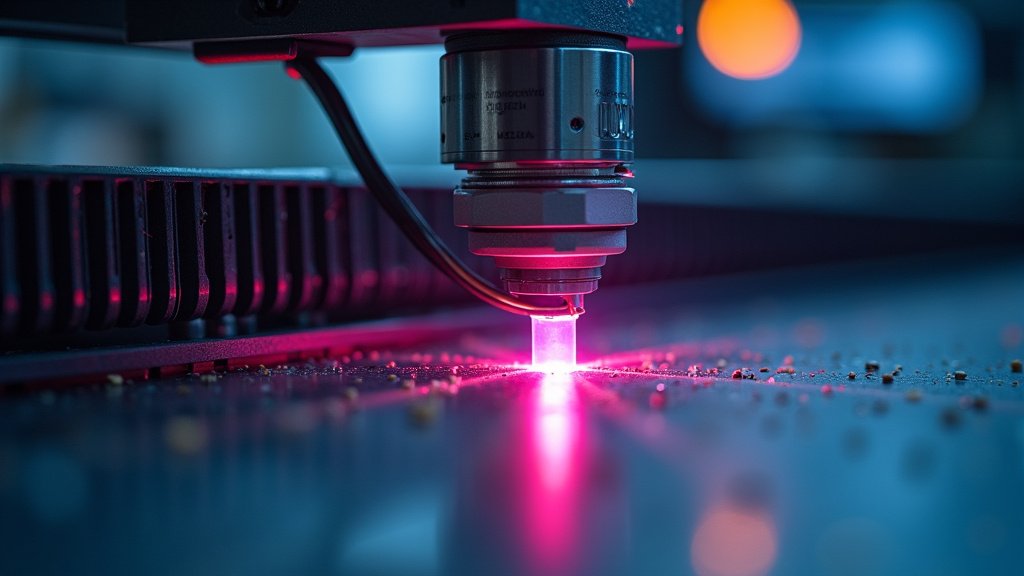
This is where galvo lasers really shine. Traditional laser machines might move the laser head or the entire table holding your material. That can be slower and involve more mechanical parts. With a galvo system, the laser
Conclusion
You’ve learned that a galvo laser is a sophisticated system using mirrors guided by precision motors to direct laser beams with incredible speed and accuracy. This technology allows for rapid marking, engraving, and cutting, making it a staple in modern manufacturing. By moving the beam instead of the workpiece, galvo lasers offer efficiency and precision for detailed jobs. If you’re considering adopting this technology for your production needs, your next step should be to research specific galvo laser systems that match your material and application requirements. Consulting with a laser system provider can help you find the best fit for your goals.
Frequently Asked Questions
What materials can a galvo laser work with?
Galvo lasers can work with a wide range of materials. This includes metals, plastics, wood, leather, and even some fabrics. The specific material you’re working with will determine the laser type and power settings needed for the best results. Our guide to laser engraving leather wallets offers specific settings.
How fast can a galvo laser operate?
Galvo lasers are known for their speed. They can often achieve marking speeds of several thousand millimeters per second. This high velocity allows for rapid production cycles, which is a major advantage in industrial settings.
Are galvo lasers difficult to set up and use?
Setup can involve some technical calibration, but many modern systems come with user-friendly software. Once set up, operating a galvo laser is generally straightforward, especially with training. The precision control through mirrors simplifies the process.
What’s the difference between a galvo laser and a gantry laser?
The main difference is how the laser beam is moved. A galvo laser moves the beam using mirrors, which is very fast. A gantry laser moves the entire laser head or the worktable, which is typically slower but can handle larger work areas.
Can a galvo laser be used for 3D engraving?
Yes, advanced galvo laser systems can perform 3D engraving. By adjusting the focal length of the laser beam dynamically, they can create depth and contour on surfaces. This capability opens up possibilities for more complex and artistic designs.
