
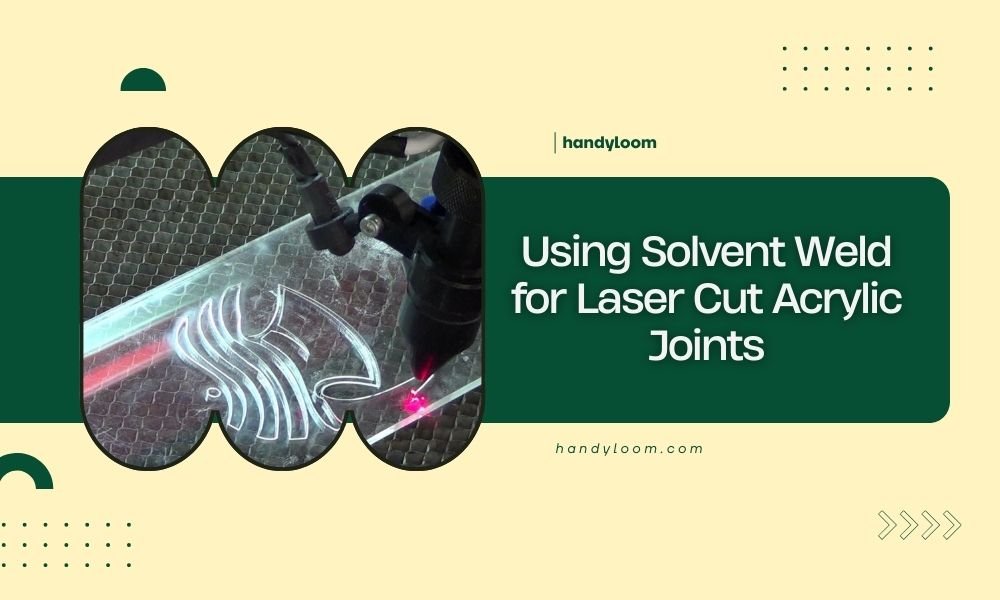
Solvent weld creates permanent, crystal-clear bonds for laser cut acrylic joints by chemically fusing the plastic pieces together at a molecular level.
This welding method works by dissolving a thin layer of acrylic material, allowing the pieces to merge seamlessly once the solvent evaporates.
What Makes Solvent Welding Perfect for Acrylic Projects
You get invisible joints that look like your acrylic was made from one solid piece. That’s the magic of solvent welding for laser cut projects.
Unlike glue that sits between surfaces, solvent weld actually melts the acrylic slightly. The pieces become one continuous material. No ugly glue lines. No cloudy spots. Just clean, professional results.
The Science Behind Chemical Bonding
The solvent temporarily softens both acrylic surfaces. As it evaporates, the softened areas fuse together. Think of it like welding metal, but gentler.
I found that dichloromethane and chloroform are common solvents for this process. They work because they can dissolve acrylic polymers temporarily.
Types of Solvent Weld for Different Acrylic Thicknesses
Thin Cement for Precise Work
Thin cement flows like water. You use it for tight-fitting joints where laser cutting gave you perfect edges.
Apply it with a needle applicator or fine brush. The thin consistency lets you control exactly where it goes.
Medium Body Cement for Standard Projects
Medium body cement has honey-like thickness. It gives you more working time and fills tiny gaps.
This works best for most laser cutting projects. You get strong bonds without the cement running everywhere.
Thick Body Cement for Gap Filling
Thick cement handles larger gaps and uneven surfaces. It contains dissolved acrylic that adds material to the joint.
Use this when your laser cuts aren’t perfectly smooth or when joining different acrylic thicknesses.
Essential Tools and Safety Equipment
Basic Application Tools
- Needle tip applicator bottles
- Fine synthetic brushes
- Precision syringes
- Clean cotton swabs
Safety Gear You Must Have
Solvent welding requires serious ventilation. The fumes can make you dizzy or sick.
- Respirator mask rated for organic vapors
- Nitrile gloves (solvent eats through latex)
- Safety glasses
- Well-ventilated workspace
Step-by-Step Solvent Welding Process
Preparing Your Laser Cut Pieces
Clean surfaces are critical. Any dust, oils, or fingerprints will weaken your joint.
Use isopropyl alcohol on a lint-free cloth. Let pieces dry completely before welding. Even tiny amounts of moisture can cause cloudy joints.
Test Fitting Before Welding
Dry fit everything first. Once you apply solvent, you have maybe 10-15 seconds to position pieces perfectly.
Mark alignment points with a pencil if needed. You won’t get second chances with this process.
Applying the Solvent Weld
Apply solvent to both surfaces you’re joining. Work quickly but don’t rush.
Bring pieces together with steady pressure. Hold firm for 30-60 seconds while the initial bond forms.
Pressure and Timing Tips
Too much pressure squeezes out the softened acrylic. Too little creates weak bonds.
I found that firm hand pressure works for most joints. You want contact but not crushing force.
Common Joint Types for Laser Cut Projects
| Joint Type | Best Cement | Typical Use |
|---|---|---|
| Butt Joint | Thin | Edge-to-edge panels |
| Corner Joint | Medium | Box construction |
| Lap Joint | Thin | Overlapping pieces |
| T-Joint | Medium | Shelving, dividers |
Butt Joints for Clean Edges
Laser cutting gives you perfect edges for butt joints. The pieces fit together like puzzle pieces.
Apply thin cement to both edges. Join quickly and hold steady. The bond forms fast with good edge contact.
Corner Joints for Box Construction
Corner joints need more working time. Use medium cement for better gap filling.
A simple jig helps keep corners square while the bond cures. Even small alignment errors show up in finished projects.
Troubleshooting Common Welding Problems
Cloudy or Hazy Joints
Cloudiness usually means moisture contamination. Make sure pieces are completely dry before welding.
High humidity can also cause problems. Work in air-conditioned spaces when possible.
Weak Bonds That Fail
Insufficient solvent or dirty surfaces cause weak bonds. Don’t skimp on cleaning time.
Old cement loses strength too. Replace bottles after 6-12 months depending on storage conditions.
Stress Cracking Around Joints
Too much solvent can over-soften the acrylic. This creates internal stress that shows up as tiny cracks later.
Use just enough cement to wet both surfaces. More isn’t better with solvent welding.
Professional Tips for Perfect Results
Working Time Management
Plan your assembly sequence before opening the cement bottle. You can’t pause once you start welding.
Do complex assemblies in stages. Let each joint cure before adding more pieces.
Temperature and Humidity Control
Cool, dry conditions give you the best results. Hot weather makes cement evaporate too fast.
I found that 65-75°F with low humidity works perfectly for most projects.
Storage and Shelf Life
Keep cement bottles tightly sealed. Exposure to air makes them thick and less effective.
Store in a cool, dark place. Heat and light break down the solvents over time.
Safety Considerations and Ventilation
Understanding Solvent Hazards
Acrylic cement contains strong solvents that can harm you if used carelessly. The vapors are the biggest concern.
Short-term exposure causes dizziness and headaches. Long-term exposure can damage your nervous system.
Proper Ventilation Setup
Work outdoors when possible. If you must work indoors, use exhaust fans and open windows.
A fume hood or downdraft table gives the best protection. The goal is moving fresh air past your work area constantly.
Personal Protective Equipment
Don’t skip the respirator. Regular dust masks won’t protect you from solvent vapors.
Change gloves between projects. Solvents can penetrate damaged gloves and reach your skin.
Alternative Joining Methods to Consider
When Not to Use Solvent Weld
Solvent welding creates permanent bonds. If you might need to disassemble your project, consider mechanical fasteners instead.
Very thin acrylic can warp from solvent stress. Adhesive tapes or UV-cure glues work better for delicate pieces.
Comparing Bonding Strength
Research shows that properly done solvent welds can be stronger than the original acrylic material. The joint becomes the strongest part of your assembly.
Adhesive bonds depend on surface preparation and cure conditions. They’re easier to apply but generally weaker.
Quality Control and Testing Joints
Visual Inspection Methods
Good solvent welds look like continuous acrylic. You shouldn’t see a joint line in clear material.
Bubbles, cloudiness, or visible seams indicate problems with your technique or materials.
Strength Testing Approaches
Make test joints with scrap pieces before starting your real project. Try to break them by hand.
The acrylic should break away from the joint, not at the joint line. If the weld fails first, you need better technique.
Conclusion
Solvent welding transforms laser cut acrylic pieces into professional-looking assemblies with invisible, permanent joints. The process requires careful preparation, proper ventilation, and precise timing, but the results speak for themselves.
Start with simple test joints to develop your technique before tackling complex projects. The investment in learning this skill will pay off in every acrylic project you build. Clean preparation, appropriate cement selection, and safety-first practices will give you consistently excellent results that look like factory assemblies.
Can you reposition pieces after applying solvent weld?
You have only 10-15 seconds maximum before the joint becomes immovable. Position pieces carefully during your initial dry fit and work quickly once you apply the cement. There’s no way to separate pieces once the weld cures.
How long should you wait before handling welded joints?
Initial bonds form in 30-60 seconds, but wait at least 24 hours for full strength. Handle assemblies gently during the first day as the chemical bond continues developing even after the solvent evaporates.
Does acrylic thickness affect which cement type to choose?
Thicker acrylic pieces work better with medium body cement because they have more material to soften and bond. Thin acrylic under 3mm responds well to thin cement that won’t over-soften the material and cause warping.
What causes white stress marks around welded joints?
Excessive solvent application or too much clamping pressure creates internal stress in the acrylic. This stress shows up as white marks or tiny cracks near the joint. Use just enough cement to wet both surfaces and apply steady hand pressure only.
Can you solvent weld different colors of acrylic together?
Different colored acrylics weld together perfectly since they’re chemically identical. The joint line may be slightly visible where colors meet, but the bond strength remains the same as welding matching colors.
