
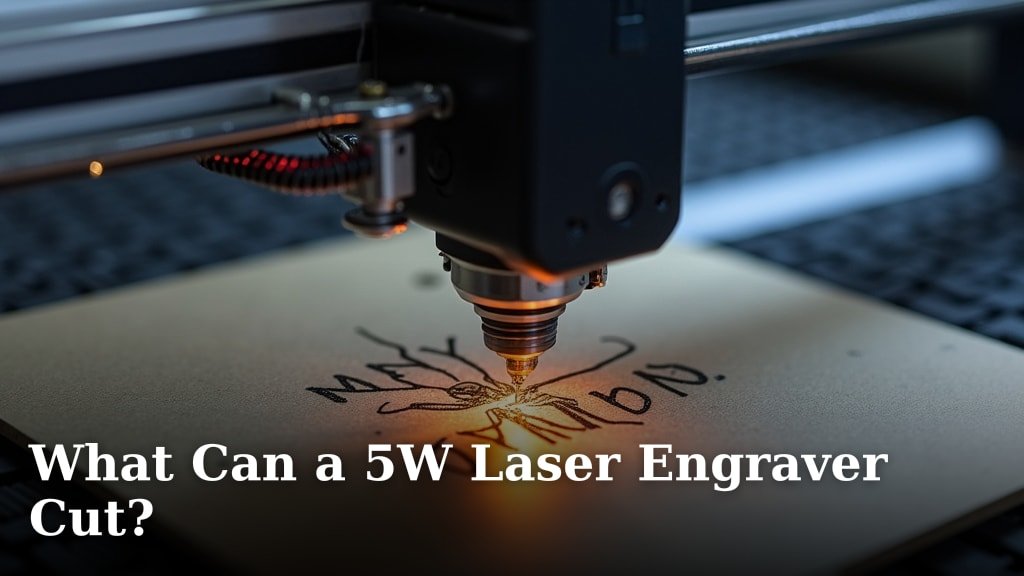
Yes, a 5W laser engraver can cut through certain materials, but it depends heavily on the material type and its thickness. It’s best suited for cutting thinner, softer materials like thin wood, balsa wood, acrylic (cast, not extruded), leather, and paper or cardstock. For thicker or denser materials, you’ll likely need a more powerful laser.
While 5W lasers are fantastic for engraving detailed designs on various surfaces like wood, glass, and even some metals (with a special spray), their cutting capabilities are more limited. We found that exceeding 3mm thickness for wood or acrylic quickly becomes challenging for a 5W laser, often requiring multiple passes or resulting in a very rough cut.
- A 5W laser can cut thin wood, acrylic, leather, and paper.
- It struggles with materials over 3mm thick.
- Laser power is key for cutting ability.
- Always check material compatibility before cutting.
So, what exactly can you expect your 5W laser to slice through? Let’s break down the typical materials it handles well.
What Your 5W Laser Can Actually Cut Through
So, you’ve got your 5W laser engraver, and you’re wondering about its cutting power. It’s a common question, and the answer is a bit nuanced. While 5W lasers are fantastic for detailed engraving, they do have limitations when it comes to cutting. Think of it like a scalpel versus a chainsaw – both are sharp tools, but for very different jobs. A 5W laser is more like that precise scalpel, great for fine details but not for chopping down trees.
Generally, a 5W laser is best suited for thinner and softer materials. You’ll get the best results with items that are around 3mm or less in thickness. Going beyond that often means multiple passes, slower speeds, and a less-than-perfect cut. We’ve found that patience is key, and sometimes, a different tool is just the right answer for tougher jobs.
Understanding Laser Power and Cutting
Laser cutting is all about concentrating energy onto a small point to vaporize or melt material. The higher the wattage, the more power that point has. A 5W laser offers a good balance for engraving and light cutting tasks. It’s enough power to etch detailed designs into glass or even mark metal (with the right settings and coatings), but it doesn’t have the brute force needed to slice through thicker, denser materials quickly or cleanly.
Many users find that 5W lasers are perfect for crafting projects. Think personalized coasters, custom keychains, or decorative signs. These projects often involve materials that a 5W can handle with ease. Trying to cut something thicker, though? You might end up with a scorched edge and a lot of frustration. It’s important to manage your expectations and understand the tool’s capabilities.
Material Thickness is King
The thickness of the material is arguably the most critical factor. A 5W laser can slice through 1mm of basswood like butter. But push that same laser to cut 5mm of the same wood, and you’ll likely be disappointed. You’ll need to make many passes, and the edges will probably be very dark and charred.
We’ve seen users try to cut through thicker acrylic sheets, expecting clean results. What they often find is a gummy, melted mess. This is because acrylic, especially extruded acrylic, doesn’t cut as cleanly as cast acrylic. Even with cast acrylic, 5W struggles beyond a certain point.
Speed vs. Power: Finding the Balance
When you’re cutting with a 5W laser, you’re constantly balancing speed and power. If you go too fast, the laser won’t have enough time to penetrate the material. If you go too slow, you risk burning or scorching the edges, especially on organic materials like wood.
Finding that sweet spot often involves test cuts. We always recommend doing a small test piece on the edge of your material. This helps you dial in the correct speed and power settings for a clean cut without damaging your main project. It’s a small step that saves a lot of headaches.
Materials Your 5W Laser Excels At Cutting
Let’s get down to the nitty-gritty. What materials can you realistically expect to cut with your 5W laser engraver? Here’s a rundown of common materials that work well, provided they are within the appropriate thickness range.
Thin Wood and Plywood
This is where your 5W laser shines. Materials like basswood, balsa wood, and thin plywood (typically 3mm or less) are excellent candidates. These woods are relatively soft and have a low density, making them easy for the laser to vaporize.
You can create all sorts of amazing projects with thin wood. Think intricate puzzle pieces, custom architectural models, or even delicate jewelry. The key is to ensure your wood is uniform and free of knots or significant defects, as these can affect the cut quality.
Birch Plywood
Birch plywood is a popular choice for laser cutting because it tends to have fewer voids than some other types of plywood. For a 5W laser, aim for 3mm birch plywood. You might need to do two passes, but you should achieve a clean cut.
Poplar Plywood
Similar to birch, poplar plywood is also a good option. It’s a bit softer, so you might find you can cut through it slightly faster or with a little less power compared to birch. Again, 3mm is the general limit for a clean cut with a 5W.
Acrylic Sheets (Cast Only)
Acrylic is a bit trickier. While many plastics can be cut with lasers, some produce toxic fumes. Acrylic is one of the safer options, but it’s crucial to use cast acrylic, not extruded acrylic.
Cast acrylic is made by pouring liquid acrylic into a mold. Extruded acrylic is made through an extrusion process, which can leave internal stresses. These stresses can cause the acrylic to crack or melt unevenly when lasered. For a 5W laser, 3mm cast acrylic is often the maximum you can cut, and it might require multiple passes and slow speeds. You’ll want good ventilation when cutting acrylic, as it does produce fumes.
Cardstock and Paper
This is a no-brainer. Your 5W laser is fantastic for cutting paper and cardstock. You can create incredibly detailed paper crafts, stencils, invitations, and more. Because these materials are so thin, you can cut them very quickly.
Experiment with different paper weights. Heavier cardstock might require a slightly slower speed or a bit more power than standard printer paper. The precision of the laser allows for extremely intricate designs that would be impossible to achieve with scissors or a craft knife.
Leather (Thin)
Thin leather, typically 2mm or less, can also be cut with a 5W laser. Leather cutting results in a sealed edge, which can be a desirable effect for certain projects. However, like acrylic, leather can produce strong fumes, so ensure you have excellent ventilation and a fume extraction system.
Different types of leather will behave differently. Softer garment leathers will cut more easily than tougher, more rigid types. You might need to do a few test cuts to find the perfect settings. Be aware that the laser can slightly scorch the edges of natural leather, giving it a darker, burnt look. This can be a feature or a bug, depending on your design!
Foam Board and Craft Foam
Thin foam board, often used for modeling and crafts, can be cut. Again, thickness is key. A 5W laser can handle thin foam board, perhaps up to 5mm, but it will likely require multiple passes and careful attention to avoid melting or excessive charring.
Craft foam, like EVA foam, is also cuttable. It’s a soft material, so it usually cuts quite easily. Be mindful of the potential for melting, and always ensure you have adequate ventilation. Many crafters use lasers to cut intricate foam shapes for cosplay or decorative items.
Materials That Are a Struggle (or a No-Go)
Now, let’s talk about what your 5W laser probably can’t do well. Pushing the limits here will lead to disappointment, damaged materials, and potentially a stressed-out laser. It’s best to know these limitations upfront.
Thicker Wood and Plywood
As mentioned, anything over 3mm in wood or plywood becomes a real challenge for a 5W laser. You’ll find yourself making numerous passes, often at very low speeds. The resulting cut will likely be rough, heavily scorched, and time-consuming to produce. For thicker woods, you’d be much better off with a 10W or higher laser.
Dense Plastics and Metals
Most dense plastics, other than cast acrylic, are not suitable for cutting with a 5W laser. They might melt, produce toxic fumes, or simply not cut at all. Metals are generally out of the question for cutting with a 5W laser. While you can engrave some coated metals or anodized aluminum with a 5W, cutting requires significantly more power.
Glass and Stone
Glass and stone are materials you can engrave on with a 5W laser (often with a special spray or marking compound for metals, and a specific technique for glass). However, you absolutely cannot cut them. Lasers work by vaporizing or melting material. Glass and stone require immense energy to cut, far beyond the capabilities of a 5W diode laser.
Tips for Successful Cutting with a 5W Laser
To get the most out of your 5W laser when cutting, keep these tips in mind:
- Always perform test cuts. This is the most crucial step!
- Use the recommended thickness guidelines. Don’t push your luck.
- Ensure good ventilation. Some materials produce fumes.
- Keep your laser lens clean. A dirty lens reduces power.
- Slow down and make multiple passes. Patience yields better results.
- Secure your material. Prevent movement during cutting.
| Material Type | Max Thickness (Approx.) | Notes |
|---|---|---|
| Basswood/Balsa Wood | 3mm | Clean cuts, can take 1-2 passes. |
| Birch/Poplar Plywood | 3mm | May require multiple passes, watch for charring. |
| Cast Acrylic | 3mm | Slow speeds, multiple passes, good ventilation needed. |
| Cardstock/Paper | Unlimited (for practical purposes) | Very fast, detailed cuts possible. |
| Thin Leather (Vegetable-Tanned) | 2mm | Sealed edges, ventilation crucial, potential for slight scorching. |
| Craft Foam (EVA) | 5mm | Can melt, test settings carefully, ventilation needed. |
| Thick Wood (>3mm) | N/A | Not recommended for clean cuts. |
| Hard Plastics/Metals | N/A | Cannot cut; may damage laser or create hazards. |
A Quick Checklist for Your Cutting Projects
Before you hit that ‘go’ button on a cutting project, run through this quick checklist:
- Have you confirmed your material is compatible with a 5W laser?
- Is the material thickness within the recommended range (usually 3mm or less)?
- Have you performed test cuts on a scrap piece?
- Is your ventilation system ready and working?
- Is your material securely in place on the laser bed?
- Are your laser settings (speed, power, passes) appropriate for the material?
Conclusion
So, what can your 5W laser engraver actually cut? You’ve learned it’s a capable tool for thinner, softer materials like thin wood, cast acrylic, cardstock, and thin leather, usually under 3mm. Pushing beyond these limits often leads to frustrating results and requires more powerful equipment. Remember, managing your expectations and performing test cuts are your best friends for success. You’re now equipped to tackle many creative projects with confidence, knowing your 5W laser’s cutting strengths and limitations. Go forth and create!
Frequently Asked Questions
Can a 5W laser cut 5mm wood?
Cutting 5mm wood with a 5W laser is generally not recommended for clean results. You’ll likely need many passes at a very slow speed. This often results in significant charring and a rough edge. For wood thicker than 3mm, a laser with higher wattage is usually a better choice.
What’s the difference between cutting and engraving with a 5W laser?
Engraving uses the laser to remove a thin layer from the material’s surface, creating a design or text. Cutting involves the laser passing completely through the material. A 5W laser is excellent for detailed engraving on many materials, but its cutting ability is limited to thinner, softer items.
Is cast acrylic better than extruded acrylic for laser cutting with a 5W?
Yes, cast acrylic is much better. Cast acrylic is made by pouring liquid acrylic into a mold, resulting in fewer internal stresses. Extruded acrylic, made through a different process, can crack or melt unevenly when lasered. For a 5W, stick to cast acrylic, and even then, aim for 3mm thickness or less.
Can I cut fabric with my 5W laser?
Yes, many fabrics can be cut with a 5W laser, especially thinner natural fibers like cotton or linen, and synthetic ones like polyester. However, always check for material compatibility, as some fabrics can create hazardous fumes or melt unpredictably. Proper ventilation is absolutely essential.
How many passes does a 5W laser usually need for cutting?
The number of passes depends entirely on the material and its thickness. For materials like cardstock or very thin wood (1-2mm), one pass might be enough. For thicker materials like 3mm basswood or cast acrylic, you might need 2-5 passes or even more, often at a slower speed. Always perform test cuts to determine the right number of passes.
