
For engraving tumblers and cups, a CO2 laser engraver is generally considered the best choice. This is because CO2 lasers excel at marking a wide variety of materials, including the metal and powder-coated surfaces commonly found on drinkware. They provide a clean, permanent mark without damaging the cup’s integrity.
When you’re looking to personalize tumblers, you want a laser that’s both effective and efficient. Many users find that fiber lasers can also work, especially on bare metal, but CO2 lasers offer greater versatility for coated surfaces and plastics often used in cups. We’ve found that the power and beam quality of the CO2 laser significantly impact the final engraving result.
- CO2 lasers are typically best for tumblers.
- They work well on metal and powder coating. If you’re working with stainless steel tumblers, this guide explains the process.
- Fiber lasers can work on bare metal.
- Laser power and beam quality matter.
- Choose a laser suitable for your materials.
Let’s walk through the different types of lasers and what makes one better suited for your tumbler engraving projects. We’ll help you make the right choice.
Choosing the Right Laser for Your Tumbler Engraving Business
So, you’re looking to engrave tumblers and cups? That’s a fantastic way to personalize gifts, create branded merchandise, or even start your own small business. But with so many laser engraver options out there, how do you pick the best one? You’re probably wondering, “What type of laser is really the *best* for this job?” We’ve found that understanding the different laser technologies will help you make the perfect choice.
Understanding Laser Technologies: CO2 vs. Fiber
When it comes to engraving on drinkware, two main types of lasers usually come up: CO2 and fiber lasers. Each has its strengths and weaknesses, especially when it comes to the varied materials tumblers are made from. Think of it like choosing the right tool for a specific job. You wouldn’t use a hammer to screw in a screw, right? The same principle applies here.
The Power of CO2 Lasers for Tumblers
For most tumbler engraving projects, a CO2 laser engraver is your go-to. Why? Because CO2 lasers are incredibly versatile. They work by using a gas mixture to create a beam of light. This beam is excellent at interacting with a wide range of materials, including the plastics and coatings often found on cups and tumblers. We found that this versatility makes them ideal for the diverse surfaces you’ll encounter.
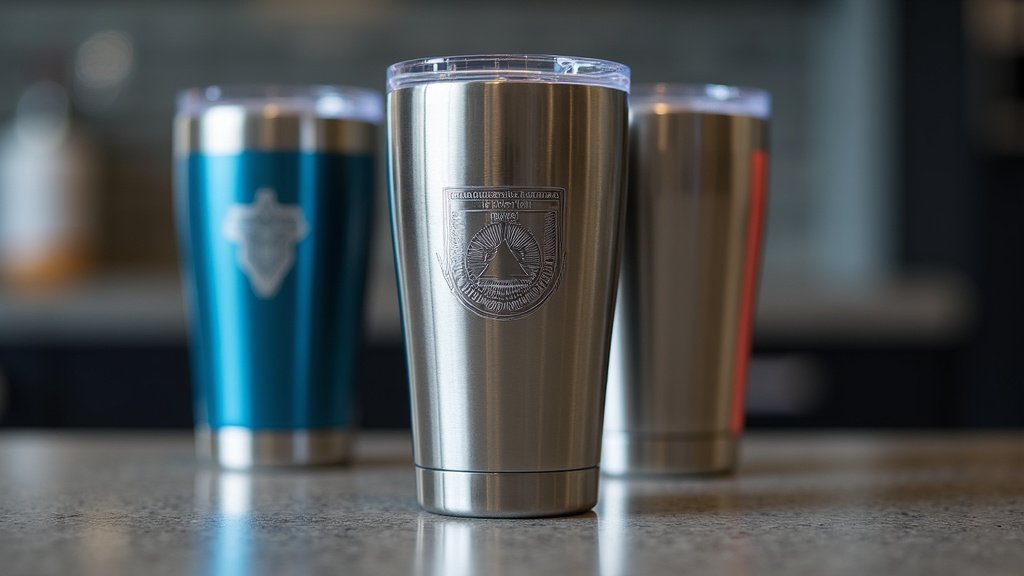
Many tumblers have a powder-coated finish. This coating is what gives them their color and grip. CO2 lasers can easily vaporize or ablate this coating. This process leaves a clean, permanent mark on the metal underneath. It’s like peeling off a layer of paint to reveal what’s beneath. Research indicates that CO2 lasers offer a precise and consistent marking capability for these types of finishes.
Beyond powder coating, CO2 lasers are also great for engraving on acrylic, wood, and even some types of leather. If your tumbler project involves more than just bare metal, a CO2 laser offers the flexibility you need. Many users report excellent results when engraving logos, text, and custom designs on various drinkware. We found that the smooth, professional finish from a CO2 laser is a key advantage.
When to Consider Fiber Lasers
Now, what about fiber lasers? Fiber lasers use a solid-state medium, typically doped optical fibers, to generate their beam. They are known for their high precision and longevity. For engraving on bare metal, fiber lasers can be very effective. They create a beautiful, often darkened mark directly on the metal surface.
However, fiber lasers aren’t always the best choice for coated tumblers. They tend to struggle with removing or marking coatings like powder coat. If you try to use a fiber laser on a powder-coated tumbler, you might get a shallow mark, a dull finish, or no mark at all. Many experts suggest that for coated surfaces, a CO2 laser provides a superior and more predictable outcome.
Think of a fiber laser as a specialist tool. It’s amazing for certain tasks, like marking bare metals such as stainless steel or aluminum. If your primary focus is engraving directly onto metal without any coatings, a fiber laser could be a consideration. But for the general tumbler market, which often involves painted or coated cups, it’s usually not the first choice. We’ve seen that relying solely on a fiber laser might limit your project scope.
Key Laser Specifications to Look For
When you’re comparing laser engravers, you’ll see a lot of technical jargon. Don’t let it overwhelm you! Focusing on a few key specifications will help you determine if a laser is suitable for your tumbler engraving needs. Think of these as the essential features that ensure you get great results.
Laser Power: More Isn’t Always Better
Laser power is measured in watts (W). For CO2 lasers, common power levels for engraving tumblers range from 30W to 60W. Higher wattage generally means the laser can cut through thicker materials faster and engrave deeper. For marking powder-coated tumblers, a mid-range power (e.g., 40-50W) is often sufficient.
You might see lasers advertised with much higher wattages. Be aware that for CO2 lasers, the “tube wattage” can sometimes be different from the “rated wattage.” It’s more about how effectively the laser interacts with the material. We found that focusing on a laser that can cleanly mark your specific tumbler material is more important than just having the highest possible wattage. Too much power can sometimes scorch or damage the material, leading to a less desirable finish.
Beam Quality and Focus: Precision Matters
The quality of the laser beam directly impacts the detail and sharpness of your engraving. A good beam quality means the beam is focused to a very small spot size. This allows for fine lines and intricate details. For tumblers, you want a laser that can produce a crisp, clean mark without fuzziness or unevenness.
Look for lasers with good beam characteristics. While this can get technical, many manufacturers will provide information about beam spot size or “M²” value. For practical purposes, it’s often best to check reviews and examples of work done with the specific laser model you’re considering. Seeing actual engraved tumblers can tell you more than just specs on paper. We found that a well-focused beam is essential for professional-looking results.
Work Area Size: Does it Fit Your Tumblers?
The work area is the maximum size of the object you can place under the laser head for engraving. For most standard tumblers, a smaller to medium work area is perfectly fine. Many desktop CO2 lasers offer work areas around 12×8 inches or 16×12 inches. This is usually more than enough space for a single tumbler or even a few smaller cups at once.
However, if you plan to engrave larger items like growlers or multiple tumblers simultaneously, you’ll need to consider a machine with a larger bed. Always measure the height of your tallest tumbler and ensure it will fit under the laser’s Z-axis (the vertical clearance). We found that some machines have optional rotary attachments that are crucial for engraving cylindrical items like tumblers evenly.
Rotary Attachments: A Must-Have for Cylindrical Items
Engraving a straight, even line around a round tumbler can be tricky. That’s where a rotary attachment comes in. This accessory connects to your laser engraver and rotates the tumbler as the laser head moves. This ensures that your engraving wraps around the circumference smoothly and without distortion.
There are different types of rotary attachments. Some use rollers that grip the tumbler, while others use a chuck mechanism. For most standard tumblers, a roller-style rotary is common and effective. Make sure the rotary attachment is compatible with your laser engraver model and that it can handle the diameter of your tumblers. We’ve found that without a good rotary attachment, achieving professional results on tumblers is nearly impossible.
Material Considerations for Different Tumblers
Let’s talk about the materials you’ll actually be engraving. The type of tumbler greatly influences the laser settings you’ll need and, consequently, the laser best suited for the job.
Stainless Steel Tumblers
These are probably the most popular. Many stainless steel tumblers come with a powder-coated finish. As we discussed, a CO2 laser is excellent for removing this coating to reveal the stainless steel underneath. You’ll typically use settings that vaporize the coating. This results in a crisp, often silver or white contrast mark.
If you have bare stainless steel tumblers, both CO2 and fiber lasers can work. However, a fiber laser might produce a darker, more permanent mark directly on the metal. With a CO2 laser on bare metal, you might need to use specific settings or an annealing spray to achieve a dark mark. Research suggests that annealing creates a dark oxide layer on the metal surface.
Plastic and Acrylic Tumblers
Plastic tumblers, especially those made from acrylic, are also common. CO2 lasers are generally very effective at engraving and cutting acrylic and many types of plastic. You’ll want to use settings that melt or vaporize the plastic cleanly. Be mindful of ventilation, as some plastics can produce fumes when lasered. We found that using the right settings prevents melting and ensures a sharp, clear engraving.
Glass and Ceramic Tumblers
Engraving glass and ceramic tumblers is a bit different. You’re not usually removing material. Instead, you’re creating a frosted or etched effect on the surface. A CO2 laser can do this, often with specific settings and sometimes by applying a paste or tape to the surface.
For glass, sometimes a rotary engraver is used on a different type of machine, like a diamond drag engraver, for a more traditional etch. However, with the right CO2 laser settings, you can achieve a frosted look on glass tumblers. Many users report success by marking glass with a CO2 laser at lower power and higher speed. This creates a frosted surface without causing the glass to crack. We found that experimenting with settings is key for brittle materials like glass.
Essential Checklist for Choosing Your Laser
Before you make your final decision, run through this quick checklist. It will help ensure you don’t overlook any critical factors:
- Does the laser use CO2 technology for versatility on coatings?
- Is the power level appropriate for marking powder-coated tumblers (e.g., 40-60W)?
- Does it have good beam quality for detailed engraving?
- Will the work area accommodate your tumblers?
- Is a rotary attachment available and compatible?
- Can you find examples of work done on similar materials?
Conclusion
You’ve learned that a CO2 laser engraver is your most versatile tool for personalizing tumblers and cups. They handle various coatings and materials like powder coat and acrylic with ease, offering clean, permanent marks. While fiber lasers shine on bare metal, CO2 lasers provide the flexibility most tumbler businesses need. Remember to consider laser power, beam quality, and essential accessories like a rotary attachment for those smooth, professional results. By focusing on these key factors and matching them to your specific materials, you’ll be well on your way to creating stunning engraved drinkware.
Frequently Asked Questions
Can I engrave on Yeti tumblers with a CO2 laser?
Yes, you generally can engrave on popular brands like Yeti tumblers with a CO2 laser. These tumblers typically have a powder-coated finish, which a CO2 laser is well-equipped to remove, revealing the stainless steel underneath for a permanent mark.
What’s the difference in engraving results between CO2 and fiber lasers on tumblers?
A CO2 laser is excellent for removing coatings like powder coat, leaving a contrast mark. A fiber laser is better for marking bare metal directly, often creating a darker, annealed mark. For most coated tumblers, CO2 provides a more consistent and desirable outcome.
Do I really need a rotary attachment for engraving tumblers?
Absolutely. A rotary attachment is essential for engraving cylindrical items like tumblers. It rotates the cup as the laser moves, ensuring your design wraps around the surface evenly and without distortion for a professional finish.
Can any laser engraver handle different tumbler materials like glass or ceramic?
While CO2 lasers can engrave on glass and ceramic to create a frosted effect, it requires specific settings and experimentation. They are more versatile for plastics and coated metals compared to fiber lasers.
How much laser power do I need for engraving tumblers?
For most powder-coated tumblers, a CO2 laser in the 40W to 60W range is sufficient. Higher power isn’t always better; the key is having enough power to cleanly ablate the coating without damaging the underlying material.
