
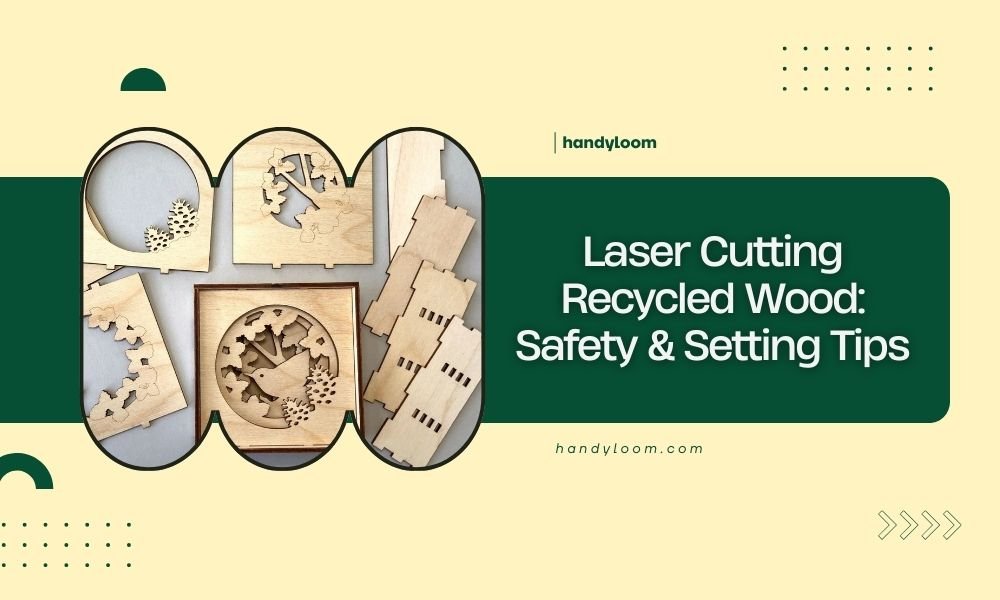
Laser cutting recycled wood requires proper ventilation, protective equipment, and careful material inspection to ensure safe operation and quality results.
Your laser settings should start at lower power levels for recycled wood since adhesives, paint, and treatments can affect cutting behavior and produce harmful fumes.
Essential Safety Gear for Recycled Wood Projects
You need the right protective equipment before cutting any recycled wood. I found that many crafters skip basic safety steps and end up with health issues later.
Start with a proper respirator mask. Not just any dust mask – get one rated for fine particles and chemical vapors. Recycled wood often contains old finishes that release toxic fumes when heated.
Ventilation Systems That Actually Work
Your workspace ventilation makes or breaks your safety. I researched commercial laser shops and found they all use exhaust fans that move at least 200 cubic feet per minute.
Place your exhaust fan as close to the laser as possible. The fumes need to leave immediately, not circulate around your workspace first.
Eye Protection Beyond Basic Safety Glasses
Laser safety glasses must match your laser’s wavelength. CO2 lasers need different protection than fiber lasers. Check your laser’s specifications and buy glasses rated for that exact range.
Many people think regular safety glasses work. They don’t. Laser light can permanently damage your vision in milliseconds.
Identifying Safe vs Risky Recycled Wood Types
Not all recycled wood works well for laser cutting. Some materials create dangerous fumes or damage your machine.
Woods You Should Avoid Completely
Pressure-treated lumber contains chemicals that turn toxic when heated. I found research showing these treatments can release chromium and arsenic compounds (EPA guidelines).
Painted wood from before 1978 likely contains lead paint. Heating lead paint creates extremely dangerous fumes that can cause serious health problems.
Best Recycled Wood Options
Untreated hardwoods work beautifully. Oak, maple, and cherry from old furniture cut cleanly and smell pleasant.
- Barn wood (if untreated)
- Reclaimed flooring
- Old furniture without paint
- Shipping pallets marked “HT” (heat treated only)
How to Test Unknown Wood Samples
Cut a tiny test piece first. Watch for unusual smoke colors, bad smells, or excessive sparking. Normal wood smoke is light gray or white.
Black smoke or chemical odors mean stop immediately. That wood contains something you don’t want to breathe.
Pre-Cutting Preparation Steps
Preparing recycled wood takes more work than cutting fresh lumber. You’ll save time and avoid problems by doing this prep work first.
Cleaning and Surface Preparation
Remove all dirt, grease, and loose finish materials. Use a wire brush for stubborn spots, but avoid chemicals that might soak into the wood.
Sand lightly if the surface is very rough. You don’t need mirror-smooth wood, but big splinters can catch fire during cutting.
Removing Nails and Metal Hardware
Metal reflects laser light back into your machine. This can damage expensive components or start fires.
Use a metal detector if you’re not sure about hidden nails. I heard from repair technicians that metal damage is one of the most expensive laser repairs.
Dealing with Embedded Hardware
Sometimes you can’t remove every piece of metal. Mark these spots clearly and plan your cuts around them. It’s better to waste some wood than damage your laser.
Laser Settings for Different Recycled Materials
Recycled wood behaves differently than fresh lumber. Old wood is often drier and cuts faster. Wood with finish takes more power to cut through completely.
| Material Type | Power Setting | Speed Setting | Passes Needed |
|---|---|---|---|
| Bare hardwood | 60-70% | Medium | 1-2 |
| Painted wood | 70-80% | Slow | 2-3 |
| Varnished wood | 65-75% | Medium-slow | 2 |
Starting Power Settings
Always start with lower power than you think you need. You can increase power if the first pass doesn’t cut through completely.
High power on the first try often burns the edges or creates too much smoke. Multiple lighter passes give cleaner results.
Speed Adjustments for Old Wood
Aged wood often cuts faster because it’s drier. Start with your normal speed, then increase if the cut looks too burned.
Wood with thick finishes needs slower speeds. The laser has to burn through the coating before it reaches the wood underneath.
Managing Smoke and Fume Extraction
Recycled wood produces more smoke than fresh lumber. Old finishes create chemical fumes that you definitely don’t want to breathe.
Proper Exhaust Fan Positioning
Position your exhaust intake right at the cutting area. Smoke rises, so put the intake slightly above your workpiece.
Many DIY setups fail because the exhaust is too far away. Fumes spread throughout the room before getting captured.
Air Assist Settings
Use higher air assist pressure with recycled wood. This blows smoke away from the cut and prevents buildup that can catch fire.
Clean your air assist nozzle more often when cutting recycled materials. Debris clogs the opening and reduces effectiveness.
When to Stop and Clean
Stop cutting if smoke production suddenly increases. This usually means something is starting to catch fire or you’ve hit contaminated wood.
Common Problems and Solutions
Recycled wood creates unique challenges. Here are the most common issues and how to fix them.
Uneven Cutting Depths
Old wood has varying density from weathering and age. Some areas cut deeper than others with the same laser settings.
Use multiple passes instead of trying to cut through in one pass. This gives more consistent results across the entire piece.
Excessive Charring
Wood with old finishes tends to char more than bare wood. The finish material burns differently than the wood itself.
Lower your power and increase cutting speed. This reduces heat buildup that causes excessive burning.
Cleaning Charred Edges
Light sanding removes most char marks. Use fine sandpaper and work gently to avoid changing your cut dimensions.
Fire Prevention Strategies
Recycled wood catches fire more easily than fresh lumber. Old, dry wood ignites quickly, and finish materials can flare up suddenly.
Never Leave Your Laser Unattended
This rule becomes even more important with recycled materials. Fires can start without warning when you hit unexpected contamination.
Keep a fire extinguisher within arm’s reach. Water works for wood fires, but a proper fire extinguisher is safer around electrical equipment.
Monitoring Cut Progress
Watch for flame-ups during cutting. Small flames are normal, but larger fires mean you need to stop immediately.
Pause your cut if flames persist after the laser moves to a new area. Something in that spot is continuing to burn.
Quality Control for Recycled Wood Projects
Recycled wood projects need extra quality checks because the material varies so much.
Checking Cut Completeness
Test every cut before removing your workpiece. Recycled wood can have hard spots that don’t cut through completely.
Gently lift corners to make sure cuts go all the way through. Incomplete cuts are easier to fix while the wood is still positioned correctly.
Edge Quality Assessment
Inspect cut edges for consistent quality. Recycled wood often produces rougher edges than fresh lumber.
Plan for light sanding in your project timeline. Most recycled wood projects benefit from edge cleanup.
Conclusion
Laser cutting recycled wood opens up amazing creative possibilities while helping the environment. Your success depends on proper safety preparation, careful material selection, and adjusted cutting settings. Remember that recycled materials need more attention than fresh lumber, but the unique character they bring to your projects makes the extra effort worthwhile. Start with simple test cuts, prioritize ventilation and safety gear, and gradually build your skills with different types of reclaimed materials.
Can I laser cut wood pallets safely?
Only pallets marked “HT” for heat treatment are safe. Avoid pallets marked “MB” (methyl bromide) or with no markings at all. These contain chemicals that create toxic fumes when heated by laser cutting.
What’s the biggest difference in laser settings between new and recycled wood?
Recycled wood typically needs 10-20% less power because it’s drier and cuts faster. Start with lower settings and work up gradually to avoid excessive charring and smoke production.
How can I tell if recycled wood contains lead paint?
Any painted wood from before 1978 likely contains lead. Use a lead test kit from the hardware store, or assume it’s present and avoid cutting painted vintage wood altogether for safety.
Why does my recycled wood catch fire more than fresh lumber?
Age makes wood drier and more combustible. Old finishes can also flare up unexpectedly. Use higher air assist pressure and lower power settings to reduce fire risk when cutting reclaimed materials.
Should I remove all finish before laser cutting recycled wood?
Not always necessary, but safer for unknown finishes. Light sanding removes loose material and reduces smoke production. For thick paint or varnish layers, removal definitely improves cut quality and safety.
