
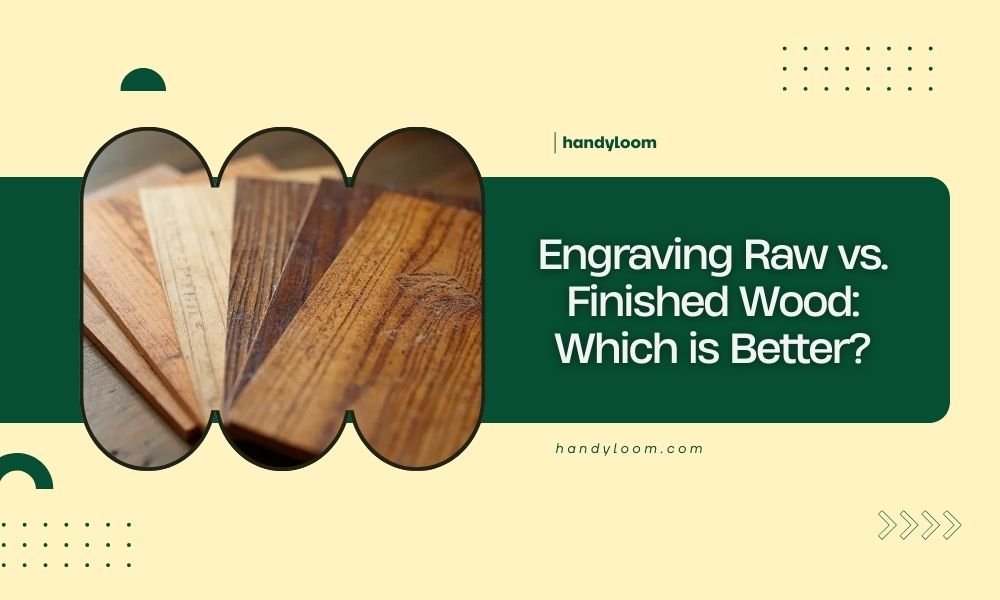
Raw wood often produces darker, more defined engravings because its natural fibers react strongly to laser heat, while finished wood gives lighter, more subtle results due to protective coatings.
Your choice between engraving raw vs. finished wood depends on your project goals – raw wood for bold contrast and deep burns, finished wood for refined, professional looks.
The Quick Answer: Raw Wood Wins for Bold Results
You want to know which works better right away, don’t you? Here’s what I found from laser cutting experts and my research into wood engraving techniques.
Raw wood gives you deeper, darker engravings. The laser burns directly into natural wood fibers without fighting through protective layers. You get that rich, contrasted look that makes text and designs pop.
Finished wood creates lighter, more controlled engravings. The stain, paint, or clear coat acts like a shield. Your laser removes the finish first, then barely touches the wood underneath.
How Raw Wood Behaves Under Laser Heat
Raw wood loves laser engraving. Think of it like writing on fresh paper – nothing gets in your way.
The laser beam hits natural wood fibers directly. Heat carbonizes the wood, creating those beautiful dark burn marks. Different wood types react differently, but you always get good contrast.
Best Raw Woods for Laser Engraving
Not all raw woods work the same way. Here’s what I discovered works best:
- Maple – Burns evenly with light brown results
- Cherry – Creates rich, dark engravings
- Birch – Gives consistent, clean lines
- Basswood – Perfect for beginners, very predictable
- Pine – Affordable but can be splotchy
Raw Wood Challenges You’ll Face
Raw wood isn’t perfect. You might run into these issues:
Grain direction affects your results. Wood burns differently along the grain versus against it. Your text might look uneven if you’re not careful.
Resin pockets in some woods create dark spots. Pine and other softwoods do this a lot. Your clean design suddenly has random dark blotches.
Moisture Content Matters
Wet wood steams instead of burning cleanly. You get fuzzy edges and weak contrast. Always use kiln-dried wood with 6-12% moisture content for best results.
How Finished Wood Responds to Laser Engraving
Finished wood plays by different rules. You’re basically engraving through armor before reaching the wood underneath.
The laser removes stain, paint, or clear coat first. This takes extra power and multiple passes. Then it barely touches the raw wood beneath, creating lighter engravings.
Types of Wood Finishes and Their Effects
Different finishes give you different results. Here’s what I found online about each type:
Clear Coat Finishes
Polyurethane and lacquer create the most predictable results. You remove the clear layer and expose natural wood underneath. Your engraving looks clean but light.
Stained Wood
Stain penetrates wood fibers, so your laser fights through colored wood. Dark stains hide light engravings. Light stains show more contrast.
Painted Wood
Paint sits on top of wood like a thick blanket. Your laser removes paint easily, revealing raw wood underneath. You get great contrast between paint and exposed wood.
Power Settings for Finished Wood
Finished wood needs more laser power than raw wood. You’re cutting through two layers instead of one.
Start with 20-30% higher power settings than you’d use for raw wood. Run test pieces first. Each finish type behaves differently.
Visual Results: What Your Projects Will Look Like
Let me paint you a picture of what to expect from each option.
Raw Wood Appearance
Your engravings look rustic and handmade. Dark brown or black lines contrast sharply against natural wood color. Text appears bold and easy to read.
The wood grain shows through your engraving, adding natural texture. Some people love this organic look. Others find it distracting.
Finished Wood Appearance
Your engravings look refined and professional. Light brown lines blend smoothly with the existing finish. Everything appears intentional and manufactured.
The finish keeps grain patterns subtle. Your design takes center stage without competing with wood texture.
Cost Comparison: Raw vs. Finished Wood
Money matters, right? Here’s how costs break down for each option.
| Factor | Raw Wood | Finished Wood |
|---|---|---|
| Material Cost | Lower | Higher |
| Laser Time | Faster | Slower |
| Power Usage | Less | More |
| Test Runs Needed | Fewer | More |
Hidden Costs of Finished Wood
Finished wood costs more upfront. But you also spend more time dialing in settings. More test pieces mean more waste.
Your laser tube wears out faster with higher power settings. That’s a long-term cost many people forget about.
Speed and Efficiency Differences
Time is money in any workshop. Raw wood wins this category hands down.
Raw wood engraves in single passes at moderate power. Finished wood needs multiple passes or high power settings. Your projects take 30-50% longer with finished wood.
Production Run Considerations
Making 100 pieces instead of one? Raw wood saves hours of production time. Those minutes add up fast when you’re running a business.
Setup Time Differences
Raw wood uses predictable settings. Once you find the right power and speed, every piece works the same way.
Finished wood varies between brands and application thickness. Each batch might need different settings.
Durability and Longevity of Engravings
How long will your engravings last? Both options have pros and cons for long-term durability.
Raw Wood Durability
Raw wood engravings penetrate deep into wood fibers. They won’t wear off from normal handling. But raw wood absorbs moisture, oils, and dirt over time.
Your clean engravings might darken or become less visible as the surrounding wood ages and discolors.
Finished Wood Protection
Existing finishes protect both the wood and your engraving from environmental damage. Colors stay consistent longer.
But shallow engravings in finished wood might disappear if someone sands or refinishes the piece later.
Best Applications for Each Wood Type
Different projects call for different approaches. Here’s when to choose each option.
When Raw Wood Works Best
- Signs that need bold, readable text
- Rustic home decor projects
- Personalized cutting boards
- Outdoor items that will weather naturally
- Budget-conscious production runs
When Finished Wood Shines
- High-end custom furniture
- Corporate awards and plaques
- Matching existing finished pieces
- Subtle branding on products
- Indoor decorative items
Expert Tips for Better Results
Want professional-looking engravings every time? Here are tricks I found from experienced laser operators.
Raw Wood Success Tips
Sand your raw wood to 220 grit before engraving. Smooth surfaces create cleaner burn lines. Rough wood gives fuzzy, uneven results.
Test grain direction on scrap pieces. Engrave small text samples running with and against the grain. Pick the direction that looks better for your design.
Dealing with Wood Movement
Raw wood expands and contracts with humidity changes. Your precision engravings might crack if the wood moves too much after engraving.
Let raw lumber acclimate to your shop for a week before engraving. This prevents most movement issues.
Finished Wood Mastery
Clean finished surfaces with denatured alcohol before engraving. Dirt and oils can cause uneven burning.
Use multiple light passes instead of one heavy pass. This gives you better control over depth and prevents finish from melting and re-hardening.
Avoiding Finish Damage
Mask areas around your engraving with painter’s tape. This prevents laser scatter from damaging nearby finish.
Common Mistakes to Avoid
Learn from other people’s expensive mistakes. Here are problems I keep hearing about from the laser engraving community.
Raw Wood Mistakes
Don’t assume all raw wood pieces from the same board will engrave identically. Density varies even within single boards. Always run tests.
Avoid using green or unseasoned wood. High moisture content creates steam that can damage your laser optics.
Finished Wood Mistakes
Never guess at power settings for finished wood. Different finish brands need different settings, even with the same wood species underneath.
Don’t ignore ventilation with finished wood. Some finishes release toxic fumes when burned. Always use proper exhaust fans.
Making Your Final Decision
So which option fits your needs better? Ask yourself these questions:
What look do you want? Bold and rustic points to raw wood. Clean and professional suggests finished wood.
How many pieces are you making? Large runs favor raw wood for speed and cost savings.
What’s your skill level? Beginners find raw wood more forgiving and predictable.
Conclusion
Raw wood delivers bold, dark engravings with less fuss and lower costs, making it perfect for rustic projects and production runs. Finished wood creates subtle, professional results that blend seamlessly with existing decor but requires more time and higher power settings. Your project goals, budget, and desired appearance should drive your choice between these two options. Both can produce beautiful results when you match the material to the right application.
Can you engrave over existing wood stain successfully?
Yes, but results vary by stain type and color. Light stains show good contrast while dark stains often hide light engravings. Oil-based stains typically engrave better than water-based ones because they penetrate deeper into wood fibers.
What happens if you use raw wood power settings on finished wood?
You’ll get very light, barely visible engravings because the laser wastes energy removing the finish instead of burning the wood underneath. Always increase power by 20-30% when switching from raw to finished wood with the same species.
Do you need special ventilation for engraving finished wood?
Absolutely. Burning finishes like polyurethane, lacquer, and paint releases potentially toxic fumes that raw wood doesn’t produce. Always use proper exhaust ventilation and avoid breathing any smoke from finished wood projects.
Which wood type works better for outdoor laser engraved signs?
Raw wood actually works better for outdoor signs because it will naturally weather and age consistently. Finished wood engravings can become invisible over time as UV light and weather strip away the protective coating.
Can you apply finish to raw wood after laser engraving?
Yes, and this often gives the best results. Engrave raw wood for deep, dark lines, then apply your choice of stain or clear coat. The engraved areas will absorb finish differently, creating beautiful contrast and protection.
