
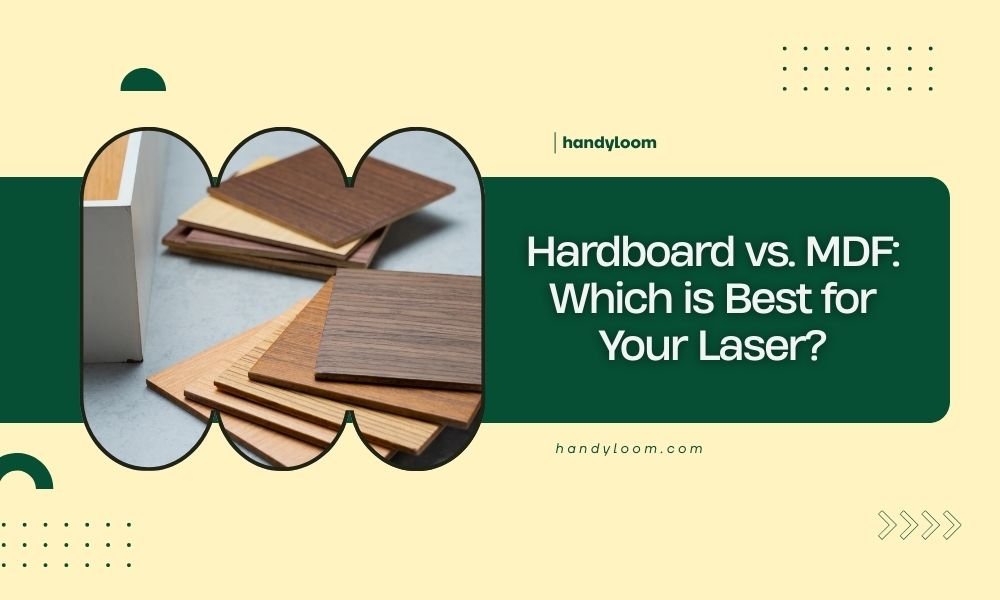
MDF works better for laser cutting because it creates cleaner cuts and produces less toxic fumes than hardboard, making it safer for your workspace.
Hardboard vs MDF comes down to your project needs: MDF costs more but delivers superior results, while hardboard offers budget-friendly options with some trade-offs.
What Makes MDF and Hardboard Different?
You might think these two materials are basically the same thing. They’re both made from wood fibers, right? Well, not exactly.
MDF gets made by breaking down wood into tiny fibers, then mixing them with wax and resin binders. The mixture gets pressed under high heat and pressure. This creates a smooth, dense board with consistent thickness.
Hardboard uses a different process. Manufacturers steam wood chips, then press them under extreme pressure without adding much binding agent. The natural lignin in wood acts as the glue.
Density Differences That Matter
MDF typically weighs between 600-800 kg per cubic meter. Hardboard can reach up to 1000 kg per cubic meter. This density difference affects how your laser behaves when cutting.
Think of it like cutting through butter versus cutting through cheese. The denser material requires more power and moves slower.
How Each Material Behaves Under Your Laser
I found that MDF responds predictably to laser cutting. The consistent density means your laser cuts at the same speed throughout the material. You get clean edges with minimal charring.
Hardboard can be trickier. The high density and compressed fibers sometimes cause the laser to bog down. You might notice burn marks or uneven cut quality.
Cut Quality Comparison
MDF produces smooth, sealed edges when cut properly. The resin binders melt slightly, creating a polished finish. You can often use these edges without sanding.
Hardboard edges tend to be rougher. The compressed fibers can separate during cutting, leaving a fuzzy texture. You’ll likely need to sand or seal these edges.
Speed and Power Settings
For 3mm MDF, most lasers cut well at 80% power and 10-15mm per minute. You can push faster speeds on thinner sheets.
Hardboard of the same thickness often needs 90-100% power and slower speeds around 8-12mm per minute. The dense material just takes more energy to cut through.
Safety Considerations You Need to Know
Here’s where things get serious. Both materials release fumes when laser cut, but the types of fumes differ significantly.
MDF Fume Concerns
MDF contains urea-formaldehyde resins. When heated, these can release formaldehyde gas. Research shows that formaldehyde exposure should be minimized (OSHA guidelines).
Good ventilation becomes really important with MDF. Make sure your exhaust system pulls fumes away from your work area.
Hardboard Emissions
Standard hardboard typically produces fewer chemical fumes since it uses less synthetic binding agents. The main concern is smoke and particulates from burning wood fibers.
Some hardboard types do contain added resins, so check your material specifications before cutting.
Ventilation Requirements
Both materials need proper ventilation. I recommend at least 200 CFM of exhaust for most desktop laser cutters. Industrial units may need 500+ CFM depending on cutting speed and material thickness.
Cost Analysis: Which Saves You Money?
Hardboard typically costs 20-30% less than MDF of similar thickness. For budget-conscious crafters, this difference adds up quickly on large projects.
But consider the hidden costs. If hardboard requires more laser passes or additional finishing work, your time investment increases. Time is money too.
Material Availability
MDF comes in more thickness options, from 3mm up to 25mm commonly. You’ll find it at most hardware stores and specialty suppliers.
Hardboard selection is more limited. Most stores carry 3mm and 6mm sheets. Thicker sheets might require special ordering.
Best Applications for Each Material
Choose MDF when you need precision and clean aesthetics. It works great for:
- Decorative panels and artwork
- Precise mechanical parts
- Items requiring smooth painted finishes
- Projects where edge quality matters
When Hardboard Makes Sense
Hardboard works well for utility applications where looks matter less than function:
- Templates and jigs
- Structural components that get covered
- Prototype development
- High-volume production where cost matters most
Thickness Options and Laser Compatibility
Most hobby lasers handle 3-6mm of either material easily. Thicker sheets need more powerful lasers and careful parameter tuning.
Thin Sheet Performance
3mm MDF cuts like a dream on most lasers. You get fast cutting speeds and excellent edge quality.
3mm hardboard cuts acceptably but may need slower speeds. The edges might require light sanding.
Thick Sheet Challenges
12mm MDF pushes many hobby lasers to their limits. You need multiple passes or very slow cutting speeds.
12mm hardboard is even more challenging. The density makes it tough to cut completely through without significant charring.
Surface Quality and Finishing Options
MDF takes paint beautifully. The smooth surface doesn’t need primer in most cases. You can apply paint directly and get professional-looking results.
Hardboard has a textured surface that shows through thin paint coats. Prime it first for best results, or embrace the texture as part of your design.
Staining and Natural Finishes
Neither material looks great with wood stain. They’re engineered products, not real wood. Paint or clear protective coatings work better.
Storage and Handling Tips
Both materials absorb moisture from air. Store them flat in a dry location. Warped sheets cause problems during laser cutting.
MDF is slightly more stable than hardboard. Hardboard can warp quickly in humid conditions.
Cutting Preparation
Let sheets acclimate to your workspace temperature before cutting. Temperature differences can cause temporary warping.
Clean the surface with a lint-free cloth. Dust and debris can cause inconsistent cutting results.
Troubleshooting Common Issues
Burn marks usually mean you’re cutting too slowly or using too much power. Try increasing speed by 20% or reducing power by 10%.
Incomplete cuts happen when your laser lacks power for the material thickness. Make multiple passes rather than cranking up the power.
Edge Quality Problems
Fuzzy edges on hardboard are normal. Light sanding with 220-grit paper cleans them up nicely.
If MDF edges look rough, check your laser alignment and lens cleanliness. MDF should cut cleanly when everything is properly maintained.
Environmental Impact Considerations
Both materials use wood waste that might otherwise go to landfills. From a recycling perspective, they’re both reasonable choices.
MDF production typically uses more energy due to the additional resin processing. Hardboard has a slightly smaller carbon footprint.
Conclusion
MDF wins for most laser cutting projects. Yes, it costs more upfront, but the superior cut quality and consistent performance make it worth the extra expense. Your finished projects will look more professional, and you’ll spend less time fixing edge imperfections.
Choose hardboard when budget constraints are tight and you don’t mind doing extra finishing work. It’s perfectly functional for utility projects and prototypes.
Whatever you pick, invest in good ventilation. Both materials produce fumes that you don’t want to breathe. Your health is worth more than any cost savings.
Can I mix MDF and hardboard in the same project?
Yes, but use different laser settings for each material. MDF typically needs less power and can cut faster than hardboard of the same thickness.
Which material holds up better outdoors?
Neither material is designed for outdoor use without proper sealing. Both will swell and deteriorate when exposed to moisture. Use marine-grade plywood for outdoor laser projects instead.
Do I need different laser lens settings for each material?
The same lens works fine for both materials. Focus distance and lens type depend more on your material thickness than whether it’s MDF or hardboard.
Can I engrave text on both materials effectively?
MDF engraves beautifully with sharp, clean text. Hardboard engraving can look fuzzy due to the compressed fiber structure. Test your settings on scraps first.
Which material is better for making puzzle pieces?
MDF creates superior puzzle pieces because the edges seal smoothly during cutting. Hardboard puzzle pieces may have rough edges that affect fit and require additional finishing.
